
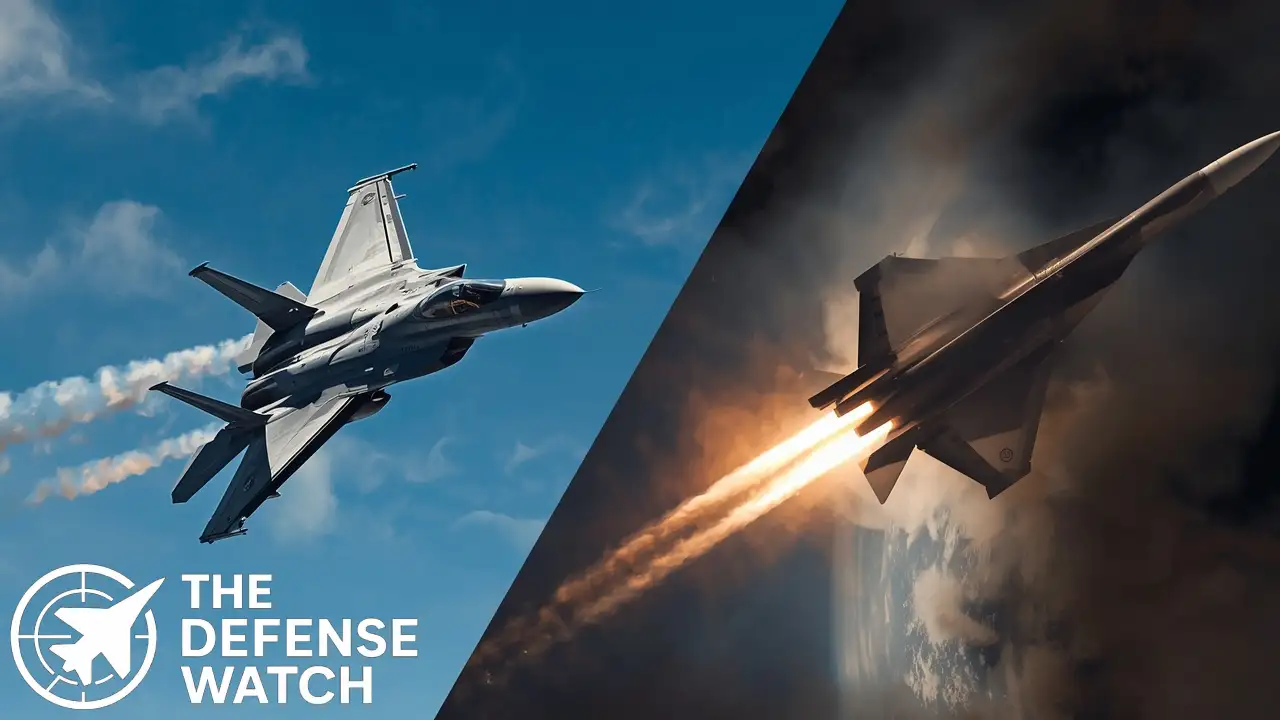
Hypersonic vs Supersonic: A Strategic Shift in Defense Technology
For decades, supersonic speed defined the cutting edge of aerospace and military technology. Today, the focus is shifting toward hypersonic weapons and aircraft, systems capable of flying at speeds once thought impossible. The debate of hypersonic vs supersonic is no longer academic—it shapes how militaries invest in research, adapt doctrine, and prepare for future conflicts.
What Is Supersonic Speed?
Supersonic flight begins when an aircraft or missile exceeds Mach 1, the speed of sound (about 1,225 km/h at sea level). Supersonic jets such as the F-16 Fighting Falcon, F-15 Eagle, or Russia’s Su-35 can sustain speeds between Mach 1 and Mach 2.
Supersonic missiles, such as the BrahMos cruise missile jointly developed by India and Russia, fly at Mach 2.8–3, making them harder to intercept than traditional subsonic systems. Supersonic speed has long been associated with air dominance, faster strike capability, and survivability in contested airspace.
Defining Hypersonic Speed
Hypersonic flight begins at Mach 5 and above, or five times the speed of sound. That translates to over 6,000 km/h—enough to cross the Atlantic Ocean in under an hour.
Unlike supersonic flight, hypersonic systems push the boundaries of physics. Temperatures can soar above 2,000°C, requiring advanced materials and heat shielding to survive. Navigation and control also become more complex, as air behaves differently at hypersonic speeds.
Hypersonic weapons fall into two main categories:
- Hypersonic Glide Vehicles (HGVs): Launched by rockets, they glide at high speeds through the atmosphere while maneuvering to evade defenses.
- Hypersonic Cruise Missiles: Powered by scramjet engines, they maintain sustained hypersonic flight within the atmosphere.
Military Applications: Supersonic vs Hypersonic
Supersonic aircraft and missiles remain essential for air superiority, precision strike, and rapid deployment. However, hypersonic weapons are seen as game-changers.
- Supersonic systems: Effective, combat-proven, and relatively affordable compared to next-gen alternatives. They remain core assets for NATO, Russia, China, and regional powers like India.
- Hypersonic weapons: Prioritized by major military powers for their ability to penetrate advanced air defenses. The U.S., Russia, and China are investing heavily, with systems like Russia’s Avangard HGV, China’s DF-17, and the U.S. Air Force’s AGM-183 ARRW under testing.
The key difference is survivability. Supersonic missiles can be intercepted by modern air defenses such as the U.S. Patriot system or Israel’s David’s Sling. Hypersonic weapons, however, travel too fast and maneuver too unpredictably for current missile defense shields to reliably counter.
Strategic Implications
The arrival of hypersonic technology introduces new strategic risks. Unlike nuclear weapons, which are governed by arms control treaties, hypersonic weapons currently exist in a regulatory gray zone. Their speed compresses decision-making time, potentially destabilizing deterrence.
Analysts warn that widespread deployment could spark an arms race, similar to the Cold War nuclear competition. For smaller powers, however, supersonic systems remain more accessible and practical, ensuring that the gap between regional and global powers does not entirely close.
Supersonic Will Not Disappear
Despite the hype surrounding hypersonics, supersonic aircraft and missiles will continue to dominate military arsenals. The cost, complexity, and limited availability of hypersonic systems mean that supersonic platforms remain the workhorses of global air forces.
In practice, future military doctrine may integrate both technologies: supersonics for mass deployment and affordability, hypersonics for strategic deterrence and precision strikes against high-value targets.
Conclusion
The debate of hypersonic vs supersonic is not about replacement but about evolution. Supersonic systems remain indispensable, while hypersonics represent the cutting edge of next-generation warfare. How nations balance both will define the future of air and missile power.
FAQs
Supersonic flight begins at Mach 1, the speed of sound.
Hypersonic flight begins at Mach 5 and above.
Their speed and maneuverability make them unpredictable and faster than current missile defense reaction times.
No, supersonic systems remain cost-effective and widely deployed, while hypersonics are specialized and limited in number.
Get real time update about this post category directly on your device, subscribe now.

3 comments
[…] QF-16 drone retains the aerodynamic profile and flight capabilities of the original F-16, including supersonic speeds and advanced maneuverability. The drones are equipped with telemetry and guidance systems to […]
[…] extended operations in the Indo-Pacific theater, where amphibious capabilities remain central to U.S. military strategy. The Makin Island routinely deploys with Marine Expeditionary Units, providing sea-based crisis […]
[…] took place at around 10:45 am on February 3, 2026. A ground-based booster accelerated the system to supersonic speed before the ramjet section engaged and sustained combustion. Subsystems such as the nozzle-less […]