
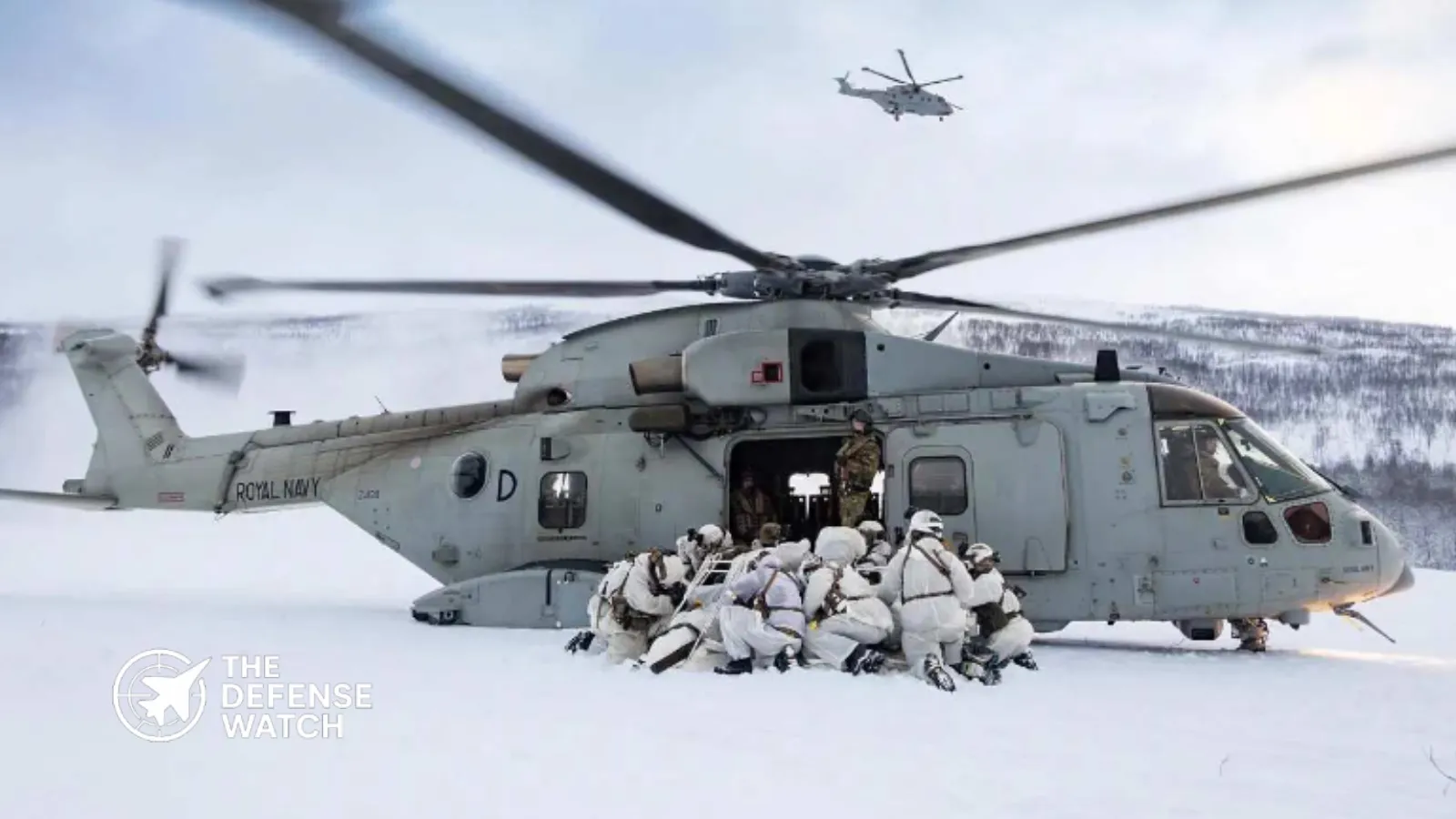
UK Expands Arctic Military Footprint With Norwegian Deployment
Britain has unveiled plans to double its military presence in Norway from 1,000 to 2,000 troops over the next three years, marking a significant expansion of UK defense commitments in the strategically vital Arctic region.
Defence Secretary John Healey is set to announce the deployment increase during a visit to Royal Marine Commandos stationed at Camp Viking in the Norwegian Arctic on Wednesday, according to an official UK government statement. The move comes as NATO finalizes preparations for its Arctic Sentry mission, designed to enhance alliance surveillance and deterrence capabilities across the High North.
Strategic Response To Russian Arctic Activity
The deployment expansion represents Britain’s direct response to escalating Russian military activity in the Arctic, where Moscow has steadily increased its military infrastructure and operational tempo over recent years. The Arctic has emerged as a critical geopolitical flashpoint as melting ice opens new shipping routes and access to natural resources, while simultaneously providing strategic advantages for military positioning.
The UK Ministry of Defence confirmed that the additional 1,000 troops will primarily consist of Royal Marine Commandos, who specialize in cold-weather and Arctic warfare operations. These elite units have maintained a rotational presence in Norway for decades, but the doubling of force levels signals London’s assessment that the security situation in the High North requires enhanced allied presence.
NATO Arctic Sentry Mission Framework
The UK troop increase aligns with NATO’s broader Arctic Sentry initiative, which aims to strengthen the alliance’s northern flank through improved intelligence gathering, surveillance capabilities, and rapid response forces. Arctic Sentry represents NATO’s most comprehensive effort to date to address security challenges in the region, incorporating assets from multiple member nations.
Norway, which shares a 196-kilometer land border with Russia in the Arctic, serves as a critical ally for NATO’s northern defense posture. The country has consistently advocated for stronger allied presence in the region, particularly following Russia’s 2022 invasion of Ukraine, which fundamentally altered European security calculations.
British Defense Commitment Details
According to the UK government statement, the phased deployment will occur over three years, allowing for infrastructure development and logistical preparation at Norwegian bases. Camp Viking, located in Troms county in northern Norway, serves as the primary training facility for multinational forces operating in Arctic conditions.
The Royal Marines bring specialized capabilities to Arctic operations, including mountain warfare expertise, cold-weather survival skills, and experience operating in extreme environments. Their deployment to Norway includes regular training exercises with Norwegian armed forces and participation in NATO’s Cold Response exercises, which occur biennially.
Defence Secretary Healey emphasized that the deployment reinforces Britain’s commitment to NATO collective defense while demonstrating solidarity with European allies facing Russian pressure. The announcement follows recent UK defense policy reviews that identified the Arctic as an area requiring increased attention and resources.
Geopolitical Context And Regional Security
Russia’s Northern Fleet, headquartered on the Kola Peninsula near Norway’s border, represents one of Moscow’s most strategically important military assets. The region houses nuclear-powered ballistic missile submarines, which form a critical component of Russia’s nuclear deterrent. Russian military modernization efforts have focused heavily on Arctic capabilities, including new icebreakers, airfields, and radar installations.
NATO members with Arctic territories—including the United States, Canada, Denmark (via Greenland), Iceland, and Norway—have expressed growing concern about Russian military buildup in the region. The alliance has responded with increased exercises, intelligence cooperation, and infrastructure investments designed to ensure freedom of navigation and territorial integrity.
The UK deployment joins existing American and other allied forces regularly training in Norway. The U.S. Marine Corps maintains a rotational presence of approximately 700 personnel in Norway, focused on pre-positioning equipment and conducting cold-weather training.
Operational Implications
Military analysts note that the doubled British presence enhances NATO’s ability to conduct sustained operations in Arctic conditions while providing a credible deterrent against potential Russian aggression. The deployment also improves interoperability between British and Norwegian forces, a key objective for alliance readiness.
The Royal Marines’ Arctic warfare expertise makes them particularly valuable for High North operations, where extreme cold, limited daylight during winter months, and challenging terrain require specialized training and equipment. Their presence enables more frequent and complex exercises that test NATO’s ability to operate in contested Arctic environments.
Britain’s commitment also sends a political signal about transatlantic defense cooperation at a time when European nations are reassessing their security requirements. The deployment demonstrates that the UK remains committed to European security despite Brexit and reflects London’s strategy of strengthening bilateral defense relationships with key allies.
Infrastructure And Support Requirements
The troop increase will necessitate expanded facilities and logistics support in Norway. The UK Ministry of Defence indicated that infrastructure investments will accompany the personnel deployment, though specific details about facility upgrades and equipment pre-positioning were not disclosed in the initial announcement.
Norway has invested significantly in military infrastructure in its northern regions, including enhanced radar systems, upgraded air bases, and improved port facilities capable of supporting allied operations. These investments facilitate the integration of partner nation forces and enable rapid reinforcement during crises.
International Response And Future Outlook
The announcement has been welcomed by Norwegian defense officials, who view increased allied presence as essential for maintaining regional stability. Norway’s Defence Minister has previously stated that permanent allied presence serves as a key deterrent factor in the High North.
Other NATO allies are expected to support the British deployment as part of coordinated alliance efforts to strengthen northern defenses. The Arctic Sentry mission framework provides a multilateral structure for coordinating various national contributions to regional security.
As climate change continues to open Arctic waters and increase accessibility to the region, military strategists anticipate that competition for resources and influence will intensify. The UK’s decision to double its Norwegian deployment reflects long-term strategic planning for a region that will likely become increasingly contested in coming decades.
The phased implementation over three years allows for adjustments based on evolving security conditions while demonstrating sustained British commitment to Arctic defense regardless of short-term political changes. Defence Secretary Healey’s visit to Camp Viking will provide additional details about operational timelines and specific force composition.
Get real time update about this post category directly on your device, subscribe now.
