


Royal Marines T-150 Drone Marks New Arctic Capability Step
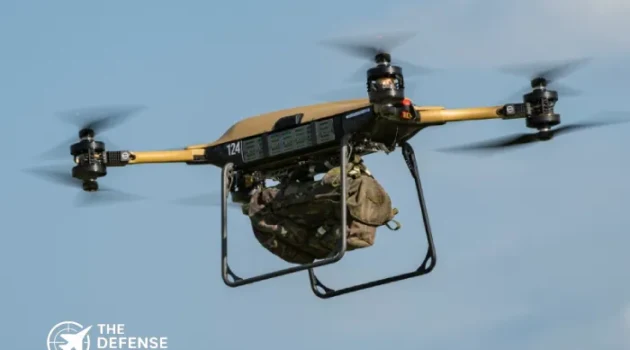
The Royal Marines T-150 drone has completed operational activity in the Arctic, marking a notable step in British efforts to integrate uncrewed systems into cold-weather expeditionary missions. According to BAE Systems, the T-150 uncrewed air system supported Royal Marines activity in extreme northern conditions, demonstrating its ability to operate where terrain, weather, and distance often slow traditional resupply methods.
- Royal Marines used the T-150 uncrewed air system during Arctic operations.
- The drone can support cargo delivery, reconnaissance, and resupply missions.
- Arctic deployment reflects growing NATO focus on northern security routes.
- Trials were conducted in extreme cold conditions that challenge conventional systems.
- Small autonomous aircraft may reduce risk to troops in remote environments.
The development matters because Arctic operations place unique stress on manned aircraft, vehicles, and troops. Reliable autonomous systems can help close those gaps.
The Big Picture
Arctic security has moved sharply up the defense agenda for NATO members. Melting sea routes, increased military activity, and growing competition over northern access corridors have pushed nations such as the United Kingdom, United States, Norway, and Canada to strengthen high-latitude readiness.
For the UK, the Royal Marines play a central role in cold-weather warfare. They regularly train in Norway and are expected to provide rapid-response forces for northern flank contingencies. Integrating drones such as the T-150 aligns with a broader trend across allied militaries, using autonomous platforms for reconnaissance, logistics, and force protection.
What’s Happening
BAE Systems said the Royal Marines employed the T-150 during Arctic activity, making history for the platform in the region. The aircraft is an uncrewed air system designed for demanding missions including cargo movement and surveillance.
The Arctic creates serious operating barriers. Snow cover limits mobility, mountainous terrain complicates line-of-sight movement, and severe cold can degrade batteries, sensors, and mechanical systems. A successful trial in those conditions is more meaningful than a standard temperate-climate demonstration.
Why It Matters
Military logistics often determine whether forces can sustain operations. In remote Arctic zones, even short movements can take hours or days. A drone capable of moving supplies directly to dispersed troops can shorten timelines and reduce exposure.
That has several advantages:
- Fewer personnel exposed on hazardous ground routes
- Faster movement of medical stores, batteries, and ammunition
- Better support for small forward teams
- Lower burden on helicopters reserved for higher-priority missions
The Royal Marines T-150 drone therefore represents more than a technology test. It points toward a new operating model for distributed forces.
Strategic Implications
Britain’s northern defense role has grown since NATO renewed focus on deterrence in Europe. The High North links the North Atlantic, GIUK gap, and access routes between North America and Europe.
Any platform that improves persistence and mobility in that region strengthens alliance readiness. Small drones cannot replace large transport aircraft or helicopters, but they can fill the tactical layer between backpack carriage and manned aviation.
That middle tier is often where shortages appear during real operations.
Competitor View
Russia has long treated the Arctic as a strategic military zone, with air bases, missile coverage, and maritime presence across its northern territories. Western adoption of resilient logistics drones may be viewed as part of a broader NATO effort to sustain forces closer to contested northern areas.
China, while not an Arctic state, has shown growing commercial and strategic interest in polar shipping lanes and research access. NATO members are likely to interpret autonomous cold-weather systems as necessary preparation for future competition rather than niche experimentation.
What To Watch Next
Several indicators will show whether the T-150 moves beyond trials:
- Expanded Royal Marines field exercises using the system
- Integration with British Army or joint logistics units
- Maritime launch and recovery testing
- Secure data-link upgrades for contested environments
- Procurement decisions for wider fleet adoption
If the platform proves dependable across repeated deployments, it could become part of standard expeditionary force packages.
Capability Gap
Western militaries often possess advanced strike systems but still struggle with last-mile resupply in difficult terrain. The Royal Marines T-150 drone appears aimed directly at that weakness.
However, limitations remain realistic and important:
- Payload is smaller than helicopters or vehicles
- Weather can still restrict flight windows
- Electronic warfare threats may disrupt control links
- Batteries and maintenance remain critical in cold climates
Even so, those constraints do not remove its utility. They define where it should be used.
The Bottom Line
The Royal Marines T-150 drone shows how small autonomous aircraft can solve real battlefield logistics problems in one of the world’s most demanding theaters.
British Commandos Fire High-Tech Mortars In Arctic Conditions
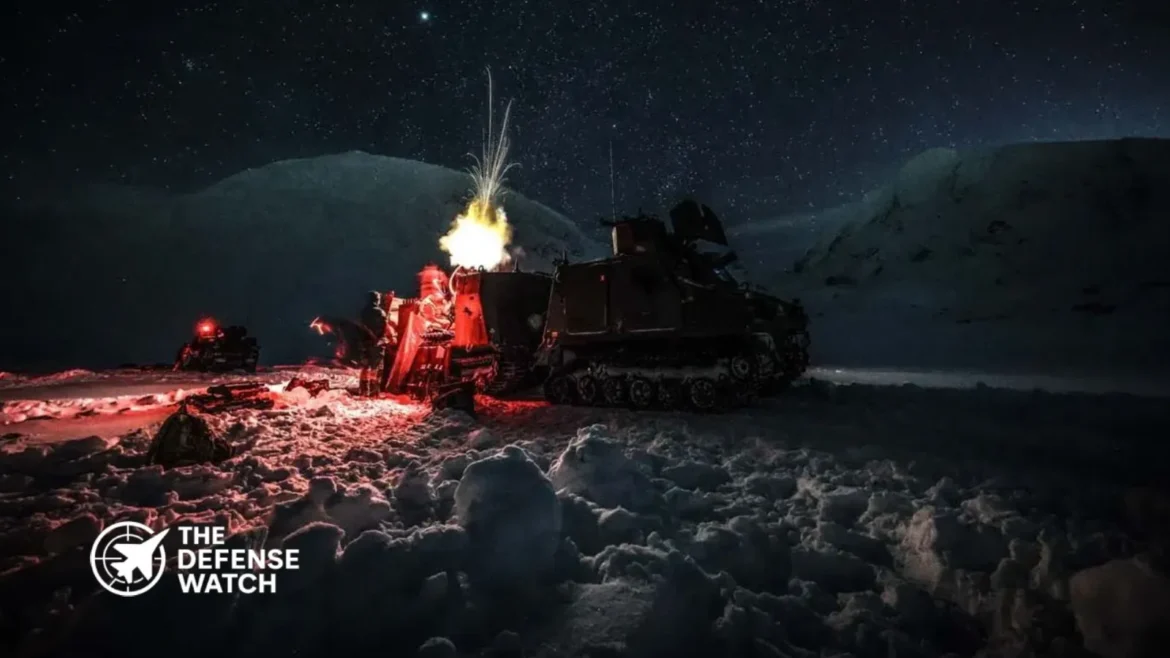
Royal Marines conducted intensive 81mm mortar fire missions in temperatures approaching -20°C near the village of Moen, more than 200 miles inside the Arctic Circle, as part of escalating preparations for NATO’s largest Arctic military exercise in 2026. The specialized mortar drills coincided with UK Defence Secretary John Healey’s announcement that British troop deployments to Norway will double from 1,000 to 2,000 personnel over the next three years.
(adsbygoogle = window.adsbygoogle || []).push({});The mortar operations, conducted by approximately 1,500 Royal Marine Commandos deployed to northern Norway, demonstrated the UK’s commitment to Arctic security as tensions with Russia intensify in the High North region. The Commando Forces’ 81mm mortars can deliver approximately 15 shells per minute on enemy positions, with rounds leaving the barrel at around 500 mph and striking targets up to 3.5 miles away.
During the week-long training exercise near Camp Viking in Øverbygd, mortar troops deployed their weapons from Viking and BV206 all-terrain vehicles, practicing rapid-fire missions both day and night. The training emphasized mobility and survivability in Arctic conditions, with crews quickly relocating positions across deep snow to evade potential adversaries while maintaining fire support for advancing troops.
UK Strengthens Arctic Presence Amid Rising Russian Activity
Defence Secretary John Healey stated that Russia poses the greatest threat to Arctic and High North security seen since the Cold War, noting Putin is rapidly re-establishing military presence in the region, including reopening old Cold War bases. The announcement came during Healey’s visit to British forces at Camp Viking, the UK’s permanent Arctic base established in 2024.
The expanded British deployment forms part of broader NATO efforts to strengthen the alliance’s northern flank. Healey confirmed that UK Armed Forces will play a vital part in NATO’s Arctic Sentry mission, with detailed military planning currently underway at NATO headquarters. The Defence Secretary is scheduled to discuss these proposals with NATO counterparts in Brussels.
(adsbygoogle = window.adsbygoogle || []).push({});This commitment builds on the historic Lunna House Agreement signed between the UK and Norway in December 2024, which established closer defense cooperation including joint operation of submarine-hunting Type 26 frigates and expanded Arctic training opportunities.
Cold Response 2026: NATO’s Premier Arctic Exercise
The mortar training exercises serve as intensive mission rehearsals ahead of Exercise Cold Response 2026, scheduled for March 9-19. The Norwegian-led exercise will involve approximately 25,000 troops from 14 NATO nations operating across Norway’s northern regions, with participation from Norway, the United States, United Kingdom, Germany, Netherlands, France, Italy, Canada, Spain, Turkey, Sweden, Finland, Denmark, Belgium, and NATO headquarters elements.
U.S. forces will contribute approximately 3,000 Marines from II Marine Expeditionary Force, deploying from Marine Corps Base Camp Lejeune, North Carolina, to demonstrate rapid transatlantic reinforcement capabilities. The exercise aims to test NATO’s ability to defend strategically important locations across fjords and mountains while operating in harsh Arctic conditions with limited daylight and extreme cold.
Cold Response 2026 represents a critical demonstration of alliance cohesion and interoperability. The exercise will be conducted as a multi-domain operation, coordinating effects across land, maritime, air, cyber, and space domains. A large-scale simulation running parallel to live operations will involve significantly larger simulated forces, increasing realism and complexity for participating headquarters.
(adsbygoogle = window.adsbygoogle || []).push({});Royal Marines: NATO’s Arctic Warfare Specialists
The Royal Marines have maintained Arctic warfare expertise for over 50 years, conducting annual training deployments to Norway. Lieutenant Colonel Chris Armstrong, Commanding Officer of 30 Commando Information Exploitation Group, emphasized the significance of the current deployment: “The UK Commando Force is stepping up readiness to war-fight alongside our allies in the High North. As NATO’s cold-weather specialists, we are ruthlessly focused on mission rehearsals with our closest partners”.
The 81mm mortar system remains a critical component of the Royal Marines‘ Arctic capabilities. These weapons provide indirect fire support for advancing commando units operating in terrain where conventional artillery may struggle to deploy. The mortar teams demonstrated their ability to conduct illumination missions, coordinate fire control in degraded conditions, and maintain high rates of fire despite extreme cold affecting personnel and equipment.
British forces are also integrating new technologies into their Arctic operations, including drones, enhanced communications systems, and AI-enabled targeting capabilities. The modernization effort aims to provide NATO with operational advantages in the High North while maintaining the Royal Marines’ traditional expertise in cold-weather warfare.
Joint Expeditionary Force Plans Major Arctic Operations
Beyond Cold Response, the UK-led Joint Expeditionary Force will conduct Exercise Lion Protector in September 2026, deploying air, land, and naval forces across Iceland, the Danish Straits, and Norway to train protection of critical national infrastructure from attacks and sabotage while enhancing joint command and control capabilities.
The Joint Expeditionary Force, which includes Denmark, Estonia, Finland, Iceland, Latvia, Lithuania, Netherlands, Norway, Sweden, and the United Kingdom, represents a rapid-reaction framework for security challenges in northern Europe. Lion Protector will involve hundreds of personnel focusing on deterrence and defense capabilities across the Arctic, High North, and North Atlantic regions.
(adsbygoogle = window.adsbygoogle || []).push({});These exercises occur against a backdrop of evolving Arctic geopolitics. Climate change is opening new sea routes and increasing access to natural resources, while great power competition intensifies in the region. Russia has significantly expanded its military footprint in the Arctic in recent years, reopening Soviet-era bases and upgrading Arctic capabilities as part of President Vladimir Putin’s effort to consolidate strategic depth in northern Europe .
UK Defense Spending Increase Supports Arctic Commitments
The British government has committed to the largest sustained increase in defense spending since the end of the Cold War, reaching 2.6% of GDP from 2027. This funding increase enables expanded operations in Norway and throughout NATO’s northern regions while supporting equipment modernization and force readiness.
The expanded Arctic presence also addresses concerns raised by the United States regarding European contributions to collective defense. NATO Secretary General Mark Rutte and alliance military commanders have warned of growing threats in the Arctic and High North from Russia and China, emphasizing the need for robust deterrence measures.
(adsbygoogle = window.adsbygoogle || []).push({});The Royal Marines’ mortar training exercises, combined with the announced troop increases and major exercise participation, demonstrate Britain’s commitment to remaining a leading contributor to Arctic security and NATO’s northern flank defense. As geopolitical competition intensifies and climate change reshapes the region’s strategic landscape, the UK’s Arctic expertise and operational capabilities will play an increasingly vital role in alliance security.
UK Expands Arctic Military Footprint With Norwegian Deployment
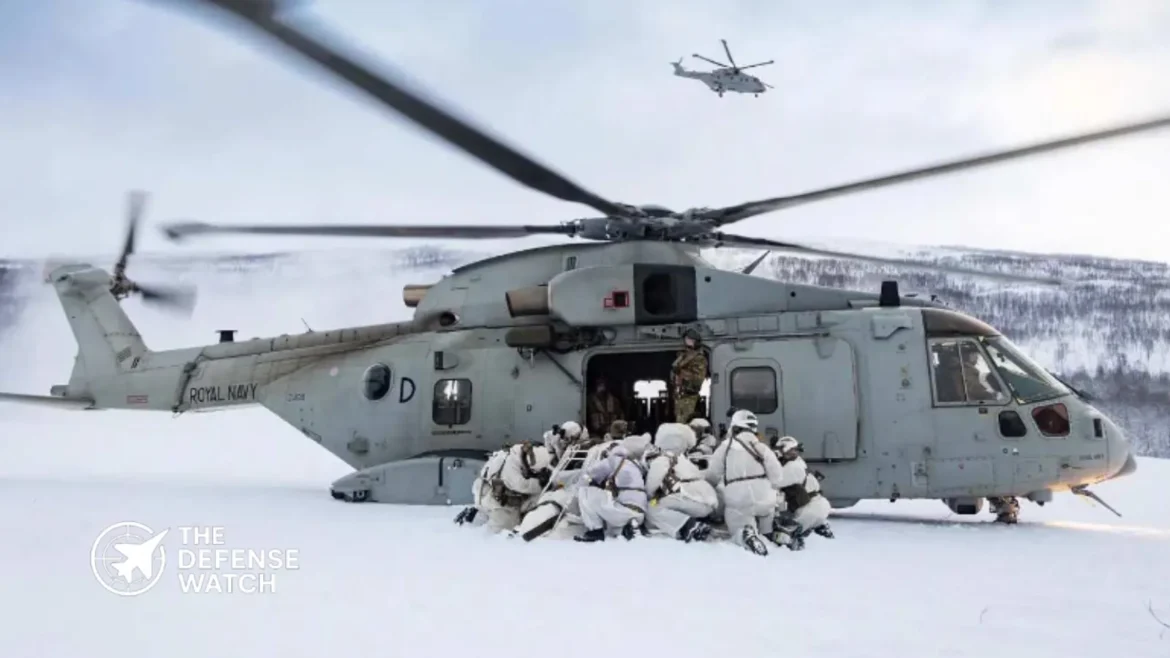
Britain has unveiled plans to double its military presence in Norway from 1,000 to 2,000 troops over the next three years, marking a significant expansion of UK defense commitments in the strategically vital Arctic region.
(adsbygoogle = window.adsbygoogle || []).push({});Defence Secretary John Healey is set to announce the deployment increase during a visit to Royal Marine Commandos stationed at Camp Viking in the Norwegian Arctic on Wednesday, according to an official UK government statement. The move comes as NATO finalizes preparations for its Arctic Sentry mission, designed to enhance alliance surveillance and deterrence capabilities across the High North.
Strategic Response To Russian Arctic Activity
The deployment expansion represents Britain’s direct response to escalating Russian military activity in the Arctic, where Moscow has steadily increased its military infrastructure and operational tempo over recent years. The Arctic has emerged as a critical geopolitical flashpoint as melting ice opens new shipping routes and access to natural resources, while simultaneously providing strategic advantages for military positioning.
The UK Ministry of Defence confirmed that the additional 1,000 troops will primarily consist of Royal Marine Commandos, who specialize in cold-weather and Arctic warfare operations. These elite units have maintained a rotational presence in Norway for decades, but the doubling of force levels signals London’s assessment that the security situation in the High North requires enhanced allied presence.
NATO Arctic Sentry Mission Framework
The UK troop increase aligns with NATO’s broader Arctic Sentry initiative, which aims to strengthen the alliance’s northern flank through improved intelligence gathering, surveillance capabilities, and rapid response forces. Arctic Sentry represents NATO’s most comprehensive effort to date to address security challenges in the region, incorporating assets from multiple member nations.
Norway, which shares a 196-kilometer land border with Russia in the Arctic, serves as a critical ally for NATO’s northern defense posture. The country has consistently advocated for stronger allied presence in the region, particularly following Russia’s 2022 invasion of Ukraine, which fundamentally altered European security calculations.
British Defense Commitment Details
According to the UK government statement, the phased deployment will occur over three years, allowing for infrastructure development and logistical preparation at Norwegian bases. Camp Viking, located in Troms county in northern Norway, serves as the primary training facility for multinational forces operating in Arctic conditions.
(adsbygoogle = window.adsbygoogle || []).push({});The Royal Marines bring specialized capabilities to Arctic operations, including mountain warfare expertise, cold-weather survival skills, and experience operating in extreme environments. Their deployment to Norway includes regular training exercises with Norwegian armed forces and participation in NATO’s Cold Response exercises, which occur biennially.
Defence Secretary Healey emphasized that the deployment reinforces Britain’s commitment to NATO collective defense while demonstrating solidarity with European allies facing Russian pressure. The announcement follows recent UK defense policy reviews that identified the Arctic as an area requiring increased attention and resources.
Geopolitical Context And Regional Security
Russia’s Northern Fleet, headquartered on the Kola Peninsula near Norway’s border, represents one of Moscow’s most strategically important military assets. The region houses nuclear-powered ballistic missile submarines, which form a critical component of Russia’s nuclear deterrent. Russian military modernization efforts have focused heavily on Arctic capabilities, including new icebreakers, airfields, and radar installations.
NATO members with Arctic territories—including the United States, Canada, Denmark (via Greenland), Iceland, and Norway—have expressed growing concern about Russian military buildup in the region. The alliance has responded with increased exercises, intelligence cooperation, and infrastructure investments designed to ensure freedom of navigation and territorial integrity.
The UK deployment joins existing American and other allied forces regularly training in Norway. The U.S. Marine Corps maintains a rotational presence of approximately 700 personnel in Norway, focused on pre-positioning equipment and conducting cold-weather training.
Operational Implications
Military analysts note that the doubled British presence enhances NATO’s ability to conduct sustained operations in Arctic conditions while providing a credible deterrent against potential Russian aggression. The deployment also improves interoperability between British and Norwegian forces, a key objective for alliance readiness.
The Royal Marines’ Arctic warfare expertise makes them particularly valuable for High North operations, where extreme cold, limited daylight during winter months, and challenging terrain require specialized training and equipment. Their presence enables more frequent and complex exercises that test NATO’s ability to operate in contested Arctic environments.
(adsbygoogle = window.adsbygoogle || []).push({});Britain’s commitment also sends a political signal about transatlantic defense cooperation at a time when European nations are reassessing their security requirements. The deployment demonstrates that the UK remains committed to European security despite Brexit and reflects London’s strategy of strengthening bilateral defense relationships with key allies.
Infrastructure And Support Requirements
The troop increase will necessitate expanded facilities and logistics support in Norway. The UK Ministry of Defence indicated that infrastructure investments will accompany the personnel deployment, though specific details about facility upgrades and equipment pre-positioning were not disclosed in the initial announcement.
Norway has invested significantly in military infrastructure in its northern regions, including enhanced radar systems, upgraded air bases, and improved port facilities capable of supporting allied operations. These investments facilitate the integration of partner nation forces and enable rapid reinforcement during crises.
International Response And Future Outlook
The announcement has been welcomed by Norwegian defense officials, who view increased allied presence as essential for maintaining regional stability. Norway’s Defence Minister has previously stated that permanent allied presence serves as a key deterrent factor in the High North.
Other NATO allies are expected to support the British deployment as part of coordinated alliance efforts to strengthen northern defenses. The Arctic Sentry mission framework provides a multilateral structure for coordinating various national contributions to regional security.
(adsbygoogle = window.adsbygoogle || []).push({});As climate change continues to open Arctic waters and increase accessibility to the region, military strategists anticipate that competition for resources and influence will intensify. The UK’s decision to double its Norwegian deployment reflects long-term strategic planning for a region that will likely become increasingly contested in coming decades.
The phased implementation over three years allows for adjustments based on evolving security conditions while demonstrating sustained British commitment to Arctic defense regardless of short-term political changes. Defence Secretary Healey’s visit to Camp Viking will provide additional details about operational timelines and specific force composition.
Royal Marines NATO Ready After Two Years Of Prep
The Royal Marines have achieved NATO readiness status after completing two years of mission rehearsals, qualifying 42 Commando for rapid deployment with the alliance’s Allied Reaction Force maritime task group, according to the Royal Navy.
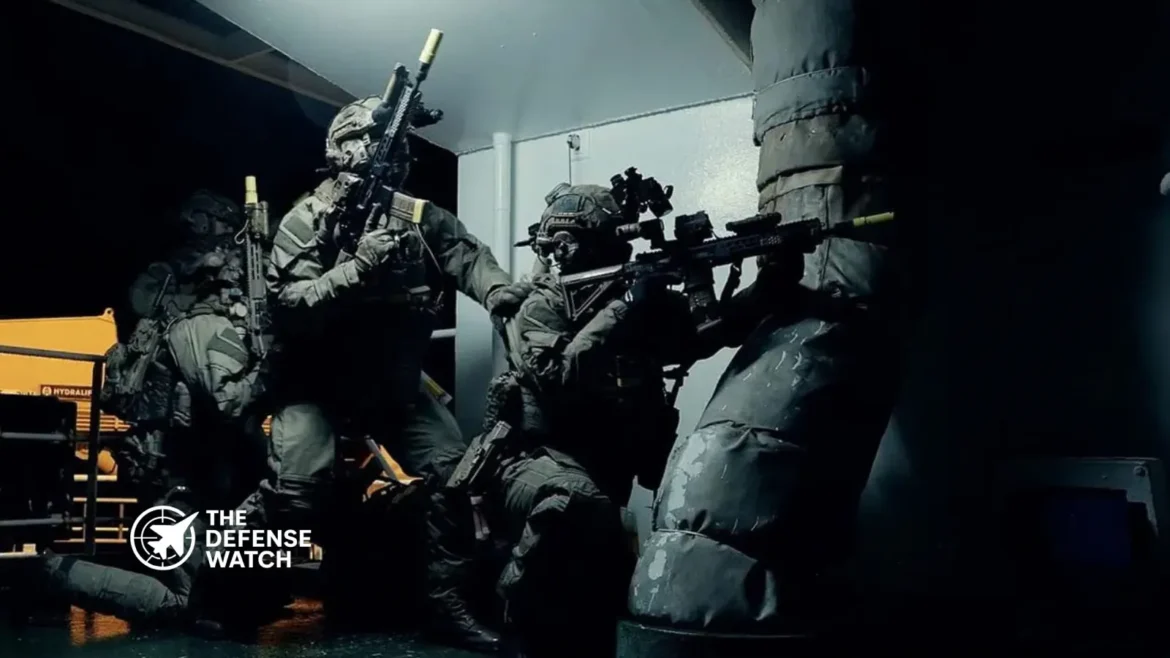
Members of Plymouth-based 42 Commando finished Exercise Hyperion Storm with a series of boarding drills, night operations, reconnaissance and helicopter assaults. The final evaluation confirmed the unit can be called up on short notice to support NATO special operations from July 2026 for approximately one year.
Hyperion Storm Validates Maritime Task Group Capability
Hyperion Storm was the capstone event in a long training cycle designed to meet NATO criteria for rapid response forces. The exercise involved a wide range of skills, including maritime interdiction, fast-roping from helicopters and coordinated operations with British Army Rangers and Royal Air Force helicopters.
The certification process required meeting more than 850 performance measures overseen by NATO’s Special Operations Forces Command Evaluation team. That validation clears the way for 42 Commando to fill a core role in the Special Operations Component of NATO’s Allied Reaction Force, a unit intended to provide an initial deterrent or response to emerging global crises.
Role And Tasks In NATO Framework
Once activated, the maritime task group led by Royal Marines will serve as the alliance’s primary rapid reaction force for maritime and littoral operations. Mission sets could include recapture of vessels, securing offshore infrastructure and covert raids from the sea.
This deployment marks the first time the UK’s Joint Special Operations Forces have been combined under a formal NATO command for such a leadership role, reflecting broader trends in alliance interoperability.
Broader UK And NATO Context
The Royal Marines’ certification and readiness are part of a larger shift in UK defense policy that emphasizes alliance deterrence and rapid response. The UK is set to assume command of NATO’s maritime component of the Allied Reaction Force in mid-2026, expanding its role within collective defense structures.
Training in recent years has spanned from the Baltic to the Arctic, with exercises such as Baltic Dawn and Cold Response helping build the advanced skills and interoperability needed for high tempo operations in complex environments.
What This Means For Allies
For U.S. and other NATO partners, the Royal Marines’ readiness adds a specialized maritime element to the alliance’s rapid reaction portfolio. The focus on interoperable doctrine and combined training aims to reduce time from decision to deployment in a crisis.

UK Commandos Sharpen Arctic Warfare Skills
Royal Marines have significantly ramped up Arctic operations in Northern Norway as approximately 1,500 UK commandos prepare for Exercise Cold Response 2026, the largest military exercise planned in Norway this year. The deployment represents a major expansion of UK commitment to NATO’s northern flank following the December 2025 Lunna House Agreement between the United Kingdom and Norway.
(adsbygoogle = window.adsbygoogle || []).push({});The two-month training period focuses on extreme cold weather warfare skills, specialized Arctic tactics, and integration of advanced technology including drones and snowmobiles. The deployment underscores UK commitment to Arctic security amid increased Russian naval activity in the North Atlantic region.
Lunna House Agreement: Foundation for Enhanced Cooperation
The current deployment stems from the Lunna House Agreement signed December 4, 2025, by UK Defense Secretary John Healey and Norwegian Defense Minister Tore O. Sandvik. This historic defense pact establishes year-round Royal Marine operations in Norway, expanding beyond traditional winter-only deployments.

Named after the Shetland Islands headquarters used by Norwegian resistance forces during World War II, the agreement creates deeper military integration between the two NATO founding members. The pact addresses growing security concerns over a 30% increase in Russian vessels detected in UK waters over the past two years, according to UK government data.
Key provisions include development of an interchangeable fleet of at least 13 Type 26 anti-submarine warfare frigates, participation in Norwegian programs for uncrewed mine hunting and undersea warfare systems, and adoption of Norwegian naval strike missiles by the Royal Navy. The £10 billion warship deal supports over 4,000 British jobs while strengthening NATO capabilities in the strategically vital Greenland-Iceland-UK gap.
Training Operations: Preparing for Arctic Combat
UK Commando Force operations are centered at Camp Viking, established in 2023 near Øverbygd, approximately 40 miles south of Tromsø. The facility serves as a permanent operations hub for British forces training in Arctic conditions.
“The UK Commando Force is stepping up readiness to war-fight alongside our allies in the High North,” stated Lieutenant Colonel Chris Armstrong, Commanding Officer of 30 Commando Information Exploitation Group. “As NATO’s cold-weather specialists, we are ruthlessly focussed on mission rehearsals with our closest partners. Fusing intelligence, bold commando tactics, and cutting-edge technology – we remain poised for operations.”
The current training regimen includes operations across Norway’s challenging terrain of coastlines, mountains, and fjords. Royal Marines are working alongside Norwegian forces and Dutch marines to develop interoperability and refine joint operating procedures in sub-zero conditions.

Commando Helicopter Force has also deployed Wildcat and Merlin helicopters from Yeovilton to Royal Norwegian Air Force Base Bardufoss as part of Operation Clockwork, an annual Arctic helicopter training exercise. Located approximately 20 miles west of Camp Viking, Bardufoss provides critical aviation support for Arctic operations.
Exercise Cold Response 2026: NATO’s Arctic Showcase
The Royal Marines will participate in Exercise Cold Response 2026, scheduled for March 9-19, 2026. The Norwegian-led exercise will involve approximately 25,000 personnel from 14 nations including the United States, Canada, Germany, France, Italy, the Netherlands, Spain, Denmark, Belgium, Sweden, Finland, and Turkey.
According to the Norwegian Armed Forces, Cold Response 2026 serves as a multi-domain operation coordinating military effects across land, maritime, air, cyber, and space domains. The exercise aims to demonstrate NATO cohesion, strengthen allied defense capabilities, and reassure populations by showcasing the alliance’s ability to defend its northern flank.
The United States is deploying approximately 4,000 personnel, including 3,000 Marines from II Marine Expeditionary Force based at Camp Lejeune, North Carolina. U.S. participation includes P-8 Poseidon maritime patrol aircraft, F-35A Lightning II fighters, and special operations forces.
(adsbygoogle = window.adsbygoogle || []).push({});Exercise activities will occur primarily in Nordland, Troms, and western Finnmark in Norway, with additional operations extending into northern Finland. The drill emphasizes rapid reinforcement capabilities, with forces training to quickly deploy across the Atlantic and integrate with Norwegian defense plans.
Strategic Context: Countering Russian Arctic Activity
The enhanced UK-Norway military cooperation comes amid growing concerns over Russian military presence in the Arctic region. NATO officials have repeatedly expressed concern about increased Russian submarine activity and potential threats to critical undersea infrastructure including communication cables and energy pipelines.
In October 2024, Admiral Rob Bauer, Chairman of the NATO Military Committee, stated: “NATO will defend its interests in the Arctic. We have a responsibility to protect all our Allies, including the seven here in this region.”
The Royal Marines deployment aligns with broader NATO efforts to strengthen deterrence and defense capabilities in the High North. Finland and Sweden’s accession to NATO in 2023 significantly enhanced the alliance’s Arctic posture by adding two nations with extensive cold-weather military expertise.
Norway’s strategic location along Russia’s northwestern border and control of critical maritime chokepoints makes the country essential to NATO’s northern defense architecture. The Barents Sea region has seen increased Russian naval activity, including submarine patrols and surface vessel operations.
Technological Modernization: Advanced Capabilities
The UK Commando Force has undergone six years of modernization incorporating artificial intelligence-enabled targeting systems, multi-domain fire capabilities, and uncrewed surface vessels. These technological enhancements aim to provide NATO with qualitative advantages in the Arctic theater.

The Lunna House Agreement accelerates adoption of autonomous systems for Arctic operations. Both nations will lead NATO efforts to integrate uncrewed platforms for mine hunting, undersea warfare, and surface patrol missions. Norwegian offshore support vessels will serve as motherships for autonomous systems, extending operational reach in harsh Arctic waters.
Royal Marines are also testing advanced cold-weather equipment including all-terrain vehicles, specialized communication systems, and improved survival gear designed for extended operations in sub-zero temperatures. The training incorporates lessons learned from five decades of Arctic operations, building institutional knowledge critical for success in extreme environments.
Allied Integration: Multinational Arctic Cooperation
Beyond UK-Norway bilateral cooperation, Exercise Cold Response 2026 emphasizes broader allied integration. Dutch marines are training alongside British and Norwegian forces, reflecting the Netherlands’ commitment to Arctic security despite its southern European geography.
(adsbygoogle = window.adsbygoogle || []).push({});The exercise provides critical opportunities for forces from warmer climates to gain Arctic experience. Italian, Spanish, and Turkish forces will operate in conditions vastly different from their home territories, building alliance-wide cold-weather competencies.
Major General Daniel L. Shipley, Commander of U.S. Marine Corps Forces Europe and Africa, emphasized the exercise’s importance: “Exercises like Cold Response 26 are crucial for ensuring Norway’s readiness and resilience, as well as demonstrating burden sharing across the Alliance. This exercise isn’t just about preparing for today’s threats; it’s about building the capabilities and strengthening the capacity necessary to deter future aggression and safeguard our shared interests.”
Historical Context: Decades of Arctic Partnership
UK-Norway Arctic military cooperation dates back over 50 years. British Royal Marines have conducted annual winter training in Norway since the early Cold War, building deep institutional relationships with Norwegian forces.
The relationship gained renewed urgency following Russia’s 2014 invasion of Ukraine and subsequent 2022 full-scale invasion. These events refocused NATO attention on territorial defense and rapid reinforcement of frontline allies.
The Lunna House Agreement represents the most significant expansion of UK-Norway military cooperation since the early Cold War period. By establishing year-round Royal Marine presence, the agreement ensures British forces maintain continuous readiness for Arctic operations rather than requiring annual reset periods.
Future Outlook: Sustained Arctic Commitment
The current Royal Marines deployment establishes a template for sustained UK presence in Norway’s Arctic regions. Beyond Exercise Cold Response 2026, British forces will continue year-round training across all seasons, developing capabilities for operations in variable Arctic conditions.
Norwegian Defense Minister Tore O. Sandvik emphasized the significance of expanded British presence: “Royal Marines have a long tradition of practicing winter operations with naval and amphibious forces in Inner Troms, Northern Norway. In the future, they will train in Norway during the other seasons as well. By being more present in Norway, the Royal Marines will be more closely integrated into the defense of Norway, and they will be able to come to our aid quickly if a crisis or war situation should arise.”
(adsbygoogle = window.adsbygoogle || []).push({});The Type 26 frigate program will further strengthen bilateral naval cooperation over the coming decade as vessels enter service. Shared logistics, maintenance facilities, and crew exchange programs will create unprecedented integration between the Royal Navy and Royal Norwegian Navy.
Analysis: Implications for NATO Arctic Strategy
The Royal Marines deployment and Exercise Cold Response 2026 signal NATO’s commitment to Arctic security amid evolving geopolitical dynamics. The alliance faces multiple challenges including climate change opening new maritime routes, increased commercial activity, and competition for Arctic resources.
Russia maintains significant military infrastructure in its Arctic regions including nuclear submarine bases, airfields, and coastal defense systems. Moscow’s Arctic capabilities present challenges for NATO maritime operations and require sustained allied presence to ensure freedom of navigation and credible deterrence.
(adsbygoogle = window.adsbygoogle || []).push({});The UK-Norway partnership model may serve as a template for other bilateral defense arrangements within NATO. By establishing deep integration at the national level, allies can achieve operational synergies beyond what alliance-wide structures alone provide.
Conclusion
Royal Marines Arctic training ahead of Exercise Cold Response 2026 demonstrates UK commitment to NATO’s northern flank and partnership with Norway. The deployment, enabled by the Lunna House Agreement, establishes year-round British presence in the High North and enhances alliance capabilities for Arctic operations.
As 25,000 NATO personnel prepare for the March exercise, the training underscores allied unity in defending European security. For the 1,500 Royal Marines currently operating in Norway’s extreme conditions, the deployment represents both continuation of a decades-long partnership and adaptation to evolving strategic challenges in one of the world’s most demanding operational environments.