
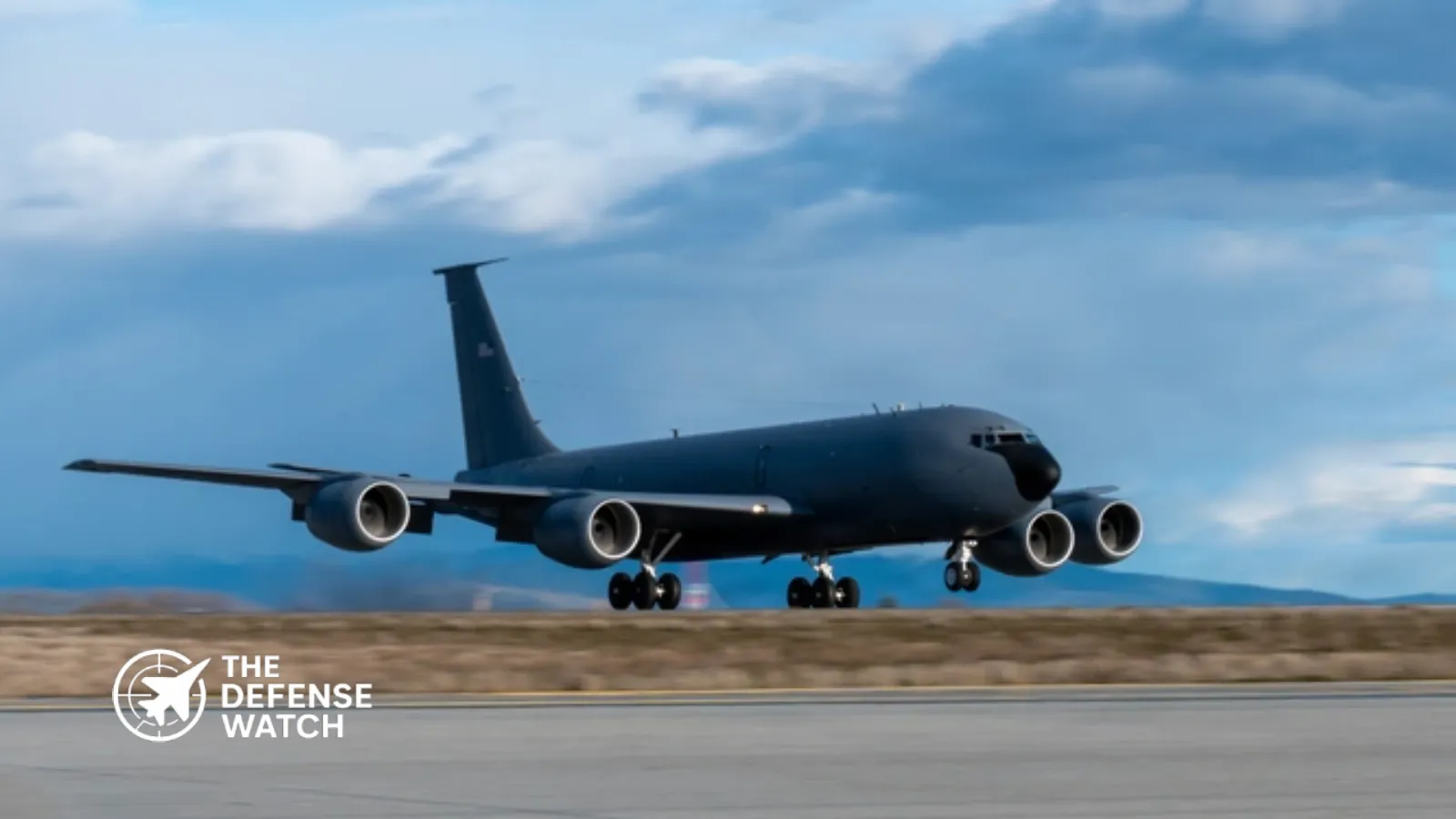
- Six U.S. Air Force Airmen were killed when a KC-135 tanker aircraft crashed in western Iraq on March 12, 2026.
- The crew was supporting Operation Epic Fury, an ongoing U.S. military operation in the region.
- Three Airmen were assigned to the 6th Air Refueling Wing at MacDill Air Force Base in Florida.
- Three others served with the 121st Air Refueling Wing at Rickenbacker Air National Guard Base in Ohio.
- U.S. defense officials say the cause of the KC-135 crash remains under investigation.
Six Airmen Killed In KC-135 Crash During Operation Epic Fury
The United States Department of Defense has confirmed that six Air Force Airmen were killed after a KC-135 Stratotanker crashed in western Iraq while supporting Operation Epic Fury.
According to the Pentagon, the fatal incident occurred on March 12, 2026. The tanker aircraft went down during a mission connected to ongoing U.S. military operations in the region. Officials said the cause of the crash remains under investigation.
The KC-135 crash Iraq incident represents one of the deadliest U.S. Air Force aviation losses in the Middle East in recent years.
Airmen Identified By Defense Department
The Department of Defense identified the six Airmen who died in the crash.
Those assigned to the 6th Air Refueling Wing at MacDill Air Force Base in Florida were:
- John A. Klinner, Major, age 33, Auburn, Alabama
- Ariana G. Savino, Captain, age 31, Covington, Washington
- Ashley B. Pruitt, Technical Sergeant, age 34, Bardstown, Kentucky
Three other Airmen were assigned to the 121st Air Refueling Wing at Rickenbacker Air National Guard Base in Columbus, Ohio:
- Seth R. Koval, Captain, age 38, Mooresville, Indiana
- Curtis J. Angst, Captain, age 30, Wilmington, Ohio
- Tyler H. Simmons, Technical Sergeant, age 28, Columbus, Ohio
Defense officials said all six were deployed in support roles tied to Operation Epic Fury when the KC-135 crash Iraq incident occurred.
Role Of The KC-135 In U.S. Military Operations
The KC-135 Stratotanker remains one of the backbone aircraft in the U.S. Air Force aerial refueling fleet. Introduced in the late 1950s, the tanker enables U.S. and allied aircraft to remain airborne for extended missions by providing midair refueling.
KC-135 aircraft routinely support a wide range of missions including:
- Combat air patrols
- Long range bomber missions
- Intelligence and surveillance flights
- Coalition operations across the Middle East
Aircraft from both the 6th Air Refueling Wing and the 121st Air Refueling Wing frequently deploy to forward operating locations to sustain U.S. and allied aircraft operating over Iraq and Syria.
Air refueling tankers are considered critical enablers of modern air operations. Without them, many strike aircraft would be limited by range, especially in large operational theaters such as the Middle East.
Operation Epic Fury And Regional Operations
Operation Epic Fury has involved U.S. air and support forces operating in the region as part of broader security missions tied to counterterrorism, force protection, and regional stability.
While details of the mission linked to the KC-135 crash Iraq incident have not been publicly released, tanker aircraft often fly high tempo support missions in the region. These include refueling fighter jets, intelligence aircraft, and coalition partners.
Military analysts note that aerial refueling operations often involve complex coordination between multiple aircraft, airspace management authorities, and ground command centers. Tankers frequently operate for long durations and across large distances, which can increase operational strain on both aircraft and crews.
Investigation Underway
The U.S. Air Force has launched a formal investigation into the crash to determine what led to the loss of the aircraft and crew.
Standard procedure following major aviation accidents includes recovery of flight data systems, review of maintenance records, mission planning data, and crew communications. Investigators will also analyze environmental factors such as weather conditions and operational flight parameters.
Officials have not released information about the crash location or whether debris recovery operations are ongoing in western Iraq.
The Air Force typically assigns an accident investigation board to incidents involving military aircraft. Findings can take months to complete depending on the complexity of the crash and recovery conditions.
Strategic Impact Of The Loss
Although aerial refueling tankers are designed with extensive safety systems, accidents involving large military aircraft remain rare but high impact events.
The KC-135 crash Iraq incident highlights the risks faced by aircrews supporting deployed operations, particularly in regions where aircraft must operate continuously to sustain combat and surveillance missions.
For the U.S. Air Force, tanker fleets remain essential to global force projection. The service is gradually modernizing its refueling capability with newer aircraft such as the Boeing KC-46 Pegasus, though hundreds of KC-135 aircraft remain in active service.
The loss of six Airmen underscores the human cost behind sustaining global air operations.
Get real time update about this post category directly on your device, subscribe now.


