
- Key fact about the development.
- Important technical or operational detail.
- Strategic or geopolitical implication.
- Timeline, contract value, or capability detail.
- Final key takeaway fact.
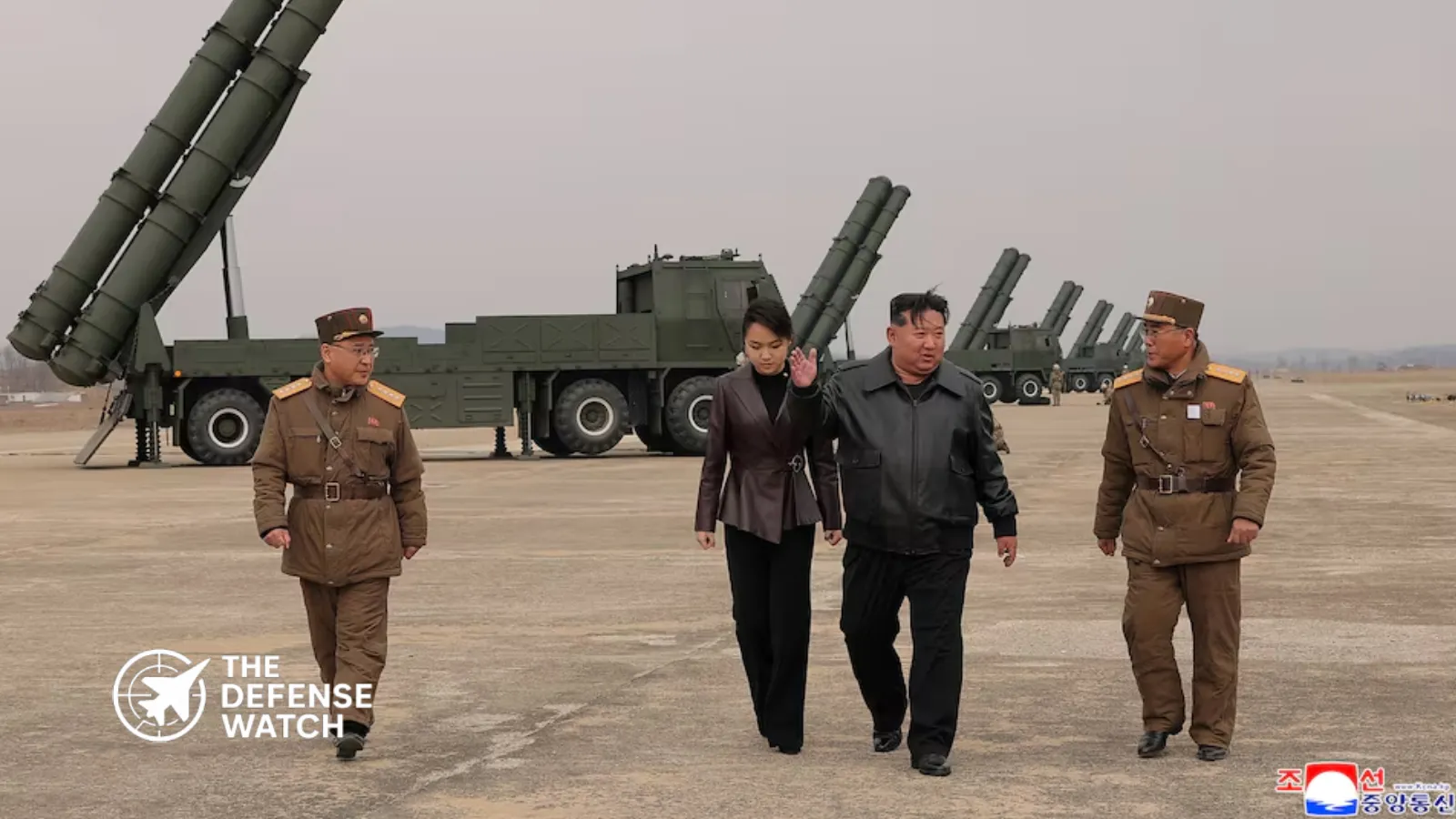
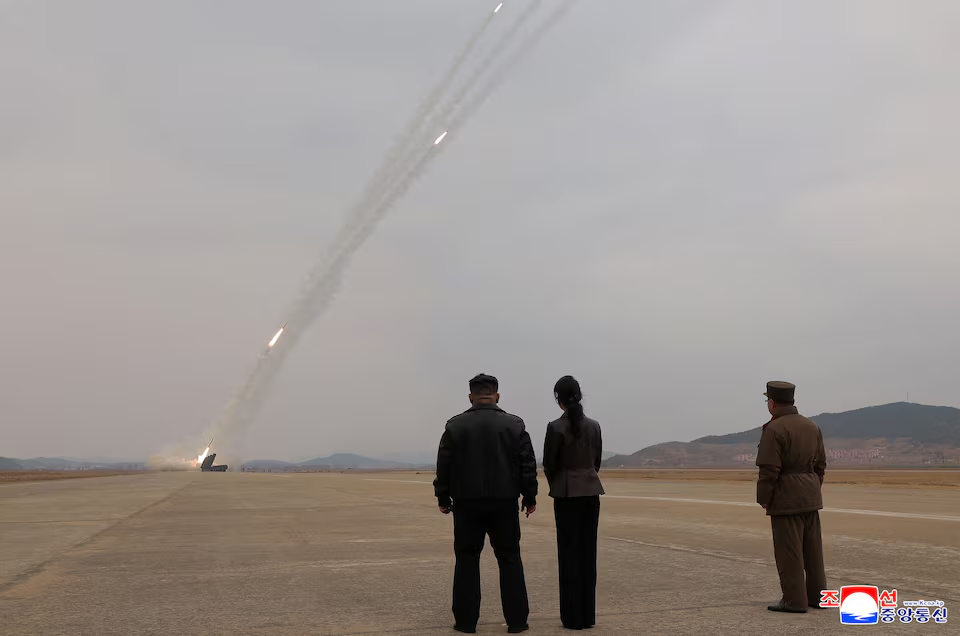
North Korea rocket drills on March 14 placed Supreme Leader Kim Jong Un and his daughter Kim Ju Ae at the center of a live-fire exercise that showcased the country’s newest ultra-precision artillery system.
State media released photographs of the pair walking near olive-green launch vehicles before watching 12 600mm-calibre multiple rocket launchers fire in a concentrated salvo. The rockets struck an island target in the East Sea 364.4 kilometers away.
The Big Picture
North Korea steadily expands its rocket artillery inventory to counter superior U.S. and South Korean air and missile defenses. The regime views joint U.S.-South Korea exercises as rehearsals for invasion and responds with visible demonstrations of nuclear-capable strike systems. This pattern has intensified since the start of the annual Freedom Shield command-post exercise in early March 2026.
What’s Happening
Kim Jong Un personally directed the firepower strike drill that included 12 600mm ultra-precision multiple rocket launchers and supporting artillery units. The systems, known in Western assessments as the KN-25, incorporate AI technology and combined guidance for improved accuracy.
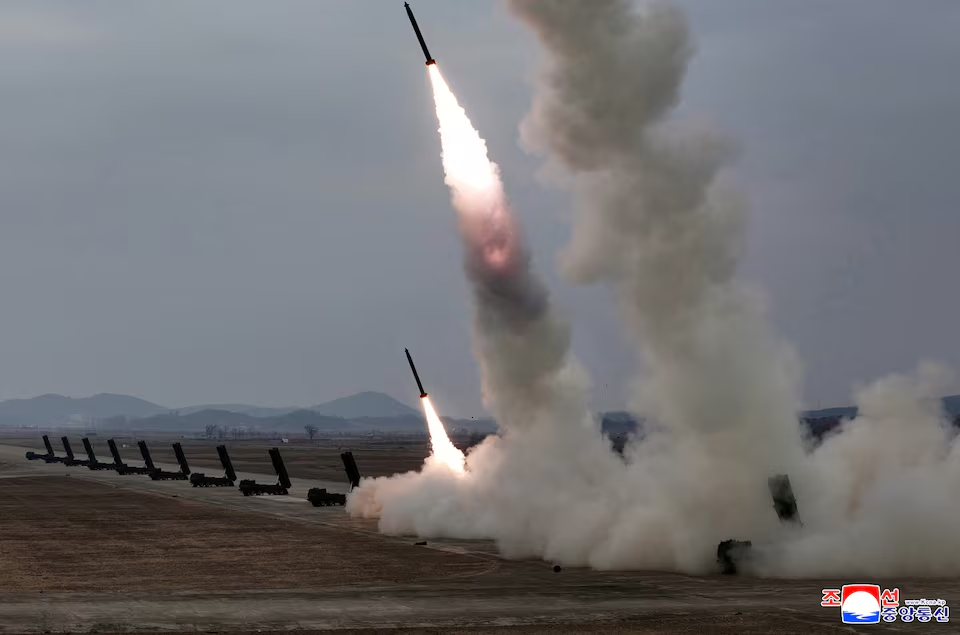
The salvo hit the designated island target with the accuracy Pyongyang claimed reached 100 percent. Kim described the weapons as a “very deadly yet attractive” system that delivers the destructive power of tactical nuclear weapons while maintaining the rapid fire rate of traditional multiple rocket launchers.
South Korea’s military separately confirmed the launch of more than 10 projectiles that flew approximately 350 kilometers eastward.
Why It Matters
The exercise advances North Korea’s force modernization by integrating precision guidance into large-calibre rocket artillery. Traditional unguided systems offered volume fire but lacked the ability to strike specific targets at extended range. The 600mm platform closes that gap and enables rapid saturation attacks against island outposts or forward bases.
This capability directly affects operational planning for U.S. and South Korean forces that rely on layered missile defenses optimized against fewer, higher-value ballistic missiles.
Strategic Implications
North Korea rocket drills of this type strengthen the regime’s deterrence posture by demonstrating reliable delivery of tactical nuclear payloads across 420 kilometers. The system allows concentrated strikes that could overwhelm point defenses through sheer volume and speed of salvo.
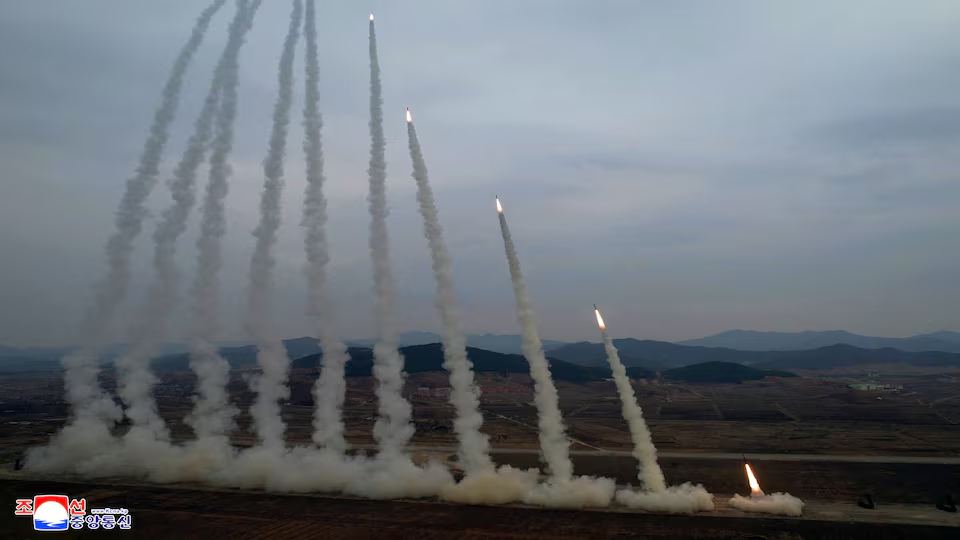
Regional stability faces added pressure because the drills coincide with Freedom Shield and signal Pyongyang’s willingness to escalate rhetoric and testing during allied training periods. The balance of power on the peninsula tilts further toward asymmetric threats that complicate allied air superiority.
Competitor View
China monitors these developments closely because North Korean advances in precision artillery affect stability along its border and could influence Beijing’s calculations on extended deterrence commitments. Russia maintains technical cooperation channels with Pyongyang that have supported missile programs in the past, though public commentary remains limited.
U.S. and South Korean planners treat the system as a credible threat to rear-area targets and island defenses, prompting continued investment in counter-battery radars and rapid-response strike options.
What To Watch Next
North Korea stated it will conduct such drills regularly to verify war deterrence. Future tests may incorporate actual nuclear warhead simulation or expanded salvo sizes. Integration of the 600mm launchers into frontline units will likely appear in subsequent parades or exercises.
Allied intelligence will track any changes in launcher deployment patterns near the Demilitarized Zone or coastal firing positions.
Capability Gap
The 600mm system addresses North Korea’s previous limitation in delivering precise, massed fires beyond the range of standard artillery while remaining cheaper and faster to reload than ballistic missiles. The combined guidance and AI features reduce circular error probable enough to target fixed island installations reliably.
Realistic limitations persist. Independent verification of the 100 percent accuracy claim is impossible outside the closed test environment, and production numbers remain constrained by sanctions and component access.
Get real time update about this post category directly on your device, subscribe now.
