
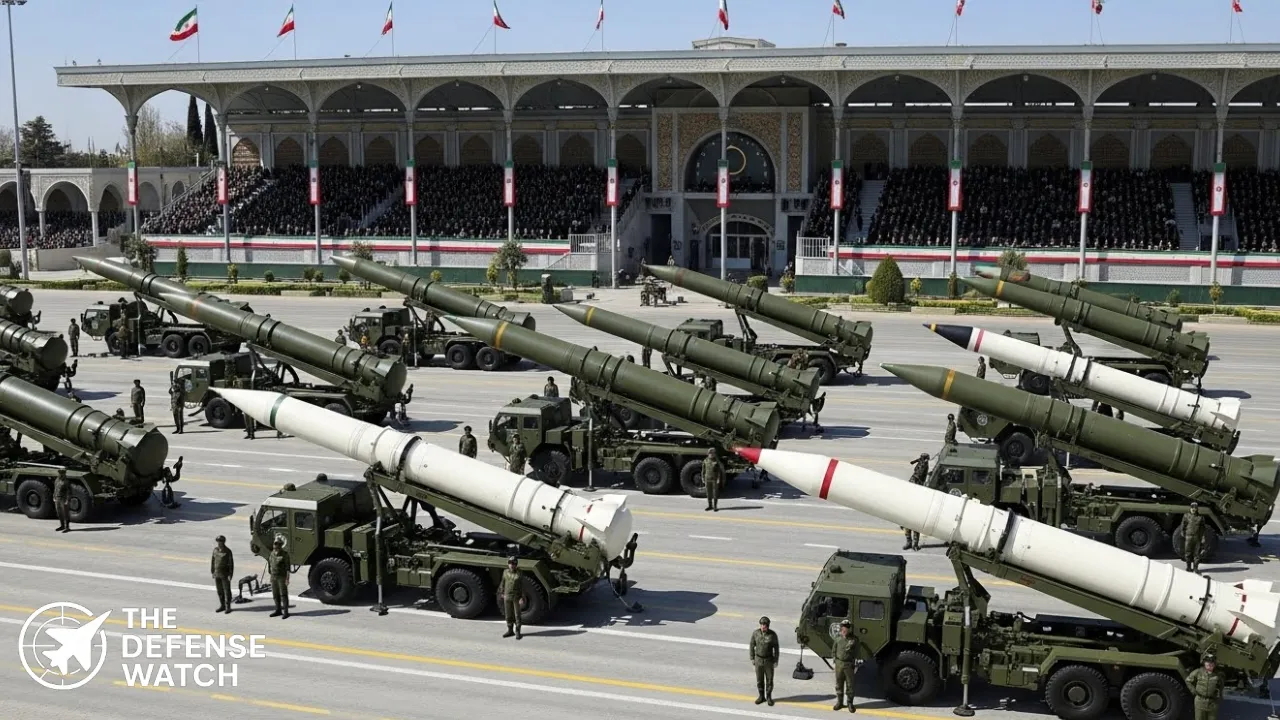
Iran Reportedly Restores Ballistic Missile Arsenal After Recent Depletion
Iran has nearly replenished its ballistic missile arsenal, according to a report citing Western intelligence assessments published this week. The development follows months of heightened regional tensions and military activity, during which Tehran is believed to have expended a significant portion of its missile inventory in operations and deterrence posturing.
The report indicates that Iran’s missile production infrastructure has scaled up output to compensate for losses and restore stockpile levels. The findings come at a time when Israel, Gulf states, and U.S. defense planners continue to monitor Iranian missile capabilities as a central component of Tehran’s military influence across the region.
Background: Missile Use, Production, and Regional Posture
Iran’s ballistic missile program remains one of the most expansive in the Middle East. Over the past year, Tehran has conducted launches in response to regional security incidents, support operations for proxy factions, and domestic demonstrations of capability. Many of these activities drew international criticism and sanctions-related warnings.
Despite these pressures, Iran’s missile manufacturing sector — managed primarily through the Islamic Revolutionary Guard Corps (IRGC) — has reportedly maintained steady production capacity. The ballistic missile arsenal includes short-, medium-, and increasingly longer-range systems, some capable of reaching targets in the eastern Mediterranean and parts of Europe.
Intelligence Findings and Strategic Assessments
According to the material cited in the report, Iranian missile stockpiles that were previously diminished due to operational use have now been restored to near prior levels. Intelligence sources suggest that Iran prioritized replenishment to maintain deterrence credibility and ensure capability sustainability in the event of escalation.
Analysts note that ballistic missiles remain Iran’s primary strategic asset, particularly in the absence of an advanced air force. The report underscores that Iran’s supply chain for missile components — including guidance units, propulsion systems, and warheads — continues to operate despite sanctions.
Israel has consistently labeled Iran’s missile programs as a direct national security threat. Defense officials in Jerusalem are reported to be monitoring the replenishment data closely, particularly as Iranian-backed militias remain active across Syria, Iraq, Lebanon, and Yemen.
Regional and Policy Implications
Security observers argue that the restoration of Iran’s ballistic missile arsenal may alter the strategic calculations of neighboring states. The replenishment could affect missile defense readiness postures, procurement cycles, and joint operational planning among U.S. regional partners.
Western defense analysts also highlight the potential for accelerated missile development pathways, including improved accuracy, survivability, and range extension. Meanwhile, Iranian state messaging has emphasized self-reliance and defensive intent.
What Comes Next
The reported replenishment raises questions regarding future testing patterns, export to proxy actors, and whether Iran intends to expand its arsenal beyond pre-depletion thresholds. Defense officials across the region are expected to continue tracking missile deployment indicators and production signatures in the months ahead.
Get real time update about this post category directly on your device, subscribe now.

20 comments
[…] and at altitudes reaching near space. This capability allows it to engage intermediate range ballistic missiles and emerging hypersonic threats, which have become a central concern for major military […]
[…] few technical specifics about the Oreshnik missile. Available information suggests it is a new ballistic missile design, possibly intended to bridge the gap between short-range and intermediate-range […]
[…] is designed to intercept short, medium, and some intermediate-range ballistic missiles during terminal flight inside or just outside the atmosphere using hit-to-kill kinetic […]
[…] unrest in Iran has reportedly resulted in a high number of deaths and injuries, drawing global scrutiny. Protestors have been […]
[…] not currently have sufficient regional assets to absorb or deter a large scale Iranian retaliation. Iran maintains a broad missile force and a network of regional proxies capable of targeting U.S. forces and […]
[…] to “an act of self-harm,” warning that businesses are “planning in the dark” and job losses may follow if the government does not act quickly. The union argues that previous pledges linking higher […]
[…] remains unclear precisely how Iran will respond to the US naval build-up. Diplomatic channels appear open to some degree, but both sides are signaling readiness to defend […]
[…] now plays a central role in shaping U.S. regional posture, particularly as concerns grow over Iran’s missile capabilities, UAV programs, and proxy warfare […]
[…] Revolutionary Guard remains a central pillar of Iran’s military and internal security apparatus, and it was deeply involved in suppressing widespread protests in late 2025 that […]
[…] of protesters gathered in south Minneapolis following news of the shooting, confronting federal agents and law enforcement. Demonstrations also took place in […]
[…] Military planners could employ B-2s against Iran’s underground Fordow uranium enrichment facility or other strategic sites where conventional munitions would prove insufficient. The aircraft’s intercontinental range allows operations from U.S. bases, eliminating dependency on regional airbases. […]
[…] analysts note that the presence of a carrier near Iran significantly complicates Tehran’s military planning, particularly in the maritime […]
[…] in both countries described the weapons as suspected ballistic missiles based on their flight profile and detection data. Further analysis is underway to assess range, […]
[…] 4% to $13.0 billion from $12.5 billion in 2024, driven by Next Generation Interceptor (NGI), Fleet Ballistic Missile (FBM), and Orion programs. Operating profit grew 10% to $1.3 billion, with operating margin […]
[…] stages of development. The first, known as Capability One, is focused on delivering an entry-level ballistic missile defence (BMD) capability across the Type 45 fleet, with full operating capability projected for the […]
[…] Space Force funding priorities reflect growing recognition of space as a contested warfighting domain requiring sustained investment. The approved budget provides $4 billion for continued development of missile warning and tracking satellites and sensors, critical capabilities for detecting and characterizing ballistic missile threats globally. […]
[…] has insisted talks focus on its nuclear program and pushed back on negotiating ballistic missile limits or regional proxy group issues. U.S. officials say a comprehensive agreement would need to […]
[…] The wider beam of the Type 09V likely provides insights into China’s prospective Type 09VI ballistic missile submarine, which may adapt a derivative hull […]
[…] Iran maintains the largest ballistic missile arsenal in the Middle East, according to Pentagon […]
[…] Middle East remains a complex operating environment. Iran’s missile and drone capabilities, ongoing instability in parts of Iraq and Syria, and maritime security […]