
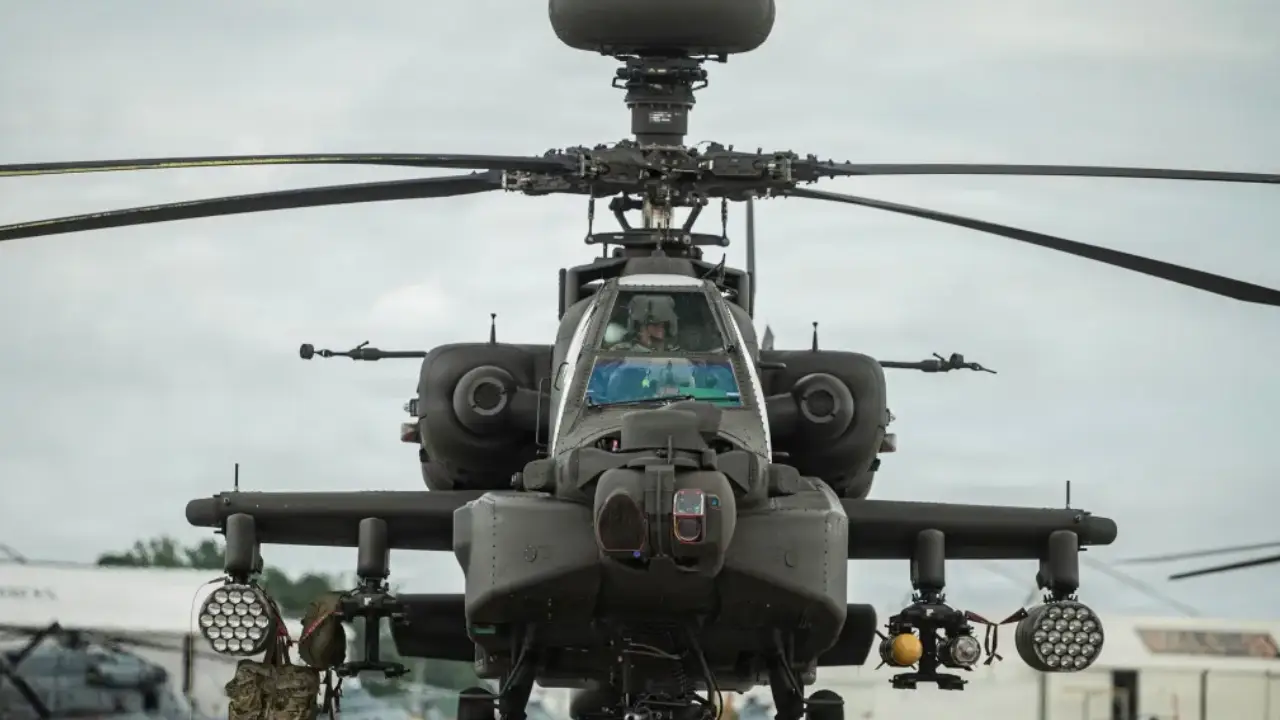
Apache Proves Counter-Drone Muscle in Recent Drills
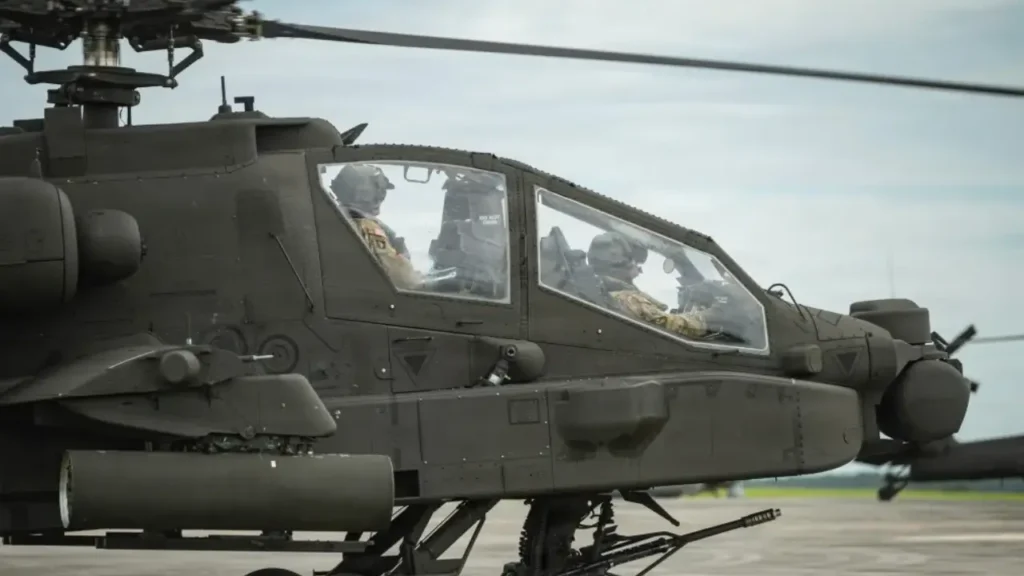
In a series of recent live-fire drills conducted by the South Carolina Army National Guard as part of Operation Flyswatter at Marine Corps Air Station New River (date not specified), the AH-64E Apache attack helicopter demonstrated its growing capability to counter unmanned aircraft systems (UAS). During the exercise, Apache crews recorded 13 kills out of 14 drone engagements — a high success rate that underscores the platform’s readiness to tackle one of the fastest-growing threats on modern battlefields.
The demonstration saw Apaches detecting, tracking, and then destroying small drones using a variety of munitions, including laser-guided rockets, precision missiles, and its onboard cannon.
Background: Why Apache’s Counter-UAS Role Matters
As low-cost, often one-way or “kamikaze” drones proliferate globally, militaries worldwide are scrambling to field effective counter-UAS (c-UAS) systems. While ground-based air defenses provide one layer of protection, mobile platforms capable of reacting quickly — especially in dynamic battlefield environments — are increasingly valuable.
The Apache, long valued for its attack and reconnaissance capabilities, has historically focused on anti-armor and conventional close air support. But upgrades to its software, sensors, and weapon integration have opened a new mission set: drone detection and defeat.
How the Apache Executed Counter-Drone Engagements
Sensor & Networking Integration
During Operation Flyswatter, the Apache used its standard electro-optical/infrared sensors and its mast-mounted AN/APG-78 Longbow radar to detect and track drones.
Moreover, thanks to network integration via Link 16 and modern data links, Apaches proved they can operate as mobile, airborne air-defense nodes — sharing target data between helicopters and command nodes to shorten sensor-to-shooter timelines.
As one pilot noted, even if only one Apache in a flight detects a drone, its data can cue the whole formation — a valuable force-multiplier in swarm or saturation attack scenarios.
Multi-Weapon Engagements
Once targets were tracked, Apaches engaged using a mix of weapons:
- Guided missiles, including AGM-179 JAGM and variants of AGM-114 Hellfire — some radar-guided, some laser-guided — depending on the engagement scenario.
- Laser-guided rockets: 70 mm Hydra rockets fitted with APKWS laser-guided rocket guidance kits. This proved particularly effective against small UAS, and reportedly three of four drones struck during the demonstration were downed using APKWS rockets.
- The Apache’s nose-mounted 30 mm chain gun, firing high-explosive dual-purpose rounds (M789) — used successfully for close-range drone kills (under ~300 meters).
According to Chief Warrant Officer 5 Daniel York, Project Manager for the Apache New Equipment Training Team, the 13-of-14 kill ratio “proves the Apache — using its current software and systems — is a lethal and adaptable solution to the drone threat.”

Wider Capability and Platform Evolution
The effectiveness demonstrated during Operation Flyswatter reflects broader enhancements being made to the Apache fleet. With its current configuration thanks to Version 6 software, the Apache is increasingly more than just a gunship — it can function as a networked, multi-role platform capable of manned-unmanned teaming, real-time data sharing, and layered mission sets that include counter-UAS, deep strike, and reconnaissance.
Indeed, recent upgrades under the U.S. defense procurement program have emphasized cyclic modernization — enabling integration of additional capabilities such as “Launched Effects” (e.g., expendable drones or rockets deployed from the Apache), advanced EW (electronic warfare) pods, and enhanced sensor suites.
Furthermore, other recent live-fire trials have shown the Apache’s ability to launch long-range guided missiles — such as the SPIKE NLOS — extending its standoff strike range to 26–32 km, a substantial growth over legacy Hellfire/JAGM reach.
This evolving arsenal and networking puts the Apache in a strong position to face modern threats — from swarming drones to peer-level adversaries — while working as part of a broader, layered air defense and strike architecture.
Strategic & Policy Implications
The success of the Apache in counter-drone drills sends a clear signal to defense planners: legacy rotary-wing assets can be adapted to meet the evolving demands of modern warfare, where unmanned systems are proliferating rapidly.
With drones increasingly used for reconnaissance, loitering munitions, and swarm attacks — often from non-state actors or in asymmetric conflict settings — having a highly mobile, flexible, and lethal airborne counter-UAS system fills a capability gap that ground-based air defenses alone may struggle to cover.
Moreover, this demonstration helps justify continued investment in attack helicopter fleets — including ongoing production runs, modernization programs, and export sales. Continuing upgrades (software, sensors, weapons) help ensure the platform remains relevant against future threats.
Finally, Apache’s role as a networked platform — interoperable via datalinks and working alongside UAVs, EW systems, and ground-based defenses — reflects the shifting nature of air operations toward integrated, multi-domain warfare.
What’s Next: Toward Formal Counter-UAS Integration
The live-fire success in Operation Flyswatter could accelerate formal adoption of counter-UAS missions for Apache units. That might include:
- Incorporation of dedicated counter-UAS tactics into standard aircrew training manuals. Indeed, Army officials have reportedly recommended expanding Apache battalion training to include a “Counter-UAS Mission Essential Task.”
- Continued upgrades to sensor suites, network integration, and weapons payloads to better handle drone swarms and fast-moving aerial threats. Future enhancements could include dual-mode rocket guidance (e.g., infrared seekers for fire-and-forget) to allow faster, more efficient engagements.
- Integration of unmanned “wingmen” — deployable drones working in concert with Apaches — to expand detection range, improve situational awareness, and reduce risk to manned helicopters.
Given the increasing complexity of air threats, this trajectory suggests that the Apache may evolve into a central node in future multi-domain air defense architectures.
In the face of proliferating drone threats — from surveillance drones to kamikaze loitering munitions — the AH-64E Apache is evolving from a conventional attack helicopter into a capable counter-UAS asset. The recent 13-of-14 drone kills during Operation Flyswatter offer concrete proof of concept, just as wider modernization and doctrinal adaptation position the Apache to remain relevant in future conflicts.
Get real time update about this post category directly on your device, subscribe now.


6 comments
[…] has since matured through a series of tests — ultimately culminating in this high-speed drone interception […]
[…] Ukraine’s use of helicopters and light aircraft for drone-hunting roles by repurposing its own UAVs for aerial […]
[…] begin broader testing as it moves toward fielding the Spike-equipped Eagle V in Army units. Further live firings and refinements are expected before wider operational use. Army […]
[…] the live fire demonstration, 20 Kargu loitering munitions were launched in a coordinated sequence. The systems reportedly […]
[…] Rolls-Royce demonstrated its most advanced engine inspection technologies during the visit. A live demonstration of the company’s boroscoping methods showed how engineers can inspect internal engine components […]
[…] live fire was the final phase of a months-long HIMARS Apprenticeship Program. The training focused on […]