Pentagon’s FY2027 Budget Doubles Down on F-47, Exposing a Deep Divide Over Naval Aviation’s Future
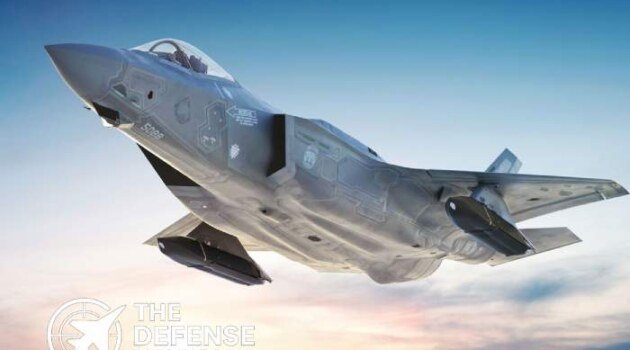
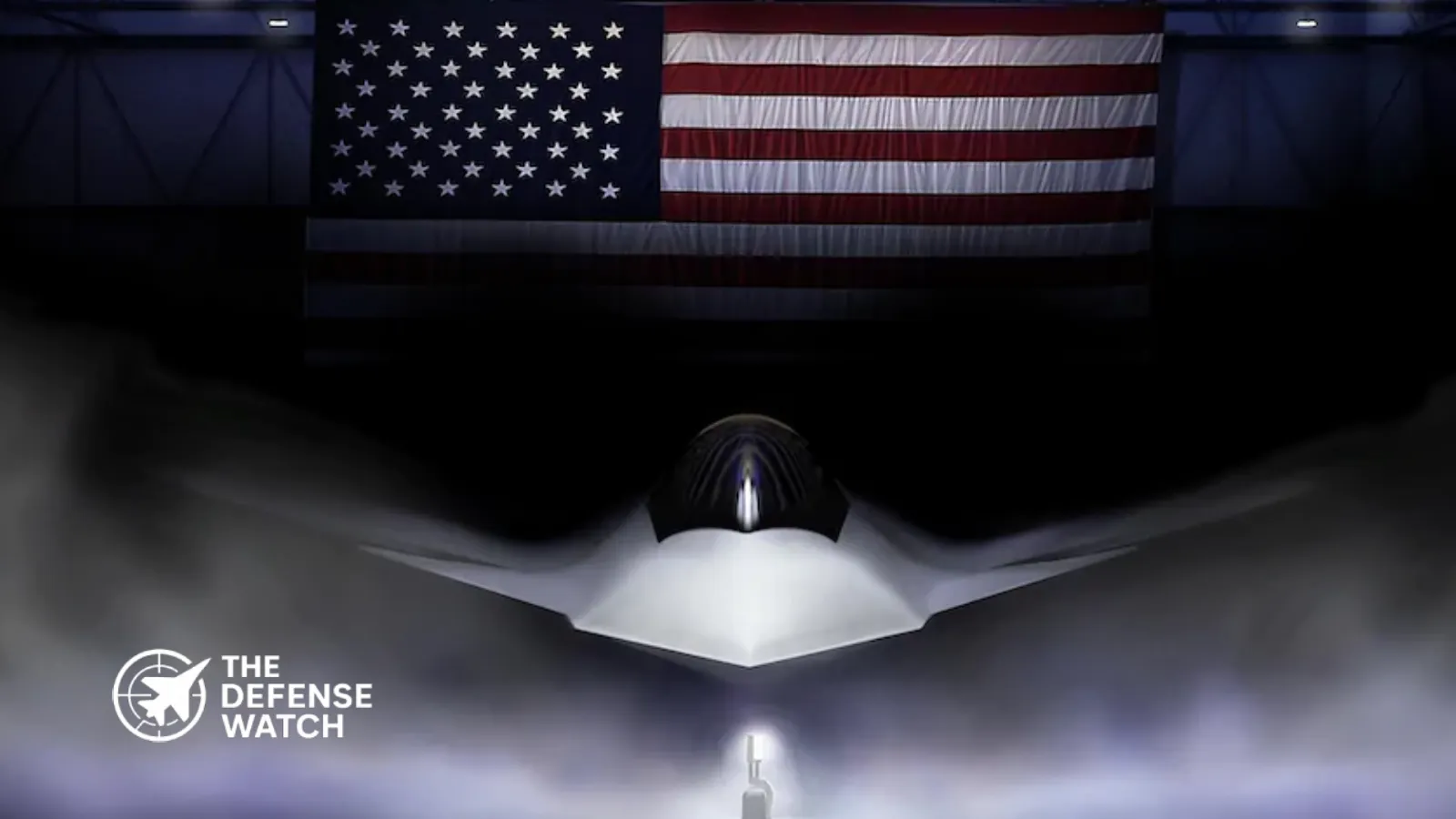
The Trump administration’s fiscal year 2027 defense budget delivers the clearest signal yet about White House airpower priorities: the F-47 sixth-generation fighter will receive roughly $5 billion in development funding, while the Navy’s own next-generation combat jet — the F/A-XX — gets just $140 million. The asymmetry, embedded in a record-breaking $1.5 trillion overall defense request, sets up a potential clash between the executive branch and Congress that could define U.S. combat aviation investment for the decade ahead.
- The Trump administration’s FY2027 defense budget requests approximately $5 billion for the Air Force’s F-47 sixth-generation fighter — all from baseline discretionary spending.
- The Navy’s next-generation fighter, the F/A-XX, receives just $140 million in the FY2027 request — a 35-to-1 funding disparity compared to the F-47.
- Budget documents state the F-47 program is on track to achieve first flight in 2028, marking a critical milestone for the Boeing-built aircraft.
- Congress dramatically boosted F/A-XX funding in FY2026 — from $74 million to nearly $1.7 billion — in direct contrast to the White House’s current proposal.
- The FY2027 request also includes 85 F-35 aircraft across the Air Force, Navy, and Marine Corps, with 53 funded through the proposed reconciliation bill.
The Big Picture
U.S. military aviation modernization has reached a critical inflection point. The Trump administration is, once again, going all in on the development of the Air Force’s sixth-generation fighter while seeking only a fraction of funding for the Navy’s future combat jet.
The F-47, built by Boeing and designed to replace the F-22 Raptor as the Air Force’s premier air superiority platform, represents the centerpiece of Washington’s push to maintain dominance over increasingly capable Chinese and Russian air forces. China’s J-20 and J-35 programs are maturing rapidly, and Beijing has publicly telegraphed ambitions for its own sixth-generation program. Against that backdrop, the F-47 is not merely a procurement decision — it is a strategic deterrence instrument.
The FY2027 budget, released April 3, frames this investment explicitly in those terms. Budget documents state: “The Administration is sending a clear message to the nation’s adversaries by aggressively moving forward with the F-47 sixth-generation fighter: that the U.S. military will secure command of the skies, deter aggression, and project power anywhere on the globe.”
What’s Happening
The record-breaking $1.5 trillion FY2027 defense spending request includes around $5 billion to develop the F-47, all from baseline discretionary funding. This represents a substantial increase from the prior year. The F-47 received $2.5 billion in the FY2026 budget request and $900 million in reconciliation funding, netting a total of $3.5 billion last year.
The contrast with naval aviation is striking. Just $140 million — $72 million of which comes from a proposed reconciliation bill — is requested for the Navy’s F/A-XX next-generation fighter.
The budget documents state the FY2027 request would achieve a first flight for the F-47 in 2028. That timeline, if met, would put the Air Force on a credible path toward initial operational capability by the early 2030s — ahead of what most analysts had previously projected for any U.S. sixth-generation platform.
On the F-35 front, the White House is requesting a total of 85 aircraft for the Air Force, Navy, and Marine Corps, with 32 funded by the discretionary budget and 53 by the proposed reconciliation bill. Of the total, 38 would go to the Air Force, 37 to the Navy, and 10 to the Marine Corps.
Why It Matters
The funding gap between the F-47 and F/A-XX is not simply a budgetary preference — it reflects a fundamental debate inside the U.S. defense establishment about where air combat superiority will be won in a future high-end conflict.
The Air Force’s F-47 program benefits from clear White House backing, a named contractor in Boeing, and now a declared first-flight target. The program has momentum and institutional support that the F/A-XX currently lacks at the executive level.
The Navy’s predicament is more complicated. Carrier-based aviation remains central to U.S. power projection in the Indo-Pacific, and any gap in next-generation naval air capability would directly undercut the strike group’s relevance against a peer adversary equipped with advanced integrated air defense systems. The F/A-XX is designed to eventually replace the F/A-18E/F Super Hornet — a platform that, while still capable, was not designed for contested airspace against near-peer threats.
The disparity also raises questions about inter-service equity and joint warfighting integration. In a high-end conflict against China — the scenario that drives most Pentagon planning — both Air Force and Navy aviation assets would need to operate together. A generational capability gap between the two services’ frontline fighters could complicate coordinated strike packages and force the Navy to rely on older platforms longer than intended.
Strategic Implications
The $5 billion F-47 request carries implications well beyond the Air Force budget line.
First, it signals that the administration views air dominance as the foundational layer of deterrence — a position consistent with both historical U.S. military doctrine and the emerging realities of modern contested airspace. Advanced air defense systems in China and Russia have fundamentally changed the threat calculus for fifth-generation fighters like the F-35 and F-22, and the F-47 is intended to defeat those systems at range, with greater survivability and payload flexibility.
Second, the budget’s heavy reliance on reconciliation funding for major defense programs — including portions of the F-35 buy and F/A-XX — introduces legislative risk. Reconciliation bills require specific procedural conditions to pass, and the fate of defense provisions within them is never guaranteed. Programs that depend on reconciliation funding for basic development activities are structurally vulnerable to political disruption.
Third, the funding trajectory for F-47 — from $3.5 billion in FY2026 to a proposed $5 billion in FY2027 — represents a steep acceleration. That pace suggests the program has cleared significant internal milestones and that contractors and program managers are confident enough to absorb and execute at that spending rate. Rapid funding ramp-ups in defense programs can indicate genuine technical progress or, alternatively, schedule pressure driven by strategic urgency rather than engineering readiness.
Competitor View
Beijing will study this budget request carefully. China’s People’s Liberation Army Air Force has advanced its own sixth-generation aviation research, and the pace of U.S. investment in the F-47 sends a direct message about American intent to maintain an air combat edge in the Western Pacific.
From Beijing’s perspective, the F-47’s projected 2028 first flight — combined with its development funding level — suggests the U.S. is accelerating a platform designed specifically to penetrate and operate inside China’s layered air defense envelope. This will likely reinforce Chinese investment in both next-generation interceptors and advanced surface-to-air missile systems intended to complicate F-47 operations.
Russia, whose Su-57 program has faced persistent production and funding challenges, will also note the contrast. U.S. commitment to a fully funded sixth-generation program underscores a qualitative edge that Moscow currently cannot match and is unlikely to close within the next decade.
The Congressional Flashpoint: F/A-XX
Lawmakers’ support for the F/A-XX program soared in January when House and Senate appropriators boosted its funding more than tenfold, from $74 million to $897 million. Along with $750 million from the reconciliation bill, the Navy’s fighter saw nearly $1.7 billion in total enacted funding.
That congressional intervention — overriding a White House posture that had repeatedly deprioritized F/A-XX — sets the stage for a renewed budget battle. Lawmakers had also requested details on the Navy’s acquisition strategy, spending plan, and timeline for awarding the manufacturing and development contract, as well as an explanation for why the Navy had not spent F/A-XX funds allocated in previous years.
That last point is politically damaging for the Navy. Unspent prior-year funds in a contested program give skeptics in both the White House and the Office of Management and Budget grounds to question the Navy’s execution capacity and institutional commitment to the program. If the service cannot demonstrate a credible plan to obligate and execute the funds Congress already provided, restoring that support in future cycles becomes significantly harder.
What To Watch Next
The 2028 first flight target for the F-47 will be the most closely watched near-term milestone. A successful first flight would validate the program’s accelerated funding and signal that Boeing and the Air Force have managed the technical risk inherent in any sixth-generation platform — which is expected to integrate advanced stealth, next-generation propulsion, directed energy capability hooks, and AI-assisted mission systems.
On the F/A-XX side, the key indicator will be whether Congress again overrides the White House’s proposed funding cut, and whether the Navy can present lawmakers with the acquisition strategy and spending plan they demanded as a condition of FY2026 support. A second consecutive year without a credible program roadmap would likely erode congressional confidence and potentially jeopardize the program’s long-term viability.
The F-35 procurement request — 85 aircraft across three services — will also draw scrutiny. The reliance on reconciliation funding for more than half of that buy highlights the broader risk that attaches to defense modernization programs funded through politically fragile legislative vehicles.
Capability Gap
The F-47 addresses a gap that has grown more urgent with each passing year: the Air Force’s lack of a post-F-22 air superiority platform capable of operating in the most heavily contested airspace.
The F-22 entered service in 2005 and, while still unmatched in many respects, was designed against the threat environment of the 1990s. The F-35, a multirole aircraft optimized for strike and interoperability rather than pure air dominance, does not fully substitute for dedicated air superiority capability. The F-47 is intended to close that gap with a combination of advanced stealth, extended range, next-generation sensors, and the ability to operate in concert with autonomous wingmen — a concept the Air Force has been developing under the Collaborative Combat Aircraft program.
The realistic limitation is schedule risk. Sixth-generation programs are extraordinarily complex, and ambitious timelines have historically slipped. The FY2027 funding acceleration suggests confidence, but the defense acquisition record counsels caution. A first flight in 2028 would be a genuine achievement; a delay of even one year would revive questions about program management and cost discipline.
The Bottom Line
The FY2027 defense budget’s 35-to-1 funding advantage for the F-47 over the F/A-XX is a deliberate strategic statement — one that prioritizes Air Force air dominance in the near term while risking a carrier aviation capability gap that Congress will almost certainly move to correct.
Get real time update about this post category directly on your device, subscribe now.