China’s Sixth-Generation Fighter Program Advances to Refueling Tests
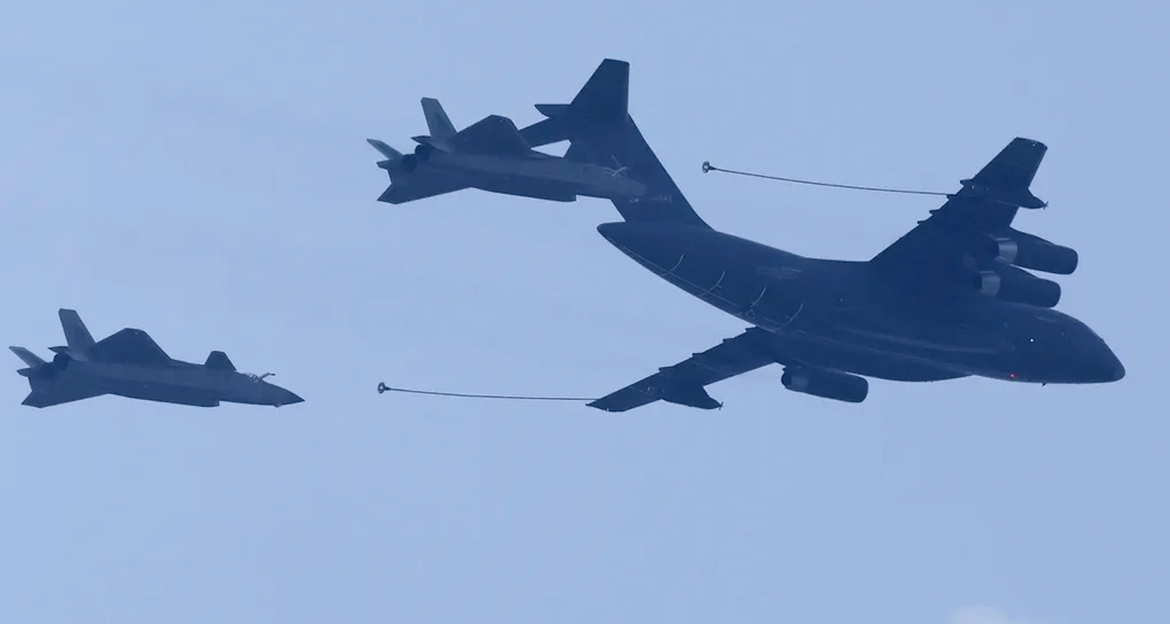
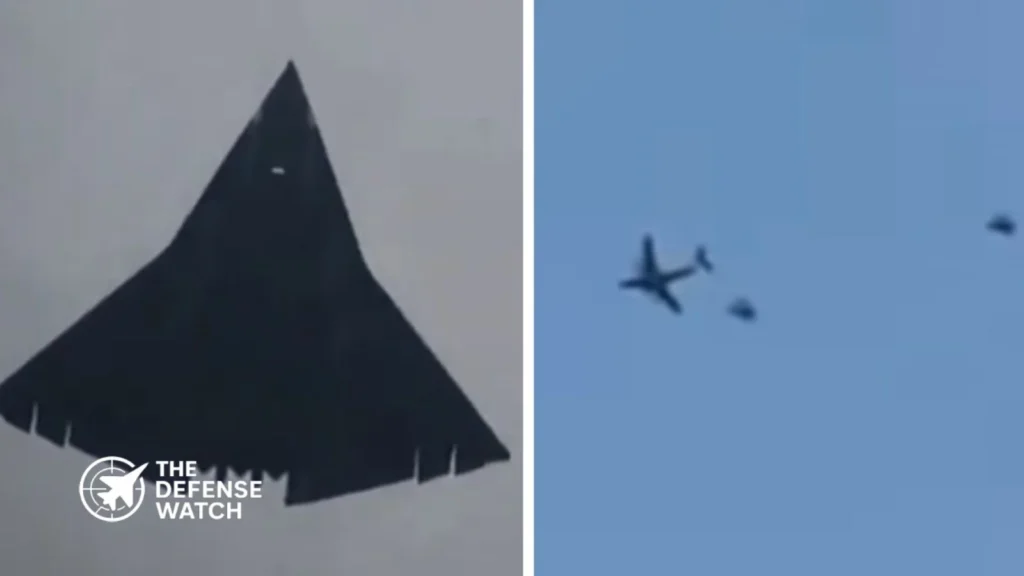
China’s sixth-generation fighter program has reached another visible flight-test milestone, with footage reportedly showing two next-generation prototypes conducting aerial refueling from a YY-20 tanker aircraft on August 28. Reported the footage on August 29, while subsequent reporting identified the aircraft as prototypes associated with China’s emerging sixth-generation combat aircraft effort.
Takeaways
New footage reportedly shows Chinese sixth-generation fighter prototypes conducting aerial refueling from a YY-20 tanker, providing a new indication of progress in long-range flight testing.
1. Two Next-Generation Prototypes Seen Refueling
Footage released in late August appears to show two Chinese sixth-generation fighter prototypes receiving fuel from a YY-20 aerial tanker.
China’s Y-20-based tanker fleet is expanding the PLA Air Force’s ability to support fighter and bomber operations beyond the First Island Chain.
5. The Footage Does Not Confirm Operational Readiness
Refueling demonstrates progress in flight testing, but it does not establish the aircraft’s final performance, weapons, sensors, production status or operational deployment timeline.
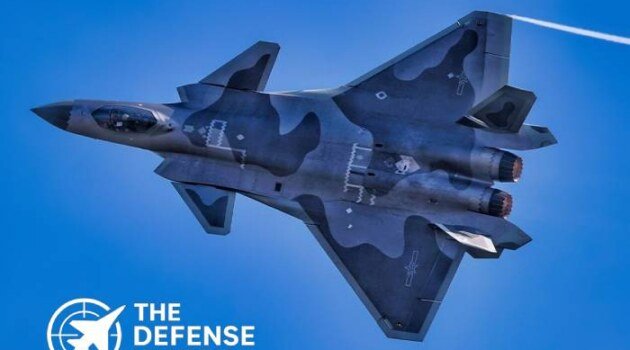
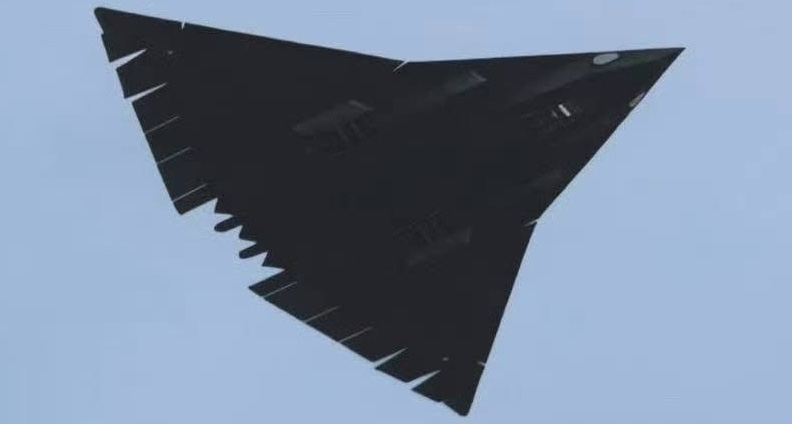
The aircraft shown remain officially unidentified. Open-source analysts have generally used the provisional J-36 designation for the large Chengdu prototype first observed in December 2024, while the separate Shenyang design is commonly referred to as the J-50. Those names should not be treated as confirmed People’s Liberation Army designations.
According to reporting on the August 28 footage, two Chinese next-generation fighter prototypes can be seen operating with a YY-20 tanker. The available imagery does not provide enough information to establish the exact aircraft variant, test location, mission profile or quantity of fuel transferred.
That distinction matters. The aircraft have been publicly observed since late 2024, but many of their most important characteristics remain undisclosed.
Feature
Current Open-Source Assessment
Aircraft type
Chinese next-generation fighter prototypes
Common analyst designation
Chengdu J-36, Shenyang J-50
Official designation
Not publicly confirmed
Configuration
Tailless designs have been observed
Refueling aircraft
YY-20 tanker
Latest reported event
Aerial refueling footage, August 28, 2026
Development status
Flight testing
Operational entry
Not officially announced
Radar, weapons and combat radius
Not publicly confirmed
The large Chengdu aircraft is notable for its tailless configuration and three-engine arrangement. Its size has led analysts to associate it with missions requiring substantial internal fuel, sensor capacity and weapons carriage, although the exact design objectives remain classified.
The Shenyang aircraft has a different configuration and is considerably smaller. Because both programs remain under development, it is premature to assume that either aircraft represents the final production configuration of a future Chinese sixth-generation fighter.
A tanker can allow a fighter to depart its base with a different fuel and weapons balance, extend its time in a patrol area, or recover after conducting a long-range mission without consuming the fuel needed for contingencies.
The U.S. Department of Defense has previously assessed that China is developing its aerial refueling fleet to extend the operating range of fighter and bomber aircraft. The Pentagon’s 2024 China Military Power Report specifically identified the Y-20-based tanker as an important improvement to the PLA Air Force’s ability to conduct operations beyond the First Island Chain.
China historically relied on a relatively limited tanker fleet compared with the United States. The introduction and expansion of Y-20-based tankers changes that equation by providing a larger domestic platform capable of supporting a broader range of aircraft.
The Y-20 family is based on China’s heavy transport aircraft, providing substantially greater capacity than older tanker conversions derived from the H-6 bomber.
Recent Chinese military imagery has already shown YY-20 tankers supporting J-20 stealth fighters. That provides an important precedent for integrating the tanker with China’s fifth-generation force before the appearance of the newer prototypes.
The reported sixth-generation refueling footage therefore fits into a broader development pattern. China is not simply testing a new fighter airframe. It is also developing the support aircraft, sensors, command-and-control architecture and aerial refueling infrastructure needed to operate advanced combat aircraft at greater distances.
Fourth Flight Prototype of China’s Ultra-Long Range Sixth Generation Fighter
Aerial Refueling Also Creates New Technical Demands
The aircraft must maintain precise relative position and speed with the tanker while pilots or automated flight-control systems manage the aircraft during the transfer. The process must work reliably under different weather, turbulence and lighting conditions.
For a stealth aircraft, the design challenge is also more complicated. Designers must incorporate refueling equipment without creating unnecessary radar-signature compromises.
The aircraft’s refueling system must therefore be integrated with the broader low-observable architecture rather than treated as an isolated component.
The latest footage does not reveal how China has solved those problems. It does, however, show that the program has reached a stage where tanker compatibility is being evaluated in flight.
What Is Known About China’s New Fighter Designs
The Chengdu prototype first became publicly visible in December 2024, alongside a separate aircraft associated with Shenyang. The emergence of two different designs indicated that China was exploring multiple approaches to its next-generation combat aircraft requirements.
The large Chengdu aircraft has attracted particular attention because of its unusual tailless configuration, very large airframe and three-engine layout.
Its physical dimensions suggest that designers have prioritized internal volume. That could support substantial fuel capacity, large sensors, weapons storage or other mission equipment, although no official specifications have been released.
The absence of published specifications is important when evaluating claims about performance. Public estimates of range, payload, radar capability and weapons integration remain uncertain and should not be presented as established specifications.
Implications for U.S. Airpower
The development has direct relevance for the United States because the Pentagon considers China its primary pacing challenge and has focused increasing attention on long-range airpower in the Indo-Pacific.
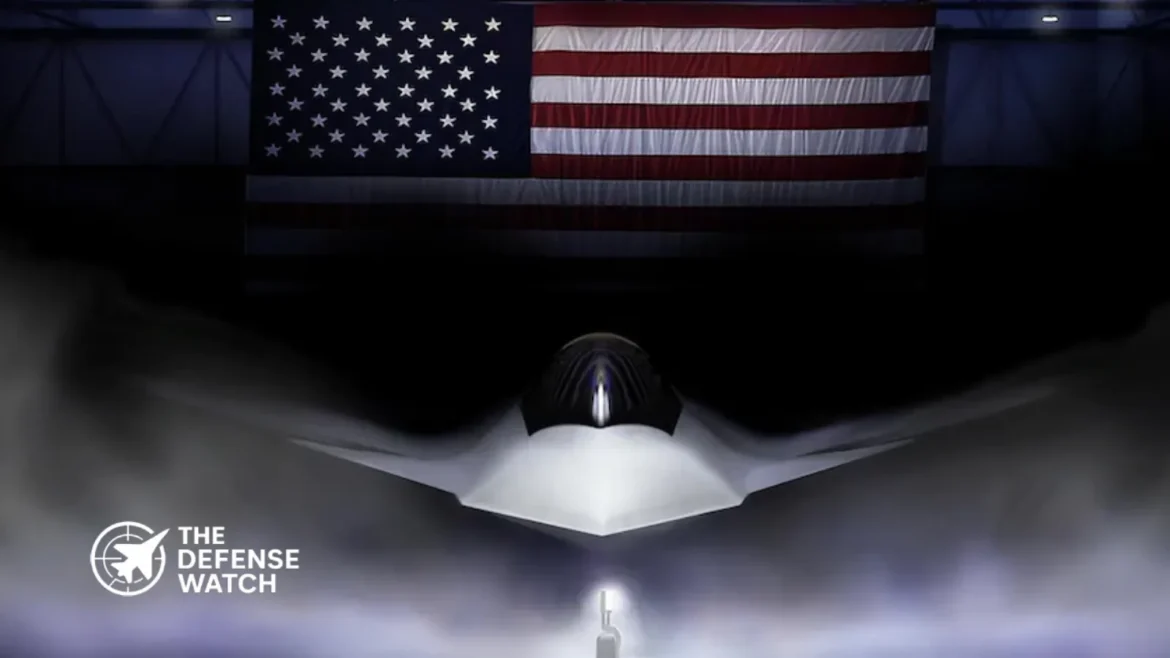
The U.S. response includes the Next Generation Air Dominance program and the F-47, which the Department of the Air Force selected Boeing to develop under an Engineering and Manufacturing Development contract in March 2025. The Air Force describes the F-47 as its sixth-generation crewed fighter and says the program is intended to preserve air superiority against advanced threats.
The important comparison is therefore not simply whether China or the United States has a sixth-generation aircraft flying first.
A more meaningful measure is whether either country can transition a prototype into a reliable operational system with mature engines, sensors, weapons, communications, electronic warfare systems, maintenance processes, trained crews and sufficient production capacity.
China’s latest refueling footage is evidence of progress in one part of that process. It is not evidence that the aircraft has completed development or achieved operational capability.
Why Tanker Integration Matters in a Pacific Conflict
The Indo-Pacific places unusual demands on tactical aviation because distances can quickly exceed the unrefueled operating limits of many fighter aircraft.
A force that can combine long-range fighters with tankers can distribute aircraft across a wider operating area and reduce dependence on individual forward bases.
For China, this could support operations farther from the mainland while allowing aircraft to remain within a broader network of Chinese air-defense, surveillance and command systems.
For the United States and its allies, the same development reinforces the importance of tanker survivability, distributed basing, long-range weapons and persistent intelligence, surveillance and reconnaissance.
That creates an operational problem for both sides. China must protect its tanker fleet while using it close enough to support combat aircraft. The United States and its allies must account for increasingly capable Chinese aircraft and weapons that could threaten tankers operating inside contested airspace.
The Milestone Does Not Establish a Service-Entry Date
Despite the significance of the footage, there is still no public Chinese announcement confirming when a sixth-generation fighter will enter operational service.
Flight testing can continue for years after an aircraft demonstrates basic aerial refueling. Engine maturity, mission systems, weapons integration, software, electronic warfare, low-observable durability and production readiness all have to be resolved before a prototype becomes an operational combat aircraft.
The United States has also emphasized accelerated development for the F-47. The Air Force said its NGAD contract covers maturation, integration and testing of the complete system, with a small number of test aircraft to be produced before low-rate initial production.
This makes the coming years important for both programs.
A Shift From Prototype Testing to System Integration
The latest Chinese footage is best understood as a system-integration milestone rather than proof of a completed sixth-generation fighter.
The appearance of the aircraft alongside a YY-20 tanker shows that China is testing how its next-generation combat aircraft will interact with one of the supporting elements required for long-range operations.
That matters because future air combat will depend less on individual aircraft and more on connected systems involving fighters, unmanned aircraft, tankers, airborne early-warning platforms, satellites, electronic warfare assets and long-range weapons.
China’s sixth-generation fighter program remains opaque, but its progression from initial public flight observations to aerial refueling testing provides another measurable indication of development.
Pentagon’s FY2027 Budget Doubles Down on F-47, Exposing a Deep Divide Over Naval Aviation’s Future
The Trump administration’s fiscal year 2027 defense budget delivers the clearest signal yet about White House airpower priorities: the F-47 sixth-generation fighter will receive roughly $5 billion in development funding, while the Navy’s own next-generation combat jet — the F/A-XX — gets just $140 million. The asymmetry, embedded in a record-breaking $1.5 trillion overall defense request, sets up a potential clash between the executive branch and Congress that could define U.S. combat aviation investment for the decade ahead.
¦
KEY FACTS AT A GLANCE
The Trump administration’s FY2027 defense budget requests approximately $5 billion for the Air Force’s F-47 sixth-generation fighter — all from baseline discretionary spending.
The Navy’s next-generation fighter, the F/A-XX, receives just $140 million in the FY2027 request — a 35-to-1 funding disparity compared to the F-47.
Budget documents state the F-47 program is on track to achieve first flight in 2028, marking a critical milestone for the Boeing-built aircraft.
Congress dramatically boosted F/A-XX funding in FY2026 — from $74 million to nearly $1.7 billion — in direct contrast to the White House’s current proposal.
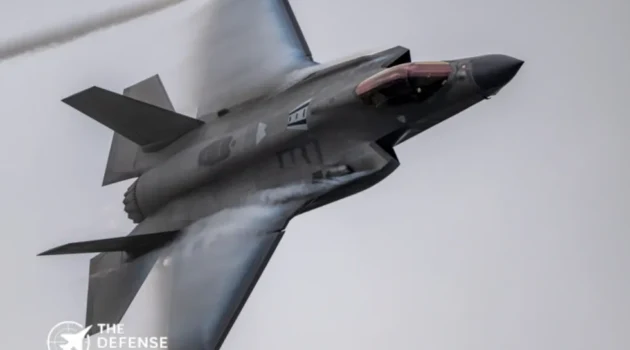
The FY2027 request also includes 85 F-35 aircraft across the Air Force, Navy, and Marine Corps, with 53 funded through the proposed reconciliation bill.
The Big Picture
U.S. military aviation modernization has reached a critical inflection point. The Trump administration is, once again, going all in on the development of the Air Force’s sixth-generation fighter while seeking only a fraction of funding for the Navy’s future combat jet.
The F-47, built by Boeing and designed to replace the F-22 Raptor as the Air Force’s premier air superiority platform, represents the centerpiece of Washington’s push to maintain dominance over increasingly capable Chinese and Russian air forces. China’s J-20 and J-35 programs are maturing rapidly, and Beijing has publicly telegraphed ambitions for its own sixth-generation program. Against that backdrop, the F-47 is not merely a procurement decision — it is a strategic deterrence instrument.
The FY2027 budget, released April 3, frames this investment explicitly in those terms. Budget documents state: “The Administration is sending a clear message to the nation’s adversaries by aggressively moving forward with the F-47 sixth-generation fighter: that the U.S. military will secure command of the skies, deter aggression, and project power anywhere on the globe.”
What’s Happening
The record-breaking $1.5 trillion FY2027 defense spending request includes around $5 billion to develop the F-47, all from baseline discretionary funding. This represents a substantial increase from the prior year. The F-47 received $2.5 billion in the FY2026 budget request and $900 million in reconciliation funding, netting a total of $3.5 billion last year.
The contrast with naval aviation is striking. Just $140 million — $72 million of which comes from a proposed reconciliation bill — is requested for the Navy’s F/A-XX next-generation fighter.
The budget documents state the FY2027 request would achieve a first flight for the F-47 in 2028. That timeline, if met, would put the Air Force on a credible path toward initial operational capability by the early 2030s — ahead of what most analysts had previously projected for any U.S. sixth-generation platform.
On the F-35 front, the White House is requesting a total of 85 aircraft for the Air Force, Navy, and Marine Corps, with 32 funded by the discretionary budget and 53 by the proposed reconciliation bill. Of the total, 38 would go to the Air Force, 37 to the Navy, and 10 to the Marine Corps.
Why It Matters
The funding gap between the F-47 and F/A-XX is not simply a budgetary preference — it reflects a fundamental debate inside the U.S. defense establishment about where air combat superiority will be won in a future high-end conflict.
The Air Force’s F-47 program benefits from clear White House backing, a named contractor in Boeing, and now a declared first-flight target. The program has momentum and institutional support that the F/A-XX currently lacks at the executive level.
The Navy’s predicament is more complicated. Carrier-based aviation remains central to U.S. power projection in the Indo-Pacific, and any gap in next-generation naval air capability would directly undercut the strike group’s relevance against a peer adversary equipped with advanced integrated air defense systems. The F/A-XX is designed to eventually replace the F/A-18E/F Super Hornet — a platform that, while still capable, was not designed for contested airspace against near-peer threats.
The disparity also raises questions about inter-service equity and joint warfighting integration. In a high-end conflict against China — the scenario that drives most Pentagon planning — both Air Force and Navy aviation assets would need to operate together. A generational capability gap between the two services’ frontline fighters could complicate coordinated strike packages and force the Navy to rely on older platforms longer than intended.
Strategic Implications
The $5 billion F-47 request carries implications well beyond the Air Force budget line.
First, it signals that the administration views air dominance as the foundational layer of deterrence — a position consistent with both historical U.S. military doctrine and the emerging realities of modern contested airspace. Advanced air defense systems in China and Russia have fundamentally changed the threat calculus for fifth-generation fighters like the F-35 and F-22, and the F-47 is intended to defeat those systems at range, with greater survivability and payload flexibility.
Second, the budget’s heavy reliance on reconciliation funding for major defense programs — including portions of the F-35 buy and F/A-XX — introduces legislative risk. Reconciliation bills require specific procedural conditions to pass, and the fate of defense provisions within them is never guaranteed. Programs that depend on reconciliation funding for basic development activities are structurally vulnerable to political disruption.
Third, the funding trajectory for F-47 — from $3.5 billion in FY2026 to a proposed $5 billion in FY2027 — represents a steep acceleration. That pace suggests the program has cleared significant internal milestones and that contractors and program managers are confident enough to absorb and execute at that spending rate. Rapid funding ramp-ups in defense programs can indicate genuine technical progress or, alternatively, schedule pressure driven by strategic urgency rather than engineering readiness.
Competitor View
Beijing will study this budget request carefully. China’s People’s Liberation Army Air Force has advanced its own sixth-generation aviation research, and the pace of U.S. investment in the F-47 sends a direct message about American intent to maintain an air combat edge in the Western Pacific.
From Beijing’s perspective, the F-47’s projected 2028 first flight — combined with its development funding level — suggests the U.S. is accelerating a platform designed specifically to penetrate and operate inside China’s layered air defense envelope. This will likely reinforce Chinese investment in both next-generation interceptors and advanced surface-to-air missile systems intended to complicate F-47 operations.
Russia, whose Su-57 program has faced persistent production and funding challenges, will also note the contrast. U.S. commitment to a fully funded sixth-generation program underscores a qualitative edge that Moscow currently cannot match and is unlikely to close within the next decade.
The Congressional Flashpoint: F/A-XX
Lawmakers’ support for the F/A-XX program soared in January when House and Senate appropriators boosted its funding more than tenfold, from $74 million to $897 million. Along with $750 million from the reconciliation bill, the Navy’s fighter saw nearly $1.7 billion in total enacted funding.
That congressional intervention — overriding a White House posture that had repeatedly deprioritized F/A-XX — sets the stage for a renewed budget battle. Lawmakers had also requested details on the Navy’s acquisition strategy, spending plan, and timeline for awarding the manufacturing and development contract, as well as an explanation for why the Navy had not spent F/A-XX funds allocated in previous years.
That last point is politically damaging for the Navy. Unspent prior-year funds in a contested program give skeptics in both the White House and the Office of Management and Budget grounds to question the Navy’s execution capacity and institutional commitment to the program. If the service cannot demonstrate a credible plan to obligate and execute the funds Congress already provided, restoring that support in future cycles becomes significantly harder.
What To Watch Next
The 2028 first flight target for the F-47 will be the most closely watched near-term milestone. A successful first flight would validate the program’s accelerated funding and signal that Boeing and the Air Force have managed the technical risk inherent in any sixth-generation platform — which is expected to integrate advanced stealth, next-generation propulsion, directed energy capability hooks, and AI-assisted mission systems.
On the F/A-XX side, the key indicator will be whether Congress again overrides the White House’s proposed funding cut, and whether the Navy can present lawmakers with the acquisition strategy and spending plan they demanded as a condition of FY2026 support. A second consecutive year without a credible program roadmap would likely erode congressional confidence and potentially jeopardize the program’s long-term viability.
The F-35 procurement request — 85 aircraft across three services — will also draw scrutiny. The reliance on reconciliation funding for more than half of that buy highlights the broader risk that attaches to defense modernization programs funded through politically fragile legislative vehicles.
Capability Gap
The F-47 addresses a gap that has grown more urgent with each passing year: the Air Force’s lack of a post-F-22 air superiority platform capable of operating in the most heavily contested airspace.
The F-22 entered service in 2005 and, while still unmatched in many respects, was designed against the threat environment of the 1990s. The F-35, a multirole aircraft optimized for strike and interoperability rather than pure air dominance, does not fully substitute for dedicated air superiority capability. The F-47 is intended to close that gap with a combination of advanced stealth, extended range, next-generation sensors, and the ability to operate in concert with autonomous wingmen — a concept the Air Force has been developing under the Collaborative Combat Aircraft program.
The realistic limitation is schedule risk. Sixth-generation programs are extraordinarily complex, and ambitious timelines have historically slipped. The FY2027 funding acceleration suggests confidence, but the defense acquisition record counsels caution. A first flight in 2028 would be a genuine achievement; a delay of even one year would revive questions about program management and cost discipline.
The Bottom Line
The FY2027 defense budget’s 35-to-1 funding advantage for the F-47 over the F/A-XX is a deliberate strategic statement — one that prioritizes Air Force air dominance in the near term while risking a carrier aviation capability gap that Congress will almost certainly move to correct.
UK, Italy, and Japan Award $850M GCAP Contract, Putting Sixth-Generation Fighter Program On a Clear Runway
The Global Combat Air Programme received its most consequential industrial milestone to date when the UK, Italy, and Japan awarded Edgewing a £686 million contract on April 1, 2026, formally designating the trinational joint venture as the program’s unified design and engineering authority. The award marks GCAP’s transition from a politically coordinated national effort into a fully integrated international acquisition program with a single design authority accountable for delivering a sixth-generation combat aircraft by 2035.
¦
KEY FACTS AT A GLANCE
The UK, Italy, and Japan awarded Edgewing a £686 million (~$850M) contract on April 1, 2026, under the Global Combat Air Programme (GCAP) to lead unified design, engineering, and airworthiness oversight.
Edgewing — a joint venture of BAE Systems, Leonardo, and Japan Aircraft Industrial Enhancement Co. Ltd. (JAIEC), each holding 33.3% — will serve as design authority for the aircraft’s entire service life, expected to extend beyond 2070.
GCAP is designed as a “system of systems,” integrating manned-unmanned teaming, advanced sensing with radar delivering 10,000 times more data than current systems, and operations across air, land, sea, space, and cyber domains.
Italy’s parliament approved €8.77 billion for initial GCAP phases through 2037, with total early-phase program costs estimated at €18.6 billion. The fighter is targeted for service entry in 2035.
Canada is being considered as a potential GCAP observer nation by July 2026, signaling expanding allied interest in the trinational program.
The Big Picture: Allied Air Power at a Strategic Crossroads
Western air forces face a converging set of threats that their current fifth-generation fleets were not specifically designed to defeat at scale. China has fielded the J-20 stealth fighter and is developing two reported sixth-generation programs; Russia continues advancing air defense systems that challenge even low-observable aircraft. Against that backdrop, the UK, Italy, and Japan identified a shared operational requirement: a survivable, networked, next-generation combat aircraft capable of operating in heavily contested electromagnetic and air defense environments where fifth-generation platforms will face growing risks.
GCAP emerged from that shared threat calculus. The program grew out of Japan’s F-X requirement and the UK-Italy Tempest initiative, formally merging into a trilateral structure in December 2022. Canada has since been identified as a potential observer nation by July 2026, a development that, if confirmed, would further widen the program’s political and industrial footprint.
What’s Happening: A Single Authority Takes the Helm
Awarded on April 1 and running until June 30, 2026, the £686 million package places Edgewing at the center of key design and engineering work under the GCAP Agency, with the stated aim of accelerating delivery for the three partner nations.
Edgewing, formally launched in June 2025, is the UK-based joint venture created specifically for GCAP by BAE Systems, Leonardo, and Japan Aircraft Industrial Enhancement Co. Ltd. (JAIEC), each holding 33.3 percent, and will remain design authority for the aircraft throughout a service life expected to extend beyond 2070.
The practical significance of that structure is considerable. Activities that were previously conducted under three national contracts will now be executed as part of a fully fledged international program, and Edgewing will oversee engineering, airworthiness, and certification across all phases of development.
Edgewing does not absorb all manufacturing into a single plant. It leads design and development while subcontracting manufacturing and final assembly to BAE Systems, Leonardo, Mitsubishi Heavy Industries, and the wider supply chain. That structure preserves sovereign industrial weight in each nation while centralizing the functions that most often derail multinational aircraft programs: configuration control, airworthiness, certification, and system integration.
Why It Matters: More Than a Fighter, a Networked Kill Node
GCAP’s ambitions extend well beyond a conventional air superiority platform. The program is not being sold as a stand-alone fighter but as a “system of systems” operating across air, land, sea, space, and cyber, with the crewed combat aircraft serving as the core platform connected to crewed and uncrewed peripheral systems.
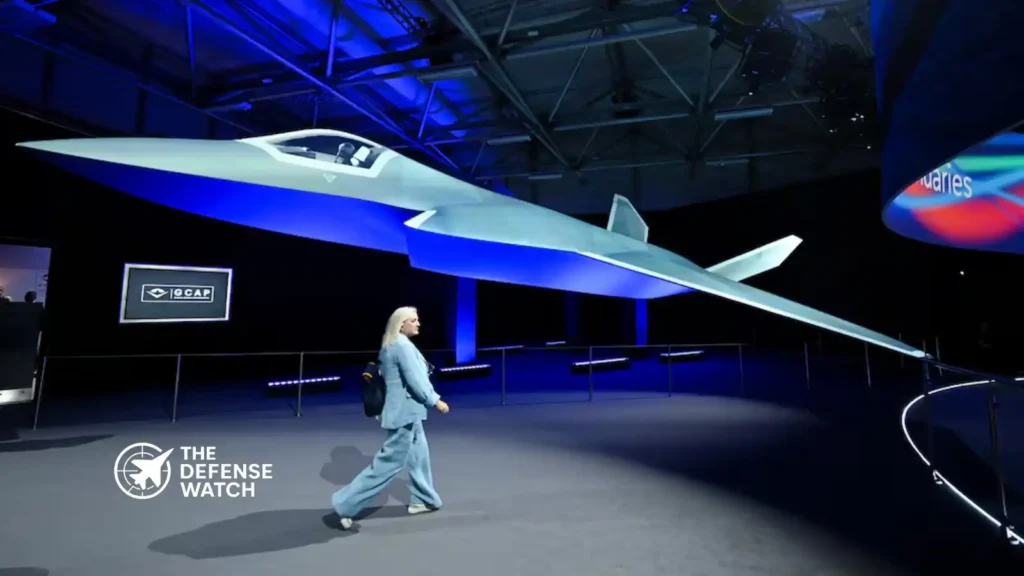
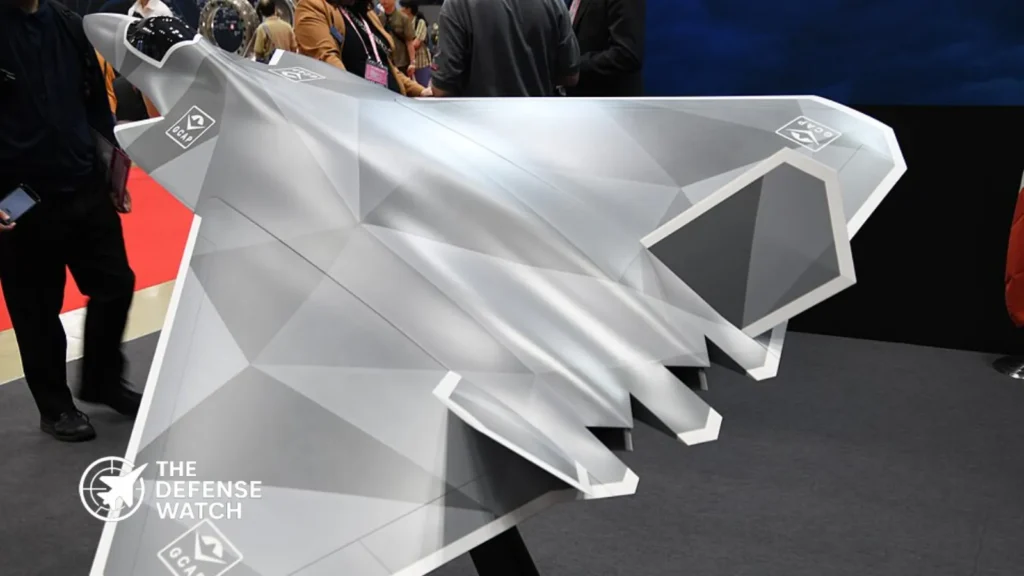
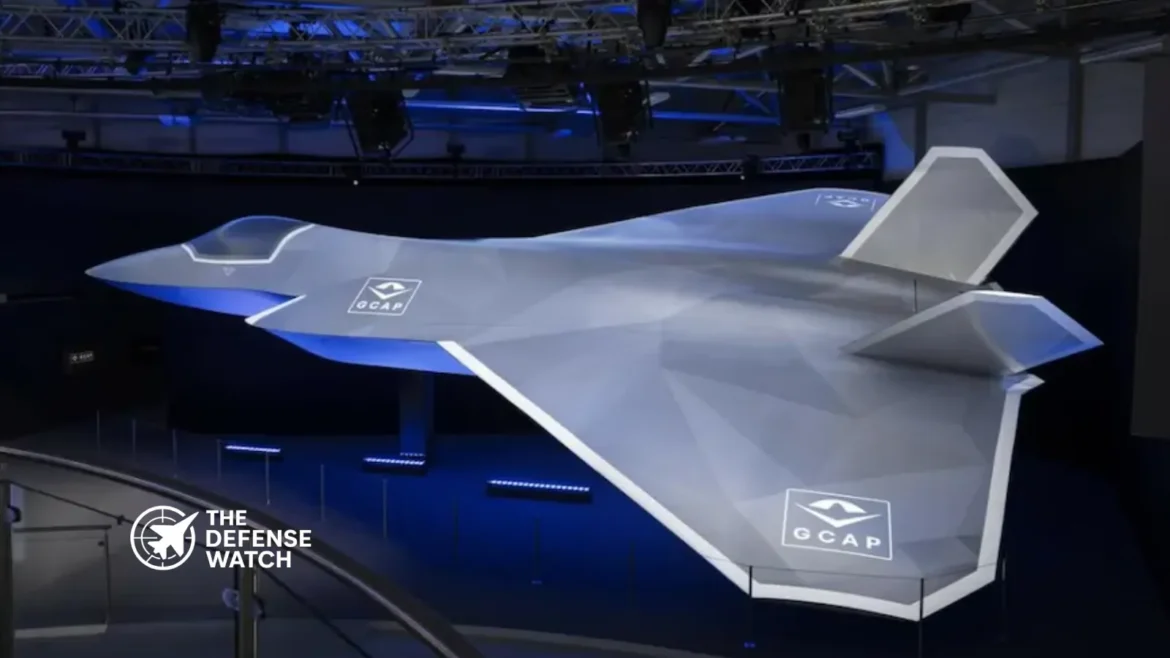
A person walks past the GCAP fighter jet concept design at the 2024 Farnborough International Airshow. (Justin Tallis/AFP via Getty Images)
The sensor architecture behind that concept is striking. The future aircraft’s radar is intended to deliver 10,000 times more data than current systems, while Leonardo UK states that GCAP’s ISANKE and ICS architecture — Integrated Sensing and Non-Kinetic Effects plus Integrated Communications Systems — will provide mission-critical information and advanced self-protection capabilities.
Propulsion carries equal ambition. Rolls-Royce, IHI, and Avio Aero are developing a propulsion architecture designed not only to generate thrust but also to supply the larger electrical loads demanded by next-generation sensors, processors, and onboard systems. Rolls-Royce says the demonstrator engine effort involves roughly 40,000 individual parts.
That combination of sensor fusion, networked operations, and high-power propulsion points toward an aircraft designed to sense first, fuse faster, share securely, and survive inside dense electronic-warfare environments — capabilities that represent a genuine generational step beyond what current fifth-generation platforms offer at scale.
Strategic Implications: Governance Solved Early Is Influence Preserved
The deeper significance of the Edgewing contract lies in industrial governance, not just engineering progress. Multinational fighter programs most commonly derail not from technological failure but from diffused authority — the inability of any single body to force engineering trade-offs when national industrial interests collide. By establishing Edgewing as design authority at the program’s outset rather than years into development, the three partner nations have attempted to solve that problem before it compounds.
GCAP has been described as important for sovereignty in combat air, allied relationships, and export return, while Italy’s parliament approved €8.77 billion for the initial phases through 2037, even as expected early-phase costs rose to €18.6 billion. Those are not discretionary commitments. They signal that the three governments view GCAP as a long-cycle strategic industrial program, not a prestige project subject to cancellation at the next budget cycle.
For the United States, the program carries direct implications. Japan is a cornerstone Indo-Pacific ally, and a Japan operating GCAP alongside U.S. F-35s and future sixth-generation platforms creates interoperability opportunities — and questions. Whether GCAP’s sensor and communications architecture will integrate cleanly with U.S. kill-web concepts, including the Air Force’s Next Generation Air Dominance program, will shape how effectively allied air operations can be coordinated across the Pacific theater.
Competitor View: Beijing and Moscow Are Watching Timelines
China’s military planners will read the Edgewing contract as confirmation that a competitive sixth-generation threat is moving from concept to execution. Beijing’s reported sixth-generation development efforts — reportedly including two parallel programs — are also progressing, meaning the 2035 GCAP service-entry target is, in effect, a race to fielding against a Chinese peer effort. Each program delay carries strategic weight, and the unified design authority structure is in part a hedge against the schedule drift that plagued earlier European consortium programs like the Eurofighter Typhoon.
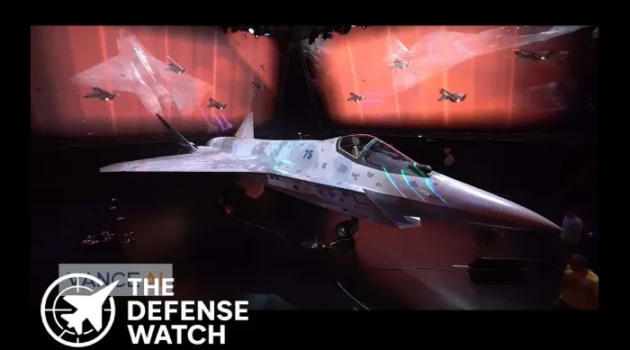
Russia, whose air force is operating under severe attrition from combat losses in Ukraine, faces a more distant sixth-generation threat horizon. Moscow’s Su-75 Checkmate program has stalled, and Russia’s defense-industrial capacity is stretched. Russian planners are unlikely to view GCAP as an immediate threat, but they will note the Japan dimension — a Japan equipped with advanced stealth fighters and manned-unmanned teaming capability substantially alters the balance in Northeast Asia, a region where Russia maintains significant Pacific Fleet and air defense investments.
What To Watch Next: Demonstrators, Decisions, and New Members
Several near-term milestones will test GCAP’s momentum. The contract runs through June 2026, at which point program leadership will likely announce the next phase of design and industrial activity. The UK Combat Air Flying Demonstrator, whose design BAE Systems revealed in July 2025, is expected to advance technology maturation and de-risk propulsion and sensor concepts before the final production configuration is locked.
Canada’s potential observer status by July 2026 is worth monitoring. An observer role could evolve into industrial partnership, and Canada’s combat air procurement requirements — driven by the eventual need to replace its CF-18 fleet — make GCAP an attractive long-term option, particularly given close Five Eyes intelligence-sharing ties with the UK.
Export prospects will increasingly drive program economics. A sixth-generation aircraft backed by the industrial depth of BAE Systems, Leonardo, and Mitsubishi Heavy Industries carries credibility across NATO Europe, the Middle East, and the wider Indo-Pacific. Early export success would distribute costs and sustain production rates, making the per-unit price more competitive against whatever the U.S. offers as an eventual NGAD export variant.
Capability Gap: Filling the Fifth-Generation Ceiling
Current fifth-generation platforms — the F-35, F-22, and Eurofighter with enhancements — were designed for threat environments projected a decade or more ago. They remain highly capable, but their sensor fusion, data-link bandwidth, electronic attack capacity, and payload flexibility are increasingly being tested by adversary integrated air defense systems that have evolved specifically to defeat low-observable aircraft.
GCAP targets that gap directly: higher sensor data throughput, manned-unmanned teaming that multiplies effective mass without multiplying pilot risk, and an open systems architecture designed to absorb mid-life upgrades across a service life stretching to 2070-plus. The realistic limitation is time and cost. Sixth-generation development is more technically complex than any previous fighter generation, and industrial supply chains for advanced composites, high-power electronics, and next-generation propulsion components are already strained across multiple simultaneous programs globally.
The Edgewing contract does not eliminate those risks. It does, however, put clear accountability in one place — and in a multinational combat aviation program, that alone is a meaningful achievement.
The Bottom Line
With Edgewing now empowered as the unified design authority and $850 million committed to the next development phase, GCAP has crossed from political ambition to executable program, positioning the UK, Italy, and Japan to field a genuine sixth-generation air combat system at a moment when allied air dominance can no longer be assumed.
Italy Commits Nearly $11 Billion to Trilateral Fighter Program
Italy’s parliament has approved approximately €8.77 billion in funding for the Global Combat Air Programme’s initial development phases, marking a significant commitment to the trilateral sixth-generation fighter initiative with the United Kingdom and Japan. The Thursday approval comes despite program costs more than tripling since initial 2021 estimates.
The defense committee of Italy’s lower house of parliament authorized the funding proposal, which will be disbursed through annual installments extending to 2037. Under Italian parliamentary procedures, the committee’s vote is final and does not require full chamber approval.
The GCAP funding approval represents one of the most expensive military aviation programs in Italian history, surpassing even the nation’s F-35 acquisition program in total projected development costs.
Program Costs Surge From Original Estimates
Italy now expects its total contribution to GCAP’s early development phases to reach €18.6 billion (approximately $21.8 billion), a dramatic increase from the roughly €6 billion estimated at 2021 prices when the program was initially proposed to parliament. The recently approved €8.77 billion represents the immediate funding authorization, with the remaining €7.8 billion to be arranged through future appropriations.
The Global Combat Air Programme was formally launched in December 2022 when Italy, the United Kingdom, and Japan merged their separate sixth-generation fighter development efforts into a unified program. The initiative aims to deliver an operational next-generation fighter aircraft by 2035, designed to integrate crewed and uncrewed platforms, advanced sensors, and networked data systems into a comprehensive “system of systems” architecture.
According to parliamentary documentation, the cost increases stem from updated estimates for technology maturation, expanded testing and development requirements, and enhanced design specifications. Defense analysts note that sixth-generation fighter programs inherently involve greater complexity and cost than previous aircraft generations due to their integration of artificial intelligence, loyal wingman drones, combat cloud networks, and advanced stealth capabilities.
Political Response and Strategic Context
The funding approval drew immediate criticism from Italy’s opposition Five Star Movement, which questioned the magnitude of the cost increase without detailed parliamentary explanation. Five Star parliamentarians noted that GCAP has become the most expensive program in Italian military history, exceeding the F-35 program’s €18 billion expenditure for 90 aircraft.
Despite domestic political scrutiny, Italian Prime Minister Giorgia Meloni’s governing coalition holds majorities in both parliamentary chambers, making final approval highly probable. The Italian government has consistently reaffirmed its commitment to GCAP at the international level, with Meloni and Japanese Prime Minister Takaichi Sanae expressing satisfaction with program progress during a January 2026 meeting in Tokyo.
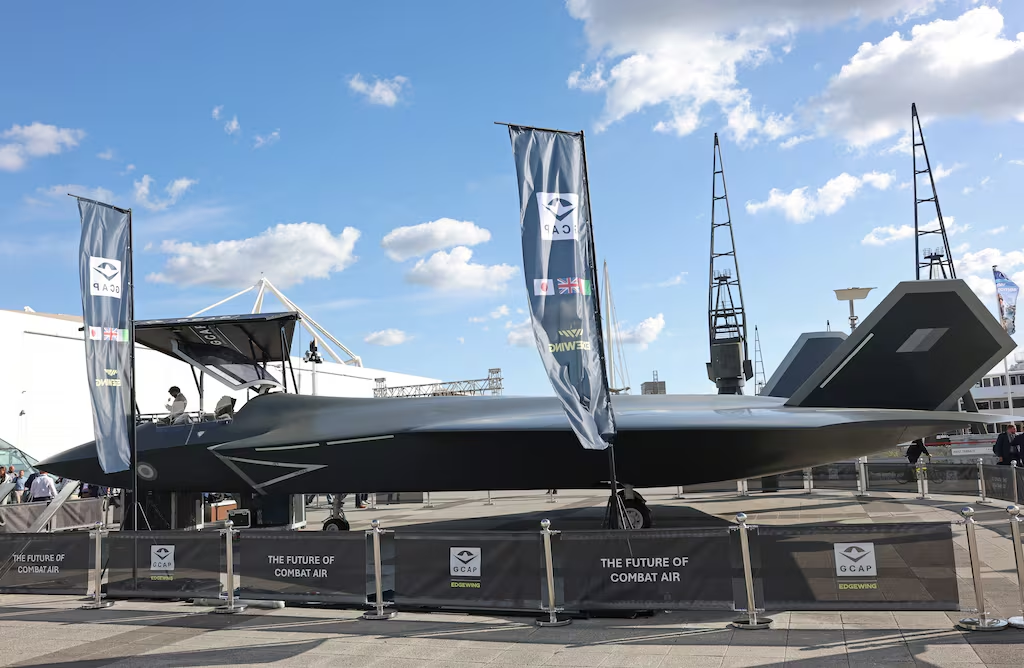
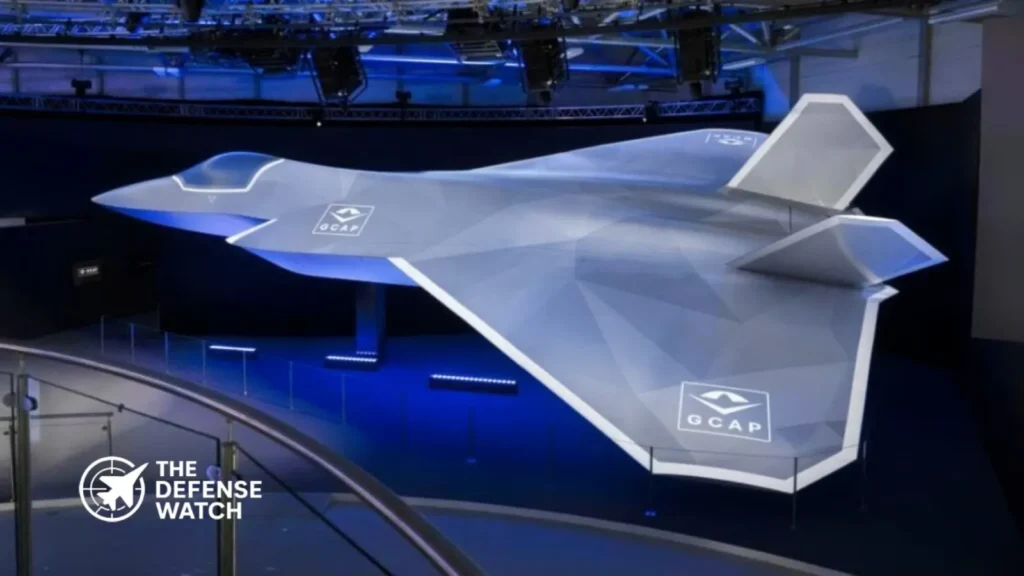
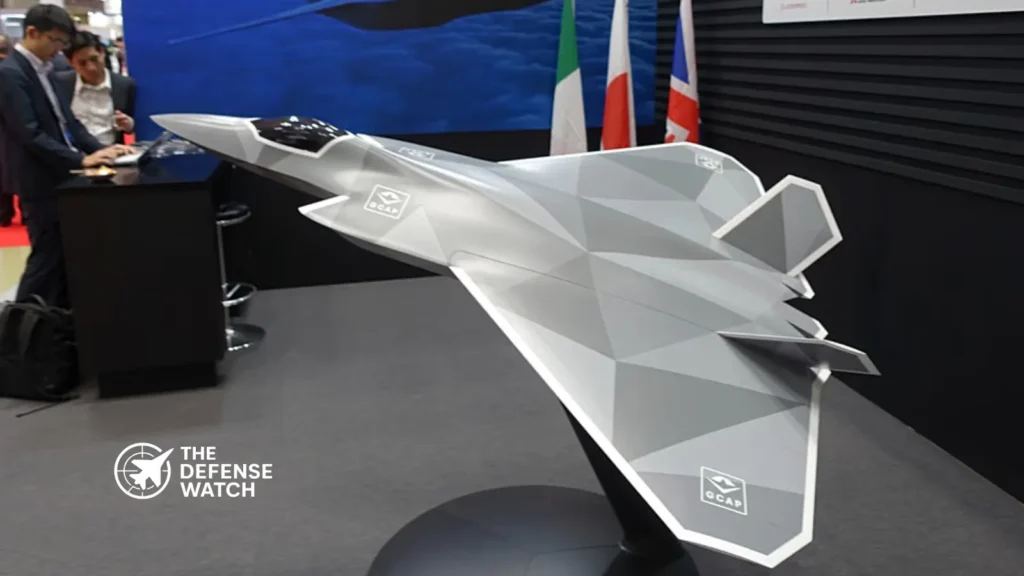
GCAP Fighter. Industry Handout Image. (adsbygoogle = window.adsbygoogle || []).push({});
Italian Defense Minister Guido Crosetto has publicly stated that GCAP represents a strategic investment in technological sovereignty and equal partnership, contrasting it with previous programs where Italy played a more subordinate role. During recent parliamentary testimony, Crosetto indicated that additional countries including Germany and Australia have expressed interest in joining the program.
GCAP vs FCAS: Competing European Visions
The Italian parliamentary approval occurs against the backdrop of significant tensions within the rival Franco-German-Spanish Future Combat Air System (FCAS) program. FCAS has experienced prolonged industrial disputes, particularly over workshare allocation and intellectual property rights between Dassault Aviation and Airbus, leading to schedule delays and political friction.
Multiple European defense publications have reported that Germany is actively considering abandoning FCAS in favor of joining GCAP, a development that would fundamentally reshape European combat air cooperation. During a January 2026 summit in Rome, German Chancellor Friedrich Merz reportedly discussed GCAP participation with Prime Minister Meloni, though no formal decisions have been announced.
The contrast between the two programs has become increasingly stark. GCAP partners established a formal international treaty in December 2023, created a joint business venture among BAE Systems, Japan Aircraft Industrial Enhancement Company, and Leonardo, and have maintained consistent program timelines. Meanwhile, FCAS continues to struggle with fundamental governance and industrial participation issues.
(adsbygoogle = window.adsbygoogle || []).push({});GCAP Fighter. Industry Handout Image.
Italian Foreign Minister Antonio Tajani stated in early February 2026 that Italy remains open to expanding GCAP membership if additional nations wish to join, emphasizing that broader participation could reduce per-nation costs while increasing technological capacity and economic returns.
Technical Capabilities and Industrial Organization
GCAP is designed as a comprehensive sixth-generation combat air system, not merely a single aircraft platform. The program encompasses development of a next-generation manned fighter as the core platform, integration with Adjunct Combat Aircraft (loyal wingman drones), establishment of a combat cloud data exchange architecture connecting space-based, airborne, naval, and ground sensors, and incorporation of artificial intelligence for enhanced decision-making and autonomous operations.
The three-nation partnership operates under an explicitly equal framework, with each country holding one-third stakes in the joint industrial venture. BAE Systems serves as the UK industrial lead, responsible for airframe development and overall integration. Leonardo leads Italian participation, with specific responsibilities for flight system integration, weapons integration, and training systems. Mitsubishi Heavy Industries heads Japanese industrial involvement, managing airframe production and systems integration for Japan.
The program structure includes provisions for technology transfer and shared intellectual property rights, addressing concerns that arose in previous collaborative efforts where certain partners retained disproportionate control over critical technologies and capabilities.
Operational Requirements and Timeline
GCAP aims to replace the Eurofighter Typhoon in Royal Air Force and Italian Air Force service, and the Mitsubishi F-2 in Japan Air Self-Defense Force operations. The target in-service date of 2035 positions GCAP to address the obsolescence of current fourth-generation and early fifth-generation platforms as peer competitors field their own advanced systems.
Defense planners envision GCAP aircraft operating in contested environments where communication with traditional support assets may be restricted or denied. The platform’s design emphasizes extended range, potentially enabling transatlantic missions on internal fuel, internal weapons carriage exceeding current fifth-generation fighters to maintain stealth characteristics, and data processing capacity sufficient to coordinate multiple uncrewed wingman aircraft in real-time combat scenarios.
Flight testing of technology demonstrators is scheduled to commence in 2027-2028, with the UK’s Excalibur flight test aircraft program already underway using modified Boeing 757 airframes. Italy and Japan have announced plans to develop their own domestic flight test platforms to accelerate development and reduce risk.
Budget Implications and Future Funding
For fiscal year 2025, Italy has allocated over €600 million to GCAP, placing it among the nation’s largest defense expenditures alongside F-35 procurement and Eurofighter upgrade programs. The approved €8.77 billion will be disbursed in annual increments through 2037, requiring sustained budgetary commitment across multiple government administrations.
Italy currently operates 118 Eurofighter aircraft and plans to acquire 115 F-35s, with combined inventory projected to exceed 180 aircraft through the 2040s. GCAP is expected to initially supplement, then gradually replace the Eurofighter fleet as those aircraft reach end-of-service life.
The Italian government is leveraging defense spending provisions within the European Union’s Stability Pact framework, which allows military expenditures to be temporarily excluded from deficit calculations under certain circumstances. This mechanism provides financial flexibility to sustain major long-term defense programs without immediately impacting fiscal targets.
International Interest and Program Expansion
Beyond Germany’s potential participation, multiple nations have expressed varying levels of interest in GCAP. Australia received an informational briefing from the GCAP consortium during the March 2025 Avalon Airshow, though Royal Australian Air Force officials indicated that significant uncertainties remain before formal consideration.
Saudi Arabia has pursued GCAP membership since 2023, though Japan initially expressed reservations regarding export policy, technology security, and timeline concerns. Recent diplomatic discussions at the 2024 G20 Summit and subsequent ministerial meetings suggest that Saudi participation remains under active consideration, particularly regarding cost-sharing arrangements and technology transfer provisions.
Canada has also examined GCAP as a potential future acquisition to succeed its planned F-35A fleet, according to diplomatic sources. Portugal’s defense minister indicated in 2025 that the country would consider joining either GCAP or FCAS as an observer under broader Portuguese Air Force modernization plans.
The potential expansion of GCAP membership presents both opportunities and challenges. Additional participants would broaden the program’s financial base and industrial capacity while potentially complicating governance structures and technology sharing arrangements. The three founding nations have indicated they are developing formal criteria for new member admission to balance these considerations.
Strategic Implications for European Defense
The approval of major GCAP funding by Italy, combined with potential German participation, carries significant implications for European defense industrial consolidation. Defense market analysts have long argued that Europe cannot sustainably support multiple competing sixth-generation fighter programs given limited procurement budgets and industrial capacity.
If Germany formally joins GCAP, the program would unite four of Europe’s five largest defense economies (UK, Italy, Germany, and potentially Spain if it follows Germany), leaving France pursuing FCAS either independently or with significantly reduced European participation. Such an outcome would represent a fundamental realignment of European combat air development away from traditional Franco-German defense cooperation.
The United Kingdom’s departure from the European Union had initially raised questions about UK-EU defense industrial cooperation, but GCAP demonstrates that substantive partnerships can proceed outside formal EU frameworks. Italy’s full commitment despite being an EU member state and potential German interest suggest that operational requirements and industrial pragmatism may outweigh political preferences for EU-internal programs.
NATO interoperability considerations also favor GCAP expansion, as the program explicitly incorporates data-sharing standards and communications architectures designed for integration with other allied systems. The inclusion of Japan, a major non-NATO ally with increasing security cooperation with European nations, provides additional strategic value in an era of great power competition.
Italy’s parliamentary approval of €8.77 billion in immediate GCAP funding, despite a tripling of estimated total program costs to €18.6 billion, demonstrates the nation’s strategic commitment to sixth-generation combat air capabilities through equal international partnership. The program’s progress contrasts sharply with the troubled FCAS initiative, potentially attracting additional European participants and reshaping the continent’s future combat air landscape.
As GCAP advances toward technology demonstration flights in 2027-2028 and an operational aircraft by 2035, the program represents not merely a weapons acquisition but a comprehensive transformation in how allied nations develop, integrate, and employ air combat capabilities in an increasingly contested operational environment.
Italy Reinforces GCAP Sixth-Generation Fighter Program With Major Financial Commitment
Italy has allocated approximately €9 billion ($9.4 billion) toward the development of the Global Combat Air Programme (GCAP), the ambitious sixth-generation fighter jet being co-developed with the United Kingdom and Japan. The announcement, made by Italian Defense Minister Guido Crosetto, represents one of Europe’s largest single commitments to next-generation air combat capability.
The GCAP fighter jet program Italy is pursuing aims to field an operational aircraft by 2035, replacing the country’s aging Eurofighter Typhoon fleet with a stealth-capable, network-centric warplane designed for 21st-century aerial warfare.
Major Investment Signals Strategic Defense Priority
The GCAP program, formally established in December 2022, brings together Italy’s Leonardo, the UK’s BAE Systems, and Japan’s Mitsubishi Heavy Industries as primary industrial partners. This trilateral collaboration marks one of the most significant international defense partnerships outside traditional NATO frameworks.
Italy’s €9 billion contribution will support research and development, prototyping, manufacturing infrastructure, and eventual production capabilities on Italian soil. Leonardo will serve as the primary Italian contractor, with significant workshare expected to support the country’s aerospace industrial base.
Sixth-Generation Technology Sets GCAP Apart
The sixth-generation stealth fighter aircraft being developed under GCAP will incorporate advanced technologies not present in current fifth-generation platforms like the F-35 Lightning II. Key capabilities include:
Advanced Stealth and Survivability: Next-generation radar-absorbent materials and airframe shaping designed to operate in highly contested electromagnetic environments.
Artificial Intelligence Integration: AI-assisted mission planning, threat assessment, and sensor fusion to reduce pilot workload and enhance decision-making speed.
Optionally Manned Capability: The platform is being designed to operate with or without a pilot onboard, enabling high-risk missions while preserving human life.
Loyal Wingman Compatibility: GCAP will command and control unmanned combat air vehicles (UCAVs) functioning as “loyal wingmen,” extending sensor range and weapon deployment options.
Advanced Sensor Suite: Multi-spectral sensors providing 360-degree situational awareness, integrated electronic warfare systems, and directed energy weapon potential.
These capabilities position GCAP to counter emerging threats from advanced Russian and Chinese fighter programs, including the Su-57 Felon and J-20 Mighty Dragon.
Timeline and Production Targets
The GCAP development timeline targets first flight of a demonstrator aircraft in the early 2030s, with initial operational capability planned for 2035. This ambitious schedule requires sustained financial commitment and close coordination among the three partner nations.
Italy plans to procure a substantial number of GCAP aircraft to replace its current Eurofighter Typhoon fleet, which entered service in the early 2000s. While exact procurement numbers remain classified, defense analysts estimate Italy may order between 80 and 100 GCAP fighters to maintain its air combat force structure.
The UK and Japan have similarly committed to replacing their Typhoon and F-2 fighter fleets respectively with GCAP aircraft, creating a combined market of potentially 250-300 sixth-generation fighters.
Italy’s defense spending 2026 allocation toward GCAP extends beyond military capability, representing a strategic investment in high-technology industrial capacity. Leonardo and its Italian supply chain partners stand to benefit from sustained high-value work in advanced materials, propulsion systems, avionics, and weapons integration.
The program is expected to create thousands of high-skill engineering and manufacturing jobs across Italy’s aerospace sector, particularly in regions already supporting military aircraft production. Leonardo’s facilities in Turin, Naples, and Rome will play central roles in GCAP development and production.
Economic multiplier effects from the program could generate billions in additional economic activity through subcontractors and technology spillover into civilian aerospace applications.
Balancing GCAP and F-35 Commitments
Italy’s major investment in the GCAP sixth-generation fighter comes as the country continues its commitment to the F-35 Joint Strike Fighter program. Italy is a Level 2 partner in the F-35 program and operates both F-35A conventional takeoff variants and F-35B short takeoff/vertical landing models.
The Italian Air Force currently operates over 30 F-35 aircraft and has plans to eventually acquire up to 90 fighters across both variants. Italy also hosts F-35 final assembly and checkout facilities at Cameri Air Base, the only such facility outside the United States.
Defense officials have clarified that GCAP and F-35 programs serve complementary rather than competing roles. The F-35 will continue as Italy’s primary multi-role fighter through the 2040s and potentially beyond, while GCAP will focus on high-end air superiority and deep strike missions requiring sixth-generation capabilities.
Italy’s substantial financial commitment to the Eurofighter Typhoon replacement program reflects evolving threat assessments in the Mediterranean region and broader European security environment. Russian military modernization, including deployment of advanced S-400 and S-500 air defense systems, necessitates next-generation stealth and electronic warfare capabilities.
Additionally, the growing sophistication of potential adversary air forces requires capabilities beyond current fourth and fifth-generation platforms. GCAP’s advanced sensor fusion, AI integration, and loyal wingman control represent force multiplication capabilities essential for maintaining air superiority in future conflicts.
The UK Japan Italy fighter collaboration presents both opportunities and challenges inherent in complex multinational defense programs. Geographic separation between partner nations, differing operational requirements, and export control considerations require careful management.
However, cost-sharing across three advanced economies reduces individual financial burden while creating economies of scale in production. Technology sharing accelerates development timelines and distributes technical risk. The partnership also creates interoperability benefits and strengthens security relationships among democracies facing common threats.
Program governance structures establish joint decision-making authorities while preserving sovereign control over critical technologies and operational concepts. This balanced approach has enabled the program to progress through initial development phases without major delays.
Looking Ahead
Italy’s €9 billion commitment to GCAP represents a decisive investment in future air combat capability and strategic defense autonomy. As development work accelerates toward first flight milestones in the coming years, sustained political and financial support will prove critical to meeting the 2035 operational timeline.
The program’s success will depend on maintaining trilateral consensus, managing technical complexity, and delivering capabilities that justify substantial investment. For Italy, GCAP represents not only next-generation military capability but also preservation of high-technology aerospace industrial capacity essential for long-term strategic independence.
The US Air Force has selected Boeing’s F-47 as its “latest fighter jets in USA” and “newest fighter jet” under the sixth-generation fighter umbrella. The announcement marks a significant shift in aerial warfare strategy, as the F-47 is poised to replace the F-22 Raptor and usher in a future defined by manned–unmanned teaming and enhanced stealth capabilities.
Overview of the F-47 Program
Under the Next Generation Air Dominance (NGAD) initiative, the F-47 is being developed by Boeing to deliver unprecedented air superiority. USAF officials confirm prototypes have been flying since 2020 and that they plan to field the aircraft by the end of this decade.
Design Goals and Performance
Range & Speed: Anticipated top speed of Mach 2 and a combat radius exceeding 1,000 nautical miles.
Supportability: Designed to be more sustainable and adaptable than fifth-generation jets, requiring less manpower and infrastructure.
Advanced Stealth & Systems: Promises next-level stealth and compatibility with collaborative combat aircraft (drones).
Strategic Shift: Boeing’s Breakthrough
The F-47 contract, worth over $20 billion for development, signals a major win for Boeing, challenging Lockheed Martin’s longstanding dominance in stealth fighters. Some reports suggest the total lifecycle value may exceed $50 billion.
This shift reflects a realignment of defense priorities, focusing on affordability, scale, and technological innovation—key as emerging threats from near-peer rivals intensify.
Program Timeline
The Air Force expects the F-47 to be operational between approximately 2025 and 2029, with plans to procure at least 185 units. Budget documents for FY 2025 allocate around $3.3 billion to NGAD development, with $2.7 billion designated for the manned fighter and $557 million for related collaborative drone.
Context & Strategic Significance
The F-47 is a pivotal leap forward in American fighter aviation, reflecting an evolving combat environment where stealth, networked multi-domain operations, and unmanned systems integration are paramount. Compared to its predecessor, the fifth-generation F-35, the F-47 emphasizes range, flexibility, and teaming capability.
Moreover, the program underscores the USAF’s commitment to staying ahead in the face of rising Chinese and Russian aerospace advancements—a calculated response to global security challenges.
Implications for Lockheed and the Defense Industry
Lockheed Martin’s absence from the F-47 project signals a notable shake-up—Boeing’s successful bid positions it as the new leader in next-gen air combat design.
While Lockheed continues to explore “fifth-generation-plus” concepts like the proposed F-55, cost and feasibility concerns cast uncertainty over their timeline.
Outlook & Analysis (Extra Value)
The F-47’s development reflects a broader move toward systems-of-systems warfare. By enabling manned aircraft to serve as networked “quarterbacks” for drone wingmen, the USAF is leveraging scalable, flexible warfare architectures. These will adapt faster to future threats and allow distributed operations across contested environments.
However, questions remain regarding production timelines, integration of drone systems, affordability, and technical challenges of fielding a sixth-generation, crewed fighter on schedule.
FAQs
What is the F-47?
he Boeing-built sixth-generation fighter jet selected by the USAF under NGAD, intended to replace the F-22.
When will the F-47 become operational?
It’s expected to be fielded between 2025 and 2029, per USAF projections.
How is the F-47 different from the F-35?
It offers longer range, faster speeds (Mach 2+), advanced stealth, integrated drone support, and lower sustainment burdens.
Why did Boeing win over Lockheed Martin?
Boeing’s proposal may have aligned better with USAF priorities for cost, production scale, and innovation—marking a strategic shift in the aerospace sector.
Boeing F-47 fighter jet: The Next Leap in Air Dominance
In March 2025, Boeing was awarded a milestone contract to develop the U.S. Air Force’s Next Generation Air Dominance (NGAD) fighter, designated F-47—a crewed, stealthy sixth-generation air superiority platform intended to succeed the F-22 Raptor. The Boeing F-47 fighter jet is the centerpiece of the NGAD family of systems, designed to operate seamlessly with unmanned Collaborative Combat Aircraft (CCAs), pioneering manned–unmanned teaming (MUM-T).
Design Goals: Stealth, Speed, Range
Although much of the F-47’s design remains classified, the Air Force has emphasized that it will offer significantly longer range, enhanced stealth, higher availability, and lower lifecycle costs versus fifth-generation fighters like the F-22 and F-35. Public infographics indicate a combat radius exceeding 1,000 nautical miles, and top speeds above Mach 2. The USAF plans to procure at least 185 F-47 jets.
Power: Adaptive Cycle Engines
Core to achieving extended range and high-speed performance are adaptive cycle turbofan engines, capable of switching efficiently between high-bypass and low-bypass modes mid-flight. These engines offer the dual benefits of fuel efficiency and powerful thrust—ideal for long transits and sudden bursts of speed, while generating greater electrical power and thermal management for advanced sensors.
Design Speculation — and Misdirection
Release of initial artist renderings sparked intrigue: visible canards and a tailless, dihedral-wing profile sparked debate, though analysts caution that these might be deliberate misdirections, not truly indicative of the final design. Such visual cues may mimic Boeing’s experimental Bird of Prey program as an obfuscation strategy.
DARPA’s Foundation: X-Plane Testing
The F-47’s development is rooted in a decade of advanced testing. DARPA funded X-plane demonstrators first flown in 2019 and 2022, which have accumulated hundreds of flight hours testing stealth, autonomy, and next-gen design concepts.
Industrial Priorities: Funding and Challenges
The Fiscal Year 2026 Pentagon budget request allocates approximately $3.5 billion toward the F-47, while drastically reducing funding for the Navy’s rival sixth-generation F/A-XX program—reflecting a strategic decision to prioritize one major fighter and avoid over-stretching the industrial base.
However, the program is already facing headwinds: engine development has reportedly slipped by up to two years, and labor disputes at Boeing’s St. Louis production facility raise the potential for strikes that could disrupt timelines.
Strategic Imperatives: Mass Matters
Planners have underscored that in future scenarios—particularly in the vast Indo-Pacific—the F-47’s impact will hinge not just on capability, but on numbers. A large, networked fleet of long-range fighters and CCAs is deemed essential to overwhelm sophisticated defenses and shorten sensor-to-shooter timelines
FAQs
What makes the F-47 different from the F-22?
The F-47 offers extended range (>1,000 nm), Mach 2+ speed, improved stealth and availability, lower costs, and networked operations with drones, surpassing the F-22’s performance envelope.
What is an adaptive cycle engine?
These engines, like GE’s XA102 or Pratt & Whitney’s XA103, can switch airflow configurations mid-flight for both efficiency and high thrust, improving range, performance, and onboard power for advanced systems.
Why pair F-47 jets with drones?
CCAs extend mission capabilities—such as surveillance, jamming, or extra missiles—while reducing risk to pilots. The F-47 acts as a “queen,” commanding drone “pawns” across contested airspace.
When will the F-47 be operational?
Estimates suggest initial fielding between 2025 and 2029, with more realistic full availability projected in the 2030s.
What risks could delay the F-47?
Engine development delays and labor disputes at Boeing pose notable risks to program timelines, potentially pushing out key milestones by years.