Executive Summary
- Boeing has been selected by the U.S. Navy for the F/A-XX sixth-generation fighter program, with a contract valued at more than $20 billion for the full-scale development phase and multiple test aircraft.
- The aircraft is intended to augment and eventually replace F/A-18E/F Super Hornets and EA-18G Growlers beginning in the 2030s, while operating alongside the F-35C.
- The award gives Boeing responsibility for both U.S. crewed sixth-generation fighter programs, the Navy’s F/A-XX and the Air Force’s F-47, while pushing the carrier air wing toward a more distributed mix of crewed and uncrewed aircraft.
The U.S. Navy has selected Boeing to develop its next-generation F/A-XX carrier-based fighter, awarding a contract worth more than $20 billion for the full-scale development phase on September 29, 2026. The award moves the Navy’s sixth-generation fighter from an extended development and competition period into a formal phase involving multiple test aircraft for ground, airworthiness, systems and weapons integration testing.
The decision also gives Boeing control of both U.S. crewed sixth-generation fighter programs. The company was selected in 2025 for the Air Force’s F-47, while F/A-XX will become the Navy’s next-generation carrier fighter. The two programs are separate aircraft programs, and the Navy has not publicly disclosed enough technical information to establish that they share specific airframe components or performance characteristics.
For the Navy, the significance goes beyond replacing an aging fighter. F/A-XX is intended to extend the reach of the carrier air wing, operate as part of a networked force and work alongside unmanned aircraft as the service moves toward its future carrier air wing concept.
F/A-XX Moves Into Full-Scale Development
The Department of War said the F/A-XX contract is worth more than $20 billion for the full-scale development phase. The award includes multiple test aircraft supporting ground testing, airworthiness work, systems integration and weapons integration.
That distinction is important.
The announced figure should not be treated as the eventual acquisition cost of the F/A-XX fleet. It covers the development phase rather than the full production program. Future production quantities, procurement costs, sustainment expenses and the eventual size of the Navy’s F/A-XX fleet have not been publicly established in the announcement.
The Navy expects the aircraft to begin entering the force in the 2030s, initially augmenting existing aircraft before eventually replacing F/A-18E/F Super Hornets and EA-18G Growlers. It will operate alongside the F-35C.
What the Navy Has Confirmed
Area Confirmed information Program F/A-XX Service U.S. Navy Contractor Boeing Generation Sixth-generation Contract phase Full-scale development Announced value More than $20 billion Test aircraft Multiple aircraft Testing Ground, airworthiness, systems and weapons integration Entry timeframe Beginning in the 2030s Replaces F/A-18E/F and eventually EA-18G Operating alongside F-35C Uncrewed integration Collaborative Combat Aircraft Detailed performance Classified or not publicly disclosed The technical configuration remains heavily protected. Boeing says the technical and programmatic details remain classified under U.S. national security and export-control requirements.
That means claims circulating about precise F/A-XX speed, combat radius, weapons load, radar performance, engine configuration or stealth characteristics should not be presented as established specifications unless they are subsequently released by the Navy or another authoritative source.
The Core Requirement Is Carrier Air Wing Reach
The strategic problem F/A-XX is intended to address is relatively clear even though the aircraft’s specifications are not.
A carrier air wing has to generate combat power from a mobile airfield while operating against increasingly capable surveillance, electronic warfare and air-defense networks. The Navy’s future carrier aviation plans therefore place greater emphasis on reach, survivability, networking and distributed operations.
The Navy’s 2025 Naval Aviation planning material describes a future carrier air wing built around a combination of F-35Cs, F/A-XX and unmanned aircraft. It specifically links the future air wing to increased operational range and the integration of autonomous unmanned systems.
This reflects a broader shift from viewing the fighter as an isolated aircraft toward treating it as one node within a larger combat system.
The Navy has previously described distributed maritime operations as requiring fighters with significantly greater range, sensors capable of operating beyond the fighter itself and resilient networks that connect those systems.
F/A-XX is being developed against that requirement.
From Super Hornet to a Networked Sixth-Generation Force
The F/A-18E/F Super Hornet has served as the backbone of the Navy’s carrier strike fighter force for decades. The aircraft entered fleet service in 1999, and successive upgrades have added improved sensors, networking, survivability and other capabilities.
The Navy has continued extending the Super Hornet’s usefulness through Block III modernization. However, a modernization program for a fourth-generation-derived aircraft cannot indefinitely substitute for a new airframe designed around future threat environments.
That is where F/A-XX enters the force structure.
Carrier air wing element Current or emerging role F/A-18E/F Super Hornet Multirole strike fighter and fleet defense EA-18G Growler Airborne electronic attack F-35C Stealth strike fighter and sensor/network node MQ-25A Unmanned carrier-based aerial refueling E-2D Airborne early warning and battle management F/A-XX Future sixth-generation carrier fighter CCA Future uncrewed combat capability The transition will therefore not simply involve replacing one fighter with another. It will change how the carrier air wing distributes sensing, strike, electronic warfare, refueling and other missions across crewed and uncrewed platforms.
F/A-XX and Collaborative Combat Aircraft
One of the most important aspects of the program is its relationship with Collaborative Combat Aircraft.
The Department of War says F/A-XX will be interoperable with manned and unmanned platforms, including CCA, and is intended to increase the capability of the unmanned aircraft operating with it.
This is consistent with the Navy’s wider development of unmanned carrier aviation.
The Navy has already established infrastructure for operating unmanned aircraft from carriers through the MQ-25 program. Navy officials have also described the carrier-based unmanned architecture as a foundation for future systems, including CCA.
The emerging concept is therefore closer to a distributed combat formation than a conventional fighter squadron.
A crewed sixth-generation aircraft could potentially provide command, sensing and decision-making functions while unmanned aircraft extend sensing, communications, electronic effects or weapons capacity. Exactly how many aircraft a future F/A-XX pilot will control, and how much autonomy will be delegated to those aircraft, remains unsettled publicly.
The Navy has said its CCA work includes studying command and control, the number of aircraft a pilot can reasonably manage and the role of artificial intelligence.
Why the F-35C Remains Important
F/A-XX is not intended to make the F-35C irrelevant.
The Navy’s future air wing is explicitly structured around the two aircraft operating together. The F-35C provides a mature fifth-generation capability, while F/A-XX is intended to introduce the next generation of carrier-based combat capability as Super Hornets and Growlers approach replacement.
This creates a layered force structure rather than a single replacement aircraft.
The F-35C can contribute stealth, sensor fusion and information-sharing capabilities. F/A-XX is expected to address future requirements that demand additional reach, survivability and integration with unmanned systems, although precise performance characteristics remain classified.
The combination also reduces the risk of relying on one aircraft type for every carrier strike mission.
Boeing Now Holds Both U.S. Sixth-Generation Fighter Programs
The F/A-XX award follows Boeing’s selection for the Air Force’s F-47 in March 2025.
The Air Force described F-47 as the crewed fighter component of its Next Generation Air Dominance family of systems, designed to operate with other networked capabilities.
The two programs have different service requirements.
The F-47 is designed for land-based Air Force operations, while F/A-XX must be integrated into carrier operations. Carrier aviation imposes requirements that do not apply in the same way to land-based fighters, including catapult launch, arrested recovery, deck handling, carrier storage and maintenance constraints.
Consequently, the fact that Boeing holds both programs does not establish that the aircraft will be identical or share a common airframe.
It does, however, give Boeing a substantial position in the development of U.S. crewed sixth-generation tactical aviation.
Industrial Base Implications
The decision also has major implications for Boeing’s fighter manufacturing business.
Boeing says it has been investing in a secure manufacturing facility in St. Louis intended to support advanced aerospace production. The company says the facility forms part of a digital design and manufacturing system and is being developed alongside investments in technology and personnel.
That industrial investment now has two major sixth-generation fighter programs to support.
This creates an opportunity to maintain and expand the workforce, tooling and supplier base required for advanced combat-aircraft production. It also creates a significant execution challenge because Boeing must develop two different next-generation fighters while continuing other major defense programs.
The issue is not simply whether Boeing won the competition. The longer-term test will be whether the company can translate the award into predictable engineering, testing and production performance.
The $20 Billion Figure Needs Context
The size of the F/A-XX development award is substantial, but comparisons with other fighter programs require caution.
The announced amount is for full-scale development and testing. It is not a $20 billion production purchase of operational aircraft.
The distinction can be summarized as follows:
Financial category F/A-XX status Full-scale development More than $20 billion announced Multiple test aircraft Included Ground and airworthiness testing Included Systems and weapons integration Included Full fleet procurement Not included in announced figure Lifetime sustainment Not included Final fleet size Not publicly established For defense procurement analysis, this distinction matters because development contracts can contain significant engineering, test and integration costs before serial production begins.
A Second Sixth-Generation Program Changes the U.S. Fighter Landscape
Boeing’s two consecutive selections also change the competitive structure of U.S. fighter development.
Lockheed Martin remains central to U.S. tactical aviation through the F-35 program, while Northrop Grumman retains major roles across aircraft, sensors, electronic warfare and other defense technologies. But Boeing now holds the development responsibility for both of the U.S. Air Force and Navy’s next-generation crewed fighters.
That concentration creates both industrial advantages and oversight requirements.
On one side, Boeing can potentially build common expertise around advanced digital engineering, manufacturing, stealth integration, mission systems and next-generation production methods.
On the other, simultaneous development of two high-end fighter programs places substantial demands on engineering talent, suppliers, test infrastructure and program management.
The Navy itself had previously maintained only limited F/A-XX development funding in the FY2026 budget while seeking to avoid excessive pressure on the defense industrial base. The Department of War’s FY2026 budget briefing specifically said the Navy would maintain minimal development funding for F/A-XX while leveraging work associated with F-47.
The new award represents a major change from that earlier posture.
The China Challenge Is About Systems, Not Just Fighters
The strategic importance of F/A-XX should not be reduced to a comparison between aircraft specifications.
In a high-end Pacific conflict, the carrier air wing would operate inside a broader network of ships, submarines, aircraft, satellites, unmanned systems and long-range weapons. The effectiveness of F/A-XX will therefore depend heavily on whether it can function when communications are degraded, sensors are contested and adversaries use layered air-defense systems.
That is why the Navy’s emphasis on network integration and distributed operations matters as much as the aircraft itself.
The Navy has already framed its future carrier air wing around manned and unmanned aircraft, networked sensors and greater operational reach.
F/A-XX is the crewed fighter component of that broader transformation.
What Remains Unknown
Despite the size of the award, many of the questions most relevant to aircraft enthusiasts and military analysts remain unanswered.
The Navy has not publicly released authoritative figures for:
- Maximum speed
- Combat radius
- Internal weapons capacity
- Exact radar configuration
- Engine type and thrust
- Radar cross-section
- Electronic warfare architecture
- Sensor aperture specifications
- Exact crew configuration
- Production quantity
- Unit procurement cost
- Final operational weapons portfolio
Claims assigning precise numbers to these characteristics should therefore be treated as estimates or unofficial reporting unless supported by future government disclosures.
The public information establishes the program’s strategic direction, but not the aircraft’s final performance envelope.
What Happens Next
The immediate priority is development and testing.
Boeing must produce the test aircraft required to support ground, airworthiness, systems and weapons integration activities. The Navy will then have to validate the design against carrier-specific requirements while developing the training, maintenance, logistics and shipboard infrastructure required for introduction.
At the same time, F/A-XX will have to mature alongside the Navy’s CCA effort and MQ-25 unmanned tanker.
The result will eventually be a carrier air wing in which the fighter is one component of a larger network rather than the sole source of combat reach.
The Navy’s 2025 aviation planning already identifies the combination of F-35C, F/A-XX and unmanned aircraft as central to the future carrier air wing.
That makes the F/A-XX award more than another aircraft procurement decision. It is a commitment to a different architecture for naval aviation.
Bottom Line
Boeing’s selection for the Navy’s F/A-XX program marks the beginning of full-scale development of the service’s sixth-generation carrier fighter, backed by an award valued at more than $20 billion.
The aircraft is intended to augment and eventually replace the F/A-18E/F and EA-18G fleets beginning in the 2030s, while operating alongside the F-35C and integrating with unmanned systems.
The most consequential element is therefore not a publicly undisclosed speed, range figure or weapons load. It is the planned integration of F/A-XX into a distributed carrier air wing built around longer reach, networked sensors, survivability and crewed-uncrewed teaming.
For Boeing, the award establishes the company as the developer of both the Navy’s F/A-XX and Air Force’s F-47. For the Navy, it starts the transition from today’s Super Hornet-centered force toward a sixth-generation carrier aviation architecture.
The difficult part now moves from competition to execution.

U.S. Navy F/A-XX Fighter Decision Moves Toward Public Announcement
The U.S. Navy F/A-XX fighter program has reached a decisive stage, with the Pentagon having selected a preferred contractor for the next-generation carrier-based stealth aircraft, according to Reuters. The two companies competing for the contract are Boeing and Northrop Grumman, and the Pentagon said it expects to award the program in the near future.
Takeaways
The Pentagon has selected a preferred contractor for the U.S. Navy’s F/A-XX next-generation carrier fighter, according to Reuters, with an announcement expected soon.
Reuters reported Sept. 8 that two people briefed on the matter said the contractor selection had already been made, although the Pentagon has not publicly disclosed the winner. The department said only that it continues to work toward an F/A-XX award in the near future.
The decision is significant because F/A-XX is intended to become the Navy’s principal next-generation carrier fighter and the strike-fighter component of the service’s broader Next Generation Air Dominance architecture.
Boeing And Northrop Grumman Compete For The Program
The final competition has narrowed to Boeing and Northrop Grumman.
Both companies have substantial experience with U.S. military aircraft, but the Navy’s requirement represents a major shift from the design philosophy of the F/A-18E/F Super Hornet. The future aircraft is expected to emphasize survivability, range, endurance, advanced sensors and networking rather than simply improving the performance of an existing airframe.
The Navy’s 2025 aviation planning documents describe F/A-XX as a sixth-generation fighter intended to replace the F/A-18E/F Super Hornet and EA-18G Growler, while incorporating greater range, speed and sensor capability and increased integration with manned and unmanned systems.
The final contract could be worth tens of billions of dollars over the life of the program, according to Reuters. That figure would encompass more than initial engineering and development work, potentially extending into production, sustainment and future modernization.
Why F/A-XX Matters To The Carrier Air Wing
The F/A-XX is not simply a one-for-one replacement for the Super Hornet.
The Navy is designing its future carrier air wing around a wider network of aircraft, weapons and sensors. The F/A-XX is expected to provide a highly survivable crewed platform that can operate alongside uncrewed aircraft and contribute to a distributed combat network.
That approach reflects a central problem facing carrier aviation: modern air-defense systems increasingly allow adversaries to detect, track and engage aircraft at greater distances.
A future carrier fighter therefore needs to do more than carry weapons. It must be able to operate in heavily contested electromagnetic and air-defense environments while exchanging information with other aircraft, ships, satellites and unmanned platforms.
The Navy’s own planning material identifies manned and unmanned integration as an important part of the F/A-XX concept.
Range Is Becoming A More Important Requirement
One of the most important differences between the F/A-XX and the current Super Hornet is expected to be operational reach.
The F/A-18E/F entered fleet service in 1999 and remains a major component of the carrier air wing. The Navy is extending the aircraft’s useful life through Block III modernization, including structural improvements, upgraded systems, networking and an expected 10,000-flight-hour service life.
Those upgrades are intended to keep the Super Hornet relevant while the Navy develops its successor.
The challenge is that extending the life of the existing aircraft does not eliminate the underlying requirement for a new platform. In a high-end conflict, a carrier aircraft may need to operate farther from the carrier because the threat environment makes close access increasingly difficult.
F/A-XX is therefore expected to combine greater range and endurance with low observability and advanced sensing.
Capability Area F/A-XX Requirement Current Super Hornet Primary role Next-generation carrier strike fighter Multirole carrier strike fighter Stealth Advanced stealth expected Reduced radar signature on Block III Range Expected to exceed current fighter requirements Improved through Super Hornet design and upgrades Sensors Advanced integrated sensors expected AESA radar and upgraded avionics Uncrewed integration Core part of future concept Increasingly networked, but not designed around CCA operations Service era Expected operational entry in the 2030s Entered fleet service in 1999 Future role Next-generation carrier air dominance Bridge to future carrier aviation The table separates publicly described program goals from established Super Hornet capabilities. Precise F/A-XX performance specifications remain classified or undisclosed. GAO has previously noted that important details concerning F/A-XX were withheld because of classification.
Program Delays Created A Strategic Problem
The F/A-XX program has faced significant uncertainty.
The Pentagon previously considered slowing the program because of concerns over engineering resources, industrial capacity and competing development priorities. The FY2026 defense budget nevertheless retained funding for F/A-XX design work.
During a 2025 Pentagon budget briefing, a senior defense official said the administration was still considering the future of F/A-XX but requested $74 million to continue design work. The official also said the department was evaluating how to achieve sixth-generation tactical air capability while moving forward with the Air Force’s F-47 program.
Congress subsequently provided stronger financial support for the Navy effort.
Reuters reports that lawmakers allocated $750 million for F/A-XX in the 2025 spending legislation and another $1.4 billion in fiscal 2026.
That funding matters because a lengthy pause would not simply delay an aircraft. It could create a gap between the retirement or reduction of older aircraft and the arrival of their replacement.
F/A-XX And The F-47 Are Related, But Not The Same Aircraft
The Navy and Air Force are pursuing separate sixth-generation fighter programs.
The Air Force’s F-47 is being developed by Boeing as the crewed fighter component of the Air Force’s Next Generation Air Dominance effort. The Navy’s F/A-XX is designed around carrier operations and the requirements of a naval air wing.
The Pentagon has acknowledged that technology sharing and coordination between the services could be useful, while also making clear that the services have different operational requirements. In the FY2026 budget briefing, officials said the department was focused on sixth-generation capability but had not ruled out different approaches to achieving it.
For the Navy, carrier suitability creates requirements that do not apply in the same way to a land-based fighter.
The aircraft must be capable of repeated carrier launches and arrested landings, tolerate the structural stresses associated with carrier operations and fit within the operational and maintenance constraints of a carrier air wing.
That makes simply adapting another sixth-generation aircraft to naval service a difficult proposition.
The Uncrewed Component Could Be Equally Important
F/A-XX is being developed at a time when the Navy is expanding its use of uncrewed aircraft.
The future carrier air wing is expected to combine crewed fighters with autonomous and remotely operated systems that can extend sensing, electronic warfare and strike capacity.
The concept is particularly important because an uncrewed aircraft can potentially be assigned to missions that would expose a human pilot to greater risk. It can also provide additional sensors or weapons without requiring every capability to reside inside a crewed fighter.
The Navy’s published F/A-XX planning material specifically identifies autonomous drones as potential force multipliers and electronic warfare assets.
This means the value of F/A-XX may ultimately depend as much on how well it controls and coordinates other systems as on the aircraft’s own speed or weapons load.
The Super Hornet Will Remain Important During The Transition
The Navy will not replace the Super Hornet overnight.
NAVAIR says the F/A-18E/F entered fleet service in 1999 and remains a major multirole aircraft. Its Block III modernization includes a longer service life, reduced radar signature, improved cockpit systems and enhanced networking.
The Navy also continues to add weapons and capabilities to the aircraft. In February 2026, the service declared initial operational capability for the Small Diameter Bomb II on the Super Hornet, expanding its ability to engage moving and stationary targets in adverse conditions.
Reuters reports that F/A-18 aircraft are expected to remain in service into the 2040s, creating a transition period in which legacy and next-generation systems will operate together.
That transition will allow the Navy to introduce F/A-XX gradually rather than relying on a single procurement cycle to replace the existing carrier fighter fleet.
China Adds Pressure To The Timeline
The strategic backdrop is the rapid modernization of China’s military aviation capabilities.
Reuters reported that China’s development of advanced combat aircraft, including aircraft Beijing describes as sixth-generation systems, has increased the pressure on the United States to maintain a credible next-generation carrier aviation capability.
For the Navy, the issue is particularly important in the Indo-Pacific.
A carrier air wing must be able to generate combat power at increasing distances while operating against sophisticated sensors, long-range missiles, electronic warfare systems and integrated air defenses.
The implication is straightforward: the Navy’s future fighter needs to provide useful combat power without requiring the carrier itself to move unnecessarily close to the threat.
That places range, survivability, sensing and networking at the center of the F/A-XX requirement.
What The Contractor Decision Will Mean
The upcoming award will answer the immediate question of who will lead development of the Navy’s next-generation carrier fighter.
It will not, however, immediately resolve the larger challenge facing naval aviation.
The winning company will have to turn a demanding set of requirements into an aircraft that can be produced in sufficient numbers, maintained aboard carriers and upgraded throughout a service life likely to extend for decades.
The industrial-base question will also remain important. Earlier Pentagon concerns about engineering and supply-chain capacity show that developing the aircraft is only one part of the problem. Building it at the required scale will require sustained access to skilled workers, suppliers, manufacturing capacity and advanced components.
The F/A-XX decision therefore represents the beginning of the most consequential phase of the program rather than its conclusion.
If the Pentagon proceeds with the expected award, the Navy will move from years of concept development and program uncertainty toward detailed engineering, testing and eventual production.
For the carrier air wing, the objective is clear: field a survivable, long-range and networked fighter capable of operating with crewed and uncrewed systems in the contested environments expected during the 2030s and beyond.

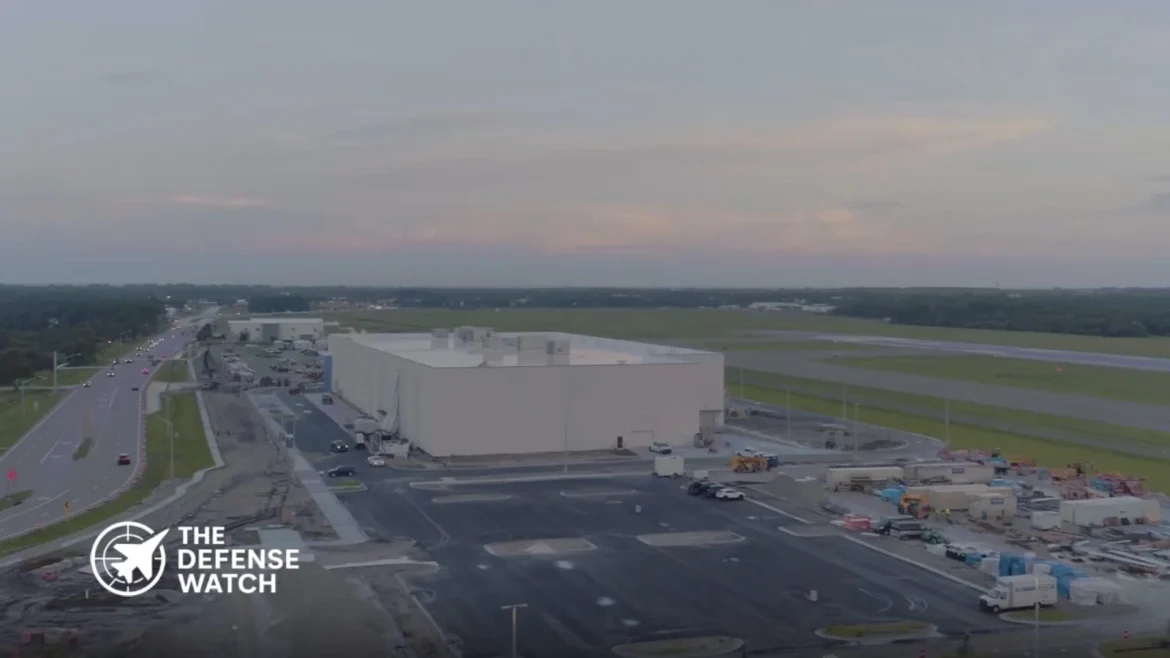
Executive Summary: Northrop Grumman has unveiled a new engineering facility intended to support next-generation aircraft development, adding infrastructure as the company competes for the U.S. Navy’s F/A-XX program. The move comes as the Navy prepares to advance its sixth-generation carrier fighter effort, which is intended to complement the F-35C and eventually replace the F/A-18E/F Super Hornet and EA-18G Growler.
Northrop Grumman Builds Capacity For Sixth-Generation Aircraft
Northrop Grumman’s sixth-generation aircraft effort is gaining an important industrial infrastructure component with the opening of a new engineering site designed to support advanced aircraft development.
The facility includes classified engineering and laboratory capabilities intended for work on highly sensitive aerospace programs. The development comes as Northrop Grumman competes with Boeing for the U.S. Navy’s F/A-XX next-generation carrier-based fighter.
FlightGlobal reported the facility’s opening in August 2026, highlighting its role in Northrop Grumman’s broader sixth-generation aircraft development activity.
Northrop Grumman has not publicly disclosed the full technical scope of classified work conducted at the site. That distinction is important because the facility’s existence does not by itself confirm specific F/A-XX design features, performance characteristics or program milestones.
New Facility Adds Classified Engineering Capacity
The new site is part of Northrop Grumman’s broader investment in advanced aircraft engineering and secure development infrastructure.
The company already operates a major aircraft engineering presence in Melbourne, Florida. Northrop Grumman says its Melbourne campus designs, develops and tests advanced manned aircraft and battle management systems. The campus contains 17 buildings across a 109-acre site near Orlando Melbourne International Airport.
Northrop Grumman has also described its Florida operations as supporting sixth-generation aircraft development. Its corporate material identifies Florida as an important center for advanced aerospace design and engineering, alongside work on the B-21 Raider and other military aircraft.
The company has significant experience with low-observable aircraft. Its B-21 Raider program has moved through flight testing, including aerial refueling testing in 2026, while Northrop Grumman continues to expand production capacity.
That background is relevant to F/A-XX because sixth-generation combat aircraft development requires expertise across low-observable design, advanced mission systems, digital engineering, sensors, communications and aircraft integration.
F/A-XX Remains A Major Navy Modernization Program
The U.S. Navy’s F/A-XX program is intended to provide the next generation of carrier-based tactical aviation.
The aircraft is expected to operate alongside the F-35C and other carrier air wing assets rather than function as a standalone replacement for every existing capability. The Navy has described its future carrier air wing as an integrated force in which crewed and uncrewed aircraft work together.
Recent Navy publications state that the service’s future sixth-generation strike fighter will augment and eventually replace the F/A-18E/F Super Hornet and EA-18G Growler in the carrier air wing. The Navy expects the transition to take place during the 2030s.
The broader direction is also consistent with the Navy’s work on collaborative combat aircraft. In January 2026, Naval Air Systems Command reported a demonstration involving autonomous systems and multi-platform coordination intended to advance future manned-unmanned teaming capabilities.
This means the value of F/A-XX will extend beyond the performance of the crewed aircraft itself. The fighter is being developed within a wider architecture involving sensors, networks, weapons, autonomous aircraft and other carrier air wing platforms.
Northrop Grumman’s Position In The F/A-XX Competition
Northrop Grumman and Boeing are the two remaining major competitors for the Navy’s F/A-XX program.
The competition has taken place against a complicated U.S. fighter development landscape. Boeing is already responsible for the Air Force’s F-47, which was selected in 2025 as the crewed component of the Air Force’s Next Generation Air Dominance effort. The Pentagon’s FY2026 budget briefing identified the F-47 as the Air Force’s first crewed sixth-generation fighter and said the Navy’s F/A-XX program would retain limited development funding.
The F/A-XX program has also faced funding and scheduling pressure. Reuters previously reported that the Navy’s next-generation fighter is intended to provide greater stealth, range and endurance while integrating with uncrewed systems and carrier-based defensive networks.
Against that backdrop, Northrop Grumman’s new engineering infrastructure has significance beyond the physical facility.
It provides additional secure workspace and engineering capacity at a time when the defense industry is competing for personnel with experience in advanced aircraft design. A modern facility can also support digital engineering, systems integration and classified program work without requiring every development activity to take place at an existing production location.
Why The Engineering Site Matters
The most important point is that the facility should be viewed as an industrial capability investment rather than proof that Northrop Grumman has won the F/A-XX competition.
That distinction matters.
A new engineering site can support multiple advanced aerospace programs, including classified projects whose details are not publicly available. Northrop Grumman’s established aircraft portfolio already includes the B-21, E-2D Advanced Hawkeye, F-35 center fuselage work and other specialized aircraft and mission systems.
The company has also demonstrated a willingness to invest in facilities and production capacity as major programs progress. In July 2026, Northrop Grumman reported that its Roy Innovation Center in Utah was expanding with a new building supporting continued growth of the site and its workforce.
For F/A-XX, however, the timing is notable.
A sixth-generation naval fighter will require a long development cycle, extensive ground testing, flight testing and systems integration before operational deployment. Secure engineering infrastructure therefore becomes part of the program’s industrial foundation.
The facility also illustrates a broader shift in U.S. military aviation development. Future combat aircraft programs increasingly depend on digital design, secure software development, advanced manufacturing, sensor integration and networked systems alongside conventional aerodynamic and structural engineering.
Sixth-Generation Aircraft Development Moves Beyond The Airframe
The term sixth-generation aircraft covers more than a new fighter shape or a reduction in radar signature.
The emerging U.S. approach emphasizes a family of connected capabilities. The crewed aircraft is expected to operate with uncrewed platforms, networked sensors and other assets that distribute sensing, targeting and weapons functions across the force.
Northrop Grumman’s B-21 program provides one example of this approach. The company describes the bomber as a sixth-generation aircraft built around advanced stealth, networking and an open systems architecture.
The Navy’s F/A-XX effort is developing within the same broad technological environment, although the requirements for a carrier-based fighter differ substantially from those of a long-range bomber.
For Northrop Grumman, experience from programs such as the B-21 could provide relevant engineering knowledge, particularly in low-observable aircraft design, systems integration and digital development. However, it would be premature to assume that technologies from one program will automatically transfer directly to F/A-XX.
What Comes Next For F/A-XX
The next major milestone is the Navy’s selection of an industrial partner for the F/A-XX development effort.
The decision will determine which company leads the next phase of engineering and manufacturing development and will establish the industrial architecture for a program expected to shape naval aviation for decades.
Northrop Grumman’s new engineering site places additional infrastructure behind its bid, but the facility itself does not determine the outcome of the competition.
For the U.S. Navy, the larger objective is to develop a carrier-based aircraft capable of operating in increasingly contested environments while remaining integrated with the broader carrier air wing.
That requirement explains why the F/A-XX competition is about more than the design of a single fighter. It is also a competition over engineering capacity, classified development infrastructure, advanced manufacturing expertise and the ability to sustain a complex combat aircraft program through several decades of modernization.
As the Navy moves toward its F/A-XX decision, Northrop Grumman’s expansion shows that the industrial base supporting sixth-generation aircraft development is already being built around the next generation of U.S. airpower.


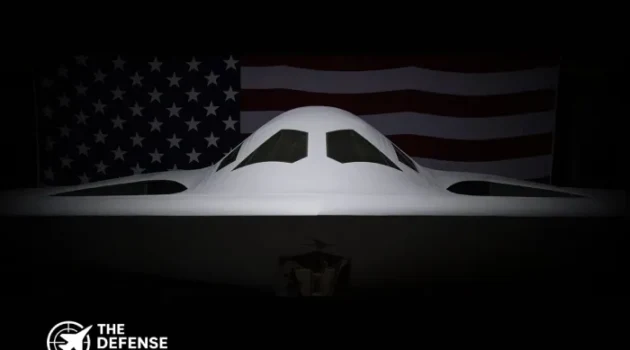
Northrop Grumman F/A-XX Emerges As Navy Decision Nears
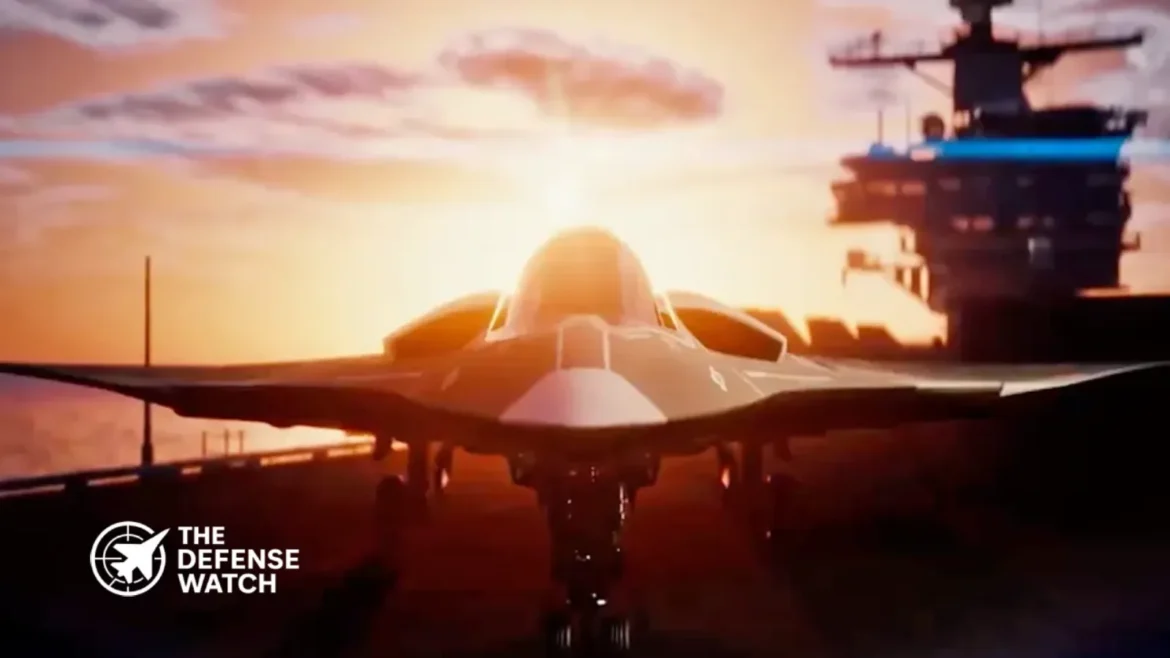
The F/A-XX naval fighter moved back into the spotlight after Northrop Grumman released a short promotional video showing its next-generation carrier fighter concept. The footage offers the most detailed public glimpse so far of the company’s proposed aircraft for the U.S. Navy’s classified F/A-XX competition.
- Northrop Grumman released a new teaser video showing an updated F/A-XX fighter concept.
- The aircraft appears tailless, carrier-capable, and optimized for stealth and long-range operations.
- The U.S. Navy is expected to choose between Northrop Grumman and Boeing for the program.
- F/A-XX is intended to replace portions of the F/A-18E/F Super Hornet fleet in future carrier air wings.
- The platform is expected to operate with drones and advanced networked systems.
The release is notable because it comes as the Navy reportedly approaches a program milestone. According to reporting cited by The War Zone, Navy leadership has indicated a final selection between Northrop Grumman and Boeing could come in the coming months.
What The New F/A-XX Concept Shows
The updated imagery suggests a large, tailless stealth aircraft designed for carrier operations. Visible features include:
- Broad forward fuselage for sensors and radar aperture
- Dorsal or high-mounted engine inlets for reduced radar signature
- Folding wings for carrier deck storage
- Apparent internal weapons bay doors
- Heavy landing gear suited for catapult launches and arrested recoveries
These design cues align with what analysts expect from a sixth-generation naval fighter focused on survivability, reach, and persistence in contested airspace.
While concept art should not be treated as final configuration data, companies often use controlled imagery to signal design direction, maturity, and market confidence. That makes this teaser strategically timed.
Why F/A-XX Matters For The U.S. Navy
The F/A-XX program is expected to become the centerpiece of future carrier air wings, eventually complementing and replacing parts of the Boeing F/A-18E/F Super Hornet fleet. It would also operate alongside the Lockheed Martin F-35C Lightning II and future unmanned systems.
For the Navy, range is one of the most critical requirements. Carrier aircraft must operate farther from enemy missile threats while still striking targets deep inland or defending the fleet. That challenge has become more urgent in the Indo-Pacific, where China’s anti-access systems continue to expand.
A longer-range stealth fighter paired with drones could give carriers more stand-off flexibility than today’s legacy tactical aviation mix.
Northrop Grumman’s Position In The Race
Northrop Grumman brings strong stealth credentials to the contest, including work on the B-2 Spirit and B-21 Raider. The company previously stepped away from the Air Force’s NGAD fighter competition, a move many analysts interpreted as a decision to prioritize naval aviation and bomber programs.
That could give Northrop additional focus if selected for F/A-XX.
Boeing, however, remains a formidable competitor with deep Navy fighter heritage through the F/A-18 Super Hornet and EA-18G Growler families.
Strategic Outlook
The F/A-XX award will shape U.S. naval aviation for decades. Beyond the aircraft itself, the winner could secure a long pipeline of software upgrades, sustainment contracts, and autonomous teaming systems.
This new Northrop Grumman release appears designed to send a clear message: the company is ready, visible, and still firmly in the fight.
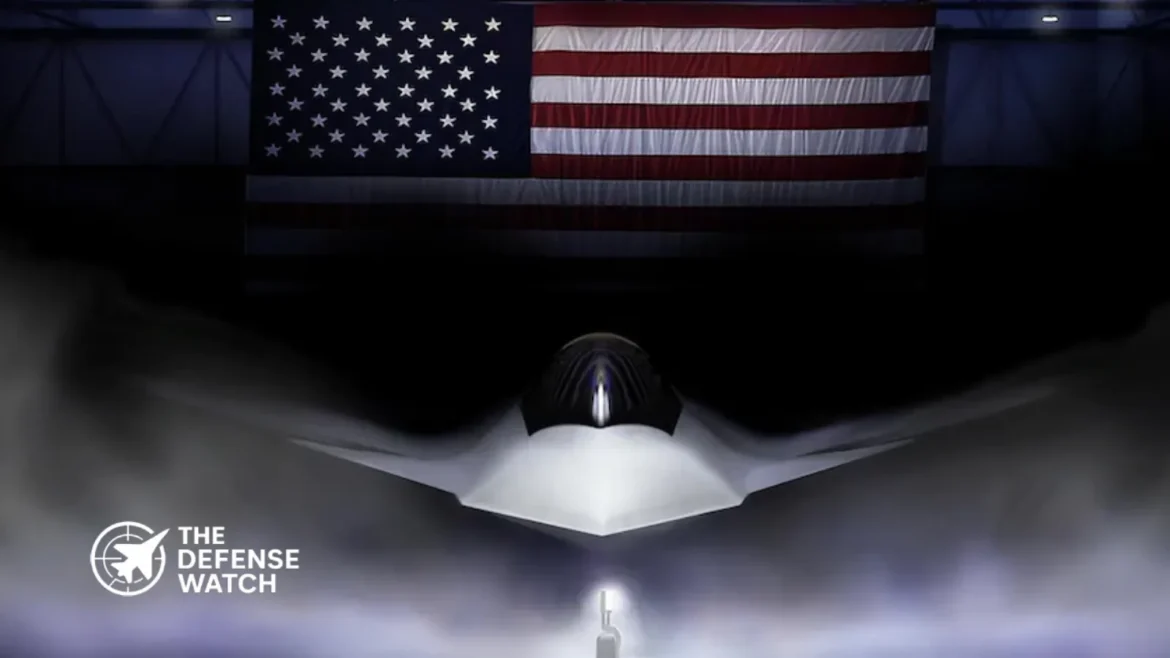
Pentagon’s FY2027 Budget Doubles Down on F-47, Exposing a Deep Divide Over Naval Aviation’s Future
The Trump administration’s fiscal year 2027 defense budget delivers the clearest signal yet about White House airpower priorities: the F-47 sixth-generation fighter will receive roughly $5 billion in development funding, while the Navy’s own next-generation combat jet — the F/A-XX — gets just $140 million. The asymmetry, embedded in a record-breaking $1.5 trillion overall defense request, sets up a potential clash between the executive branch and Congress that could define U.S. combat aviation investment for the decade ahead.
- The Trump administration’s FY2027 defense budget requests approximately $5 billion for the Air Force’s F-47 sixth-generation fighter — all from baseline discretionary spending.
- The Navy’s next-generation fighter, the F/A-XX, receives just $140 million in the FY2027 request — a 35-to-1 funding disparity compared to the F-47.
- Budget documents state the F-47 program is on track to achieve first flight in 2028, marking a critical milestone for the Boeing-built aircraft.
- Congress dramatically boosted F/A-XX funding in FY2026 — from $74 million to nearly $1.7 billion — in direct contrast to the White House’s current proposal.
- The FY2027 request also includes 85 F-35 aircraft across the Air Force, Navy, and Marine Corps, with 53 funded through the proposed reconciliation bill.
The Big Picture
U.S. military aviation modernization has reached a critical inflection point. The Trump administration is, once again, going all in on the development of the Air Force’s sixth-generation fighter while seeking only a fraction of funding for the Navy’s future combat jet.
The F-47, built by Boeing and designed to replace the F-22 Raptor as the Air Force’s premier air superiority platform, represents the centerpiece of Washington’s push to maintain dominance over increasingly capable Chinese and Russian air forces. China’s J-20 and J-35 programs are maturing rapidly, and Beijing has publicly telegraphed ambitions for its own sixth-generation program. Against that backdrop, the F-47 is not merely a procurement decision — it is a strategic deterrence instrument.
The FY2027 budget, released April 3, frames this investment explicitly in those terms. Budget documents state: “The Administration is sending a clear message to the nation’s adversaries by aggressively moving forward with the F-47 sixth-generation fighter: that the U.S. military will secure command of the skies, deter aggression, and project power anywhere on the globe.”
What’s Happening
The record-breaking $1.5 trillion FY2027 defense spending request includes around $5 billion to develop the F-47, all from baseline discretionary funding. This represents a substantial increase from the prior year. The F-47 received $2.5 billion in the FY2026 budget request and $900 million in reconciliation funding, netting a total of $3.5 billion last year.
The contrast with naval aviation is striking. Just $140 million — $72 million of which comes from a proposed reconciliation bill — is requested for the Navy’s F/A-XX next-generation fighter.
The budget documents state the FY2027 request would achieve a first flight for the F-47 in 2028. That timeline, if met, would put the Air Force on a credible path toward initial operational capability by the early 2030s — ahead of what most analysts had previously projected for any U.S. sixth-generation platform.
On the F-35 front, the White House is requesting a total of 85 aircraft for the Air Force, Navy, and Marine Corps, with 32 funded by the discretionary budget and 53 by the proposed reconciliation bill. Of the total, 38 would go to the Air Force, 37 to the Navy, and 10 to the Marine Corps.
Why It Matters
The funding gap between the F-47 and F/A-XX is not simply a budgetary preference — it reflects a fundamental debate inside the U.S. defense establishment about where air combat superiority will be won in a future high-end conflict.
The Air Force’s F-47 program benefits from clear White House backing, a named contractor in Boeing, and now a declared first-flight target. The program has momentum and institutional support that the F/A-XX currently lacks at the executive level.
The Navy’s predicament is more complicated. Carrier-based aviation remains central to U.S. power projection in the Indo-Pacific, and any gap in next-generation naval air capability would directly undercut the strike group’s relevance against a peer adversary equipped with advanced integrated air defense systems. The F/A-XX is designed to eventually replace the F/A-18E/F Super Hornet — a platform that, while still capable, was not designed for contested airspace against near-peer threats.
The disparity also raises questions about inter-service equity and joint warfighting integration. In a high-end conflict against China — the scenario that drives most Pentagon planning — both Air Force and Navy aviation assets would need to operate together. A generational capability gap between the two services’ frontline fighters could complicate coordinated strike packages and force the Navy to rely on older platforms longer than intended.
Strategic Implications
The $5 billion F-47 request carries implications well beyond the Air Force budget line.
First, it signals that the administration views air dominance as the foundational layer of deterrence — a position consistent with both historical U.S. military doctrine and the emerging realities of modern contested airspace. Advanced air defense systems in China and Russia have fundamentally changed the threat calculus for fifth-generation fighters like the F-35 and F-22, and the F-47 is intended to defeat those systems at range, with greater survivability and payload flexibility.
Second, the budget’s heavy reliance on reconciliation funding for major defense programs — including portions of the F-35 buy and F/A-XX — introduces legislative risk. Reconciliation bills require specific procedural conditions to pass, and the fate of defense provisions within them is never guaranteed. Programs that depend on reconciliation funding for basic development activities are structurally vulnerable to political disruption.
Third, the funding trajectory for F-47 — from $3.5 billion in FY2026 to a proposed $5 billion in FY2027 — represents a steep acceleration. That pace suggests the program has cleared significant internal milestones and that contractors and program managers are confident enough to absorb and execute at that spending rate. Rapid funding ramp-ups in defense programs can indicate genuine technical progress or, alternatively, schedule pressure driven by strategic urgency rather than engineering readiness.
Competitor View
Beijing will study this budget request carefully. China’s People’s Liberation Army Air Force has advanced its own sixth-generation aviation research, and the pace of U.S. investment in the F-47 sends a direct message about American intent to maintain an air combat edge in the Western Pacific.
From Beijing’s perspective, the F-47’s projected 2028 first flight — combined with its development funding level — suggests the U.S. is accelerating a platform designed specifically to penetrate and operate inside China’s layered air defense envelope. This will likely reinforce Chinese investment in both next-generation interceptors and advanced surface-to-air missile systems intended to complicate F-47 operations.
Russia, whose Su-57 program has faced persistent production and funding challenges, will also note the contrast. U.S. commitment to a fully funded sixth-generation program underscores a qualitative edge that Moscow currently cannot match and is unlikely to close within the next decade.
The Congressional Flashpoint: F/A-XX
Lawmakers’ support for the F/A-XX program soared in January when House and Senate appropriators boosted its funding more than tenfold, from $74 million to $897 million. Along with $750 million from the reconciliation bill, the Navy’s fighter saw nearly $1.7 billion in total enacted funding.
That congressional intervention — overriding a White House posture that had repeatedly deprioritized F/A-XX — sets the stage for a renewed budget battle. Lawmakers had also requested details on the Navy’s acquisition strategy, spending plan, and timeline for awarding the manufacturing and development contract, as well as an explanation for why the Navy had not spent F/A-XX funds allocated in previous years.
That last point is politically damaging for the Navy. Unspent prior-year funds in a contested program give skeptics in both the White House and the Office of Management and Budget grounds to question the Navy’s execution capacity and institutional commitment to the program. If the service cannot demonstrate a credible plan to obligate and execute the funds Congress already provided, restoring that support in future cycles becomes significantly harder.
What To Watch Next
The 2028 first flight target for the F-47 will be the most closely watched near-term milestone. A successful first flight would validate the program’s accelerated funding and signal that Boeing and the Air Force have managed the technical risk inherent in any sixth-generation platform — which is expected to integrate advanced stealth, next-generation propulsion, directed energy capability hooks, and AI-assisted mission systems.
On the F/A-XX side, the key indicator will be whether Congress again overrides the White House’s proposed funding cut, and whether the Navy can present lawmakers with the acquisition strategy and spending plan they demanded as a condition of FY2026 support. A second consecutive year without a credible program roadmap would likely erode congressional confidence and potentially jeopardize the program’s long-term viability.
The F-35 procurement request — 85 aircraft across three services — will also draw scrutiny. The reliance on reconciliation funding for more than half of that buy highlights the broader risk that attaches to defense modernization programs funded through politically fragile legislative vehicles.
Capability Gap
The F-47 addresses a gap that has grown more urgent with each passing year: the Air Force’s lack of a post-F-22 air superiority platform capable of operating in the most heavily contested airspace.
The F-22 entered service in 2005 and, while still unmatched in many respects, was designed against the threat environment of the 1990s. The F-35, a multirole aircraft optimized for strike and interoperability rather than pure air dominance, does not fully substitute for dedicated air superiority capability. The F-47 is intended to close that gap with a combination of advanced stealth, extended range, next-generation sensors, and the ability to operate in concert with autonomous wingmen — a concept the Air Force has been developing under the Collaborative Combat Aircraft program.
The realistic limitation is schedule risk. Sixth-generation programs are extraordinarily complex, and ambitious timelines have historically slipped. The FY2027 funding acceleration suggests confidence, but the defense acquisition record counsels caution. A first flight in 2028 would be a genuine achievement; a delay of even one year would revive questions about program management and cost discipline.
The Bottom Line
The FY2027 defense budget’s 35-to-1 funding advantage for the F-47 over the F/A-XX is a deliberate strategic statement — one that prioritizes Air Force air dominance in the near term while risking a carrier aviation capability gap that Congress will almost certainly move to correct.