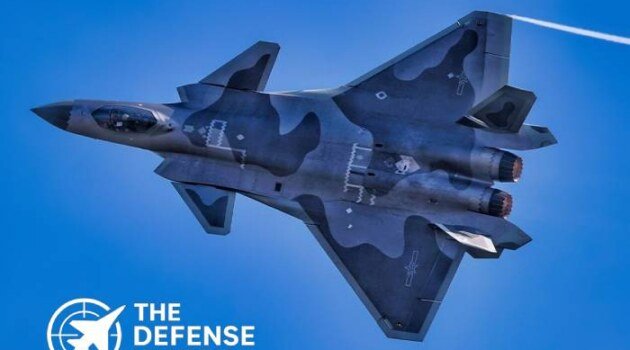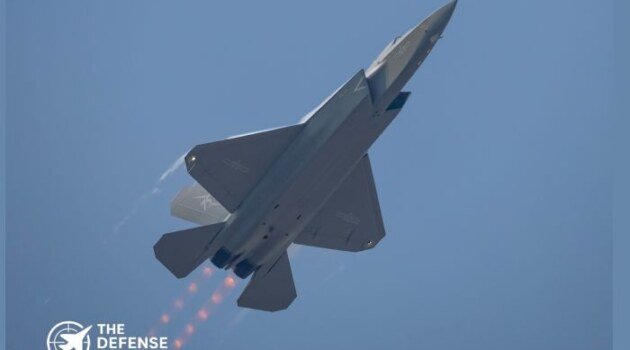
China Reveals Advanced J-35A Stealth Fighter Platform
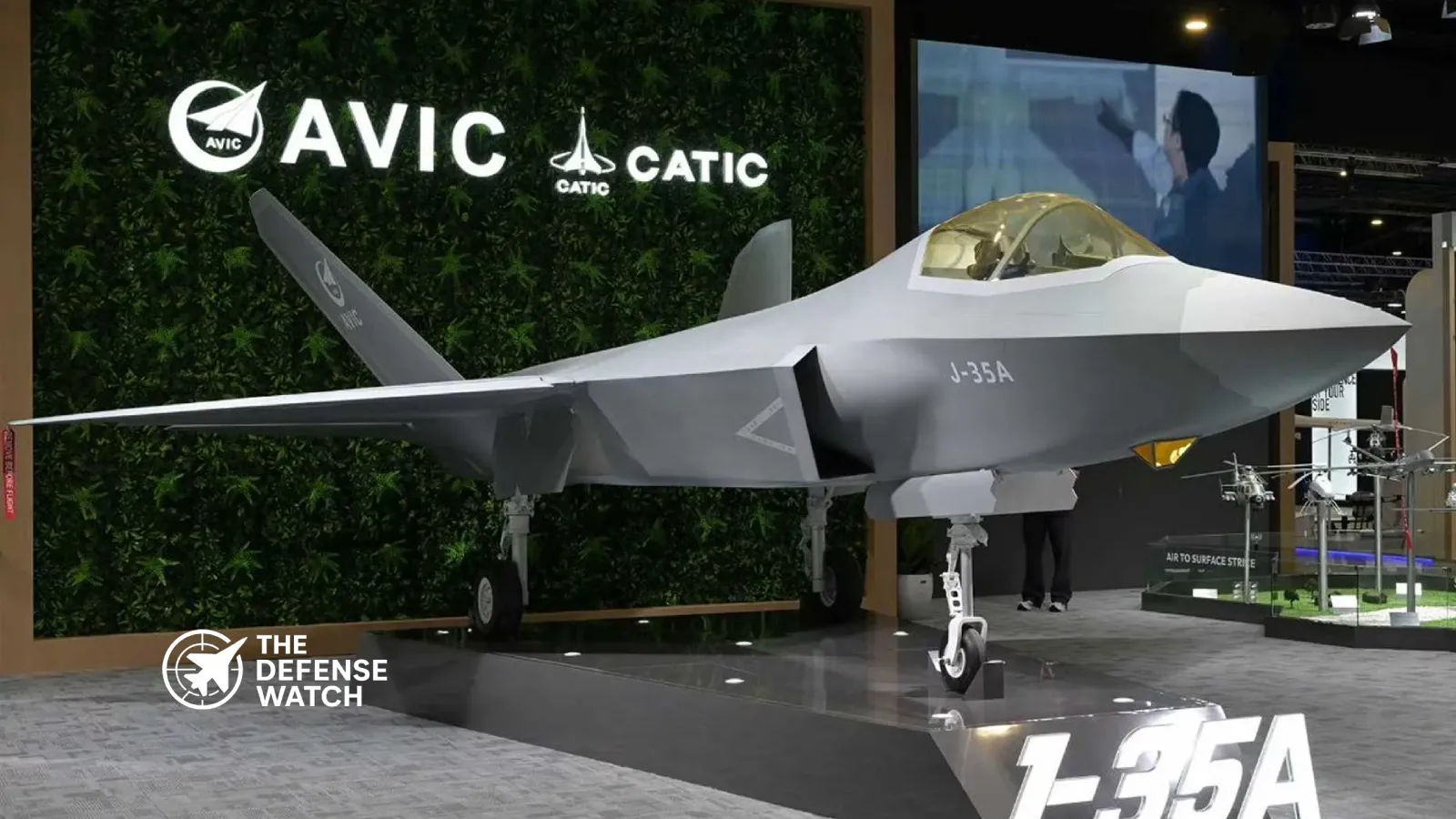
China’s state-owned Aviation Industry Corporation of China (AVIC) unveiled a detailed scale model of the J-35A stealth fighter at Singapore Airshow 2026, marking the clearest public presentation of the land-based fifth-generation aircraft to date. The February 3-8 exhibition at Changi Exhibition Centre provided international observers with the first comprehensive look at the People’s Liberation Army Air Force (PLAAF) platform designed to complement China’s existing J-20 heavy stealth fighter.
The J-35A represents Beijing’s continued advancement in low-observable combat aircraft technology and signals China’s intent to field a diversified fifth-generation air combat force across multiple mission profiles.
Technical Design and Stealth Characteristics
The scale model displayed at Singapore showcases several hallmark fifth-generation design elements optimized for reduced radar cross-section and enhanced survivability in contested airspace. The aircraft features diverterless supersonic intakes, canted twin vertical stabilizers, and edge-aligned control surfaces that minimize radar returns.
AVIC’s presentation emphasizes the J-35A’s blended fuselage lines and internal weapons bay configuration, which eliminates external stores during combat operations to maintain stealth characteristics. This design philosophy aligns with contemporary multi-domain air combat concepts employed by advanced air forces worldwide.
The platform’s aerodynamic shaping suggests optimization for both air superiority and precision strike missions, with geometry balancing stealth, maneuverability, and payload capacity requirements.
Strategic Role Within PLAAF Modernization
Defense analysts characterize the J-35A as a complementary system to China’s heavier J-20 stealth fighter, potentially offering the PLAAF a more flexible and numerically scalable fifth-generation option for various operational scenarios. The land-based configuration differs from naval variants associated with carrier aviation programs.
Unlike carrier-capable variants that require reinforced structures and specialized landing systems, the J-35A is optimized for conventional runway operations and integration into mainland air defense architectures. This design choice potentially reduces production complexity and maintenance demands compared to navalized versions.
Industry observers note the aircraft is expected to incorporate advanced sensor suites including active electronically scanned array (AESA) radar systems, electro-optical targeting capabilities, and comprehensive sensor fusion architecture designed to support network-centric operations.
Propulsion and Indigenous Technology Development
While AVIC did not release detailed performance specifications during the Singapore exhibition, the J-35A model configuration suggests compatibility with China’s latest-generation indigenous turbofan engines. This reflects Beijing’s ongoing efforts to achieve complete autonomy in high-performance military propulsion systems, reducing dependence on foreign technology suppliers.
The propulsion system development represents a critical component of China’s broader defense industrial modernization strategy, enabling sustained production and operational deployment without external dependencies.
International Exhibition Strategic Messaging
AVIC’s decision to showcase the J-35A at one of Asia’s premier aerospace events carries significant strategic implications. Singapore Airshow attracts senior defense officials and procurement authorities from across the Indo-Pacific region, Middle East, and Africa, providing China with a platform to demonstrate advanced military aviation capabilities to potential partner nations.
The public display signals both program maturity and Beijing’s readiness to position the aircraft as a future option for countries seeking advanced combat aircraft beyond traditional Western suppliers. This export-oriented messaging aligns with China’s expanding defense industrial outreach to developing nations and regional partners.
Fifth-Generation Fighter Ecosystem Integration
The J-35A is designed to operate within China’s evolving networked air combat architecture, integrating with airborne early warning platforms, unmanned systems, and ground-based command nodes. This multi-domain integration approach reflects modern air warfare concepts emphasizing distributed operations and real-time information sharing.
The platform’s sensor fusion capabilities enable coordinated operations with other PLAAF assets, potentially including the heavier J-20 fighter in high-low force structure arrangements similar to those employed by other major air forces.
Regional Security Implications
The J-35A’s development occurs within the broader context of intensifying military modernization across the Indo-Pacific region. Multiple nations are acquiring or developing fifth-generation fighter capabilities, driving regional arms competition and altering established air power balances.
U.S. defense officials have previously noted China’s rapid advancement in stealth aircraft technology as a key factor in Indo-Pacific security planning. The J-35A’s emergence as a mature platform adds another dimension to regional military calculations and alliance defense planning considerations.
Future Development and Deployment Timeline
While official PLAAF deployment timelines remain undisclosed, the Singapore Airshow presentation suggests the J-35A program has progressed beyond initial development phases. Scale model displays at major international exhibitions typically indicate approaching operational deployment or active production preparation.
Defense industry analysts anticipate the PLAAF may pursue substantial J-35A procurement to complement existing fourth-generation fighter fleets and augment the more limited numbers of J-20 heavy fighters in service. This two-platform fifth-generation approach would provide operational flexibility across diverse mission requirements.
Comparative Analysis With Global Competitors
The J-35A enters a competitive global market for fifth-generation fighters dominated by the United States’ F-35 Lightning II family and supplemented by platforms including Russia’s Su-57, South Korea’s KF-21, and Turkey’s KAAN development program.
China’s ability to offer a stealth fighter option independent of Western political constraints may appeal to nations seeking advanced capabilities without alignment conditions or operational restrictions typically associated with U.S. defense exports.
Technology Transfer and Export Potential
Beijing’s historical approach to defense exports includes varying levels of technology transfer and co-production arrangements, particularly with long-term strategic partners. The J-35A’s presentation at Singapore suggests China may pursue similar export strategies with this platform, though specific arrangements would likely depend on recipient nation relationships and strategic alignment.
Export versions of Chinese military aircraft have previously featured modified avionics and weapons integration compared to PLAAF operational variants, a pattern that may continue with any potential J-35A international sales.
Get real time update about this post category directly on your device, subscribe now.