

China Reveals Advanced J-35A Stealth Fighter Platform
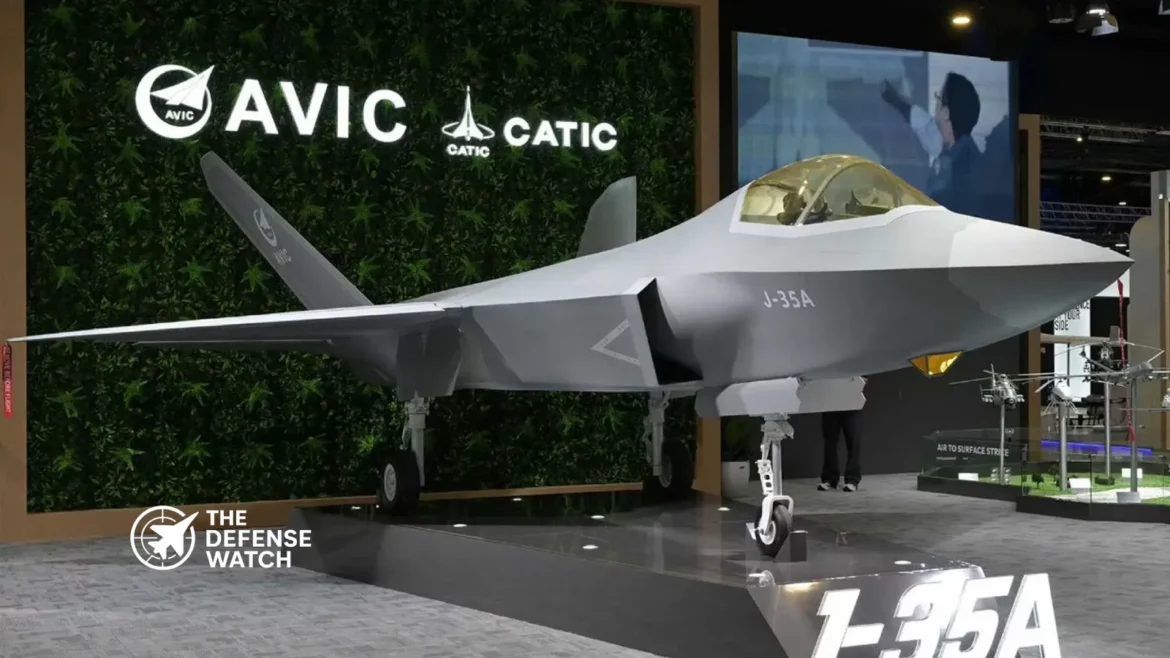
China’s state-owned Aviation Industry Corporation of China (AVIC) unveiled a detailed scale model of the J-35A stealth fighter at Singapore Airshow 2026, marking the clearest public presentation of the land-based fifth-generation aircraft to date. The February 3-8 exhibition at Changi Exhibition Centre provided international observers with the first comprehensive look at the People’s Liberation Army Air Force (PLAAF) platform designed to complement China’s existing J-20 heavy stealth fighter.
(adsbygoogle = window.adsbygoogle || []).push({});The J-35A represents Beijing’s continued advancement in low-observable combat aircraft technology and signals China’s intent to field a diversified fifth-generation air combat force across multiple mission profiles.
Technical Design and Stealth Characteristics
The scale model displayed at Singapore showcases several hallmark fifth-generation design elements optimized for reduced radar cross-section and enhanced survivability in contested airspace. The aircraft features diverterless supersonic intakes, canted twin vertical stabilizers, and edge-aligned control surfaces that minimize radar returns.
AVIC’s presentation emphasizes the J-35A’s blended fuselage lines and internal weapons bay configuration, which eliminates external stores during combat operations to maintain stealth characteristics. This design philosophy aligns with contemporary multi-domain air combat concepts employed by advanced air forces worldwide.
The platform’s aerodynamic shaping suggests optimization for both air superiority and precision strike missions, with geometry balancing stealth, maneuverability, and payload capacity requirements.
Strategic Role Within PLAAF Modernization
Defense analysts characterize the J-35A as a complementary system to China’s heavier J-20 stealth fighter, potentially offering the PLAAF a more flexible and numerically scalable fifth-generation option for various operational scenarios. The land-based configuration differs from naval variants associated with carrier aviation programs.
Unlike carrier-capable variants that require reinforced structures and specialized landing systems, the J-35A is optimized for conventional runway operations and integration into mainland air defense architectures. This design choice potentially reduces production complexity and maintenance demands compared to navalized versions.
Industry observers note the aircraft is expected to incorporate advanced sensor suites including active electronically scanned array (AESA) radar systems, electro-optical targeting capabilities, and comprehensive sensor fusion architecture designed to support network-centric operations.
Propulsion and Indigenous Technology Development
While AVIC did not release detailed performance specifications during the Singapore exhibition, the J-35A model configuration suggests compatibility with China’s latest-generation indigenous turbofan engines. This reflects Beijing’s ongoing efforts to achieve complete autonomy in high-performance military propulsion systems, reducing dependence on foreign technology suppliers.
(adsbygoogle = window.adsbygoogle || []).push({});The propulsion system development represents a critical component of China’s broader defense industrial modernization strategy, enabling sustained production and operational deployment without external dependencies.
International Exhibition Strategic Messaging
AVIC’s decision to showcase the J-35A at one of Asia’s premier aerospace events carries significant strategic implications. Singapore Airshow attracts senior defense officials and procurement authorities from across the Indo-Pacific region, Middle East, and Africa, providing China with a platform to demonstrate advanced military aviation capabilities to potential partner nations.
The public display signals both program maturity and Beijing’s readiness to position the aircraft as a future option for countries seeking advanced combat aircraft beyond traditional Western suppliers. This export-oriented messaging aligns with China’s expanding defense industrial outreach to developing nations and regional partners.
Fifth-Generation Fighter Ecosystem Integration
The J-35A is designed to operate within China’s evolving networked air combat architecture, integrating with airborne early warning platforms, unmanned systems, and ground-based command nodes. This multi-domain integration approach reflects modern air warfare concepts emphasizing distributed operations and real-time information sharing.
The platform’s sensor fusion capabilities enable coordinated operations with other PLAAF assets, potentially including the heavier J-20 fighter in high-low force structure arrangements similar to those employed by other major air forces.
Regional Security Implications
The J-35A’s development occurs within the broader context of intensifying military modernization across the Indo-Pacific region. Multiple nations are acquiring or developing fifth-generation fighter capabilities, driving regional arms competition and altering established air power balances.
U.S. defense officials have previously noted China’s rapid advancement in stealth aircraft technology as a key factor in Indo-Pacific security planning. The J-35A’s emergence as a mature platform adds another dimension to regional military calculations and alliance defense planning considerations.
Future Development and Deployment Timeline
While official PLAAF deployment timelines remain undisclosed, the Singapore Airshow presentation suggests the J-35A program has progressed beyond initial development phases. Scale model displays at major international exhibitions typically indicate approaching operational deployment or active production preparation.
(adsbygoogle = window.adsbygoogle || []).push({});Defense industry analysts anticipate the PLAAF may pursue substantial J-35A procurement to complement existing fourth-generation fighter fleets and augment the more limited numbers of J-20 heavy fighters in service. This two-platform fifth-generation approach would provide operational flexibility across diverse mission requirements.
Comparative Analysis With Global Competitors
The J-35A enters a competitive global market for fifth-generation fighters dominated by the United States’ F-35 Lightning II family and supplemented by platforms including Russia’s Su-57, South Korea’s KF-21, and Turkey’s KAAN development program.
China’s ability to offer a stealth fighter option independent of Western political constraints may appeal to nations seeking advanced capabilities without alignment conditions or operational restrictions typically associated with U.S. defense exports.
Technology Transfer and Export Potential
Beijing’s historical approach to defense exports includes varying levels of technology transfer and co-production arrangements, particularly with long-term strategic partners. The J-35A’s presentation at Singapore suggests China may pursue similar export strategies with this platform, though specific arrangements would likely depend on recipient nation relationships and strategic alignment.
Export versions of Chinese military aircraft have previously featured modified avionics and weapons integration compared to PLAAF operational variants, a pattern that may continue with any potential J-35A international sales.

PL-17 Missile Emerges from Secrecy
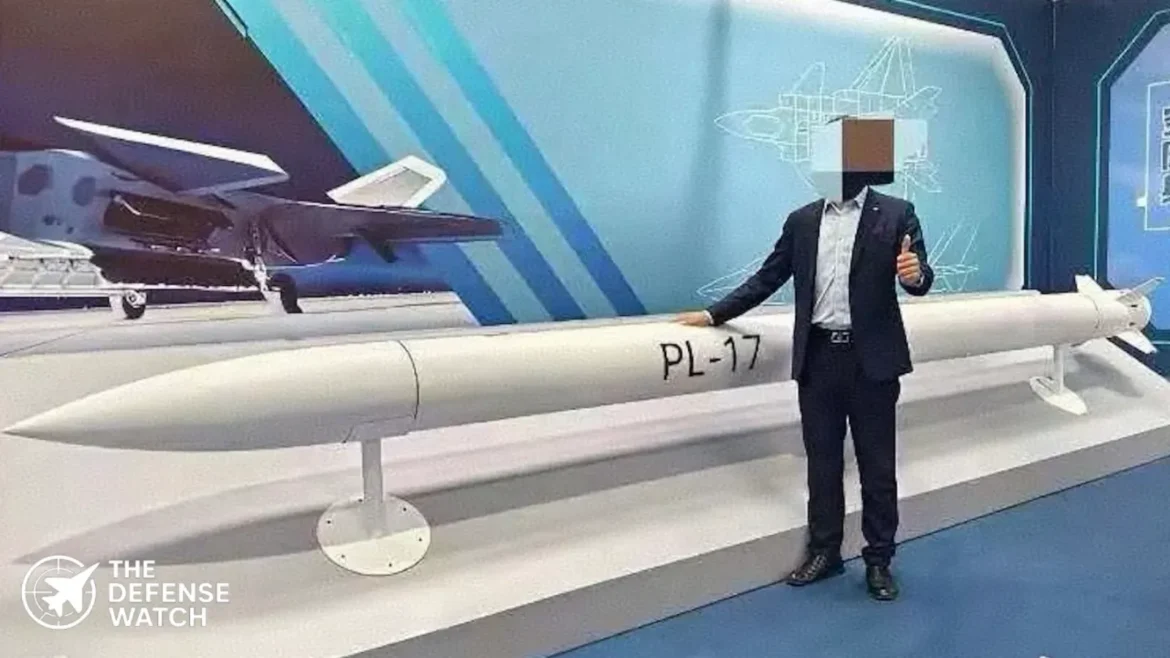
A recently surfaced photograph provides the first detailed close-quarters view of China’s PL-17 very long-range air-to-air missile, one of the most secretive weapons in the People’s Liberation Army Air Force arsenal. The image shows a full-scale mock-up of the approximately 20-foot-long weapon on display at what appears to be a defense exhibition or tradeshow, though the specific date and location remain unconfirmed.
(adsbygoogle = window.adsbygoogle || []).push({});The photograph, shared by respected defense analyst Andreas Rupprecht on social media, depicts a man posing in front of the PL-17 mock-up with his face censored, while a promotional board for China’s J-20 stealth fighter appears in the background. While the authenticity of the image appears credible based on known characteristics of the missile, defense analysts note the photograph cannot be independently verified at this time.
This public appearance marks a significant departure from the decade-long secrecy surrounding the PL-17 since blurry images first emerged in 2016. The weapon system has been a subject of intense Western military interest due to its potential to threaten high-value assets including aerial refueling tankers and airborne early warning aircraft at unprecedented ranges.
Technical Capabilities and Design Features
The PL-17, designated CH-AA-12 Auger under Western reporting conventions, represents a major advancement in Chinese air-to-air missile technology. Defense publications including the International Institute for Strategic Studies estimate the weapon’s maximum range at approximately 250 nautical miles, though actual engagement ranges vary significantly based on target altitude, speed, and countermeasures employed.
The missile’s design incorporates several advanced features. A dual-pulse rocket motor provides extended range capability, while flight control relies on four relatively compact tail fins combined with a thrust-vectoring nozzle for enhanced maneuverability. Maximum velocity is believed to exceed Mach 4, according to technical assessments by defense analysts.
Guidance systems reportedly include a two-way datalink for mid-course updates and an active electronically scanned array seeker designed to resist electronic countermeasures. Some reports suggest the missile may incorporate a passive anti-radiation seeker to target emissions from airborne radar platforms, though this capability has not been officially confirmed.
Initial speculation about a potential infrared optical window in the nose section has not been substantiated by the recent display photograph. The mock-up reveals no visible evidence of such a sensor system.
Operational Employment and Platform Integration
The People’s Liberation Army Air Force has publicly released imagery showing the PL-17 operationally deployed on J-16 multirole fighter aircraft. Official PLAAF photographs from 2023 depicted J-16 formations carrying mixed loadouts including PL-10 short-range, PL-12 medium-range, PL-15 long-range, and PL-17 very long-range missiles, demonstrating comprehensive engagement capability across multiple distance bands.
(adsbygoogle = window.adsbygoogle || []).push({});Defense analysts assess the PL-17 would typically rely on off-board targeting data for maximum-range engagements. China’s extensive investment in airborne early warning platforms, ground-based radar networks, and satellite systems provides potential targeting infrastructure to support long-range missile employment beyond the launch aircraft’s sensor range.
While current operational use appears limited to the J-16 platform, military observers anticipate potential integration with China’s J-20 stealth fighter in external carriage configurations. The missile’s dimensions preclude internal carriage in current Chinese aircraft, raising questions about export prospects given compatibility limitations with smaller fighter types like the J-10 or J-35.
Future integration possibilities include China’s developmental J-36 sixth-generation fighter, which features substantial internal weapons capacity that could accommodate the PL-17’s size.
Impact on U.S. Military Development
The PL-17’s capabilities have prompted significant U.S. responses aimed at maintaining air superiority. The highly classified AIM-260 Joint Advanced Tactical Missile represents the Pentagon’s primary counter-development program, though limited technical details have been publicly released.
In 2024, the U.S. Navy fielded the AIM-174B, an air-launched variant of the SM-6 surface-to-air missile system. While exact range specifications remain classified, defense analysts estimate the AIM-174B can engage large aerial targets at ranges potentially exceeding twice that of the current AIM-120D Advanced Medium-Range Air-to-Air Missile, possibly reaching multiple hundreds of nautical miles against appropriate targets.
Additional U.S. programs include Boeing’s modular air-to-air missile concept, which received Air Force funding for continued development. These initiatives collectively reflect Pentagon concerns about China’s progress in reducing historical Western advantages in beyond-visual-range air combat capabilities.
Strategic Implications
The PL-17’s development aligns with broader Chinese military modernization efforts focused on anti-access/area denial strategies. Very long-range air-to-air missiles enhance China’s ability to threaten critical enablers of U.S. air operations, particularly aerial refueling tankers and airborne early warning and control aircraft operating in the Western Pacific theater.
Military analysts note that successful employment of weapons like the PL-17 requires sophisticated targeting networks and coordination between multiple sensor platforms. China’s investments in integrated air defense systems, space-based surveillance, and datalink technologies support these operational requirements.
(adsbygoogle = window.adsbygoogle || []).push({});The weapon’s public display, while unofficial, suggests increased Chinese confidence in the system’s operational status. Historical patterns indicate Chinese willingness to selectively reveal military capabilities once systems achieve operational maturity, though official technical specifications typically remain classified.
Regional Balance Considerations
The PL-17’s capabilities contribute to evolving air combat dynamics across the Indo-Pacific region. U.S. Air Force and Navy planners must account for extended threat ranges when positioning support assets during potential conflicts. This operational reality influences basing decisions, tanker routing, and airborne early warning patrol patterns.
Allied air forces operating in the region, including Japan, South Korea, and Australia, face similar considerations when planning air operations in scenarios involving Chinese forces equipped with very long-range air-to-air missiles. These nations maintain close coordination with U.S. forces on countering emerging Chinese capabilities.
The missile’s development also reflects broader trends in air combat technology, including increased engagement ranges, networked operations, and emphasis on targeting high-value assets. These trends drive procurement priorities and training requirements across multiple air forces globally.
Future Developments
Despite this new visual evidence, numerous technical questions about the PL-17 remain unanswered. Specific details regarding warhead design, electronic counter-countermeasure capabilities, and actual operational range under various engagement conditions have not been publicly disclosed.
The appearance of the mock-up at what appears to be a semi-public venue may indicate Chinese willingness to provide additional information about the system. Historical precedent suggests selective disclosure of capability information serves both deterrent purposes and supports potential export marketing, though the PL-17’s size may limit export applications.
Western intelligence services and defense analysts will continue monitoring for additional information about the PL-17’s technical characteristics, operational employment, and integration with other Chinese military systems. The missile represents a significant component of China’s expanding air combat capabilities that will shape regional military planning for years to come.


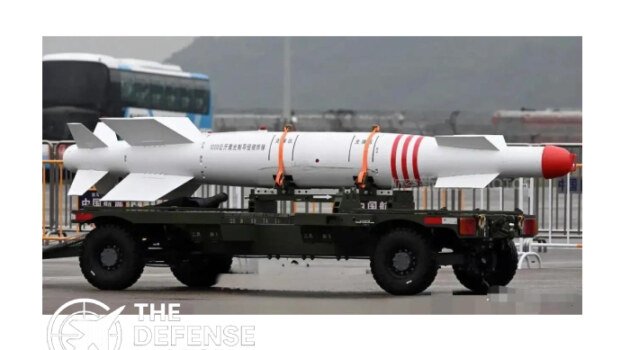
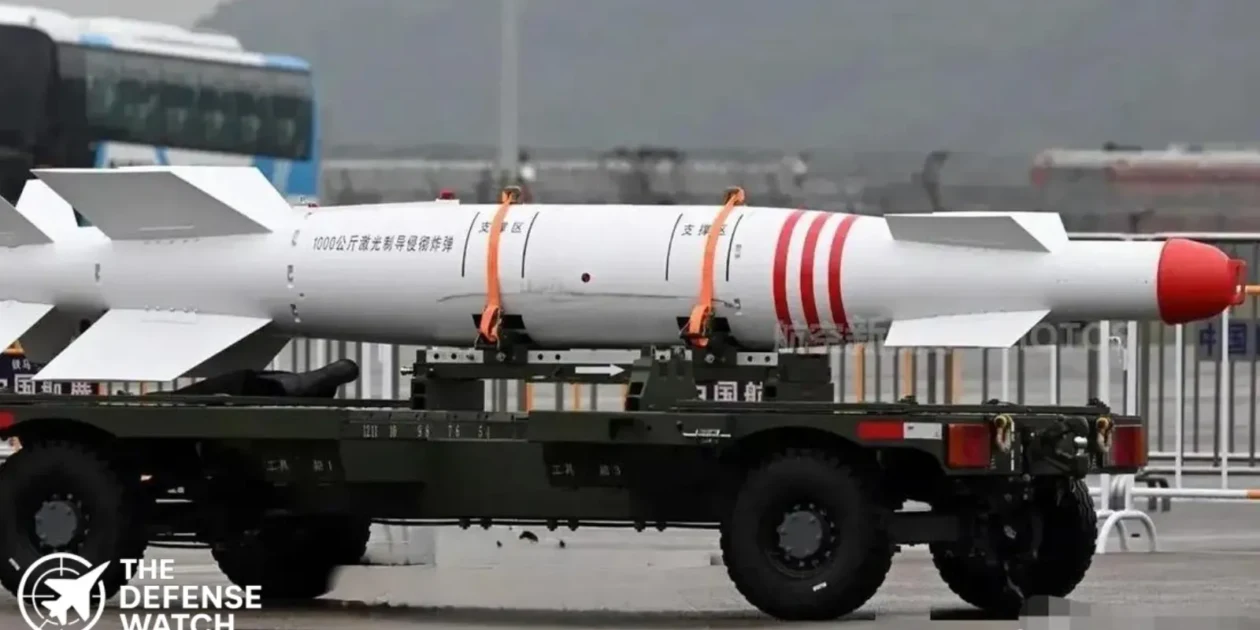
China YJ 1000 precision guided bomb is emerging as one of the heaviest air delivered strike weapons entering service with the People’s Liberation Army Air Force and Naval Aviation forces. Designed as a long range glide munition with a large penetrator warhead, the YJ 1000 reflects Beijing’s continued push to expand stand off strike options against hardened ground targets and high value naval assets.
The YJ 1000 bomb, reportedly developed by major Chinese defense groups under AVIC and CASIC, is believed to have entered limited service around 2024 to 2025. While Chinese authorities have not released a full official data package, public displays, industry briefings, and military reporting suggest the weapon fills a gap between smaller satellite guided bombs and cruise missiles.
With a claimed stand off range of up to 80 kilometers, the YJ 1000 allows Chinese combat aircraft to strike defended targets without entering the most dangerous layers of enemy air defenses. This capability aligns closely with China’s broader airpower modernization goals and its focus on anti access and area denial strategies.
What Is the YJ 1000 Bomb
Heavy Precision Guided Glide Munition
The YJ 1000 is assessed to be a 1,000 kilogram class precision guided bomb fitted with a glide kit rather than a powered engine. After release from altitude, deployable wings extend to provide lift and allow the bomb to travel significant distances toward its target.
Unlike cruise missiles, the YJ 1000 relies on gravity and aerodynamic glide rather than propulsion. This keeps costs lower while still offering extended reach compared to traditional free fall bombs.
Chinese military analysts describe the YJ 1000 as a penetrator munition optimized for hardened or semi hardened targets. Its large mass and reinforced casing are designed to punch through concrete, soil, or ship decks before detonation.
Guidance and Accuracy
Beidou and Inertial Navigation
The YJ 1000 uses a combination of China’s Beidou satellite navigation system and inertial navigation for midcourse guidance. This approach mirrors Western GPS guided bomb designs and supports fire and forget employment.
There is no terminal seeker reported on the weapon. Instead, it relies on pre programmed coordinates and satellite updates to maintain accuracy. Chinese sources claim a circular error probability of less than three meters under ideal conditions.
The lack of an imaging or radar seeker suggests the YJ 1000 is intended primarily for fixed or well located targets such as bunkers, command centers, airfield infrastructure, and large surface vessels.
Performance and Range
Stand Off Strike Capability
Chinese military publications estimate the YJ 1000 has a stand off range between 50 and 80 kilometers when released from high altitude. Actual range depends heavily on release speed, altitude, and flight profile of the launch aircraft.
Because it is a glide bomb, there is no fixed ceiling or altitude limit. Fighters and strike aircraft operating at higher altitudes can maximize glide distance while staying outside many short and medium range air defense systems.
The weapon travels at subsonic speed and follows a predictable glide path. This makes it less survivable than a cruise missile against advanced integrated air defenses, but far more capable than older gravity bombs.
Warhead and Lethality
Large Penetrator Payload
One of the most notable aspects of the YJ 1000 is its warhead size. Open source estimates suggest an 800 kilogram high explosive penetrator payload, making it one of the heaviest air launched guided bombs in China’s inventory.
The warhead is designed to detonate on impact or after a short delay, allowing it to penetrate reinforced structures before exploding. This makes it suitable for destroying underground bunkers, hardened aircraft shelters, ammunition depots, and port facilities.
Against naval targets, the YJ 1000 could be used to strike large surface combatants or support ships in port or at sea, particularly when combined with massed attacks.
Aircraft Compatibility
Integration With Frontline Chinese Fighters
The YJ 1000 is reported to be compatible with several frontline Chinese combat aircraft, including the J 10C multirole fighter, J 15 carrier based fighter, J 16 strike fighter, and the older JH 7 fighter bomber.
These platforms provide the payload capacity and avionics needed to carry and release a weapon of this size. The J 16, in particular, is seen as a key launch platform due to its range, payload, and strike focused mission profile.
Integration across both PLAAF and PLANAF aircraft suggests the YJ 1000 is intended for joint operations, supporting both land attack and maritime strike missions.
Role in Chinese Airpower Strategy
Filling the Gap Between Bombs and Missiles
The YJ 1000 sits between smaller precision guided bombs and long range cruise missiles in China’s strike arsenal. It offers greater reach and lethality than 250 or 500 kilogram satellite guided bombs, but at lower cost and complexity than powered missiles.
This balance is important for sustained operations. In a high intensity conflict, glide bombs like the YJ 1000 could be used in large numbers to overwhelm defenses and conserve more expensive missile inventories.
The weapon also reflects a shift toward stand off employment. Chinese aircraft can launch from outside the range of many point defense systems, reducing risk to pilots and platforms.
Comparison With Western Systems
Similarities to JDAM ER and SPICE
In concept, the YJ 1000 is comparable to Western extended range guided bombs such as the JDAM ER or the Israeli SPICE family. However, its size places it closer to the heaviest bunker buster class weapons rather than standard general purpose bombs.
While the United States relies heavily on powered cruise missiles and stealth aircraft for deep strike, China appears to be building a layered approach. Glide bombs like the YJ 1000 complement ballistic missiles, cruise missiles, and long range aviation.
The absence of a terminal seeker may limit flexibility against mobile targets, an area where some Western weapons offer more options.
Operational Status and Combat Use
No Confirmed Combat Employment
As of 2025, there is no confirmed combat use of the YJ 1000. The weapon has not been reported in real world strike operations, and its performance remains unproven outside of testing and exercises.
However, its reported entry into active service suggests production has begun and operational units are training with the system. Chinese military exercises increasingly emphasize long range precision strike, providing a likely testing ground for the weapon.
Industrial and Program Background
Chinese Defense Industry Role
Development of the YJ 1000 is attributed to major Chinese aerospace and missile organizations under AVIC and CASIC. These firms have been central to China’s rapid expansion of precision guided munitions over the past decade.
China has invested heavily in satellite navigation, guidance electronics, and mass production capabilities. The YJ 1000 benefits from these investments, particularly the widespread adoption of Beidou across Chinese weapons systems.
Analysis and Strategic Context
Strengthening Stand Off Strike Depth
The introduction of the YJ 1000 underscores China’s focus on creating depth in its air delivered strike options. Rather than relying on a single class of weapon, the PLAAF and PLANAF are fielding a mix of bombs, glide weapons, and missiles to suit different targets and threat environments.
This approach complicates enemy defense planning. Air defenses must account for both slow glide weapons and faster missiles, increasing the burden on interceptors and sensors.
Implications for Regional Air Defense
For regional militaries, the YJ 1000 highlights the need to strengthen layered air defenses around critical infrastructure. Hardened shelters, command facilities, and ports could face increased risk from heavy glide bombs launched from outside traditional engagement zones.
While not as difficult to intercept as stealthy cruise missiles, large glide bombs still pose a serious challenge when used in numbers or combined with electronic warfare and decoys.
FAQs
What is the main role of the YJ 1000 bombIt is designed for long range precision strikes against hardened ground targets and large naval assets.
How far can the YJ 1000 travelEstimated stand off range is between 50 and 80 kilometers depending on launch conditions.
Does the YJ 1000 have its own engineNo. It is a gravity delivered bomb with a glide kit and no propulsion.
Which aircraft can carry the YJ 1000Reported platforms include J 10C, J 15, J 16, and JH 7 aircraft.
Has the YJ 1000 been used in combatThere is no confirmed combat use as of 2025.
YJ-1000 Bomb

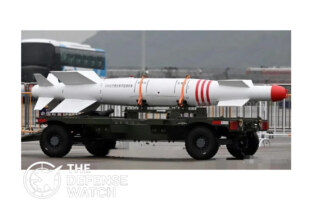
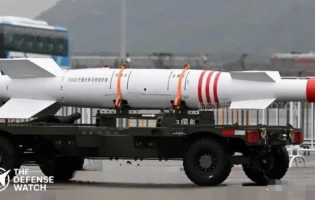
Defense Systems Full Specifications
1. General Information
Name / Designation YJ-1000 Type / Role Precision-Guided Bomb / Penetration Munition Country of Origin China Manufacturer AVIC / CASIC Service Entry / Year Introduced 2024–2025 (estimated) Operational Status Active / In Service 2. Performance & Range
Range 50–80 km (standoff range) Speed Subsonic / gravity-delivered Ceiling / Altitude Limit Depends on launch platform Accuracy (CEP) <3 meters Warhead Type Penetrator High-Explosive 3. Guidance & Targeting
Guidance System Beidou + INS Targeting Mode Fire-and-Forget Launch Platform Compatibility J-10C, J-15, J-16, JH-7 Seeker Type None (GPS/INS guided) 4. Physical Characteristics
Length Approx. 3.5 m Diameter 0.45 m Wingspan 0.8 m Launch Weight ~1,000 kg Propulsion None (gravity bomb with glide kit) 5. Warhead & Payload
Warhead Weight ~800 kg Explosive Type High-Explosive Penetrator Detonation Mechanism Impact or Delay Fuse Payload Options Conventional 6. Operational Use & Capabilities
Operational Range Type Medium Deployment Platform Air (Fighter / Bomber) Target Types Bunkers, Naval Ships, Airfields Combat Proven No (as of 2025) Users / Operators China (PLAAF / PLANAF) PROS
- High-precision guidance (Beidou/INS system)
- Compatible with multiple Chinese fighter jets
- Strong penetration capability against hardened targets
- Long standoff range enhances aircraft survivability
- Modular design allows flexible payload integration
CONS
- Limited publicly available performance data
- Heavier payload restricts smaller aircraft compatibility
- Dependent on satellite connectivity for optimal accuracy
- Lacks verified combat record
- Restricted export availability
YJ-1000 Precision Guided Bomb
The YJ-1000 is a modern, 1-ton precision-guided bomb developed by China’s defense industry, likely under the state-run Aviation Industry Corporation of China (AVIC) or China Aerospace Science and Industry Corporation (CASIC). Introduced in the mid-2020s, the YJ-1000 is designed to deliver accurate, high-impact strikes against fortified ground and naval targets. Its debut signals China’s growing capability to equip fourth- and fifth-generation aircraft with advanced, long-range strike munitions.
Design and Capabilities
Weighing approximately 1,000 kilograms, the YJ-1000 employs a modular design compatible with a range of People’s Liberation Army Air Force (PLAAF) aircraft, including the J-10C, J-15, J-16, and JH-7. Its guidance suite combines satellite navigation (Beidou) and inertial navigation (INS) systems to achieve sub-meter accuracy, enabling precision attacks even in GPS-jammed environments.
The bomb’s aerodynamic casing and adjustable control fins support high-speed, standoff delivery, allowing aircraft to release it from significant altitudes and distances beyond enemy air defenses. It carries a penetrator-type warhead, optimized for destroying bunkers, runways, and hardened shelters.
While not officially disclosed, estimates place its effective range at 50–80 kilometers when deployed from altitude. The YJ-1000 integrates with China’s digital targeting pods, providing fire-and-forget capability once released.
Operational Role
The YJ-1000 enhances China’s precision-strike capability across contested zones such as the South China Sea or Taiwan Strait. It serves as a counterpart to Western systems like the U.S. GBU-31 JDAM, reflecting China’s continued modernization of its aerial strike arsenal.
YJ-1000 Bomb Price
Although not available for U.S. export, defense analysts estimate the YJ-1000’s unit cost to be around $150,000–$250,000, comparable to Western precision-guided munitions in its weight class.
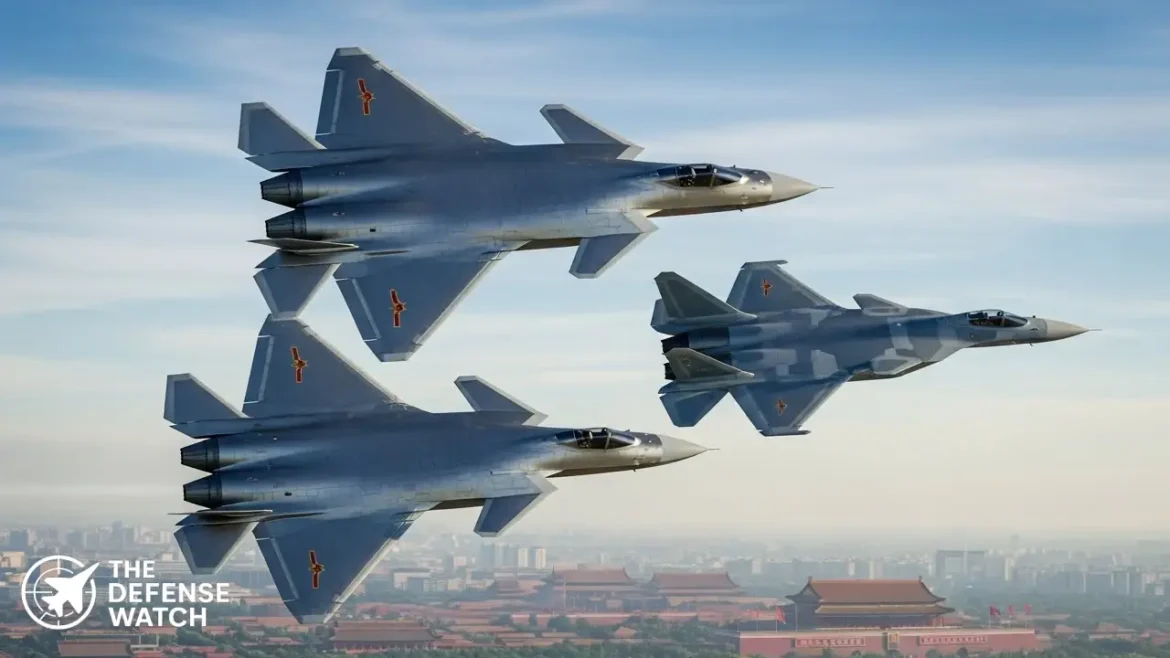
China Emerges as Second Nation With Multiple Stealth Fighter Programs
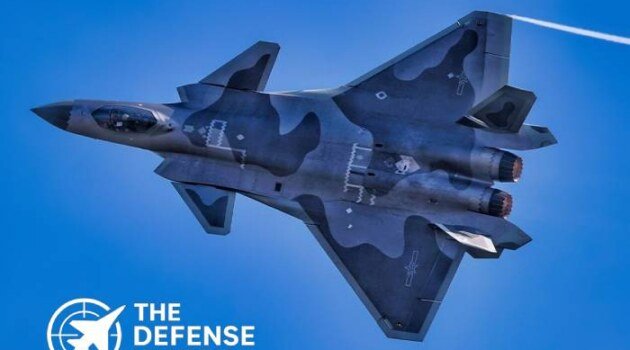
China has become the second country after the United States to develop two types of stealth fighter jets—the J-20 and J-35 families—marking a transformative milestone in global aerospace competition. As of December 2025, more than 300 J-20 china stealth fighter jets have been manufactured, with the People’s Liberation Army Air Force (PLAAF) simultaneously integrating the newly operational J-35A and advancing development of the sixth-generation J-36. This triad of platforms represents Beijing’s comprehensive approach to challenging U.S. air dominance across the Indo-Pacific theater.

The rapid expansion of China’s stealth capabilities reflects both industrial maturity and strategic urgency. In 2025 alone, China is expected to procure up to 120 J-20s, a figure that dwarfs the U.S. Air Force’s planned acquisition of just 24 F-35s. This production disparity, coupled with the operational debut of multiple stealth variants, signals a fundamental shift in the regional balance of airpower.
The J-20: China’s Heavy Stealth Fighter Reaches Critical Mass
Production Surge and Operational Deployment
The Chengdu J-20, also known as Weilong or “Mighty Dragon,” is a twin-engine all-weather stealth fighter developed for the People’s Liberation Army Air Force. First achieving operational capability in March 2017, the J-20 program has accelerated dramatically in recent years. Between mid-2024 and late 2025 alone, more than 50 aircraft were delivered, with current estimates indicating annual output between 70 and 100 units.
The aircraft’s deployment pattern reflects Beijing’s strategic priorities. In the Eastern Theater Command, J-20 brigades conduct patrols over the Taiwan Strait and East China Sea, frequently shadowing U.S. and Japanese reconnaissance aircraft, while in the Southern Theater Command, J-20s are now a permanent fixture over the South China Sea. This operational tempo provides the PLAAF with a persistent stealth presence across China’s most sensitive flashpoints.
Twin-Seat Variant Expands Mission Capabilities
On July 7, 2025, China officially fielded a two-seat version of the J-20 fighter, identified as the J-20S, the first fifth-generation stealth fighter globally to feature a tandem crew configuration. The second crew member functions as a mission systems officer responsible for managing electronic warfare, coordinating strikes, and potentially controlling unmanned combat aerial vehicles in loyal wingman formations.
Chief Technical Expert Gong Feng described the J-20 as possessing outstanding stealth capabilities with an extremely small radar cross-section, allowing it to “pierce the opponent’s defense network like a needle”. The twin-seat configuration addresses the cognitive challenges of processing enormous sensor data while maintaining tactical effectiveness during extended-range operations.
Technical Evolution and Engine Upgrades
The aircraft has evolved into variants including the initial production model, the revised airframe variant with new engines and thrust-vectoring control, and the twin-seat variant. Early J-20s were powered by Russian AL-31F or Chinese WS-10C engines, but newer variants feature the indigenous Shenyang WS-15 afterburning turbofan producing 161.86-180 kN of thrust with afterburner, significantly enhancing supercruise performance and combat agility.
The J-20’s canard-delta configuration, once controversial among Western analysts, has proven effective. Chinese aerospace researchers have concluded that the canard delta configuration is comparable with conventional arrangements in terms of stealth when properly managed through flight-control software.
J-35A Stealth Fighter: China’s Multirole Solution
From Export Demonstrator to Frontline Asset
The Shenyang J-35 was developed from the FC-31 Gyrfalcon, a stealth aircraft prototype that initially aimed to secure export customers after Shenyang Aircraft Corporation lost the J-XX bid to Chengdu’s J-20. However, PLA Navy interest in a carrier-capable stealth fighter led to extensive redesign work. On 3 September 2025, Chinese state media announced the J-35 and J-35A to be part of the aircraft fleet of the PLA Navy and the PLAAF.
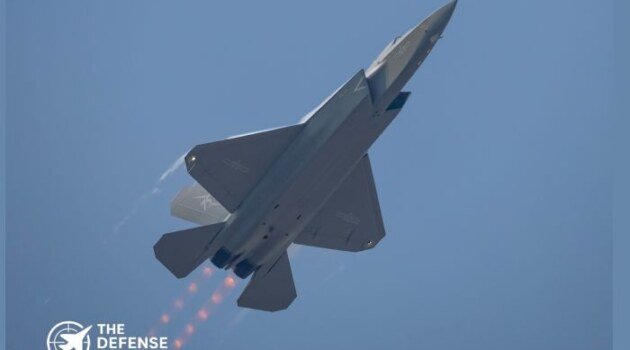
The land-based J-35A variant officially entered PLAAF service in October 2025, complementing the heavier J-20 with a medium-weight multirole platform. Wang Yongqing, the J-35A’s chief researcher, stated the aircraft was created to neutralize high-level threats, especially hostile stealth aircraft, while establishing a considerable scale fleet of affordable, powerful stealth jets.
Networked Warfare Capabilities
The J-35A’s defining characteristic is its integration into China’s broader air defense architecture. Wang explained that the aircraft “can lock on targets, share the targets’ position with other weapon systems, such as surface-to-air missiles, and even use its own radar to guide other weapons to bring the targets down” in what he described as “systems coordination” or “multi-domain coordination”.
This network-centric approach mirrors the U.S. F-35’s sensor fusion philosophy but adapts it to China’s integrated air defense systems. The J-35A functions as both a shooter and a sensor node, enabling non-stealthy platforms and ground-based systems to engage targets beyond their organic detection ranges.
Carrier Operations and Naval Variant
On 22 September 2025, the PLA Navy announced that the Shenyang J-35 had been certified for catapult launch and recovery operation using the electromagnetic catapult onboard the Fujian aircraft carrier. This milestone makes the J-35 the first stealth fighter to successfully conduct electromagnetic catapult-assisted operations at sea, preceding the U.S. Navy’s F-35C integration aboard USS Gerald R. Ford.
The carrier-based J-35 features folding wings, reinforced landing gear, and structural modifications for the demanding catapult and arresting gear environment. Its deployment aboard the Fujian—China’s first carrier equipped with electromagnetic launch systems—will substantially enhance the PLA Navy’s ability to project airpower beyond the first island chain.
J-36: China’s Sixth-Generation Demonstrator
Tailless Flying Wing Design Breaks Cover
On 26 December 2024, an aircraft believed to be the J-36 was spotted conducting test flights in Chengdu, featuring a trijet tailless diamond-double-delta winged design. The aircraft’s public emergence surprised Western analysts and sparked immediate debate about its classification and capabilities.
Open imagery and specialist analysis describe a tailless, trijet flying wing with a stretched diamond double-delta wing, broad chine running into the leading edge, and side-by-side seating under a wide canopy. Three engines buried deep in the fuselage are fed by lateral inlets and a prominent dorsal diverterless supersonic intake, maximizing internal volume while minimizing radar signature.
Weapons Bay and Payload Capacity
The primary weapons bay has an approximate length of 7.6 meters, apparently capable of housing PL-17 beyond-visual-range air-to-air missiles or large air-to-surface munitions, flanked by two smaller bays. This internal capacity exceeds that of the J-20 and approaches that of heavy strategic bombers, suggesting a platform optimized for long-range strike and air dominance missions.
The overall aircraft design is speculated to emphasize all-aspect broadband stealth, high speed, long endurance, high payload capacity, large power generation, and multispectral situational awareness. The wing sweep angles indicate aerodynamic optimization for supercruise, potentially enabling sustained supersonic flight without afterburner.
Rapid Prototyping and Development Timeline
On 17 March 2025, images emerged of a second J-36 prototype featuring redesigned exhausts with two-dimensional thrust vectoring petals and revised side intakes with diverterless supersonic inlets. The rapid iteration between prototypes demonstrates an accelerated development approach, with significant design changes occurring within months rather than years.
USAF official Andrew P. Hunter acknowledged the J-36 may achieve initial operational capability earlier than American sixth generation fighter programs, though he believed the USAF system would likely produce the better product. U.S. Air Force leadership has cited the J-36’s progress as justification for continuing the Next Generation Air Dominance (NGAD) program despite budget pressures.
Strategic Implications and Mission Profile
According to Chinese military magazine Shipborne Weapons, when the sixth-generation fighter is in service, the PLA can intercept U.S. warplanes trying to penetrate the first island chain, potentially blocking the airspace to foreign bases in Guam for up to two hours from 1,000 km away. This assessment highlights the aircraft’s intended role as a long-range interceptor and strike platform capable of operating deep into the Pacific.
The J-36 fits Beijing’s need for a deep-reach air-dominance and strike asset over the Indo-Pacific’s vast maritime spaces, tailored to patrol far beyond China’s coastline while cueing long-range anti-ship and anti-air missiles against U.S. carrier strike groups. In future air combat, the platform could function as the central node of a kill web, absorbing targeting data from satellites and drones while pushing track-quality information to other shooters.
Comparative Analysis: China vs. U.S. Stealth Fighters
Production Rates and Fleet Size
The disparity in production rates represents a critical strategic factor. If the present tempo continues, China’s J-20 inventory may exceed 500 units by 2026 and approach 1,000 by 2030—potentially surpassing the combined numbers of F-22s and F-35As in U.S. Air Force service. The U.S. operates 187 F-22 Raptors with no additional production planned, while F-35 deliveries continue at approximately 156 units annually across all services and international partners.
However, raw numbers tell only part of the story. The F-35 program has delivered over 1,000 aircraft globally, with extensive combat experience and a mature logistics infrastructure. The F-22, despite limited numbers, remains undefeated in simulated combat and possesses stealth characteristics refined over decades of development.
Technological Maturity and Operational Experience
Western analysts remain cautious about Chinese stealth capabilities. Questions persist regarding radar cross-section reduction, sensor fusion effectiveness, engine reliability, and pilot training standards. The PLAAF has limited experience integrating fifth-generation fighters into complex air campaigns, whereas the U.S. has employed stealth aircraft operationally since 1991.
Some analysts describe the J-35A as requiring time to reach full operational capacity, with potential gaps in engines, frontal stealth, sensor fusion, interoperability, and maintenance ecosystems compared to the F-35. Software development, mission mode updates, and data link security represent critical challenges for achieving true networked warfare capability.
Design Philosophy Differences
The J-20, with a canard wing configuration, is a heavy fighter jet focused on air superiority missions comparable to the F-22, while the medium-sized J-35A uses a tailplane wing configuration similar to the F-35 with strong surface attack capabilities. This high-low mix mirrors U.S. force structure but with China achieving simultaneous serial production of both aircraft classes—something the U.S. never accomplished with the F-22 and F-35.
The J-36’s tailless configuration and tri-engine layout represent a distinct design philosophy. China’s tri-engine approach suggests it chose brute-force thrust and power over the weight savings of two larger engines, potentially implying differences in engine technology maturity or specific performance goals.
Regional Security Implications
First Island Chain Dynamics
The concentration of Chinese stealth fighters in the Eastern and Southern Theater Commands directly challenges U.S. and allied freedom of operation. Taiwan, Japan, and South Korea face an adversary capable of contesting airspace with low-observable platforms supported by integrated air defenses and long-range sensors.

The stealth capabilities of the J-35A make it difficult for Taiwan’s air defense systems to detect and track the planes, making surprise attacks easier for China while advanced avionics and weapon systems give China a significant edge in achieving air superiority. Taiwan’s F-16V fighters, while upgraded with modern radars, lack the stealth characteristics necessary for survivability in heavily contested environments.
U.S. Response and Force Posture Adjustments
Facing China’s growing military threat, the U.S. has deployed all three variants of its F-35 jet in Japan, its key ally for projecting power and deterring Chinese aggression under the island chain strategy. The U.S. Air Force has also reactivated aggressor squadrons equipped with F-35s to replicate Chinese stealth threats during training.
The emergence of the J-36 has intensified pressure on U.S. sixth-generation programs. Bryan Clark of the Hudson Institute suggested the Chengdu aircraft could be a potential adversary to NGAD and provide American planners incentives to continue the program. However, the NGAD program faces budget scrutiny and questions about optimal configuration, with some officials questioning whether a crewed fighter remains cost-effective.
Export Potential and International Proliferation
In January 2024, Pakistan announced its intention to buy FC-31 aircraft, with Pakistani media reporting in December 2024 that 40 aircraft had been approved for purchase. Export versions of the J-35 could provide countries unable to access Western fifth-generation fighters with stealth capabilities, fundamentally altering regional power dynamics in South Asia and the Middle East.
In May 2025, Egypt was reportedly considering the purchase of the J-35, with military officials showing interest during an event celebrating 45 years of military ties between Egypt and China. Chinese willingness to export advanced stealth technology—something the U.S. has restricted to close allies—could accelerate global proliferation of fifth-generation capabilities.
Industrial Base and Technological Foundations
Digital Manufacturing and AI-Assisted Production
The sheer pace of J-20 production highlights the industrial discipline and resource allocation underpinning China’s defense manufacturing ecosystem, where digitalized factories and AI-assisted quality control ensure consistent output. China’s state-directed aerospace sector enables rapid scaling and coordinated supply chains across multiple manufacturers.
The J-20 program has become an integration benchmark, linking Aviation Industry Corporation of China (AVIC), Aero Engine Corporation of China (AECC), and China Electronics Technology Group Corporation (CETC) in synchronized production networks. This industrial coordination allows China to maintain high production rates while managing the complexity of stealth manufacturing.
Indigenous Engine Development Progress
Engine technology has historically represented a critical weakness in Chinese aerospace programs. Early J-20s relied on Russian AL-31F engines or interim Chinese WS-10C powerplants. The development of the WS-15 engine represents a major milestone, providing thrust levels comparable to the F-22’s F119 while incorporating thrust-vectoring nozzles for enhanced maneuverability.
The J-36 appears to use thrust-vectoring nozzles similar to those on the F-22A fighter, providing additional maneuverability throughout different areas of the flight envelope and allowing better overall controllability on a highly unstable tailless design. Mastery of two-dimensional thrust vectoring technology demonstrates China’s progress in advanced propulsion systems.
Future Trajectory and Uncertainties
Manned-Unmanned Teaming Integration
The two-seat J-20S’s rear cockpit capabilities have sparked discussion about managing collaborative combat aircraft and loyal wingman systems. China is developing multiple unmanned platforms including the AVIC Dark Sword and GJ-11 Sharp Sword stealth UAVs designed to operate in coordination with manned fighters.
The integration of stealth UCAVs with the J-20S and potentially the J-36 would create layered attack formations capable of overwhelming air defenses through saturation while preserving high-value manned platforms. This manned-unmanned teaming concept parallels U.S. efforts with the Collaborative Combat Aircraft program but may advance more rapidly given China’s industrial capacity.
Sixth-Generation Definition and Classification Debate
Experts have not yet reached a consensus on the J-36’s primary role or specific capabilities, with uncertainty about what jet fighter generation and tactical usage the aircraft would be classified under. Some analysts view it as a fighter-bomber hybrid optimized for range and payload rather than a pure air superiority platform.
From the PLAAF perspective, Wang Wei, deputy commander of PLAAF, confirmed in an interview that J-36 is PLAAF’s interpretation of a sixth-generation aircraft. However, without clear international consensus on sixth-generation criteria, classification remains fluid and dependent on observed capabilities as testing progresses.
Timeline to Operational Capability
If China’s sixth-generation fighters follow a similar pace to previous programs, they could potentially enter service as early as January 2031, possibly outpacing the U.S. Air Force’s projected sixth-generation fighter timeline However, significant development challenges remain, particularly in advanced sensor integration, artificial intelligence systems, and directed energy weapons that may define true sixth-generation capability.
The J-36 is unlike any fighter now in frontline service, and while China moved first in flight-test chronology with public flights since late 2024, the United States still holds deep advantages in adaptive engines, combat networking, and the broader drone ecosystem underpinning NGAD.
FAQs
How many J-20 stealth fighters does China currently operate?As of late 2025, China has manufactured over 300 J-20 fighters, with the majority integrated into active PLAAF service across multiple theater commands. Production rates suggest the fleet could exceed 500 aircraft by 2026.
What distinguishes the J-35A from the carrier-based J-35?The J-35A is a land-based variant optimized for PLAAF operations from conventional runways with a single nose wheel and revised wing design. The carrier-based J-35 features folding wings, reinforced landing gear, a catapult launch bar, and arresting gear tailhook for electromagnetic catapult operations aboard the Fujian carrier.
Is the J-36 truly a sixth-generation fighter?The classification remains debated among analysts. The J-36 features advanced characteristics including tailless configuration, all-aspect stealth, tri-engine layout, and extensive weapons capacity. Chinese officials describe it as their sixth-generation interpretation, though its operational capabilities relative to U.S. NGAD concepts remain unclear.
Can Chinese stealth fighters match U.S. F-22 and F-35 capabilities?While Chinese stealth fighters represent significant technological achievements, questions remain about stealth effectiveness, sensor fusion maturity, pilot training standards, and combat-proven reliability compared to U.S. platforms with decades of operational experience. Production numbers increasingly favor China, but technological sophistication likely still favors U.S. systems.
What export markets exist for Chinese stealth fighters?Pakistan has committed to purchasing approximately 40 FC-31/J-35 aircraft with pilot training already underway in China. Egypt has reportedly expressed interest in the J-35. Chinese willingness to export fifth-generation technology to partners unable to access Western platforms could significantly alter regional power balances.
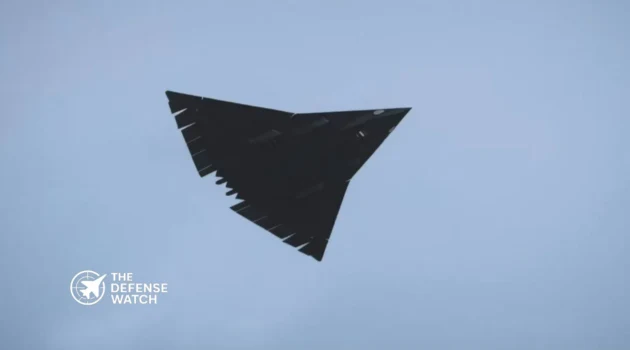
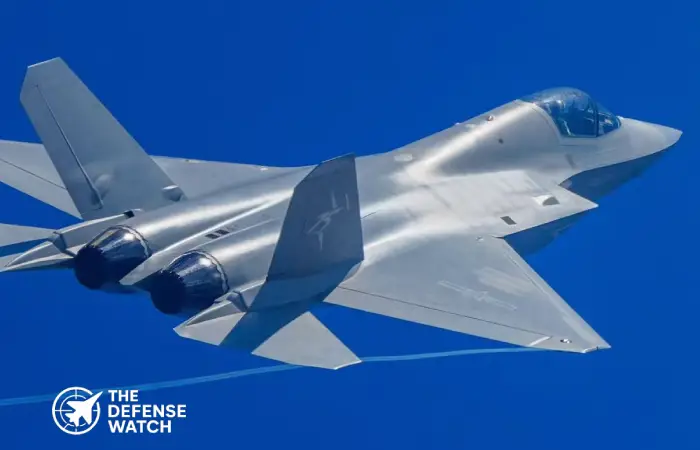

The Global Push Toward Sixth Generation Fighter Jets
The race to field the world’s most advanced combat aircraft is intensifying, with sixth generation fighter jets emerging as the next major milestone in airpower. Both China and the United States are pursuing sixth-generation designs, and China’s alleged sixth-generation fighter jets have become a key focus of global intelligence observations. While details remain closely guarded, both nations view these future platforms as essential to maintaining—or redefining—the global balance of air superiority.
Sixth-generation fighters aim to surpass traditional stealth aircraft through deeper integration with AI, sensor fusion, collaborative unmanned teaming, advanced propulsion concepts, and long-range strike capabilities. As the world’s two largest military powers push aggressively toward this new frontier, the competition represents one of the most consequential aerospace races since the early Cold War.
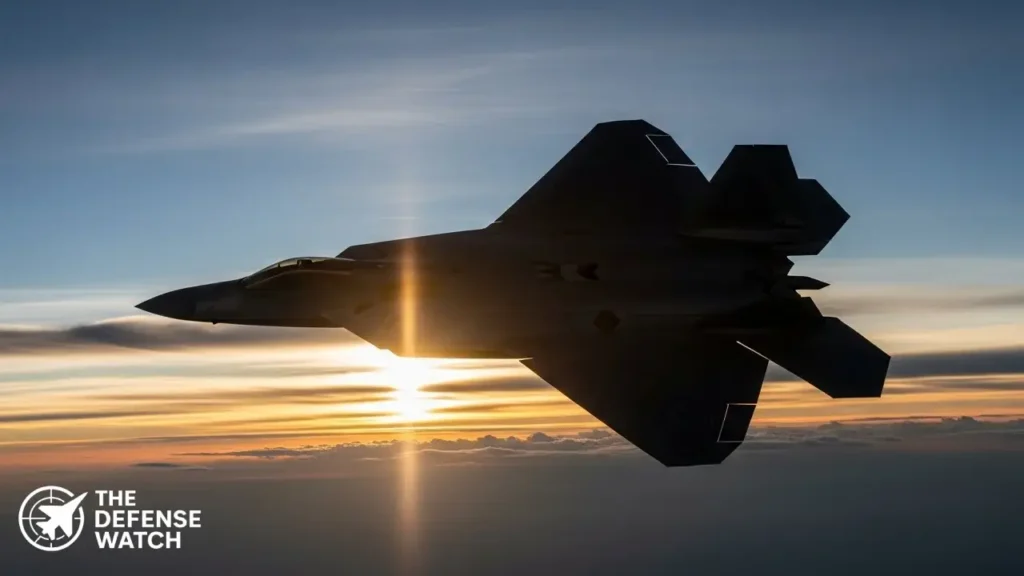
What Defines a Sixth Generation Fighter Jet?
Although no universal specification exists, defense agencies and aerospace analysts generally agree on several core characteristics that differentiate sixth-generation fighters from current fifth-generation platforms:
Key Expected Capabilities
- Enhanced low observability beyond traditional shaping and coatings
- AI-enabled battle management and semi-autonomous mission execution
- Optionally manned operation, switching between piloted or unmanned missions
- Directed-energy weapon (DEW) compatibility, including laser defenses
- Adaptive-cycle or hybrid propulsion systems enabling greater range and efficiency
- Seamless teaming with drones, especially “loyal wingman” autonomous systems
- Multi-domain networking, connecting air, space, cyber, and ground sensors
These features are designed to address future threat environments involving advanced air defenses, hypersonic weapons, and increasingly contested electronic warfare conditions.
China’s Alleged Sixth-Generation Fighter Jet Program
China has not officially unveiled a complete sixth-generation fighter jet design, but imagery, state media hints, and strategic patterns indicate aggressive development within the People’s Liberation Army Air Force (PLAAF).
Satellite Imagery and Unconfirmed Prototypes
Commercial satellite photos released over the last two years appear to show large, tailless, flying-wing-type aircraft at the Chengdu Aircraft Industry Group (CAIG) facility. While Chinese officials have neither confirmed nor denied these reports, the aircraft shape is consistent with sixth-generation aerodynamic signatures focusing on extreme stealth.
Expected Capabilities of China’s Next-Gen Fighter
Based on available intelligence and PLAAF modernization trends, analysts expect China’s sixth-generation platform to include:
- Large internal weapons capacity for long-range missiles
- Deep-penetration stealth aimed at bypassing U.S. Indo-Pacific defenses
- AI-powered autonomous teaming, possibly with enhanced air-launched drones
- Advanced electronic warfare suites, potentially rivaling the F-35’s sensor fusion
Chinese military researchers have also published papers on laser-based missile defenses, hypersonic integration, and new composite materials, signaling potential directions for the program.
Strategic Motivation
China’s focus appears centered on countering U.S. air dominance in the Western Pacific. A sixth-generation aircraft, combined with rapidly advancing missile systems, could play a key role in A2/AD (anti-access/area denial) strategy.
The United States’ NGAD Program: Sixth Generation by 2030s
The U.S. Air Force’s Next Generation Air Dominance (NGAD) program is the most publicly acknowledged sixth-generation fighter initiative in the world. Expected to replace or supplement the F-22 Raptor, NGAD is designed for operations in highly contested environments where current platforms may face limitations.
NGAD’s Confirmed Features
U.S. Air Force leadership has confirmed several components of NGAD:
- Family-of-systems approach, with a manned fighter at the center
- Collaborative Combat Aircraft (CCA) drones functioning as escorts, decoys, or strike assets
- Open-architecture digital design, supporting rapid upgrades
- Breakthrough propulsion, likely adaptive-cycle engines from GE or Pratt & Whitney
- Large standoff-range sensors to counter long-range PLA anti-air missiles
While images of the prototype remain classified, officials have stated that a demonstrator has already flown—indicating the project is further along than many expected.
Cost and Industrial Impact
NGAD is projected to be one of the most expensive aircraft programs ever undertaken, with fighter unit costs potentially exceeding $300 million each. Its development will drive innovations in U.S. aerospace manufacturing, autonomy, and next-generation avionics.
China vs. the U.S.: A Strategic and Technological Competition
Technology Access and Industrial Capacity
- United States: Holds decades of stealth experience and deep industrial infrastructure.
- China: Rapidly accelerating aerospace R&D but still constrained by reliance on foreign or reverse-engineered engine technology—though progress is improving.
Timeline Comparison
- U.S. NGAD: Expected fielding early-to-mid 2030s
- China’s 6th Gen Jet: Unconfirmed, but analysts estimate early 2030s prototypes
Airpower Implications
The deployment of sixth-generation fighter jets by both countries could dramatically reshape:
- Pacific airpower balance
- ISR (intelligence, surveillance, reconnaissance) penetration capabilities
- Deterrence dynamics in contested regions like Taiwan and the South China Sea
Both nations view sixth-generation airpower as a core requirement for future warfare.
Analysis: The Future of Air Superiority
The sixth-generation fighter race is not simply about aircraft—it represents a broader transformation of integrated air combat networks. The U.S. and China are building ecosystems that link manned fighters, drones, space assets, and AI-driven command systems into a single battlespace.
While the U.S. maintains a lead in proven stealth combat operations and engine technology, China’s rapid expansion, industrial scale, and willingness to iterate quickly make it a serious competitor.
The real question is not which aircraft will be superior, but how each nation will integrate these platforms into wider operational concepts. The country that achieves more effective manned-unmanned teaming, resilient data links, and adaptive autonomy may ultimately define the future of air dominance.
FAQs
What qualifies a fighter jet as sixth generation?A combination of extreme stealth, AI autonomy, advanced propulsion, and multi-domain network integration.
Has China revealed a sixth-generation fighter?Not officially. Imagery and research suggest development is underway, but details remain classified.
What is the U.S. NGAD program?A sixth-generation air dominance family of systems centered on a next-generation fighter for the 2030s.
Will sixth-generation jets replace the F-35?No. The F-35 will remain in service for decades and operate alongside NGAD aircraft.
When will the first sixth-generation jet enter service?Likely sometime in the early to mid-2030s, depending on development timelines.
Chengdu J-10C Stealth Enhancements Explained
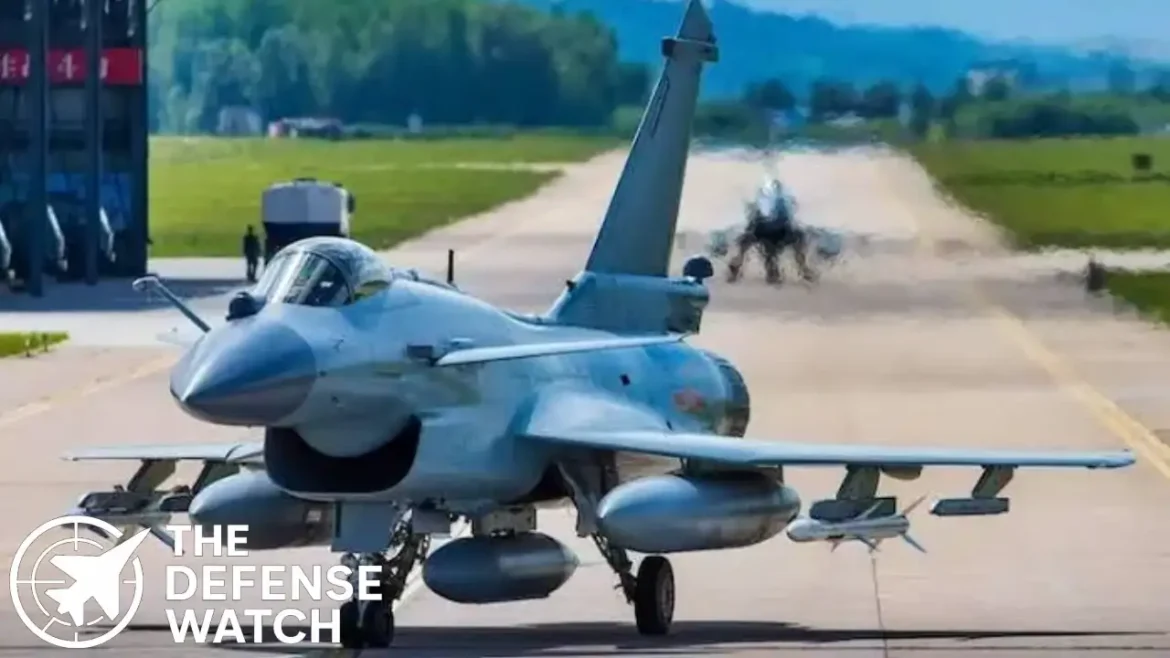
China’s Chengdu J-10C multirole fighter, often described as the backbone of the People’s Liberation Army Air Force (PLAAF), is undergoing incremental but significant stealth-related upgrades that aim to make the aircraft harder to track and more survivable in contested environments.
The enhancements reflect Beijing’s broader push to modernize legacy fourth-generation platforms with fifth-generation features, thereby extending their relevance alongside the stealthier J-20 and upcoming sixth-generation designs.
Radar-Absorbing Coatings and Surface Refinements
Recent open-source imagery and Chinese defense industry disclosures indicate that the latest J-10C variants are being equipped with radar-absorbing material (RAM) coatings and refinements to their airframe paneling. These measures aim to reduce the fighter’s radar cross-section (RCS), particularly against X-band radars commonly used by modern air defense systems.
Engine inlets and panel seams have reportedly been smoothed and sealed more precisely, minimizing radar reflectivity. Some analysts note that the modifications echo earlier treatments applied to the J-20 stealth fighter, though at a less extensive scale given the J-10’s conventional airframe.
Infrared and Electronic Signature Reduction
Beyond radar visibility, the PLAAF appears focused on lowering the infrared (IR) and electronic signatures of the J-10C. Modifications to the engine exhaust geometry and coatings are aimed at reducing the jet’s heat plume, making it harder for IR-guided missiles to lock on.
Meanwhile, electronic warfare (EW) system upgrades—likely tied to China’s indigenous KLJ-7A AESA radar and advanced jamming pods—further enhance survivability. Together, these steps align with global trends where legacy fighters are being retrofitted to remain viable in environments increasingly dominated by stealth aircraft and integrated air defenses.
Integration with Advanced Weapons
The J-10C’s stealth improvements complement its growing arsenal of modern precision-guided munitions. The platform is compatible with PL-15 long-range air-to-air missiles, featuring active radar seekers designed to counter stealthy adversaries. By pairing a reduced signature with advanced munitions, the J-10C is evolving into a more formidable multi-role platform despite its single-engine layout.
Export variants, such as the J-10CE supplied to Pakistan, are also believed to incorporate elements of these stealth and systems upgrades, underscoring Beijing’s willingness to offer advanced technology to close partners.
Context: A Bridge Between Generations
The J-10C’s stealth enhancements illustrate China’s pragmatic modernization strategy. While the J-20 Mighty Dragon remains the centerpiece of China’s high-end airpower, the J-10C provides a cost-effective option for sustaining fleet numbers and maintaining pressure in regional airpower balances.
Analysts argue that this mirrors trends in the U.S. and Europe, where upgraded F-16s, F/A-18E/Fs, and Eurofighter Typhoons are being fielded alongside stealthier fifth-generation platforms. For Beijing, the J-10C ensures that the PLAAF retains a credible frontline force until sixth-generation fighters, such as the rumored tailless J-50, enter service in the 2030s.
Outlook
With stealth modifications, advanced avionics, and weapons integration, the J-10C continues to evolve well beyond its 1990s origins. While it cannot achieve the deep stealth of a purpose-built fifth-generation jet, the upgrades significantly enhance its ability to survive and operate in modern air combat.
For regional rivals—including Taiwan, India, and U.S. forces in the Indo-Pacific—the upgraded J-10C represents a more elusive and capable adversary. Its continued evolution suggests China intends to keep the platform in frontline service for at least another decade.
FAQs
The J-10C features AESA radar, compatibility with PL-15 long-range missiles, and stealth refinements not present on earlier models.
While not in the same league as the J-20, the J-10C’s radar-absorbing coatings and signature reduction give it improved survivability compared to legacy fourth-gen fighters.
Currently, the PLAAF operates the J-10C, and Pakistan is the only confirmed export customer with its J-10CE fleet.