Executive Summary:
BAE Systems, Boeing, and Saab have signed a teaming agreement to jointly offer the T-7 Advanced Pilot Training System to the United Kingdom. The proposal includes a UK based final assembly and support capability, positioning the partnership for any future Royal Air Force trainer aircraft competition while strengthening Britain’s aerospace industrial base.
BAE Systems, Boeing, And Saab Position T-7 Red Hawk For UK Pilot Training
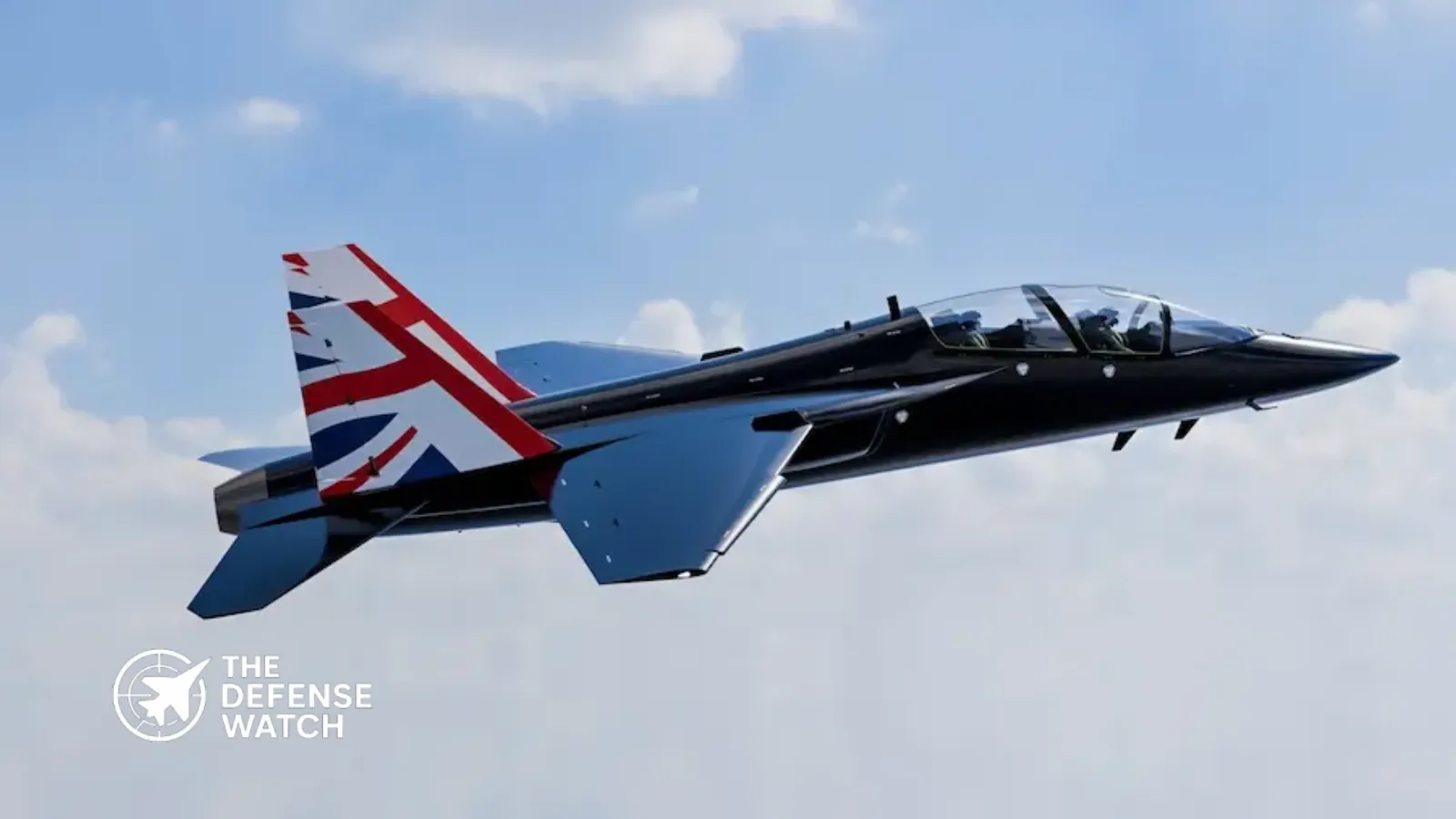
BAE Systems, Boeing, and Saab have signed a strategic teaming agreement to jointly offer the T-7 Advanced Pilot Training System to the United Kingdom, marking a significant step toward a potential future replacement for the Royal Air Force’s fast jet training aircraft.
- BAE Systems, Boeing, And Saab Position T-7 Red Hawk For UK Pilot Training
- Partnership Focuses On Domestic Industrial Capability
- What Is The T-7 Advanced Pilot Training System?
- Supporting Future RAF Pilot Requirements
- Why Local Final Assembly Matters
- Strategic Analysis: Why This Partnership Matters
- Looking Ahead
Announced by the three companies, the agreement establishes an industrial partnership that combines Boeing’s aircraft design expertise, Saab’s manufacturing experience, and BAE Systems’ extensive presence within the UK’s defense and aerospace sector. A key element of the proposal is a plan for final assembly of the T-7 aircraft in the United Kingdom, should the aircraft be selected by the British government.
The announcement comes as several NATO nations continue modernizing pilot training systems to support the introduction of fifth generation and future combat aircraft.
Partnership Focuses On Domestic Industrial Capability
The companies said the agreement goes beyond simply offering an aircraft platform. Their proposal includes building long term sovereign industrial capabilities within the United Kingdom.
Under the proposed arrangement, BAE Systems would leverage its established UK manufacturing footprint and support infrastructure, while Boeing would provide overall aircraft integration expertise. Saab, already Boeing’s principal industrial partner on the T-7 program, would contribute advanced manufacturing processes developed during production of the aircraft.
The proposed UK industrial package includes:
| Capability | Proposed Contribution |
|---|---|
| Final aircraft assembly | Conducted in the United Kingdom |
| Long term maintenance | UK based sustainment capability |
| Engineering support | Domestic engineering expertise |
| Supply chain | Expanded opportunities for British industry |
| Skills development | Aerospace workforce growth and technology transfer |
According to the companies, local assembly would support national industrial resilience while reducing long term sustainment complexity.
What Is The T-7 Advanced Pilot Training System?
The T-7 Advanced Pilot Training System was developed by Boeing and Saab for the U.S. Air Force under the T,X program to replace the aging T,38 Talon fleet.
Unlike many legacy trainer aircraft, the T-7 was designed using advanced digital engineering techniques, significantly reducing development timelines while enabling faster production updates.
Key characteristics include:
| Specification | T-7 Red Hawk |
|---|---|
| Role | Advanced jet trainer |
| Crew | Two |
| Engine | Single General Electric F404 turbofan |
| Flight controls | Digital fly by wire |
| Training system | Integrated live, virtual, constructive environment |
| Designed for | Fifth generation fighter pilot training |
The aircraft forms part of a broader training ecosystem that includes simulators, mission planning software, instructor stations, and digital learning tools intended to replicate operational combat environments.
Supporting Future RAF Pilot Requirements
Although the UK government has not announced a formal competition to replace existing advanced jet trainers, military aviation planners across Europe are increasingly evaluating how pilot training must evolve alongside aircraft such as the F,35 Lightning II and future sixth generation combat aircraft.
The T-7’s digital architecture was specifically developed to prepare pilots for highly networked combat operations involving advanced sensors, electronic warfare, data fusion, and collaborative mission planning.
Rather than focusing solely on basic flying skills, modern training systems increasingly emphasize:
- Multi domain operations
- Sensor management
- Electronic warfare environments
- Tactical data links
- Human machine teaming
- Mission rehearsal using synthetic environments
These capabilities are becoming increasingly important as NATO air forces prepare for future high intensity operations.
Why Local Final Assembly Matters
One of the most notable aspects of the agreement is the proposal to establish final aircraft assembly within the United Kingdom.
For London, domestic production offers several strategic advantages beyond aircraft procurement.
These include:
- Greater control over fleet availability
- Improved long term sustainment
- Protection of highly skilled aerospace jobs
- Increased resilience during supply chain disruptions
- Expanded export and industrial opportunities
The proposal also aligns with the UK’s broader defense industrial strategy, which increasingly emphasizes sovereign manufacturing capacity for critical military programs.
For Boeing and Saab, incorporating BAE Systems provides an experienced UK industrial partner with decades of involvement in Royal Air Force aircraft programs, including Typhoon, Hawk, Tempest, and F,35 support activities.
Strategic Analysis: Why This Partnership Matters
The teaming agreement reflects a broader trend across NATO defense procurement. Rather than competing solely on aircraft performance, manufacturers increasingly compete through industrial participation packages that promise domestic investment, technology transfer, and workforce development.
For the United Kingdom, future pilot training will be closely linked to the Global Combat Air Programme (GCAP), which aims to deliver a sixth generation combat aircraft during the 2030s. Training systems introduced during this decade will need sufficient digital flexibility to evolve alongside those future capabilities.
The T-7’s software driven architecture may provide advantages in this environment because mission systems, synthetic training environments, and aircraft software can be updated more rapidly than legacy trainer platforms. That flexibility could reduce lifecycle costs while allowing training syllabi to adapt as operational requirements change.
From a broader defense industrial perspective, the partnership also demonstrates how major Western aerospace companies are increasingly building multinational production models. Similar approaches have appeared across fighter aircraft, missile systems, and naval programs, where governments seek both military capability and domestic economic benefits from major acquisitions.
For the United States, expanded international adoption of the T-7 could strengthen common pilot training standards among allied air forces while increasing production scale for the aircraft. Shared training systems can improve interoperability during coalition operations by exposing pilots to similar digital mission environments before they transition to operational fighter aircraft.
Although no UK procurement decision has been announced, the agreement positions the three companies early for any future requirement while reinforcing Britain’s role as a major participant in allied aerospace manufacturing.
Looking Ahead
The newly signed teaming agreement establishes the industrial framework for a future UK T-7 proposal but does not represent a procurement contract. Any acquisition decision will ultimately depend on future Royal Air Force requirements and UK Ministry of Defence procurement plans.
If pursued, the proposed local final assembly capability would represent one of the most significant industrial elements of the offering, combining advanced pilot training technology with domestic aerospace production and long term sustainment support.