Executive Summary
- Taiwan received its first two new F-16 Block 70 fighters on October 2, beginning delivery of a 66-aircraft U.S. Foreign Military Sale approved in 2019.
- The $8 billion approved package includes F-16C/D Block 70 aircraft and associated equipment and support. The new configuration incorporates the APG-83 AESA radar and modernized avionics.
- The aircraft expand Taiwan’s existing F-16 force and improve its ability to conduct air defense and multirole missions, but they do not remove the capability gap created by China’s growing fleet of advanced and stealth aircraft.
Taiwan Receives First F-16V Block 70 Fighter Jets
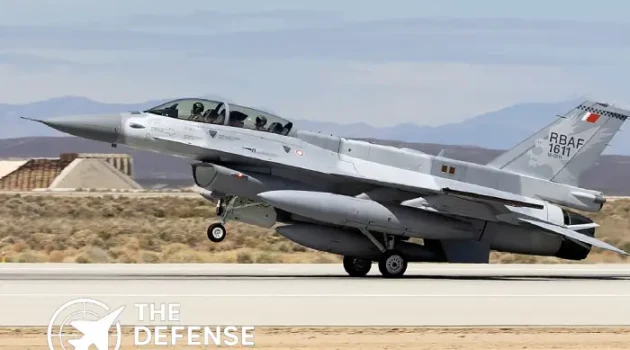
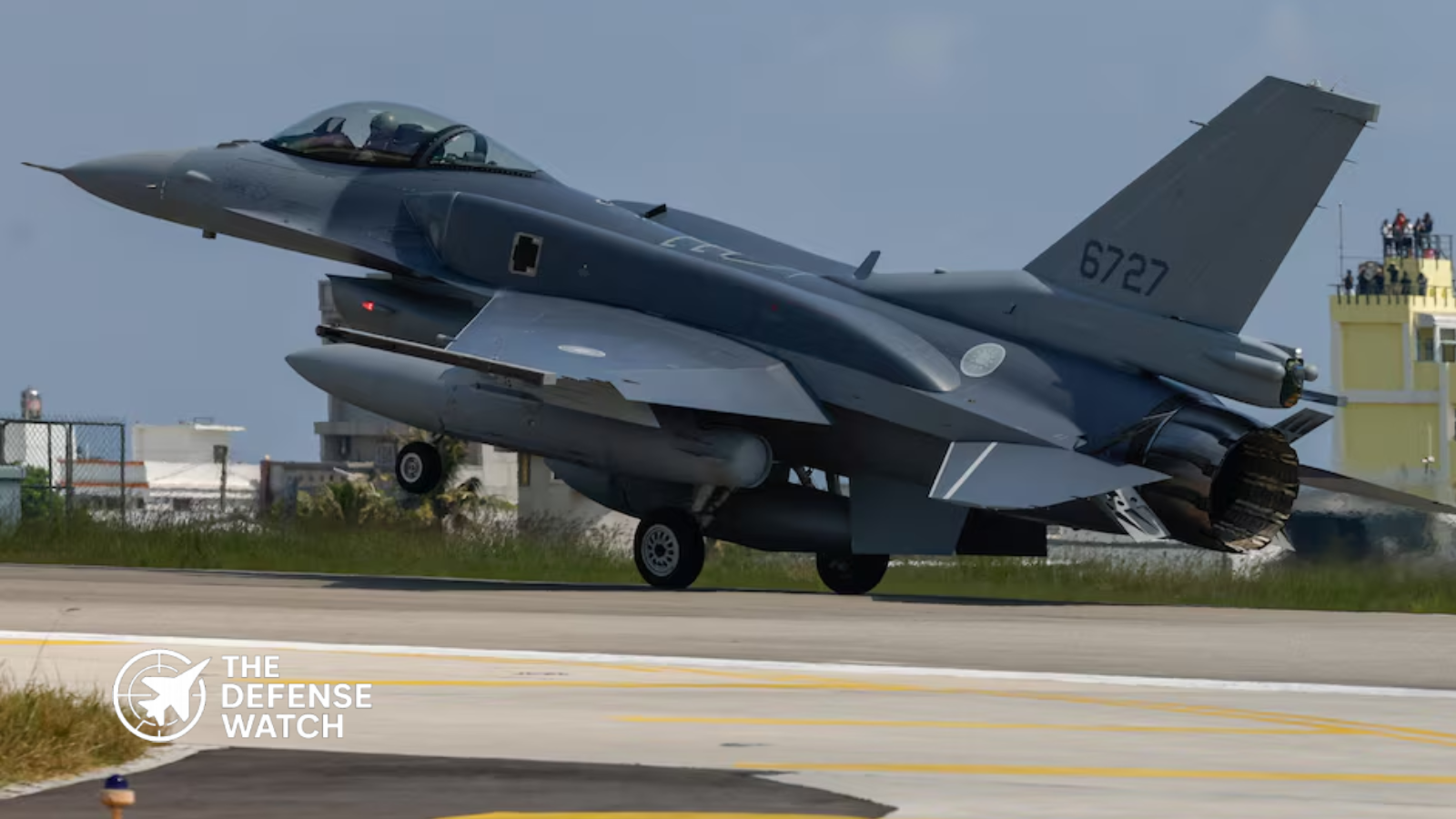
Taiwan received its first two new F-16V Block 70 fighter jets on October 2, marking the start of deliveries under a 66-aircraft U.S. procurement program intended to modernize one of the island’s principal fighter fleets.
The two single-seat aircraft arrived at Chihhang Air Base in Taitung after flying through Hawaii and Guam. Taiwan’s Air Force said the aircraft would enter a planned reception and conversion training process as crews and maintenance personnel transition to the new configuration.
The arrival comes after significant schedule delays. Taiwan’s Ministry of National Defense previously said the program had been affected by supplier delays and changes to the U.S. assembly schedule. By October 2, Taiwan said the first two aircraft had arrived while 63 of the remaining aircraft were still on the U.S. production line, with some already at the delivery stage.
What Taiwan Is Receiving
The F-16 Block 70 is the latest production configuration of the F-16 family. The aircraft retains the basic F-16 design while adding a substantially modernized mission system architecture.
The U.S. government approved the potential sale to Taiwan in August 2019. The Defense Security Cooperation Agency notified Congress of a possible $8 billion Foreign Military Sale covering 66 F-16C/D Block 70 aircraft, engines, Link 16 systems and associated equipment and support.
Program element Confirmed information Aircraft 66 F-16C/D Block 70 U.S. approval August 2019 Approved estimated value $8 billion First aircraft delivered 2 F-16 Block 70 Delivery location Chihhang Air Base, Taitung Remaining aircraft on U.S. production line 63, according to Taiwan MND Primary radar APG-83 AESA Data link Link 16 included in the approved U.S. package Existing Taiwan F-16 upgrade Completed in 2023 The $8 billion figure is the U.S. government’s 2019 estimated value for the possible sale, rather than a verified per-aircraft acquisition price. The notification covered a broader package of aircraft, equipment, support and associated systems.
APG-83 Radar Is a Major Upgrade
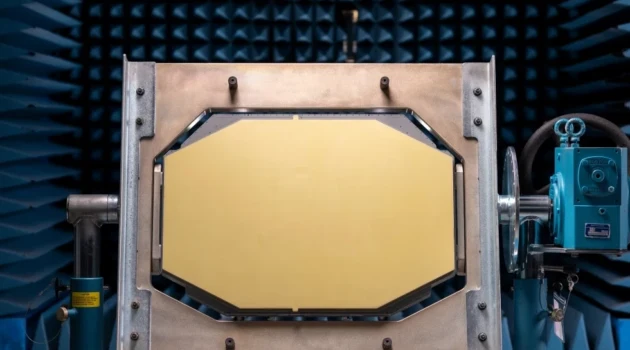
One of the most important changes in the Block 70 configuration is the APG-83 active electronically scanned array radar.
Lockheed Martin identifies the APG-83 as the Block 70’s primary AESA fire-control radar and says the system incorporates technology commonality with AESA radar development associated with the F-22 and F-35 programs. The company also identifies improved pilot displays and integration with targeting and infrared search and track systems as part of the configuration.
For Taiwan, the significance is less about turning the F-16 into a fifth-generation aircraft and more about extending the useful combat value of a large existing fighter fleet.
The Block 70 remains a fourth-generation fighter. Its AESA radar, improved mission systems, data links and cockpit architecture provide a substantially newer sensor and information-management baseline than older F-16 configurations, but they do not give the aircraft the low-observable characteristics of a stealth fighter.
That distinction matters in the Taiwan Strait, where aircraft must operate against an increasingly sophisticated Chinese air force and integrated air defense environment.
A Larger Modernized F-16 Fleet
The new aircraft will add to Taiwan’s existing F-16 inventory rather than replace the entire fleet.
Taiwan completed an upgrade program for its existing F-16s in 2023. Reuters reported that the combined fleet is expected to exceed 200 aircraft once the new Block 70s are delivered.
The resulting fleet structure gives Taiwan a common fighter family across older upgraded aircraft and new-production Block 70s.
That has practical implications for training, maintenance, weapons integration and logistics. A larger modernized F-16 force also gives Taiwan more options for distributing fighter missions across its air bases rather than relying on a small number of newer aircraft.
The immediate constraint, however, is delivery tempo. Taiwan’s Air Force said the remaining aircraft will return according to a schedule coordinated with the U.S. program office. The service is already training personnel in the United States for the transition.
Why the Delivery Matters for Taiwan’s Air Defense
Taiwan’s fighter force operates in an environment of sustained Chinese military activity around the island.
Taiwan’s Air Force reported that 23 PLA aircraft were detected around Taiwan during the 24-hour period ending October 1, with 16 crossing the Taiwan Strait median line and entering Taiwan’s northern, central or southwestern air defense identification zone. Taiwan said it responded with combat air patrol aircraft, naval forces and coastal missile systems.
That operating pattern creates a readiness problem independent of any major conflict.
Aircraft used repeatedly for air policing and interception accumulate flight hours, maintenance requirements and personnel demands. Additional modern fighters can increase the pool of available aircraft, although the precise operational effect will depend on pilot training, maintenance capacity, weapons stocks, base survivability and the rate at which the remaining F-16s are delivered.
The Block 70 therefore represents more than an individual aircraft purchase. It is part of Taiwan’s effort to maintain a sustainable fighter force while facing persistent air activity around the island.
F-16 Block 70 Versus China’s Stealth Fighter Challenge
The new F-16s improve Taiwan’s fighter fleet, but the procurement does not create a direct one-for-one answer to China’s J-20 stealth fighter.
Reuters reported that the Block 70’s upgraded radar, avionics and weapons systems are intended to improve Taiwan’s ability to confront China’s advanced air force, including the J-20. At the same time, Taiwan does not operate the F-22 or F-35, leaving its fighter force without a comparable U.S.-designed stealth platform.
The distinction between the two aircraft generations is important.
Area Taiwan F-16 Block 70 Chinese J-20 Basic design generation Fourth-generation derivative Fifth-generation stealth fighter Radar APG-83 AESA Chinese AESA system Low-observable design No Yes Primary role Multirole fighter Air superiority and long-range counter-air focused platform Fleet role for Taiwan Expansion and modernization of existing F-16 force Part of China’s advanced combat-aircraft force Key advantage of program Modernized sensors, avionics and common F-16 ecosystem Stealth design and advanced combat-aircraft architecture This comparison should not be interpreted as a simple aircraft-versus-aircraft contest. In a Taiwan Strait contingency, fighter effectiveness would depend on the broader sensor network, command and control architecture, air defenses, electronic warfare, weapons inventories, dispersal, runway resilience and access to external intelligence.
The F-16 Block 70 can therefore improve Taiwan’s air combat capability without eliminating the wider requirement for layered air defense and distributed military infrastructure.
The Industrial Lesson From the Delays
The delivery timeline also highlights the difficulty of sustaining a major fighter modernization program under production and integration constraints.
Taiwan’s Ministry of National Defense said in September 2024 that the first aircraft had originally been scheduled for production in the third quarter of that year. The ministry attributed schedule changes to international conditions, supplier delivery delays and adjustments to the U.S. assembly schedule. It subsequently targeted completion of the aircraft’s return to Taiwan by the end of 2026.
In March 2026, Taiwan’s defense ministry said 59 of the 66 aircraft were undergoing assembly and modification and explained that the Taiwan-specific configuration required flight testing and calibration before feedback could be incorporated into production.
By October, the first aircraft had reached Taiwan, but the program still had a substantial number of aircraft to deliver.
For Taiwan, this reinforces the importance of delivery schedules and production capacity when acquiring systems intended to address immediate readiness requirements. A modern aircraft has limited value to force structure until it is delivered, accepted, supported, crewed and integrated into operational units.
Training and Force Generation
Taiwan’s Air Force established a tactical fighter wing in December 2023 and divided the conversion process into phases. Air and maintenance personnel have been sent to the United States for training before returning to support the new aircraft in Taiwan.
This approach allows Taiwan to begin building the personnel pipeline before the complete fleet arrives.
The training requirement is particularly important because the Block 70 is not simply an older F-16 with a new radar. The aircraft combines updated avionics, displays, sensors and weapons integration that require pilots and maintainers to develop familiarity with a new mission-system configuration.
The pace at which Taiwan can turn delivered aircraft into operationally available aircraft will therefore be an important measure of the program’s real contribution.
What the F-16 Delivery Does Not Solve
The first two aircraft are an important addition to Taiwan’s fighter inventory, but several structural challenges remain.
First, the 66 aircraft will arrive over time rather than simultaneously. Second, Taiwan must maintain runways, shelters, fuel infrastructure, weapons stocks and command networks that can survive disruption. Third, the F-16 fleet must operate alongside Taiwan’s F-16 upgrades, Indigenous Defense Fighters and Mirage 2000s while the service manages an increasingly demanding readiness cycle.
The F-16 Block 70 also cannot independently solve Taiwan’s exposure to China’s larger military aviation and missile forces.
Its value is therefore greatest when viewed as one component of a wider air-defense architecture.
A Modernization Program With Regional Significance
The arrival of the first two F-16 Block 70s also carries significance beyond Taiwan’s inventory.
The United States has maintained arms sales to Taiwan under the framework of the Taiwan Relations Act while avoiding formal diplomatic relations with Taipei. Beijing has repeatedly opposed U.S. arms sales to Taiwan. The U.S. State Department told Reuters that Washington continues to support security cooperation with Taiwan.
The aircraft thus sit at the intersection of military modernization, industrial production and U.S. defense policy in the Indo-Pacific.
For Taiwan, the immediate objective is practical: introduce the new aircraft, train personnel and progressively build an operational Block 70 capability.
For the United States, the program demonstrates continued support for Taiwan’s conventional defense capabilities while relying on an established fighter platform rather than transferring the F-22 or F-35.
For China, the delivery adds another modernized fighter element to Taiwan’s air-defense network. Its ultimate military significance will depend less on the arrival of two aircraft than on how quickly Taiwan converts the full 66-aircraft order into a sustainable, networked and survivable force.
Bottom Line
Taiwan’s receipt of its first two F-16 Block 70 fighters marks the operational beginning of a long-delayed 66-aircraft modernization program.
The aircraft bring the APG-83 AESA radar, updated avionics and a modernized mission-system architecture to Taiwan’s F-16 fleet. They also extend a fighter force that already underwent a major F-16 upgrade program completed in 2023.
The larger question is now execution. Taiwan has to move from initial delivery to sustained fleet generation, with pilots, maintainers, weapons, infrastructure and aircraft availability developing together.
The Block 70 does not erase the technological and numerical challenges posed by China’s expanding air force. It does, however, give Taiwan another modern fighter capability within a force structure designed around distributed air defense and continued F-16 operations.