
Table of Contents
The Apache Helicopter as a Modern Battlefield Icon
The Apache helicopter has become one of the most recognizable and feared combat aircraft in modern warfare. Designed during the Cold War and continuously upgraded for 21st-century conflicts, the Apache attack helicopter remains a core element of U.S. Army airpower and a benchmark for attack rotorcraft worldwide. From high-intensity armored warfare to counter-insurgency and precision strike missions, the Apache’s combat record spans more than four decades of global operations.
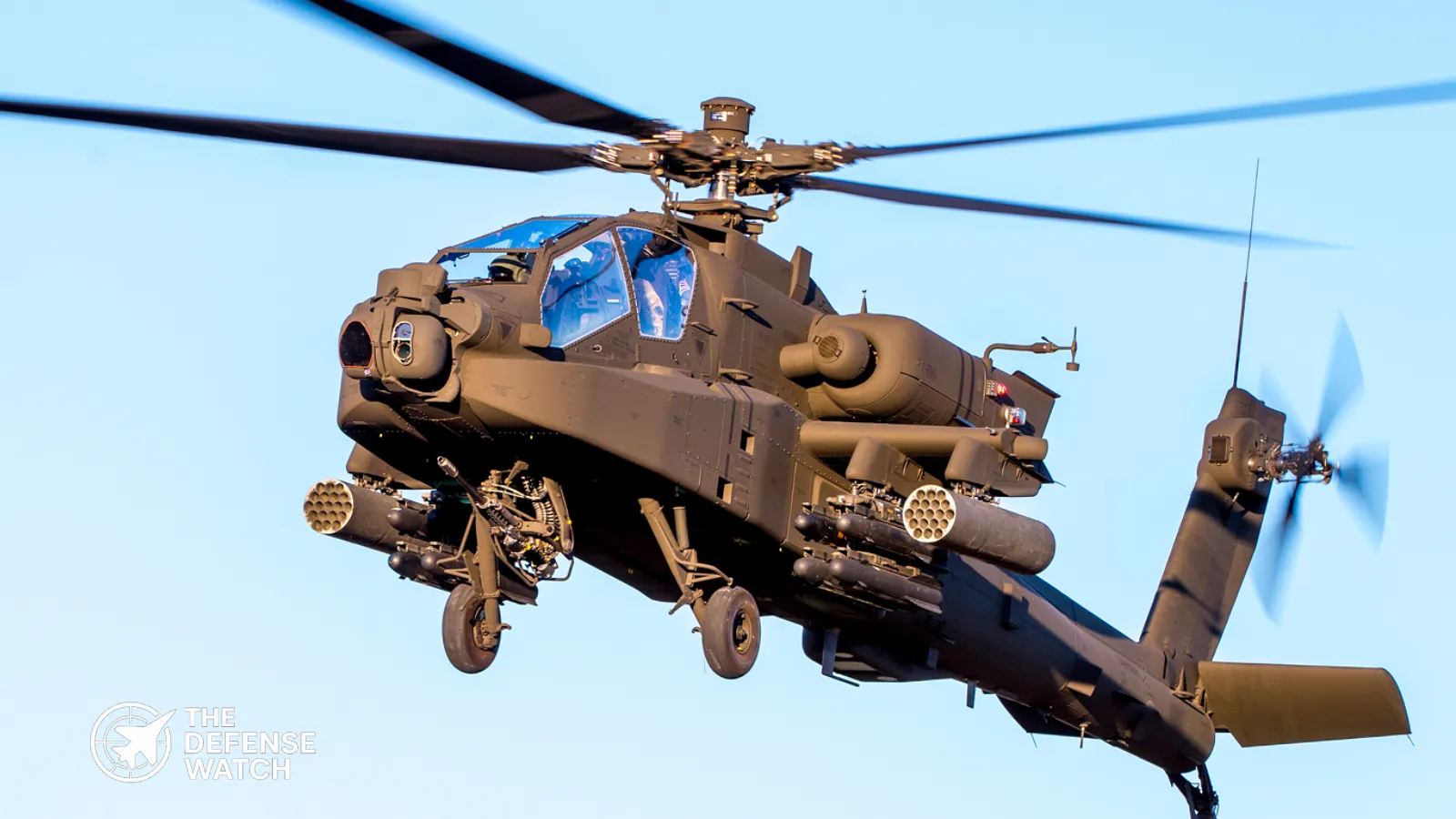
Today, platforms such as the AH-64D Apache helicopter and the latest AH-64E Guardian represent not just flying gunships, but fully networked battlefield systems capable of finding, fixing, and destroying targets day or night, in all weather conditions. With its distinctive mast-mounted radar, heavy weapons load, and survivability features, the Apache fighter helicopter continues to define the attack helicopter category.
The Origins of the Apache Attack Helicopter
The Apache’s roots trace back to the U.S. Army’s search in the 1970s for an advanced anti-armor helicopter capable of countering large Soviet tank formations in Europe. This requirement led to the Advanced Attack Helicopter (AAH) program, eventually won by Hughes Helicopters—later acquired by McDonnell Douglas and now part of Boeing Defense.

The resulting AH-64 entered U.S. Army service in the mid-1980s, introducing a new generation of survivability, firepower, and sensor integration. Unlike earlier gunships, the Apache was designed from the ground up to fight in heavily defended environments, incorporating armor protection, redundant systems, and the ability to operate at extremely low altitudes.
AH-64D Apache Helicopter: A Major Leap in Capability
The AH-64D Apache helicopter, introduced in the late 1990s, marked a transformational upgrade over earlier models. Its most visible feature is the AN/APG-78 Longbow radar, mounted above the rotor mast. This radar allows the Apache to detect, classify, and prioritize multiple targets while remaining concealed behind terrain.
Key Enhancements of the AH-64D
- Longbow fire-control radar enabling “fire-and-forget” missile engagements
- Fully digital glass cockpit
- Improved datalinks for sharing targeting data with other aircraft and ground forces
- Enhanced electronic warfare and self-protection systems
In combat, these improvements allowed Apache crews to engage armored vehicles and high-value targets with unprecedented speed and coordination, especially when operating in hunter-killer teams.
Apache Fighter Helicopter: Weapons and Firepower
At the heart of the Apache’s reputation is its lethal weapons suite. The Apache attack helicopter is designed to deliver precision firepower across a wide range of mission profiles.
Primary Armament
- 30mm M230 Chain Gun: Mounted under the fuselage, capable of engaging infantry, vehicles, and fortified positions.
- AGM-114 Hellfire Missiles: The Apache’s primary anti-armor weapon, used extensively in Iraq, Afghanistan, and other theaters.
- Hydra 70 Rocket Pods: Unguided and guided variants for area suppression and precision strike.
- Air-to-Air Missiles: Such as Stinger, for self-defense against aerial threats.
This combination allows the Apache fighter helicopter to conduct close air support, deep attack missions, armed reconnaissance, and escort operations.

Combat Experience: From Desert Storm to Today
The Apache helicopter’s combat debut during Operation Desert Storm in 1991 cemented its reputation. Apache helicopters were among the first aircraft to strike Iraqi targets, neutralizing radar sites and opening corridors for coalition airpower.
Since then, Apaches have seen extensive combat use in:
- Iraq and Afghanistan
- Syria and counter-ISIS operations
- Peacekeeping and deterrence missions worldwide
U.S. Army operational assessments consistently highlight the Apache’s ability to operate in high-threat environments while maintaining a high mission-capable rate. According to publicly available U.S. Army aviation briefings (external source: U.S. Army Aviation Center), Apache units remain central to ground maneuver operations.
Apache Helicopter Price and Global Market
The apache helicopter price varies significantly depending on configuration, support packages, and modernization level. While exact figures depend on contracts, defense analysts estimate that a new-build Apache can exceed $35–40 million per unit, with lifetime costs rising considerably once training, spares, and sustainment are included.
International Operators
Beyond the United States, the Apache attack helicopter has been exported to numerous allied nations, including:
- United Kingdom
- India
- Japan
- South Korea
- Saudi Arabia
- Netherlands
For many countries, the Apache represents a high-end capability aimed at deterring armored threats and enhancing joint operations with U.S. and NATO forces.
AH-64E Guardian: The Latest Evolution
While the AH-64D remains influential, the U.S. Army has largely transitioned to the AH-64E Guardian, an upgraded variant featuring:
- More powerful engines
- Improved composite rotor blades
- Enhanced networking with drones and ground forces
- Better maritime strike capability
The AH-64E reflects the shift toward multi-domain operations, where attack helicopters act as sensor and shooter nodes within a broader combat network.
Survivability and Battlefield Integration
One reason the Apache helicopter remains relevant is its emphasis on survivability. The aircraft incorporates:
- Armored crew compartments
- Redundant flight and weapons systems
- Infrared suppression and countermeasures
- Advanced electronic warfare suites
In modern conflicts, Apache crews increasingly operate alongside unmanned aerial systems (UAS), using drones to scout ahead and relay targeting data. This manned-unmanned teaming concept is a key pillar of U.S. Army aviation modernization.
Strategic Analysis: Why the Apache Still Matters
Despite the rise of drones and precision missiles, the Apache attack helicopter continues to offer unique advantages. Its ability to loiter, adapt to changing battlefield conditions, and directly support ground forces gives it a flexibility that fixed-wing aircraft and unmanned systems often lack.
From a strategic perspective, the Apache’s continued upgrades signal that the U.S. Army views attack helicopters as essential in both conventional warfare and hybrid conflicts. For allies, acquiring Apache helicopters also strengthens interoperability with U.S. forces, reinforcing coalition operations.
Future Outlook: Modernization Beyond 2030
The U.S. Army plans to keep the Apache in service well into the 2040s, even as it explores next-generation platforms under the Future Vertical Lift (FVL) program. Rather than replacing the Apache outright, current plans emphasize incremental upgrades, ensuring the aircraft remains lethal and survivable against evolving threats.
FAQs
What is the main role of the Apache helicopter?The Apache helicopter is designed for attack missions, including anti-armor warfare, close air support, and armed reconnaissance.
How much does an Apache helicopter cost?The apache helicopter price typically ranges above $35 million per unit, depending on configuration and support packages.
What is the difference between AH-64D and AH-64E?The AH-64E features stronger engines, better networking, and improved performance compared to the AH-64D.
Which countries operate the Apache attack helicopter?The U.S., UK, India, Japan, South Korea, and several NATO allies operate Apache helicopters.
Is the Apache still relevant in modern warfare?Yes. Continuous upgrades keep the Apache effective against modern threats and integrated into network-centric warfare.
Get real time update about this post category directly on your device, subscribe now.


