Table of Contents
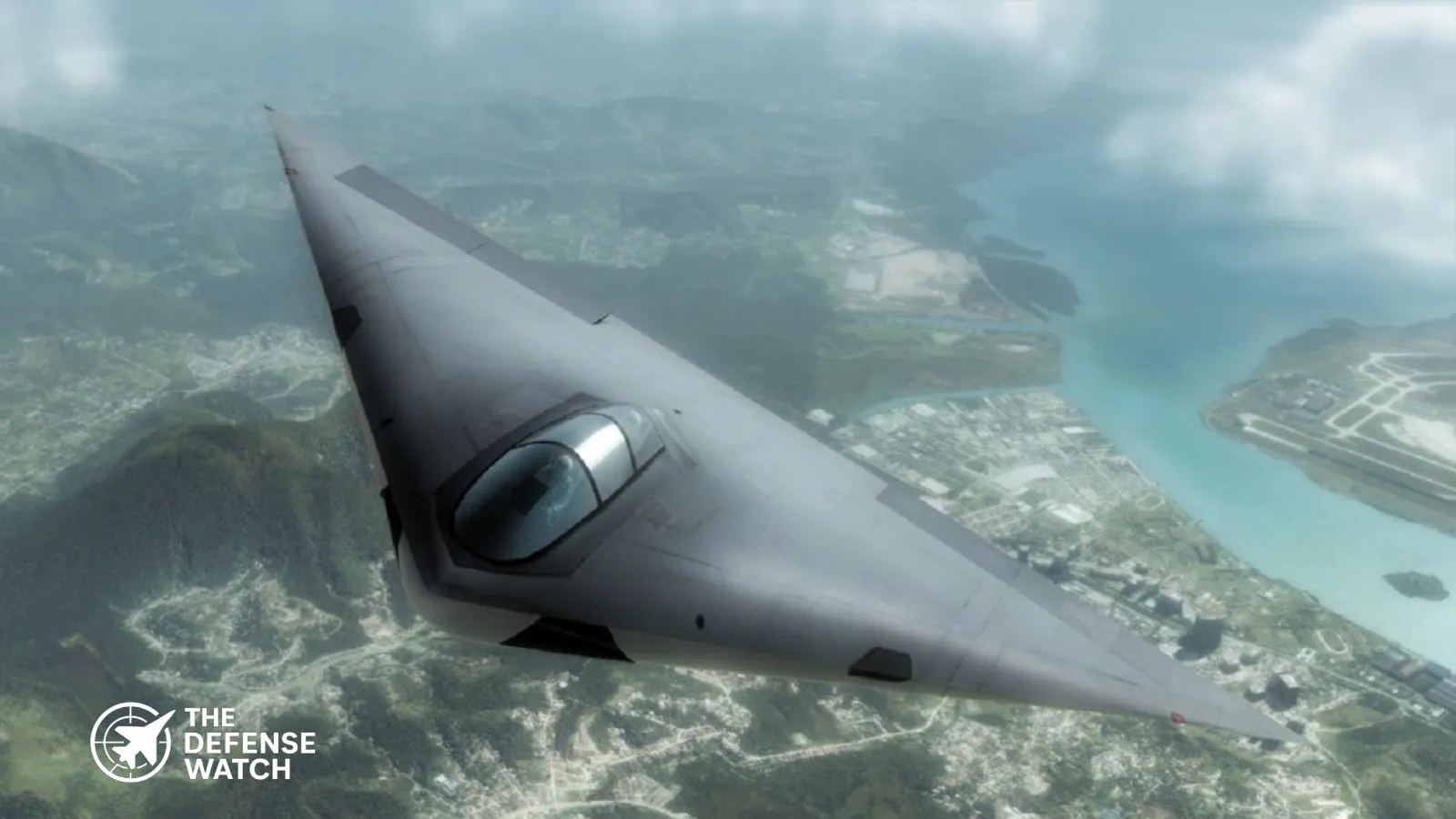
The revived debate around the A-12 Avenger II bomber is not about nostalgia or canceled programs. It points to a deeper and unresolved problem in U.S. naval strategy. Large aircraft carriers remain central to American power projection, yet the systems designed to find and strike them keep getting better. The A-12 Avenger II, often called the flying dorito, symbolizes a class of long range stealthy naval strike aircraft that could exploit this tension.
The strategic challenge is simple to describe and hard to solve. How does the United States protect high value carriers in an era of dense sensors, long range missiles, and precision strike networks. The A-12 debate matters because it forces planners to confront limits in current carrier defense concepts rather than assuming technological dominance will always hold.
Strategic Context
The A-12 Avenger II was conceived during the Cold War as a stealth attack aircraft designed to penetrate heavy defenses and strike enemy fleets and coastal targets. Its cancellation in the early 1990s reflected budget pressure, technical risk, and the belief that the carrier air wing faced no near peer threat.
That assumption no longer holds. China and Russia have invested heavily in anti access area denial systems built around satellites, over the horizon radars, submarines, bombers, and long range anti ship missiles. These networks aim to hold U.S. Navy aircraft carriers at risk hundreds or even thousands of kilometers from shore.
Recent conflicts and exercises reinforce this trend. Precision strike, real time targeting, and layered sensors are no longer theoretical. Even regional powers now field capabilities that complicate carrier operations. In this environment, the A-12 Avenger II represents a capability gap rather than a historical curiosity. The U.S. Navy still lacks a true long range, stealthy, carrier based strike aircraft optimized for naval targets.
Military Balance and Strike Reach
The first major driver is range. Modern anti ship missiles often outrange carrier based aircraft, forcing carriers closer to contested areas to generate combat power. This increases exposure and reduces operational flexibility.
The A-12 Avenger II bomber was designed to reverse that equation. Its long range and stealth would have allowed carriers to remain farther from enemy sensors while still threatening surface fleets and land targets. Without such an aircraft, the carrier strike group must rely on tanking, stand off weapons, or joint force support, all of which add complexity and risk.
This imbalance matters because carriers are not just combat platforms. They are symbols of commitment. If adversaries believe carriers can be pushed back or neutralized, U.S. deterrence credibility suffers.
Political and Budget Constraints
A second obstacle is political reality. Aircraft carriers are deeply embedded in U.S. defense culture, industrial planning, and alliance signaling. Any suggestion that their dominance is fading triggers resistance across Congress, industry, and parts of the military.
Developing an A-12 like platform today would require major investment, long timelines, and acceptance of technical risk. These factors compete with other priorities such as submarines, missiles, space systems, and cyber capabilities. Budget tradeoffs are unavoidable, and carriers remain politically protected programs.
This creates a strategic trap. Acknowledging carrier vulnerability without funding the tools to mitigate it leaves U.S. naval power exposed by design rather than by necessity.
Alliance Dynamics and Operational Assumptions
Allied strategy is the third driver. Many U.S. allies depend on carrier presence as a visible security guarantee. Forward deployed carriers reassure partners in the Indo Pacific, Middle East, and Europe.
If carriers are forced to operate farther from contested zones, the perception of U.S. commitment may weaken even if strike capability remains. An A-12 Avenger II type aircraft would help bridge this gap by extending reach without abandoning presence.
Without it, the burden shifts to land based aircraft and allied bases, which may be politically sensitive or vulnerable themselves. This complicates coalition planning and crisis response.
Technological and Industrial Limits
The final factor is industrial capacity. Building a stealthy, carrier capable strike aircraft is among the hardest tasks in aerospace engineering. Weight limits, corrosion, deck handling, and maintenance all constrain design choices.
The A-12 program struggled with these realities decades ago. Today, while technology has advanced, the complexity remains. This makes incremental upgrades to existing platforms more attractive in the short term, even if they do not fully address the strategic problem.
Strategic Implications
These constraints are difficult to change because they are structural. Geography, physics, budgets, and politics all shape naval power. Ignoring them does not make them disappear.
For U.S. defense planning, the lesson is not that carriers are obsolete. It is that their effectiveness depends on complementary systems that restore initiative and range. Without a credible long range naval strike aircraft, carrier strike group vulnerability becomes a planning assumption rather than a contingency.
For allies, the implication is a need for deeper integration. Shared sensors, distributed basing, and joint strike concepts become more important as single platforms face greater risk.
Conclusion
The A-12 Avenger II bomber debate highlights a strategic tension at the heart of modern naval warfare. Aircraft carriers remain indispensable, yet increasingly contested. Resolving this tension will require choices about force structure, investment, and operational concepts.
There is no quick fix. The future will likely involve a mix of longer range aircraft, unmanned systems, and tighter integration across domains. What matters is recognizing that the problem is real and persistent. The flying dorito may never return, but the message it carries about carrier vulnerability cannot be ignored.
Key Takeaways
- The A-12 Avenger II symbolizes a missing long range naval strike capability.
- Carrier strike group vulnerability is growing due to anti access area denial systems.
- Political and budget pressures limit radical changes to carrier centric strategy.
- U.S. and allied security depends on restoring range, flexibility, and deterrence credibility.
Get real time update about this post category directly on your device, subscribe now.