

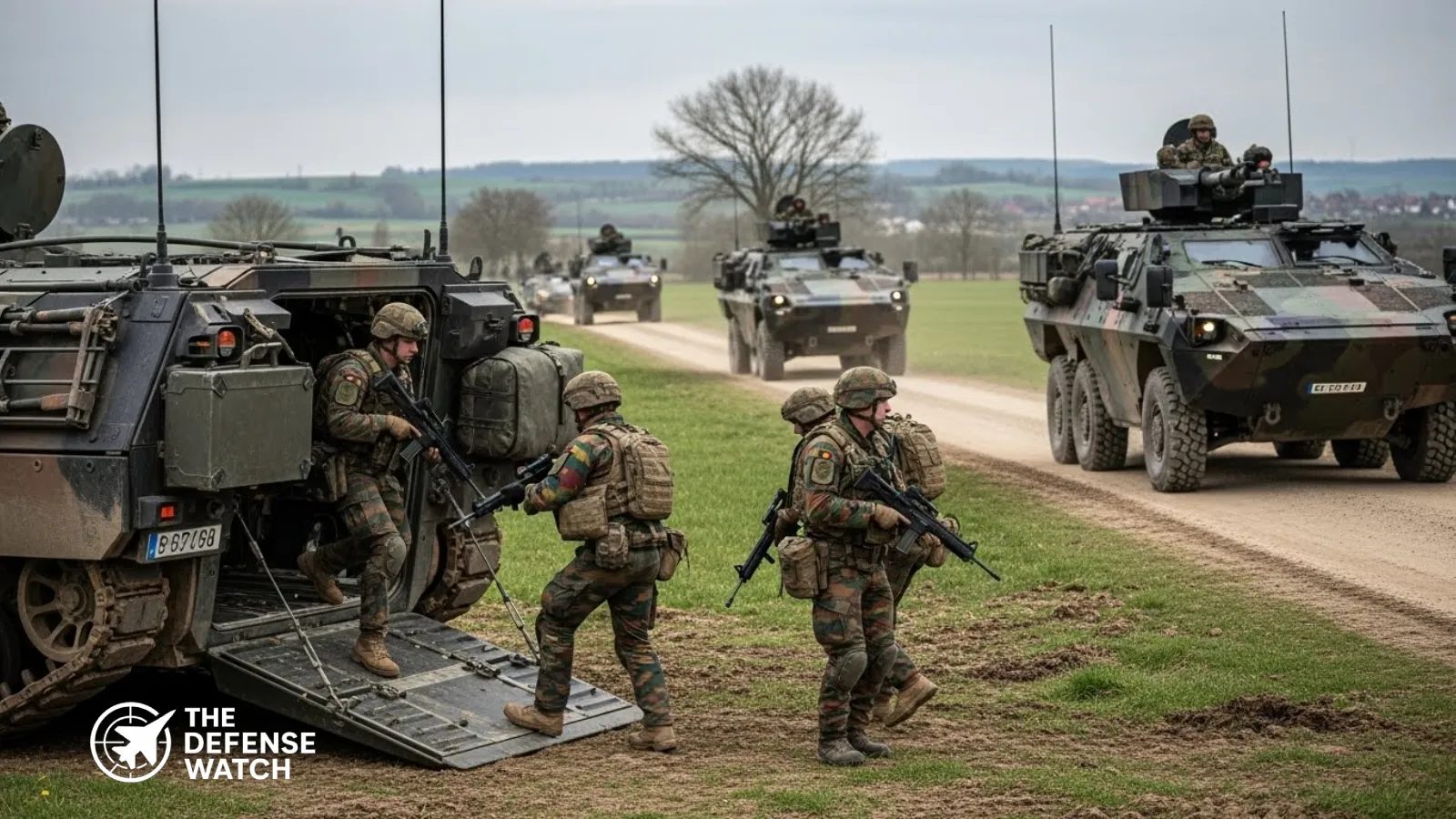
Luxembourg has finalized a defense procurement agreement with Belgium to acquire 38 Jaguar and 16 Griffon combat vehicles. The deal, announced in December 2025, will equip a new binational reconnaissance battalion that is expected to be operational by 2030 under NATO frameworks.
The pact represents one of Luxembourg’s largest defense investments and reinforces military cooperation between the two neighboring NATO allies. The vehicles, built under France’s Scorpion program, will form the backbone of the Binational Battalion of Luxembourg Reconnaissance Guides-Chasseurs.
Background
The acquisition stems from a broader drive to modernize Luxembourg’s armored forces and improve interoperability with allied armies. In 2024, Luxembourg approved a multi-billion euro investment to modernize its military, focusing on wheeled armored platforms that align with NATO and European Union standards.
Under the deal, Luxembourg will contribute to the joint battalion while Belgium supplies additional personnel, training capacity, and infrastructure. The unit is formed under NATO’s Defense Planning Process, a mechanism that guides member states in matching national capabilities with alliance needs.
Jaguar EBRC: Armored Reconnaissance and Combat
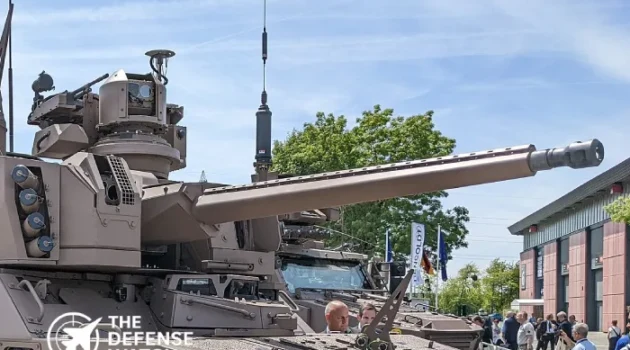
The Jaguar EBRC (Engin Blindé de Reconnaissance et de Combat) is a 6×6 wheeled armored reconnaissance and combat vehicle. It is designed for reconnaissance missions in high-threat environments, offering both mobility and firepower.
Key features include a 40mm CTA40 cannon, twin MMP (Missile Moyenne Portée) anti-tank guided missile launchers, and a remote 7.62mm machine gun. The vehicle integrates advanced sensors and battlefield networking systems that allow shared situational awareness and operational coordination across the battalion.
The Jaguar’s design emphasizes protection and mobility, allowing it to conduct deep reconnaissance and direct fire support while maintaining crew survivability. It operates with a three-person crew and offers modular capabilities to adapt to different mission profiles.
Griffon VBMR: Multi-Role Support
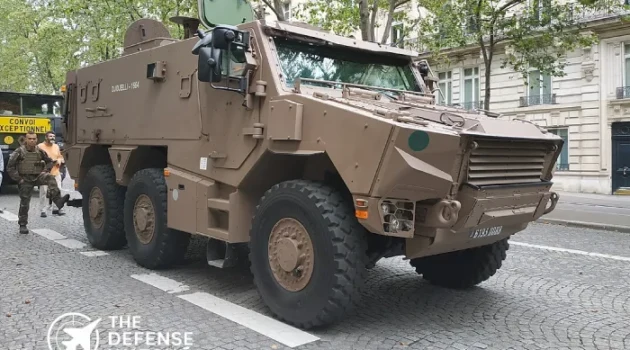
The 16 Griffon VBMR (Véhicule Blindé Multi-Rôles) vehicles will serve in command, logistics, and combat support roles. Built on a 6×6 chassis similar to the Jaguar, each Griffon carries a three-person crew.
These vehicles are equipped with modular remote weapon stations that can mount either 7.62mm or 12.7mm machine guns, depending on mission needs. Designed for flexibility, they can transport troops, provide command and control nodes, or support logistical tasks in the field.
The Griffon’s design focuses on survivability in asymmetric and hybrid warfare environments and full interoperability with NATO digital systems. Its modular architecture allows rapid reconfiguration for multiple battlefield roles.
The Binational Reconnaissance Battalion
The new unit, dubbed the Binational Battalion of Luxembourg Reconnaissance Guides-Chasseurs, will integrate personnel and assets from both Luxembourg and Belgium. The battalion is structured to support NATO and EU missions, from territorial defense to expeditionary tasks.
Belgium’s larger land force will provide additional manpower and support assets, while Luxembourg’s investment in vehicles and systems highlights its commitment to collective defense. The unit will be capable of high-tempo reconnaissance operations across Europe, with integrated command and control systems to support rapid decision-making on the battlefield.
Colonel Pascal Ballinger, Deputy Chief of Staff of the Luxembourg Army, emphasized that this procurement goes beyond buying new vehicles. It embeds Luxembourg more deeply into multinational defense structures and enhances operational readiness across joint missions.
NATO Context and Defense Planning
NATO’s Defense Planning Process defines capability targets for member states to ensure they can contribute meaningfully to collective defense. The binational battalion aligns with these targets, offering a medium-weight force with reconnaissance, command, and support capabilities.
European defense officials have noted the importance of such joint units in strengthening deterrence and cooperation. The integration of Luxembourg and Belgium in this battalion mirrors broader trends toward shared capabilities among smaller NATO members, particularly in armored and networked ground forces.
What’s Next
Deliveries of the Jaguar and Griffon vehicles will occur in stages, with full operational capability planned by 2030. Training exercises between Luxembourg and Belgium are expected to increase in frequency as the battalion prepares for NATO exercises and potential deployments.
The success of this joint battalion may serve as a model for future European defense cooperation. Other allies with smaller armies could look to similar arrangements to pool resources and meet alliance commitments more effectively.

2 comments
[…] reflects broader defence cooperation trends. Earlier teaming agreements and technical cooperation pacts between the firms laid groundwork for this more detailed […]
[…] has grown into one of Europe’s most active armoured vehicle cooperation […]