Executive Summary
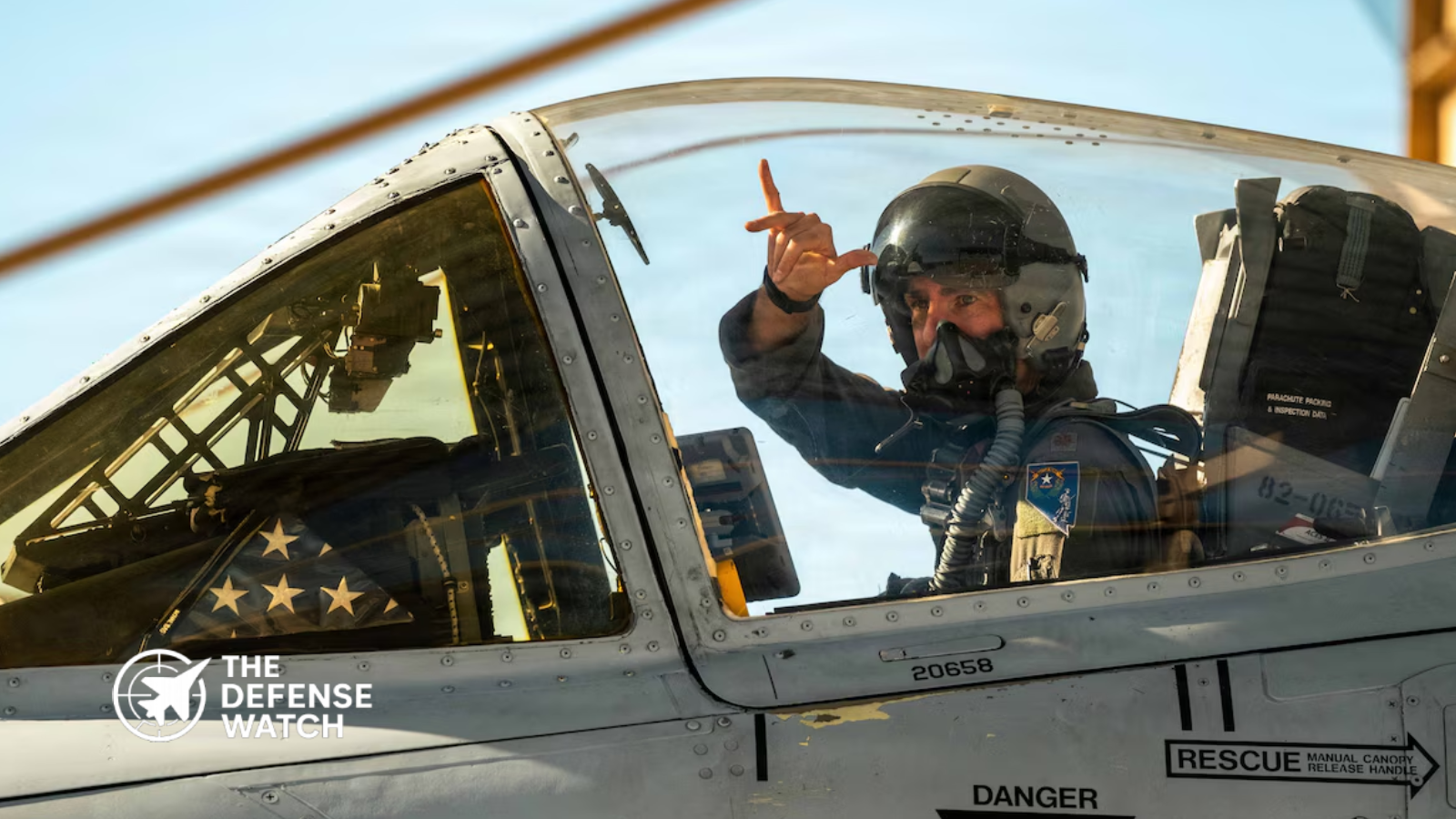
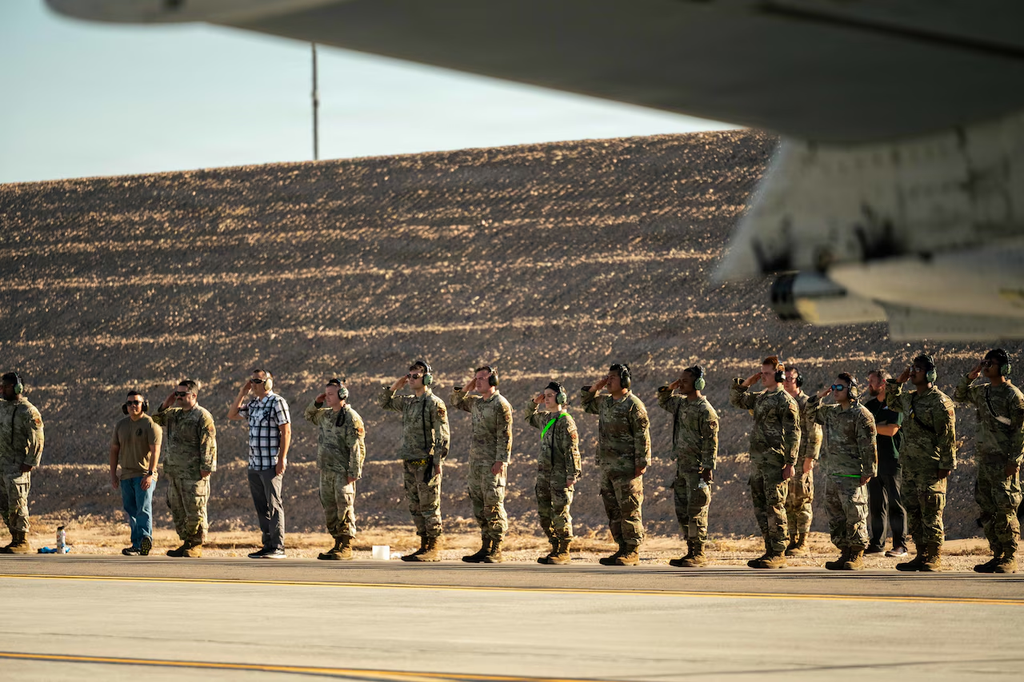
The A-10 Warthog has ended nearly five decades of operations at Nellis Air Force Base, Nevada, with the final aircraft departing the installation on September 22, 2026. Nearly 70 Airmen gathered on the flight line to salute the aircraft, closing a chapter that began when the first A-10 arrived at Nellis in 1977. During that period, Nellis became an important center for A-10 tactics development, operational testing, weapons employment and maintenance expertise. The Air Force Weapons School’s 66th Weapons Squadron trained more than 300 A-10 weapons officers through approximately 100 classes. The departure does not mean the end of the Air Force’s close air support mission. Instead, A-10 personnel, tactics and experience are being transferred into other fighter communities, including the F-15, F-16 and F-35. The transition reflects a broader modernization effort as the Air Force shifts toward multirole aircraft and networked operations.
KEY FACTS AT A GLANCE
| Technical Detail | A-10C Thunderbolt II |
|---|---|
| Manufacturer | Fairchild Republic, now part of Northrop Grumman |
| Generation | 3rd-generation dedicated attack aircraft |
| Maximum Speed | About Mach 0.75 |
| Combat Radius | Approximately 460 km, configuration and mission dependent |
| Key Sensors | AN/AAS-35 Pave Penny on earlier configurations, targeting pod integration, upgraded avionics |
| Primary Armament | GAU-8/A 30 mm cannon, AGM-65 Maverick, precision-guided bombs |
| Primary Mission | Close Air Support, Combat Search and Rescue support, armed overwatch |
| Nellis Arrival | 1977 |
| Final Nellis Departure | September 22, 2026 |
A-10 Warthog Leaves Nellis After Nearly 50 Years
The final A-10 Warthog departure from Nellis represents more than the movement of an aging aircraft from one base to another. It closes a significant chapter in the development of U.S. close air support tactics.
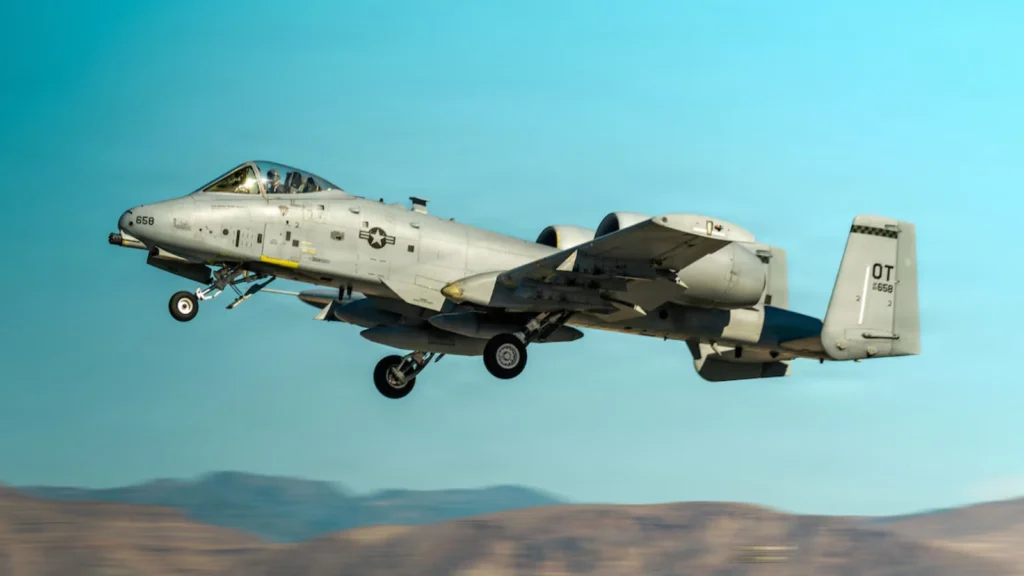
The first A-10 arrived at Nellis in 1977. Over the following decades, the base became closely associated with the aircraft’s employment in realistic training environments and operational testing. Nellis units worked on software, avionics and precision weapons capabilities, while the 66th Weapons Squadron developed tactics and trained weapons officers.
Nellis remains one of the Air Force’s principal locations for advanced combat training and tactics development. Its connection to the Nevada Test and Training Range gives units a large environment for integrating aircraft, weapons, sensors and command-and-control capabilities against complex simulated threats.
A-10 Warthog Technical Design and Survivability
The A-10 Thunderbolt II was designed around the requirements of low-altitude attack and close air support rather than high-speed air combat.
Its distinctive design includes twin General Electric TF34 engines, mounted high and aft of the fuselage. This configuration reduces the exposure of the engines to some ground threats and helps separate the propulsion system from the weapons and fuel systems.
The aircraft’s most recognizable feature is its GAU-8/A Avenger 30 mm cannon. Mounted directly into the forward fuselage, the seven-barrel rotary cannon was designed to provide substantial firepower against ground targets.
Survivability was also central to the design. The A-10 incorporates a titanium armored cockpit, redundant flight controls and separated systems intended to allow the aircraft to remain controllable after sustaining battle damage.
Unlike modern stealth aircraft, the A-10 was not designed around low radar cross section. Its survivability concept instead emphasized armor, redundancy, low-altitude maneuvering, structural durability and the ability to continue operating after damage.
The aircraft’s relatively low maximum speed is also deliberate. Its mission set prioritized time over the target, weapons employment and low-speed handling rather than supersonic performance.
A-10 Avionics and Precision Weapons Evolution
The original A-10 configuration has changed substantially during its service life.
Modernized A-10C aircraft received digital avionics, improved communications, precision weapons capability and compatibility with targeting systems. These upgrades transformed an aircraft originally optimized for conventional attack missions into a platform capable of employing modern precision-guided munitions.
The aircraft can employ weapons including AGM-65 Maverick missiles, laser-guided bombs and GPS-guided Joint Direct Attack Munition weapons, depending on configuration and mission requirements.
Nellis played an important role in developing and testing these capabilities. The 66th Weapons Squadron also demonstrated how A-10 operations could contribute to broader combat operations rather than treating close air support as an isolated mission. In a 2022 exercise, the squadron examined the aircraft’s use in austere environments and its ability to support fifth-generation aircraft in a contested environment.
What Happens to A-10 Expertise?
The most important consequence of the Nellis departure may be organizational rather than technological.
According to the Air Force, A-10 maintainers from the 757th Aircraft Maintenance Squadron are moving to other squadrons and aircraft, including the F-35 and F-16. That transfers decades of experience with structural fatigue, wing replacement, aircraft sustainment and flight-line maintenance into newer fleets.
The same process is occurring within the operational community.
Lt. Col. Ridge Flick, commander of the 66th Weapons Squadron, said the unit is maintaining the A-10’s close air support culture by involving other fighter communities. F-15, F-16 and F-35 pilots are being trained for roles associated with the broader close air support and combat search and rescue mission set.
That shift matters because the A-10’s legacy is not limited to its airframe. Much of its value came from the people, tactics and training architecture developed around it.
F-35 and the Future of Close Air Support
The F-35A Lightning II represents a fundamentally different approach to supporting forces on the ground.
Where the A-10 relies heavily on survivability through armor, redundancy and low-altitude attack, the F-35 combines stealth, sensor fusion, electronic warfare, secure communications and precision weapons.
The F-35’s ability to collect and distribute information gives it a role in the wider battlespace beyond the traditional close air support aircraft model. The aircraft can identify and track threats, share information with other platforms and employ precision weapons while operating in environments where legacy aircraft could face increasingly sophisticated air defenses.
That does not make the F-35 a direct technical replacement for every A-10 capability. The two aircraft were designed around different operating concepts. The transition instead represents a change in how the Air Force intends to integrate close air support with broader air operations.
The Air Force Weapons School already reflects this transition. Its current structure includes dedicated weapons squadrons for the F-35A, F-16, F-15E and F-22, alongside specialized units covering intelligence, cyber, space and special missions.
The A-10 Warthog Legacy at Nellis
The final departure also marks the loss of an aircraft that became deeply embedded in the identity of Nellis.
More than 300 A-10 weapons officers were trained through the 66th Weapons Squadron across roughly 100 classes, according to the Air Force’s account of the aircraft’s Nellis history.
The A-10’s departure from Nellis follows its broader withdrawal from other major U.S. installations. Davis-Monthan Air Force Base conducted the A-10’s final flight there in July 2026, ending nearly five decades of operations at that installation.
The remaining fleet is therefore increasingly concentrated as the Air Force continues its transition away from the Warthog.
Conclusion
The final A-10 Warthog departure from Nellis Air Force Base on September 22, 2026, closes nearly 50 years of specialized training, tactics development, testing and maintenance experience.
The significance of the event extends beyond the retirement of an individual aircraft type from one installation. A-10 maintainers are moving into newer fleets, while close air support expertise is being incorporated into F-15, F-16 and F-35 training communities.
The A-10 Warthog therefore leaves Nellis with its most important legacy carried by the people and tactical knowledge developed around it. The aircraft’s distinctive combination of armor, redundancy, low-speed handling and heavy weapons firepower belongs to a different era of air warfare. The Air Force’s emerging model places greater emphasis on multirole aircraft, sensor integration, precision weapons and networked operations.
For Nellis, September 22 marked the end of the Warthog era. For the broader close air support mission, it marked a transition from a dedicated attack aircraft toward a more distributed force structure.