Why Electronic Warfare Is Changing
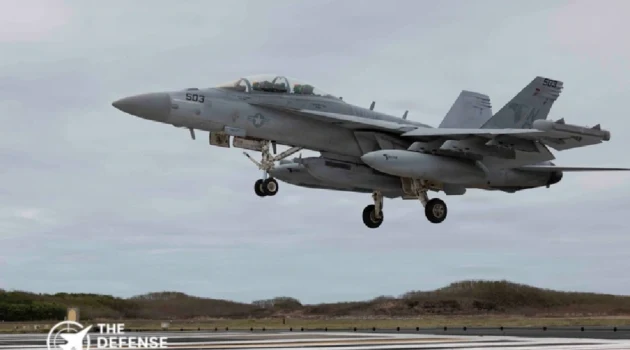
The Next Generation Jammer NGJ-MB is the U.S. Navy’s latest major step in modern airborne electronic attack, designed to replace the aging AN/ALQ-99 Tactical Jamming System on the EA-18G Growler. Unlike the ALQ-99, which entered operational service in 1971, NGJ-MB uses digital processing, electronically scanned arrays and software-based techniques to provide greater power, target flexibility and electronic attack capability.
The transition is taking place as electronic warfare becomes increasingly important against sophisticated integrated air defense systems, tactical communications networks, data links and radar architectures.
Key Takeaways
The transition from ALQ-99 to NGJ-MB represents a major change in airborne electronic attack, while newer unmanned EW technologies are extending spectrum operations to smaller and more distributed platforms.
At the same time, the September 2026 acquisition of Berlin-based Raydiant RF by German defense company STARK illustrates another side of the same transformation. STARK is combining Raydiant RF’s expertise in antennas, radio-frequency electronics and software-defined radios with unmanned systems and its Minerva mission-management software. The company already has R-Zero, an electronic warfare system intended to help unmanned platforms locate hostile transmitters and radar installations.
These developments are related, but they are not interchangeable.
NGJ-MB is a high-capacity airborne electronic attack system carried by a dedicated electronic attack aircraft. STARK and Raydiant RF are pursuing a more distributed approach in which unmanned platforms sense, communicate and operate inside a contested electromagnetic environment.
That distinction helps explain where airborne EW systems are heading in 2026.
What Was the AN/ALQ-99?
The AN/ALQ-99 Tactical Jamming System represents one of the longest-running airborne electronic attack programs in U.S. military service.
The system achieved initial operational capability in 1971 and was originally associated with the EA-6B Prowler. When the EA-18G Growler entered service, the ALQ-99 transitioned to the new aircraft and continued providing airborne electronic attack against radar and communications targets. The Growler first deployed operationally with the ALQ-99 in 2010.
An ALQ-99 pod contains a ram-air turbine generator, transmitter modules, antennas and an exciter. The system was designed around selectable transmitter and antenna configurations for different frequency ranges and missions.
The EA-18G can carry as many as five ALQ-99 pods, although actual configurations vary according to mission requirements.
The fundamental concept was straightforward: place significant electronic attack power on an aircraft capable of accompanying strike forces into contested airspace.
But the electromagnetic environment changed substantially during the ALQ-99’s service life.
Modern air defenses increasingly employ networked sensors, mobile launchers, multifunction radars, frequency agility, digital communications and distributed command networks. That creates a more difficult electronic attack problem than simply defeating a single radar transmitter.
The Navy therefore began developing the Next Generation Jammer family.
Next Generation Jammer NGJ-MB Explained
The Next Generation Jammer NGJ-MB is the mid-band element of the broader NGJ program.
The Navy describes NGJ as an evolutionary acquisition program intended to introduce capabilities across different portions of the electromagnetic spectrum. The program uses digital software and electronically scanned array technologies to disrupt, deny and degrade enemy air defense and communications systems.
NGJ-MB is designated AN/ALQ-249(V)1.
The system is carried externally by the EA-18G Growler and requires hardware and software modifications to the aircraft for carriage, communication and employment. A standard NGJ-MB shipset consists of two pods.
The key change is not simply that NGJ-MB is a newer jammer.
It is designed around a more software-driven and electronically agile architecture.
Digital Processing
Modern electronic warfare depends heavily on the ability to collect, classify, process and respond to signals quickly.
A digital architecture provides greater flexibility than a system built around older analog components and fixed hardware functions. Software updates can introduce new techniques and adaptations without requiring every change to originate from a completely new physical jammer.
NAVAIR specifically identifies the ability to make rapid hardware and software updates as one of the advantages of the NGJ architecture.
Active Electronically Scanned Arrays
NGJ-MB also incorporates active electronically scanned array technology.
Unlike mechanically steered antennas, electronically scanned arrays can redirect energy without physically moving the antenna. In an electronic attack application, this can support rapid changes in beam direction and engagement priorities.
Raytheon says NGJ-MB can attack multiple targets simultaneously and employ advanced jamming techniques while providing greater operating range than the legacy architecture.
Specific classified performance figures, including effective jamming ranges against particular threat systems and detailed power output, should not be treated as publicly established specifications.
NGJ-MB Reaches Operational Service
The transition from development to operational service is already underway.
The Navy declared Initial Operational Capability for NGJ-MB in December 2024, with the announcement published in January 2025. The Navy said the system provided substantial improvements in power, target flexibility and jamming techniques compared with legacy systems.
The system also deployed with Electronic Attack Squadron VAQ-133 aboard USS Abraham Lincoln during a five-month carrier strike group deployment. NAVAIR described this as the first deployment in which NGJ-MB was used both in a deployed setting and in combat.
That milestone is important because electronic warfare systems are particularly difficult to evaluate through laboratory testing alone.
The real test comes when a system has to operate with:
- Carrier aviation operations
- Strike aircraft
- Airborne sensors
- Tactical datalinks
- Intelligence systems
- Friendly communications
- Adversary electronic warfare
- Dynamic radar environments
- Changing threat emissions
NGJ-MB is therefore not simply a new external pod. It is part of the larger Growler combat system.
The EA-18G Growler Is the Platform Behind NGJ-MB
The EA-18G Growler was developed from the F/A-18F Super Hornet and replaced the EA-6B Prowler as the Navy’s dedicated airborne electronic attack aircraft.
The aircraft combines electronic warfare systems with the performance, sensors, weapons and networking architecture of the Super Hornet family.
Its electronic warfare architecture includes the ALQ-218 receiver, communications countermeasures and other mission systems. The aircraft also carries the APG-79 AESA radar.
The Growler’s importance extends beyond simply carrying a jammer.
It provides a platform capable of operating with a carrier air wing and supporting strike aircraft in contested electromagnetic environments.
That makes the aircraft an important part of the suppression and destruction of enemy air defenses mission, particularly when adversary radars and communications systems are integrated into wider networks.
The U.S. Navy is also upgrading the aircraft through programs such as Growler Capability Modification and Growler Block II.
NAVAIR said the Growler Capability Modification program is intended to support future growth through aircraft system upgrades, including integration of NGJ-MB.
How NGJ-MB Changes Airborne Electronic Attack
The most important difference between ALQ-99 and NGJ-MB is the ability to operate against a more complex electromagnetic threat environment.
A modern integrated air defense network can contain:
- Long-range surveillance radars
- Multifunction fire-control radars
- Communications networks
- Data links
- Passive sensors
- Mobile launchers
- Distributed command nodes
- Electronic warfare systems
Disrupting one emitter may therefore not be enough.
An effective electronic attack campaign may need to create uncertainty across several parts of the adversary’s kill chain.
NGJ-MB contributes to that effort by providing a more flexible airborne electronic attack capability designed around digital processing and electronically scanned arrays.
The objective is not necessarily to permanently destroy an adversary’s radar.
Electronic attack can instead:
- Deny access to information
- Reduce detection quality
- Disrupt communications
- Complicate targeting
- Create false or degraded information
- Force an adversary to change operating procedures
- Protect friendly aircraft
- Increase the survivability of strike packages
This makes electronic warfare a form of operational competition over information and access to the electromagnetic spectrum.
NGJ-MB and the Broader NGJ Family
NGJ-MB should not be viewed as the complete replacement for every function performed by ALQ-99.
The Navy’s broader NGJ architecture is divided into frequency-focused increments.
The current program includes:
- NGJ-MB, focused on the mid-band spectrum
- NGJ-LB, intended to address lower-frequency threats
- Additional future capabilities intended to broaden the system’s spectrum coverage
NAVAIR says NGJ-LB is in the Engineering and Manufacturing Development phase and is intended to address advanced and emerging threats in lower frequency bands.
This incremental approach matters because no single jammer can provide unlimited coverage against every electromagnetic threat.
Different radar and communications systems operate across different portions of the spectrum, and adversaries can change frequencies, waveforms and tactics.
The broader NGJ architecture therefore seeks to provide complementary capabilities rather than one universal pod.
The U.S. and Australia Are Building a Common EW Capability
The NGJ program also has an important alliance dimension.
The United States and Australia have cooperated on Next Generation Jammer development, with both countries operating the EA-18G Growler.
NAVAIR said the two governments expanded their cooperative partnership on NGJ-LB to support commonality and share costs and risks.
Raytheon has also described NGJ-MB as a cooperative development and production program involving the Royal Australian Air Force.
That creates an important interoperability advantage.
Australia operates the same basic electronic attack aircraft and NGJ-MB family as the U.S. Navy, allowing the two forces to develop compatible tactics, logistics and operational concepts.
For Indo-Pacific operations, this matters because electronic warfare is inherently networked.
A jammer operating alone has less value than a jammer connected to a broader intelligence, surveillance, reconnaissance and targeting architecture.
NGJ-MB Production Is Expanding
NGJ-MB has moved beyond prototype development into production.
NAVAIR states that the program achieved Milestone C in 2021, allowing it to enter the Production and Deployment phase. The Low Rate Initial Production III contract was awarded in March 2023, and the first production pods were delivered to the fleet in July 2023.
Raytheon received a $580 million follow-on production contract in May 2025 for additional NGJ-MB pod shipsets, including pods for the Royal Australian Air Force, along with spares and support equipment.
The Navy’s FY2026 budget documentation requested funding for 10 NGJ-MB shipsets, with two pods per shipset. The same documentation noted that projected unit costs had increased based on production experience.
This highlights an important procurement reality.
Electronic warfare capability is expensive not only because of the hardware. It also requires:
- Specialized test equipment
- Software development
- Mission-data development
- Maintenance infrastructure
- Technical data
- Operator training
- Threat libraries
- Depot-level support
- Continuous modernization
The cost of maintaining an effective EW capability therefore extends throughout the system’s life cycle.
Raytheon NGJ-MB Expansion
The development cycle is also continuing after initial operational capability.
In October 2024, Raytheon received a $192 million U.S. Navy contract for the Next Generation Jammer Mid-Band Expansion, or NGJ-MBX. The company said the modification would extend the frequency range of the NGJ-MB system to counter additional threats.
This is important because electronic warfare is fundamentally a moving target.
A jammer that is effective against today’s threat set may require new techniques when an adversary changes:
- Frequency
- Waveform
- Radar modes
- Communications architecture
- Networking
- Antenna configuration
- Emission control procedures
Software and hardware growth therefore become central to maintaining EW relevance.
From Airborne EW Pods to Unmanned Spectrum Operations
The September 2026 STARK acquisition of Raydiant RF shows that the next stage of electronic warfare may not be limited to traditional electronic attack aircraft.
STARK says Raydiant RF brings expertise in RF technology, analog electronics, antenna design and software-defined radios. Its technology is intended to be integrated with STARK’s unmanned systems and Minerva mission-management software.
STARK already has R-Zero, which the company describes as an electronic warfare system allowing unmanned platforms to conduct reconnaissance and locate hostile transmitters and radar installations.
Raydiant RF adds another piece.
The company has developed a compact directional antenna system designed for unmanned platforms. According to STARK, the technology uses edge AI to analyze electromagnetic activity and react to attempts to jam communications.
Rather than radiating communications broadly, the directional antenna focuses energy toward the intended receiver.
That can reduce the electromagnetic signature and make the communication link more difficult to detect, locate or jam.
This represents a different EW philosophy from NGJ-MB.
NGJ-MB Approach
The Growler and NGJ-MB are designed to project significant electronic attack effects from a specialized aircraft operating alongside high-value strike forces.
STARK and Raydiant RF Approach
The unmanned approach focuses on giving smaller platforms the ability to sense the spectrum, communicate more selectively and continue operating when an adversary attempts to interfere with their links.
Both approaches address the same fundamental problem:
Who controls the electromagnetic spectrum controls a critical part of the modern kill chain.
NGJ-MB vs. Raydiant RF: Different Systems, Same EW Problem
It would be misleading to describe Raydiant RF as a direct replacement for NGJ-MB.
The systems operate at very different scales and serve different missions.
Capability AN/ALQ-99 NGJ-MB STARK/Raydiant RF Direction Primary role Airborne electronic attack Advanced airborne electronic attack EW-resilient unmanned operations and spectrum sensing Main platform EA-6B and EA-18G EA-18G Growler Unmanned platforms Architecture Legacy modular jammer Digital and electronically scanned Directional communications, RF sensing and SDR Status Legacy system being replaced Operational Developing and expanding Developer/Industry Multiple companies Raytheon, RTX STARK and Raydiant RF Spectrum role Jamming radar and communications Mid-band electronic attack Spectrum reconnaissance and resilient communications Processing Legacy and upgraded architecture Digital software-based architecture Edge AI and software-defined technologies Directional communications Not the primary design focus Electronic attack function Core technology area Future role Retirement through NGJ transition Continued NGJ modernization Expansion across unmanned systems The comparison shows why modern electronic warfare is becoming increasingly distributed.
Large electronic attack aircraft remain essential because they can carry substantial power, sophisticated sensors and mission systems.
But smaller unmanned systems can provide numbers, persistence and geographic distribution.
Russia and China Increase the Pressure on EW Systems
The modernization of U.S. electronic warfare cannot be separated from the broader competition with China and Russia.
Both countries operate increasingly sophisticated integrated air defense systems and have invested heavily in electronic warfare, communications disruption and spectrum operations.
For the United States and its allies, the problem is not simply defeating a radar.
A future air campaign may involve multiple sensors sharing information across networks while electronic warfare units attempt to identify, locate and disrupt friendly aircraft.
This places greater emphasis on kill-chain resilience.
A fighter aircraft needs reliable communications.
A missile needs targeting information.
A command aircraft needs access to sensors.
An unmanned aircraft needs a control or data link.
A distributed force therefore needs to survive electromagnetic disruption while simultaneously attempting to impose disruption on an adversary.
NGJ-MB addresses the offensive side of that equation.
Technologies such as Raydiant RF address the resilience side.
Why Directional Communications Matter for Drones
Unmanned systems are particularly vulnerable to electronic warfare because many depend on radio-frequency links.
A conventional communication link can create an observable electromagnetic signature.
If an adversary detects that signal, it may be possible to determine the transmitter’s location, interfere with the connection or attack the platform.
Directional communications attempt to reduce this vulnerability by concentrating RF energy toward the intended receiver rather than transmitting broadly.
The approach does not make a communications link invisible or immune to jamming.
However, reducing unwanted radiation can make detection and geolocation more difficult and can improve the efficiency of the link.
STARK says Raydiant RF’s technology will be integrated into Minerva, allowing operators to obtain a broader picture of electromagnetic activity and enabling unmanned platforms to respond to spectrum threats.
What Comes After the ALQ-99?
The ALQ-99 era is ending, but the underlying mission is becoming more important.
The future electronic attack aircraft will likely operate as one node within a larger electromagnetic combat network.
That network could combine:
- EA-18G Growlers
- NGJ-MB and future NGJ increments
- AESA radars
- Passive RF sensors
- Satellites
- Cyber capabilities
- Unmanned aircraft
- Attritable EW platforms
- Software-defined radios
- AI-assisted signal classification
- Tactical data links
- Long-range precision weapons
The result is a shift from the traditional concept of a jammer aircraft supporting a strike package toward a broader electromagnetic battle network.
The Growler remains important because it brings specialized crewed airborne electronic attack capability.
But unmanned platforms can potentially distribute sensing and communications functions across a much larger area.
Challenges for Modern Airborne EW
The modernization of electronic warfare also creates major technical challenges.
Spectrum Congestion
Military aircraft increasingly operate alongside civilian communications, satellite systems and allied networks.
Jamming must therefore be carefully controlled to avoid interfering with friendly systems.
Threat Adaptation
An adversary can change frequencies, waveforms and tactics.
EW systems require continuous software and mission-data updates.
Power and Thermal Management
High-power electronic attack systems generate substantial heat and require aircraft-level power and cooling capacity.
Platform Survivability
A dedicated electronic attack aircraft is itself a high-value target.
It must operate close enough to the threat environment to produce effects while maintaining sufficient survivability.
Maintenance
Advanced AESA arrays, processors, RF electronics and specialized support equipment create significant maintenance demands.
The Navy’s FY2026 documentation specifically identifies the need to establish organizational, intermediate and depot-level maintenance capabilities for the ALQ-249 system.
Unmanned EW Limitations
Smaller unmanned systems offer distribution and scalability, but they face their own limitations involving power, antenna size, communications range, payload capacity and survivability.
Public information on Raydiant RF’s technology does not currently establish detailed performance figures such as frequency coverage, transmission power, antenna gain or effective range.
Those figures should therefore not be treated as confirmed specifications.
The Future of Electronic Warfare Pods and Aircraft
The next generation of electronic warfare will probably not involve one technology replacing another.
Instead, the battlefield is moving toward layered spectrum operations.
The Next Generation Jammer NGJ-MB represents the high-capacity airborne electronic attack layer.
The EA-18G provides the aircraft, crew, sensors and networking required to employ that capability in complex combat operations.
Future NGJ increments can extend coverage across additional frequency ranges.
Meanwhile, companies such as STARK are exploring a different model in which unmanned systems themselves become spectrum-aware.
The September 2026 Raydiant RF acquisition is significant because it brings RF engineering, directional antennas, software-defined radios and edge AI into a company already developing unmanned systems and mission software.
This could eventually produce a more distributed electronic warfare architecture in which drones are not simply consumers of communications.
They become active participants in the electromagnetic battle.
Conclusion: From ALQ-99 to a Distributed EW Battlespace
The transition from the AN/ALQ-99 to the Next Generation Jammer NGJ-MB represents one of the most important changes in U.S. airborne electronic attack since the introduction of the EA-18G Growler.
The ALQ-99 proved that dedicated airborne jamming could protect strike forces and suppress enemy air defenses for decades.
NGJ-MB brings a newer architecture built around digital processing, electronically scanned arrays, increased power, greater target flexibility and more adaptable jamming techniques. The Navy’s declaration of IOC in December 2024 and subsequent operational deployment demonstrate that the system has moved beyond development into fleet use.
But the next phase of electronic warfare is broader than a new jammer pod.
The STARK acquisition of Raydiant RF in September 2026 demonstrates how EW technology is spreading into unmanned systems, directional communications and software-driven spectrum awareness.
The strategic direction is therefore clear.
The future electronic warfare force will combine specialized electronic attack aircraft with networked sensors, unmanned platforms, adaptive communications and software-driven spectrum operations.
NGJ-MB is an important part of that transition, but it is not the endpoint.
The ALQ-99 era was built around dedicated jammer pods.
The emerging era is being built around control, resilience and competition across the entire electromagnetic spectrum.