Executive Summary:
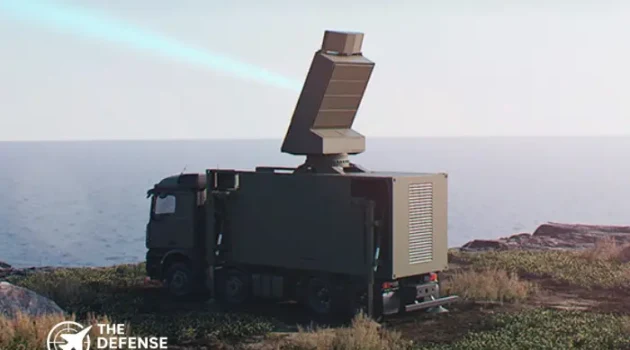
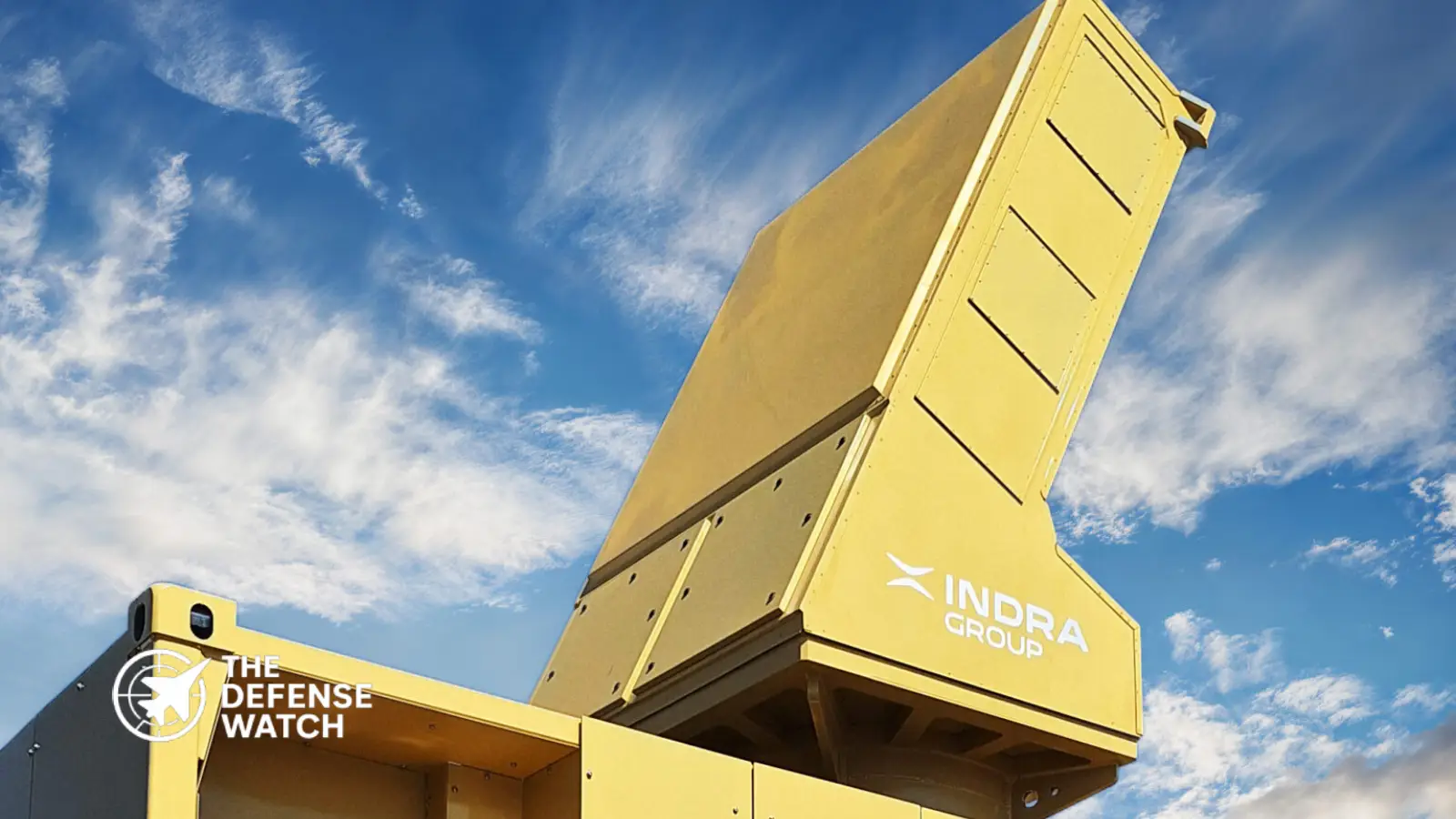
Spanish defense technology company Indra has unveiled its new AESA MTR radar family mounted on a Rheinmetall HX truck platform. The system is designed to perform counter battery missions, air surveillance, and battlefield monitoring while offering rapid deployment and mobility suited to modern high intensity combat environments.
Indra Introduces Mobile AESA MTR Radar Family
The Indra AESA MTR radar family has been presented on a Rheinmetall HX truck platform, highlighting the company’s latest effort to provide highly mobile radar capabilities for counter battery and air surveillance missions.
The system combines Active Electronically Scanned Array (AESA) technology with a truck-mounted configuration intended to support rapid deployment and redeployment in contested operational environments. The radar was showcased as part of Indra’s expanding portfolio of land-based defense systems and surveillance technologies.
The MTR, or Multi-Mission Terrestrial Radar, family is designed to perform multiple battlefield functions from a single platform. These include artillery and mortar detection, air defense support, target tracking, and broader surveillance operations.
Designed For Modern Battlefield Threats
According to Indra, the MTR family is based on Full AESA technology and is optimized for rapid reaction against short-range threats that require high refresh rates and fast target updates. These threats increasingly include drones, cruise missiles, rockets, artillery projectiles, and mortar rounds.
The radar family is modular and scalable, allowing military operators to tailor configurations for different missions. Indra states that the systems can support both ground based air defense operations and counter battery missions while maintaining mobility and operational flexibility.
Unlike traditional fixed-site radars, the truck-mounted architecture enables rapid movement between locations, improving survivability against enemy targeting efforts. This characteristic has become increasingly important in conflicts where artillery, loitering munitions, and long-range precision strikes can quickly threaten stationary assets.
Rheinmetall HX Platform Enhances Mobility
Mounting the radar on a Rheinmetall HX military truck provides a proven tactical mobility solution capable of operating across varied terrain.
The HX vehicle family is widely used by NATO and allied forces and supports a broad range of mission equipment, including air defense, logistics, recovery, and command systems. The integration of the MTR radar onto this platform highlights a growing trend toward highly mobile sensor networks capable of supporting dispersed military operations.
The combination of advanced radar technology and tactical mobility allows forces to establish surveillance coverage quickly, relocate when necessary, and reduce exposure to enemy counterfire.
Counter Battery Capability Gains Importance
One of the most significant aspects of the Indra AESA MTR radar family is its counter battery role.
Counter battery radars detect incoming artillery, rocket, and mortar fire, calculate the point of origin, and provide targeting information for rapid response. Modern conflicts have demonstrated that artillery remains one of the most decisive battlefield capabilities, making counter battery systems a critical component of force protection.
Indra’s counter battery radar technology employs electronic beam steering and track-while-scan functionality, enabling simultaneous detection, tracking, and localization of multiple threats. The system can operate with fixed or rotating antenna configurations depending on mission requirements.
This flexibility allows commanders to balance sector-focused surveillance with full 360-degree coverage when operational conditions demand broader awareness.
Expanding Air Defense And Drone Detection Roles
Beyond artillery detection, the MTR radar family is intended to support modern air defense missions.
Indra describes the radar as capable of contributing to short- and medium-range ground based air defense architectures by detecting and tracking airborne threats. These include unmanned aerial systems, cruise missiles, and low-flying aircraft.
The growing prevalence of drones in military operations has accelerated demand for radar systems capable of identifying small, low-signature aerial targets. Mobile AESA radars provide an important layer within integrated air defense networks by delivering early warning and target tracking data to command and weapon systems.
The MTR family is also designed to integrate with broader command-and-control architectures, helping operators coordinate defensive responses across multiple sensors and effectors.
Analysis: Why The MTR Radar Matters
The unveiling of the Indra AESA MTR radar family comes as armed forces across Europe and beyond seek lessons from ongoing conflicts that have highlighted the importance of mobility, survivability, and sensor coverage.
Traditional distinctions between counter battery radars and air surveillance systems are increasingly giving way to multifunction sensors capable of addressing multiple threat categories simultaneously. The MTR reflects this evolution by combining artillery detection, air defense support, and surveillance functions within a single AESA-based platform.
Its deployment on a Rheinmetall HX truck further underscores the military’s shift toward highly mobile systems that can rapidly reposition and avoid detection while maintaining operational effectiveness.
As drone warfare, precision fires, and long-range strike capabilities continue to shape future combat environments, multifunction radar systems such as the MTR are likely to play a growing role in integrated battlefield awareness and force protection architectures.