South Korea Reviews P-8A Poseidon Mission For Strait Of Hormuz
South Korea is reviewing a possible contribution of military assets to efforts to protect freedom of navigation in the Strait of Hormuz, with the P-8A Poseidon maritime patrol aircraft among the reported options. Seoul’s presidential office said Sept. 4 that no final decision has been made and that any contribution would have to preserve military readiness on the Korean Peninsula and comply with domestic legal procedures.
- South Korea Reviews P-8A Poseidon Mission For Strait Of Hormuz
- Takeaways
- What The P-8A Would Bring To Hormuz
- Why The Strait Of Hormuz Matters To Seoul
- Mine Clearance Could Be A Major Mission
- Six Aircraft Create A Significant Readiness Question
- P-8A Commonality Could Help U.S. And Allied Operations
- The Political Dimension Is As Important As The Military One
- What A South Korean Deployment Would Mean For U.S. Strategy
- What Happens Next
Takeaways
South Korea is reviewing whether to contribute military assets to efforts to restore freedom of navigation through the Strait of Hormuz, with the P-8A Poseidon among the reported options.
The clarification is important because reports have differed on the status of the proposed deployment. South Korean broadcaster SBS reported that preparations were underway for a package involving P-8 aircraft, an explosive ordnance disposal team and a logistics support ship, while the presidential office has emphasized that the broader deployment question remains under review.
The distinction between planning and an approved deployment is significant. South Korea would face both operational and political decisions before sending forces into a region where U.S. and Iranian forces remain in active confrontation.
What The P-8A Would Bring To Hormuz
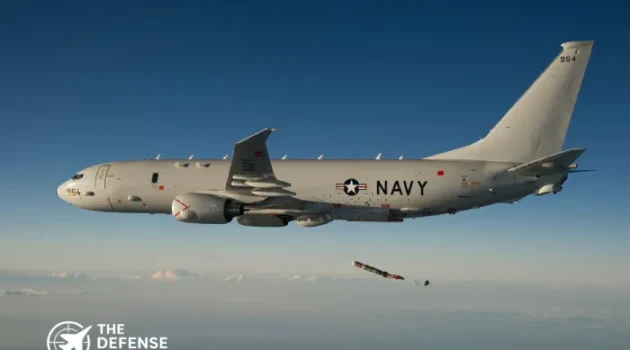
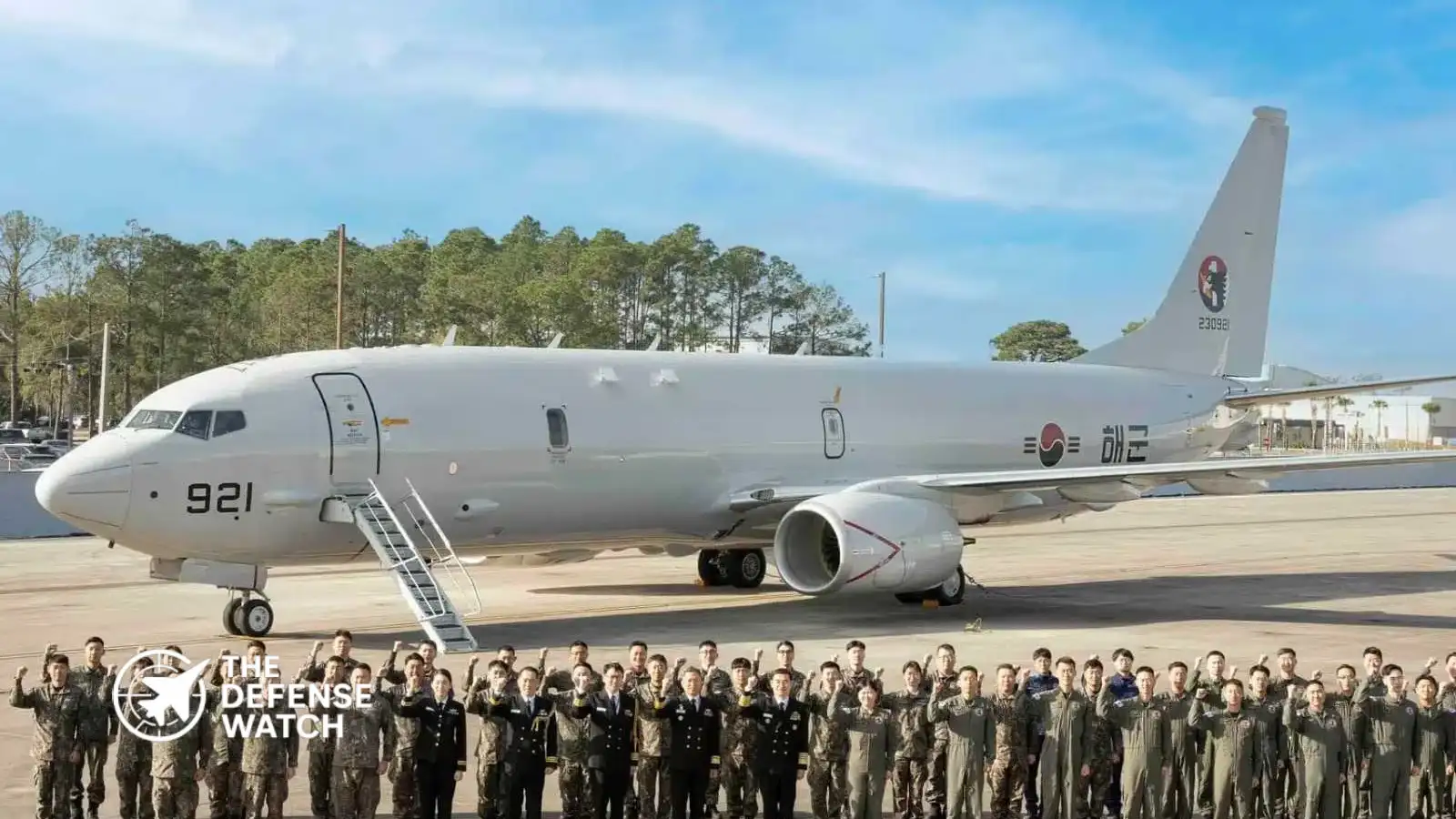
The P-8A Poseidon is a long-range maritime patrol and reconnaissance aircraft derived from the Boeing 737-800 airframe. The U.S. Navy identifies anti-submarine warfare, anti-surface warfare and intelligence, surveillance and reconnaissance as its primary missions.
Boeing lists a range of more than 1,200 nautical miles with more than four hours of time on station under specified operating conditions. The aircraft can employ sonobuoys, radar, electronic support measures and other sensors to detect, classify and track maritime contacts. Its weapons compatibility includes Harpoon anti-ship missiles and Mk 54 lightweight torpedoes.
| P-8A Poseidon capability | Relevance to Hormuz |
|---|---|
| Maritime ISR | Track surface traffic and monitor maritime activity |
| Anti-submarine warfare | Search for and track submarines |
| Anti-surface warfare | Identify and potentially engage hostile surface vessels if authorized |
| Radar and ISAR | Detect and classify maritime contacts |
| Sonobuoys | Support underwater surveillance |
| Long endurance | Maintain surveillance over defined patrol areas |
| Secure communications | Share information with coalition forces |
The aircraft would therefore add a surveillance capability rather than simply another strike platform. In a congested waterway containing commercial tankers, naval vessels, smaller Iranian craft and potential underwater threats, persistent identification and tracking can be as important as the ability to attack.
Why The Strait Of Hormuz Matters To Seoul
South Korea’s interest in Hormuz is directly connected to energy security.
A South Korean presidential office briefing earlier this year said about 70 percent of the country’s crude oil imports passed through the Strait of Hormuz. The government has also pursued alternative crude supplies through the United Arab Emirates as disruptions in the waterway threatened energy flows.
That dependence changes the strategic calculation for Seoul. A Hormuz mission would not simply be an overseas contribution to a U.S.-led security effort. It could also protect a maritime route directly connected to South Korea’s industrial economy.
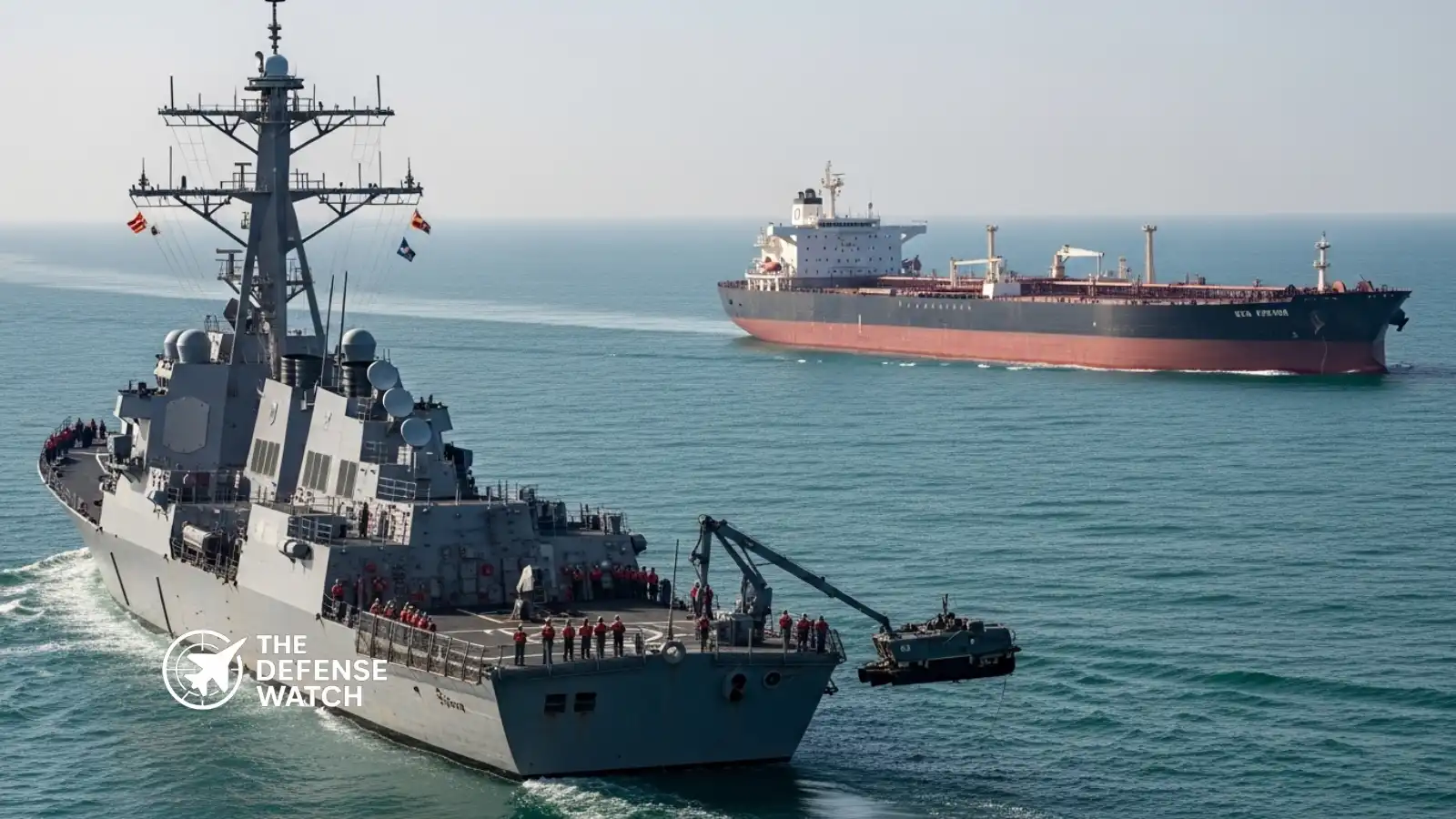
The waterway is particularly difficult to secure because of its geography. Heavy tanker traffic moves through confined shipping routes while military forces operate nearby. Mines, small boats, submarines, missiles, drones and coastal surveillance systems can create risks without requiring a conventional naval battle.
Mine Clearance Could Be A Major Mission
The reported inclusion of South Korean explosive ordnance disposal personnel is significant because mine warfare presents a different problem from conventional maritime surveillance.
A P-8A can detect and track maritime activity, but it is not a dedicated mine-clearance platform. Mine countermeasures require specialized equipment, procedures and personnel capable of identifying and neutralizing underwater explosive hazards.
SBS reported that South Korea is considering an EOD element drawn from the Navy’s Underwater Demolition Team, potentially operating with foreign naval forces. The same reporting identified a naval logistics support ship as another component of the possible force package.
This combination would make operational sense if Seoul’s objective were to contribute to maritime security without deploying a large combat formation. The P-8A could provide surveillance, specialized personnel could address explosive hazards, and the support vessel could sustain the detachment.
Six Aircraft Create A Significant Readiness Question
South Korea’s P-8A fleet is small.
The Republic of Korea Navy operates six P-8As, according to reporting cited by Army Recognition. The aircraft were acquired primarily to strengthen South Korea’s maritime patrol and anti-submarine capabilities.
That creates a clear tradeoff.
Sending two aircraft, for example, would commit roughly one-third of the entire fleet to a distant theater. A larger detachment would consume an even greater share of available aircraft while the Republic of Korea Navy continues to monitor North Korean submarine and surface activity.
The issue is not simply how many aircraft Seoul could physically fly to the Middle East. A sustainable deployment also requires aircraft for training, maintenance, crew rotation and contingency operations.
South Korea’s presidential office has specifically identified readiness on the Korean Peninsula as a factor in determining whether any contribution is possible.
P-8A Commonality Could Help U.S. And Allied Operations
If Seoul approves a deployment, the P-8A’s commonality with U.S. Navy maritime patrol forces could provide an important interoperability advantage.
The U.S. Navy has operated the P-8A as its principal long-range maritime patrol aircraft, while South Korean crews have trained to operate the same platform. The common aircraft architecture, communications systems and mission concepts can reduce some of the integration challenges associated with introducing a different national aircraft into an established maritime surveillance network.
The P-8A is also designed around networked operations. Boeing describes the aircraft as supporting maritime ISR, anti-surface warfare and anti-submarine warfare through an integrated sensor and communications suite.
For U.S. forces, the practical benefit would be additional surveillance capacity.
A South Korean aircraft could monitor assigned maritime sectors, contribute to the recognized maritime picture and search for underwater contacts. That could allow U.S. aircraft and ships to concentrate more heavily on escort, force protection and other missions.
The Political Dimension Is As Important As The Military One
Washington has pressed Seoul to contribute to efforts involving the Strait of Hormuz. Reuters reported Sept. 4 that South Korea was considering military and non-military options while consulting with the United States, Britain and France.
South Korean President Lee Jae Myung’s administration has nevertheless stressed that any overseas deployment must take account of domestic legal requirements and the country’s defense posture.
The presidential office said Sept. 4 that the review includes both combat and noncombat possibilities and has not reached the stage of seeking National Assembly approval.
That means a potential P-8A mission should not currently be described as an approved South Korean deployment.
It is more accurately understood as one of several military options under consideration.
What A South Korean Deployment Would Mean For U.S. Strategy
From a U.S. perspective, the value of a South Korean contribution would extend beyond the number of aircraft involved.
The P-8A is particularly useful for maritime domain awareness, an area where persistent coverage is essential when commercial shipping and military operations overlap. Additional aircraft can increase the number of patrol hours available to the broader force without requiring the United States to provide every surveillance sortie itself.
A South Korean contribution could also demonstrate that Seoul’s security interests extend beyond the Korean Peninsula when those interests involve major global shipping routes and energy supplies.
There is a strategic balance, however. South Korea cannot indefinitely shift scarce maritime surveillance assets away from Northeast Asia without accepting a readiness cost.
That is the central military question behind the debate.
What Happens Next
The immediate question is whether Seoul moves from reviewing possible contributions to seeking formal approval for a specific mission.
Current reporting indicates that P-8A aircraft, an EOD element and a logistics support ship are among the assets being considered or prepared for a possible mission, but South Korean officials continue to state that no final deployment decision has been made.
If approved, the mission would likely place a premium on surveillance, maritime awareness, mine-related security and support for freedom of navigation rather than automatically committing South Korean forces to offensive operations against Iran.
For South Korea, the decision would represent a significant test of its ability to balance three competing requirements: protecting a critical energy route, managing its alliance relationship with Washington and maintaining sufficient maritime forces to address threats closer to home.
The P-8A Poseidon is well suited to the surveillance side of that equation. The harder question is whether Seoul is prepared to commit a substantial portion of its small fleet to a distant and potentially dangerous theater.