

What is LRHW (Long-Range Hypersonic Weapon)?
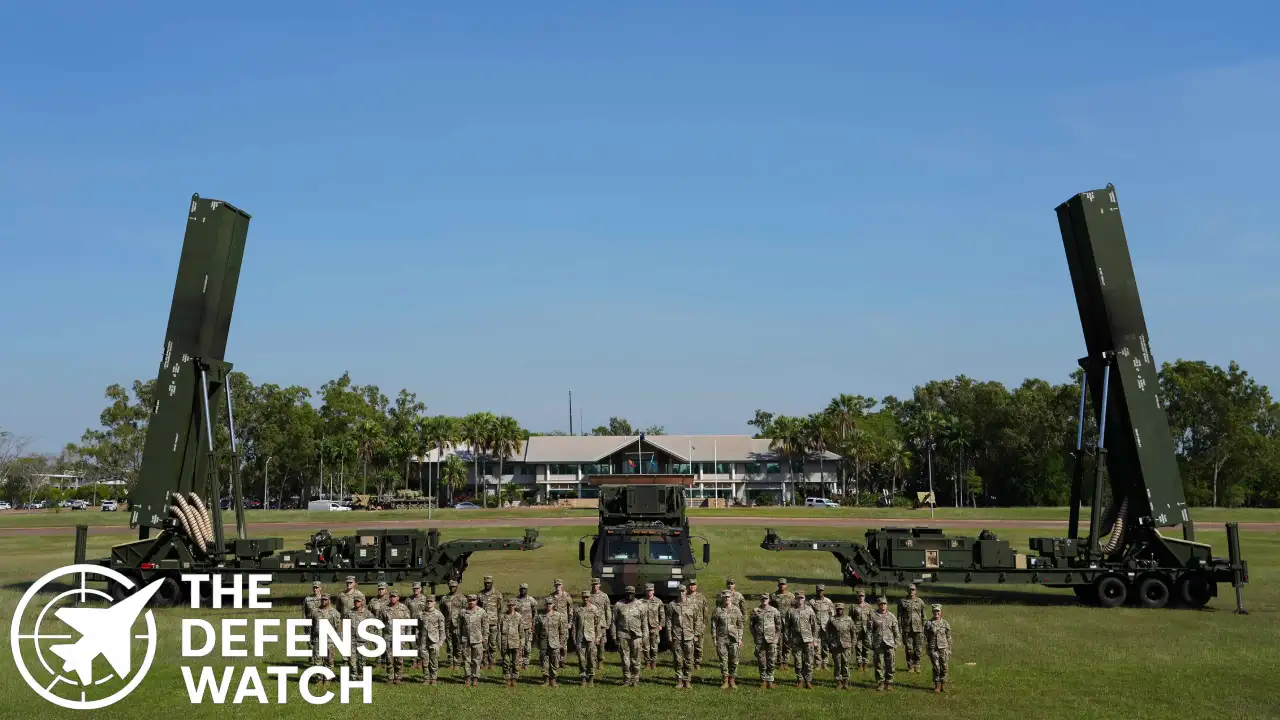
The Long-Range Hypersonic Weapon (LRHW), also known as Dark Eagle, is a U.S. Army intermediate-range, boost-glide hypersonic missile system. It is designed to deliver conventional, precision strikes at extreme ranges—currently estimated around 1,725 miles—by launching a booster which then releases a unpowered Common Hypersonic Glide Body (C-HGB) that glides at hypersonic speeds toward its target.
LRHW is among the U.S. hypersonic programs intended to counter growing global competition in hypersonic and anti-access/area-denial (A2/AD) systems. The design seeks to be both responsive to time-sensitive threats and effective against heavily defended targets.
Recent Progress and Deployment
- The Army has confirmed that its first operational LRHW battery is scheduled to be fielded by the end of Fiscal Year 2025.
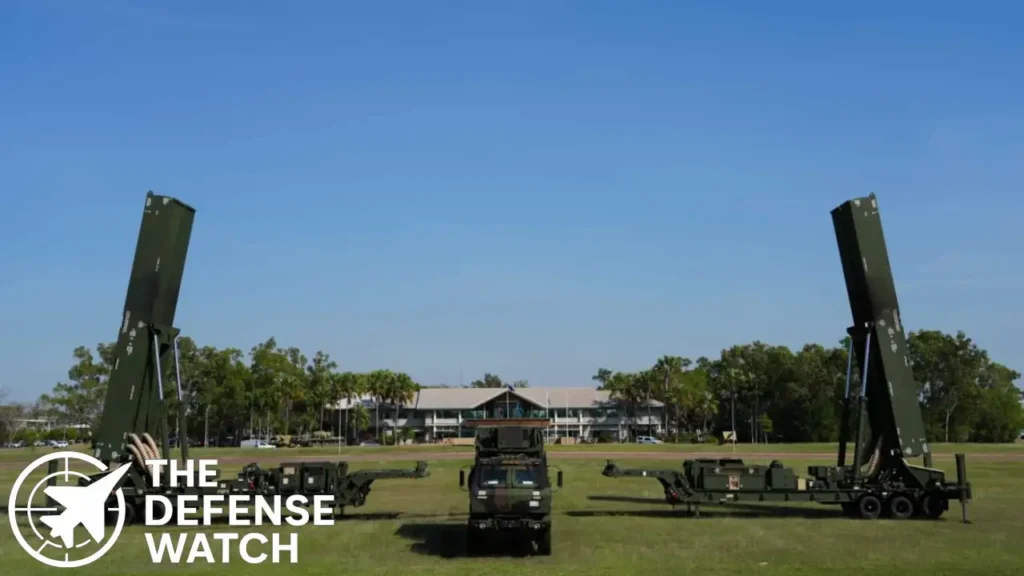
- A battery consists of four launchers and eight hypersonic missiles (All-Up Rounds plus canisters), together with a Battery Operations Center (BOC) and necessary support vehicles.
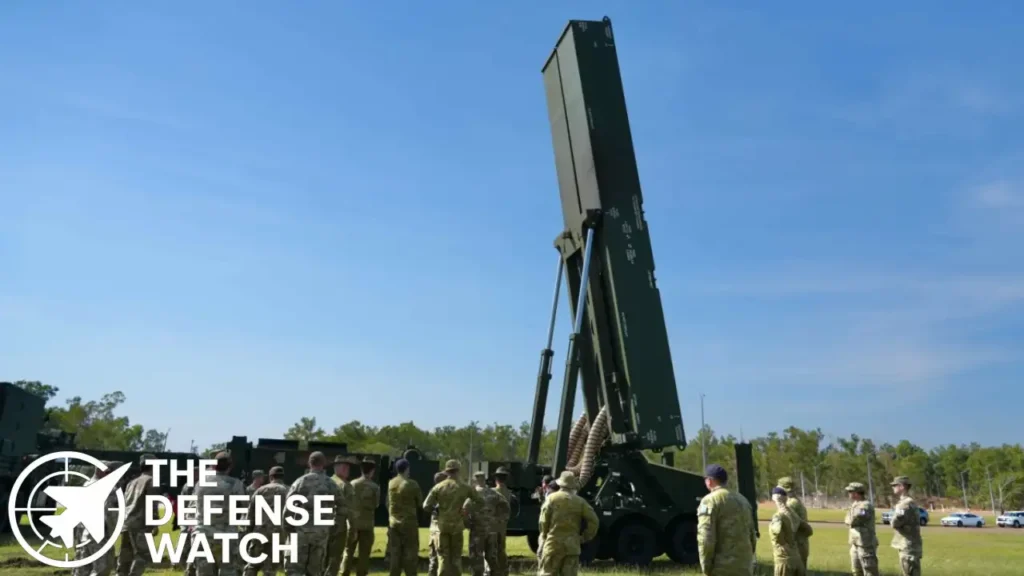
- In mid-2025, LRHW was deployed outside the continental United States for the first time: two missile launchers were sent to Australia as part of Exercise Talisman Sabre 2025.
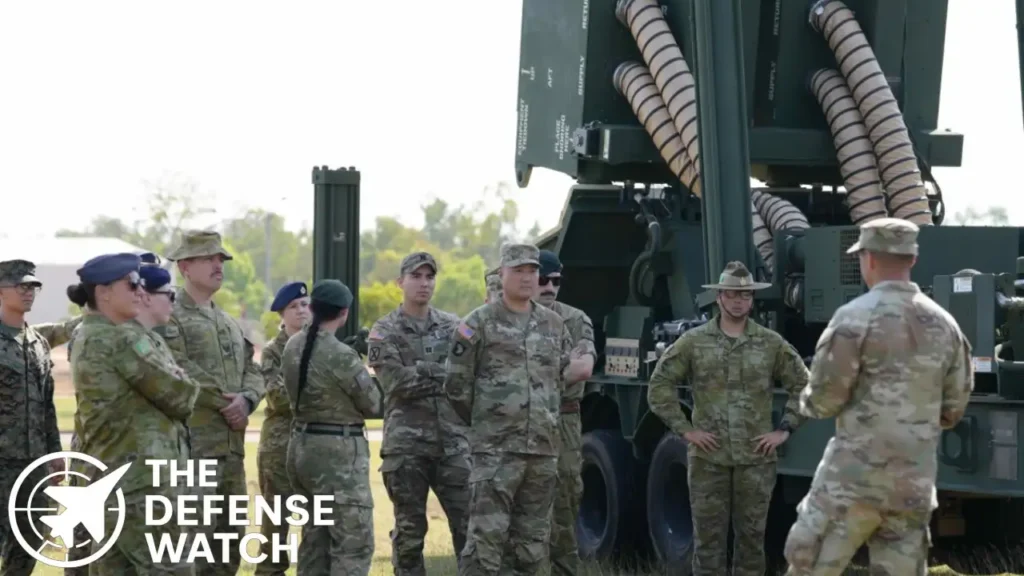
- This forward deployment underscored the Army’s ability not only to deploy and support LRHW overseas, but also to integrate it into operational command and control and mission exercises in the Indo-Pacific region.
Delays, Testing, and Cost Trends
Despite its rapid advancement, LRHW has faced several hurdles:
- Testing delays and cancellations have pushed back original deployment goals. For instance, a planned flight test in late FY2022/early FY2023 was delayed to allow for analysis of failures from prior tests.
- The Army acknowledged it would miss its FY2023 target for fielding the first battery.
- According to the Government Accountability Office (GAO), the estimated cost of fielding the first LRHW battery increased (by about $150 million) owing to higher missile costs, testing issues, investigation, and retests.
Strategic Context and Why It Matters
The LRHW system is part of the U.S. effort to modernize its long-range precision fires and strike capabilities in the face of evolving threats from near-peer competitors, especially in the Indo-Pacific theater. Its capability to strike over long distances, at hypersonic speeds, and with maneuvering glide bodies makes it harder to detect and intercept compared to traditional ballistic or cruise missiles.
The forward deployment to Australia—via the 3rd Multi-Domain Task Force—serves multiple strategic aims: demonstrating rapid deployment ability, enhancing deterrence with allies, improving interoperability, and signaling to adversaries that the U.S. can project this advanced firepower in contested regions.
Outlook: What’s Next for LRHW
- The Army intends to test a version of the missile with “minor modifications” in Q4 of FY2025, ahead of fielding the second battery in Q4 FY2026.
- Ground support equipment contracts and procurement for Battery 3 are underway, although some schedules slipped due to funding and program delays. C
- Alongside these deployments, the Army is under pressure to refine cost predictions, improve test reliability, and incorporate modern engineering practices (such as digital engineering / digital twins) to reduce risk. GAO has specifically recommended the LRHW program assess how to better use such tools.
Challenges & Risks
While LRHW is making tangible progress, several risks remain:
- Cost Overruns – The inflationary pressures in missile components, testing, and logistics support remain a concern for sustaining production beyond the first battery.
- Technical Reliability – Hypersonic systems are exceptionally demanding from engineering, materials, thermal protection, and glide body performance perspectives. Failed or delayed tests have been a recurrent issue.
- Strategic Stability and Arms Control – Increasing deployment of hypersonic weapons may complicate crisis stability, raising concerns among rivals, and could provoke arms racing if not managed transparently.
- Operational Integration – Deploying the LRHW overseas (e.g., Australia) requires not only moving the launchers but also ensuring secure command, protocols, logistical support, and coordination with allies and forward postures.
FAQs
LRHW is a ground-launched boost-glide weapon designed for long range (≈1,700-mile class), whereas other programs (e.g., Air-Launched Rapid Response Weapon or hypersonic cruise missiles) have different launch platforms, flight profiles, ranges, or deployment concepts.
The first battery is expected by end of FY2025, with subsequent batteries following (Battery 2 by Q4 FY2026) assuming current schedules hold.
Speed (hypersonic velocities), difficult intercept profiles, long range, ability to operate from forward positions, and to counter A2/AD networks in contested environments.
High cost, technical difficulties (thermal stress, glide body precision, testing), logistical and operational challenges of deploying overseas, risk of strategic escalation.
No. As of current unclassified sources, the LRHW is a conventional weapon, not nuclear.

19 comments
[…] allowing forces to strike targets deep behind enemy lines and relocate before counterfire. The Army is further enhancing HIMARS with the Precision Strike Missile (PrSM), extending range beyond 500 […]
[…] Independently Targetable Reentry Vehicle (MIRV) capability into the Agni-5, allowing a single missile to deploy multiple warheads to different targets. A 2024 trial reportedly demonstrated a version with MIRV […]
[…] Hypersonic weapons fall into two main categories: […]
[…] with advanced electronic warfare systems, modern cockpit displays, fly-by-wire controls, and hypersonic weapon […]
[…] Against Time: Russia and China have already fielded hypersonic weapons, accelerating global investments in next-generation […]
[…] and Russia are both investing heavily in high-end military capabilities: hypersonic weapons, space systems, drones, and cyberwarfare. For NATO, staying ahead in defense technology is […]
[…] strategy emphasizes field deployment and deterrent posture, leveraging these systems as bargaining chips in geopolitical competition, […]
[…] simplest terms, hypersonic missiles are projectiles that travel at five times the speed of sound or faster. There are two primary […]
[…] of counter-narcotics as cover for broader strategic aims—including regime pressure—especially amid large-scale U.S. naval deployments near Venezuelan maritime […]
[…] terms, nor does it fully specify time-lines for deployment; however, the move signals intent to field hypersonic options more affordably and more […]
[…] The Pentagon is expected to coordinate with Boeing in the coming weeks to revise delivery timelines, especially for F-15EX units slated for deployment in the Indo-Pacific. […]
[…] of these conditions, creating a controllable hypersonic weapon requires specialized materials, engines, guidance software, and real-time thermal […]
[…] hypersonic testbed by orders of magnitude, addressing a critical bottleneck that has hampered U.S. hypersonic weapons development for […]
[…] high precision. Since the onset of Russia’s invasion of Ukraine in 2022, the U.S. has provided a range of military assistance to Kyiv, including artillery, drones, and precision-guided munitions. However, ATACMS […]
[…] — a standard combat-level certification — along with advanced coursework in surveillance, weapons deployment, and defense-system […]
[…] to Okinawa-area media and defense-ministry statements, the deployment constitutes a full missile battery, though Tokyo has not yet published a firm […]
[…] Defense Development. It features imaging infrared guidance and a fire-and-forget profile, with a range near 8 […]
[…] is designed as a bolt on solution. Each wheel operates independently and can be fitted to a wide range of military and commercial vehicles. This approach supports rapid conversion for logistics, reconnaissance, and […]
[…] deliveries from LRIP 2 will continue through Army fielding plans and are expected to support additional testing and operator familiarization ahead of a […]