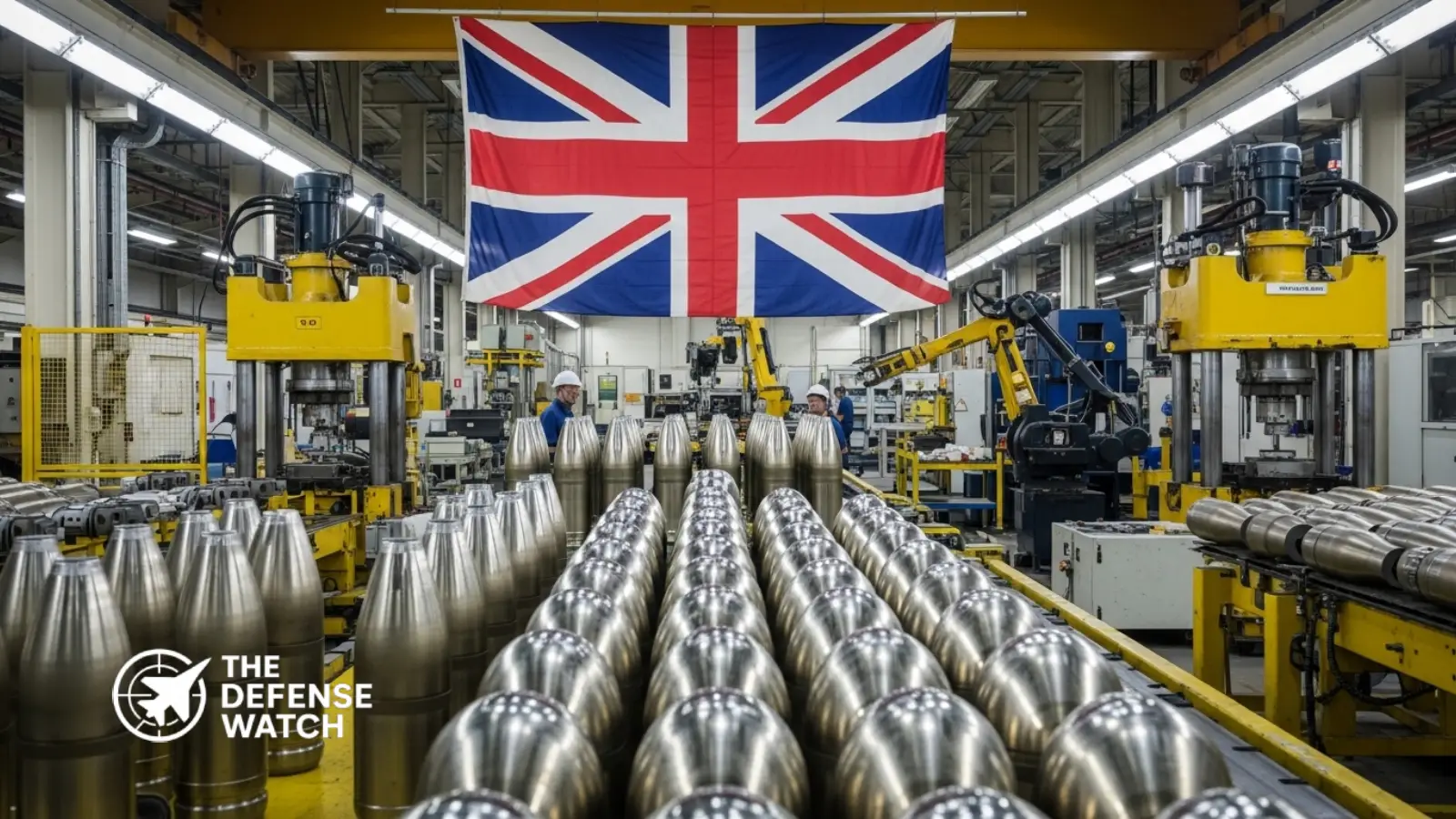
UK Ammo Factories Still Await Contract Awards
The UK ammo factories program, announced as part of Britain’s Strategic Defence Review, has not yet moved into construction, according to new parliamentary disclosures. The update highlights that feasibility study contracts for the six planned plants were still pending as of late April 2026.
In a written response to questions from Conservative MP James Cartlidge, Defence Minister Luke Pollard said feasibility studies are planned to be contracted in spring 2026 and completed by August. The Ministry of Defence then intends to announce investment decisions in the third quarter of 2026, with the first factory potentially breaking ground before year-end.
- The UK government says none of the six planned munitions factories have started construction.
- Feasibility study contracts were expected in spring 2026 but had not yet been awarded.
- Investment decisions are now targeted for the third quarter of 2026.
- The first factory could begin construction before the end of 2026 if timelines hold.
- The program is central to rebuilding sovereign UK ammunition production capacity.
That timeline suggests the UK’s long-promised industrial expansion remains in a preparatory phase, despite growing pressure across Europe to rebuild ammunition stocks and strengthen supply resilience.
Why The Delay Matters
The war in Ukraine has exposed shortages in artillery shells, explosives, propellants, and other critical munitions across NATO countries. Many Western states are now racing to rebuild production lines after decades of reduced capacity.
For Britain, the six planned factories are not just about wartime surge demand. They are also about restoring sovereign industrial capability in energetics, explosives, and ammunition components that have increasingly relied on foreign suppliers.
The delay does not necessarily indicate failure. Large explosives and munitions facilities require environmental approvals, safety reviews, site assessments, workforce planning, and supply chain commitments before construction begins. These projects are complex by design.
Still, timing matters. Every quarter lost delays future production output.
UK Strategy Focuses On Long-Term Capacity
The UK government previously announced up to £1.5 billion to support at least six new munitions and energetics factories, alongside procurement of up to 7,000 UK-built long-range weapons. Officials linked the effort directly to warfighting readiness and sustained industrial output.
Separate Ministry of Defence guidance also outlined a model where private industry would compete for capital grants, with funding windows expected to open from Q3 2026 onward.
This indicates London is trying to build an enduring industrial base rather than simply fund emergency production runs.
Strategic Outlook
The broader issue is whether Europe can convert political urgency into real factory output fast enough. Announcements alone do not produce shells, propellants, or missiles.
Britain’s six-factory plan remains strategically important, but execution speed will now be closely watched by allies, industry, and military planners. If first construction begins in late 2026, meaningful production gains may still take years depending on plant type and certification timelines.
For the UK, rebuilding munitions depth is no longer optional. It is becoming a core pillar of deterrence.