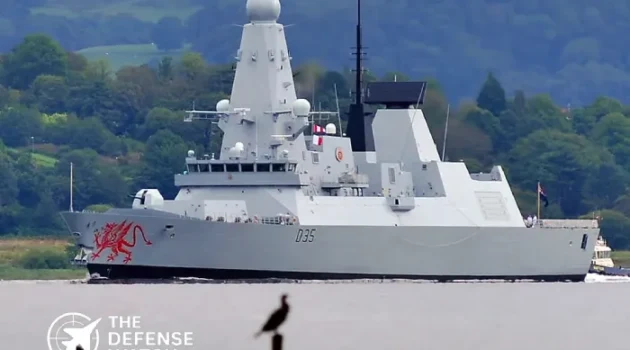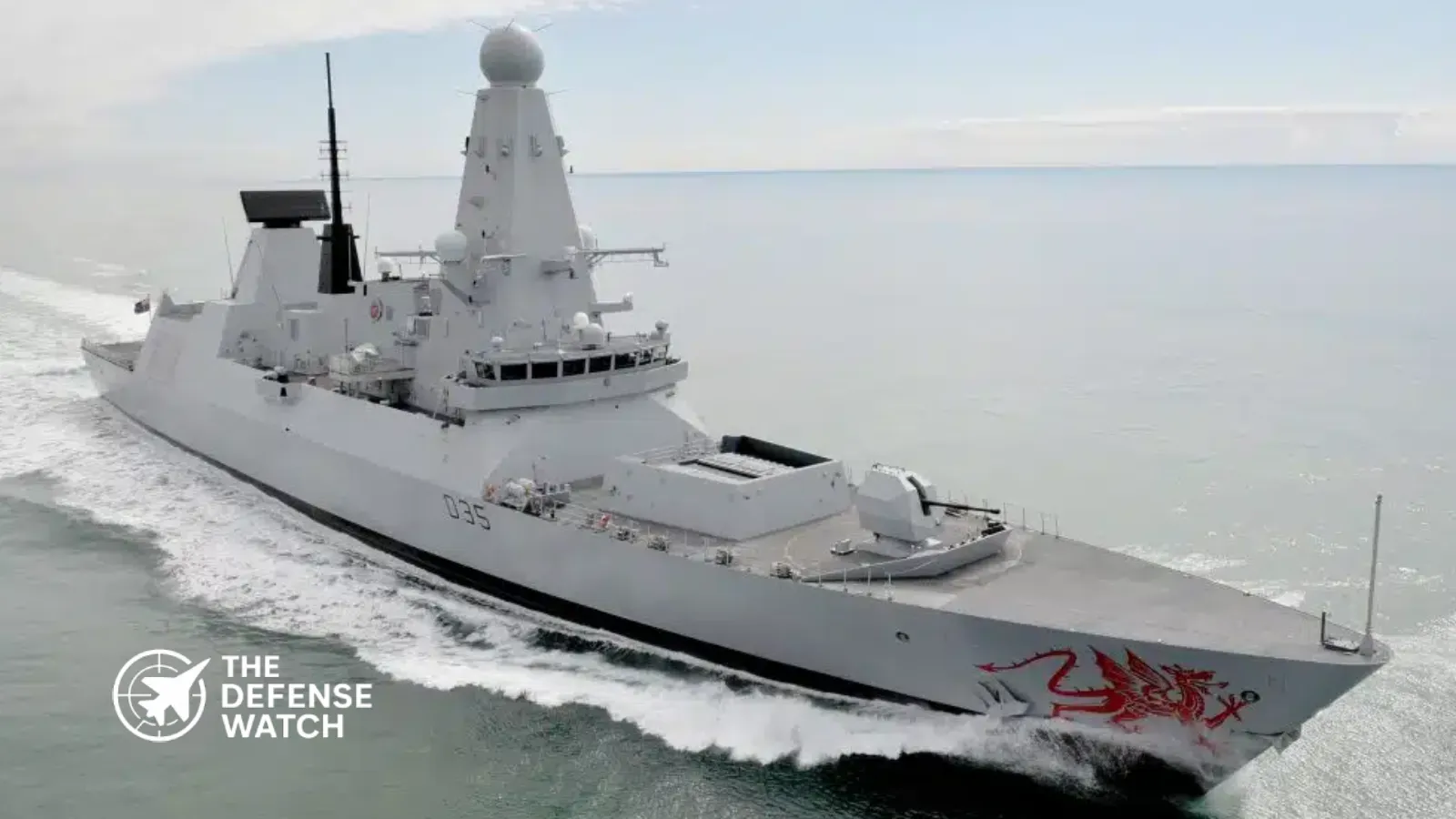
Type 45 Destroyers Service Life Extended To 2038
The Type 45 destroyers service life has been extended to at least 2038, reinforcing the Royal Navy’s core air defense capability as modernization timelines evolve and operational demands increase.
The decision ensures that all six Type 45 destroyers remain operational well into the next decade. These ships form the backbone of the UK’s maritime air defense, particularly in protecting carrier strike groups centered around the Queen Elizabeth-class aircraft carriers.
The extension comes alongside ongoing upgrades under the Power Improvement Project (PIP), which addresses long-standing propulsion reliability issues. The program replaces the ships’ original diesel generators with more capable systems, improving resilience and availability during extended deployments.
- The UK will keep its Type 45 destroyers in service until at least 2038, extending their operational lifespan.
- The extension aligns with ongoing propulsion upgrades under the Power Improvement Project.
- Type 45 ships provide advanced air defense using the Sea Viper missile system.
- The move ensures continued protection for carrier strike groups and allied naval forces.
- The decision reflects growing demand for high-end air defense platforms in contested environments.
Sustaining High-End Air Defense Capability
The Type 45 destroyers service life extension highlights a broader strategic requirement. Modern naval operations increasingly depend on layered air and missile defense, especially in contested regions such as the North Atlantic, Mediterranean, and Indo-Pacific.
Each Type 45 is equipped with the Sea Viper air defense system, capable of tracking and intercepting multiple airborne threats simultaneously, including aircraft and anti-ship missiles. This capability remains critical as adversaries expand their use of long-range precision weapons and unmanned systems.
From an operational standpoint, extending the fleet’s service life avoids a potential capability gap. Replacement platforms are not expected to enter service until the late 2030s, meaning the Type 45 destroyers must continue to shoulder frontline duties.
This move also reflects lessons from recent naval operations, where demand for high-end escorts has consistently exceeded supply among NATO navies.
Bridging The Gap To Future Surface Combatants
The extension of the Type 45 destroyers service life is closely tied to the UK’s future surface combatant plans, including the Type 83 destroyer concept. While details on the Type 83 remain limited, it is expected to deliver next-generation integrated air and missile defense capabilities.
Until then, the upgraded Type 45 fleet will remain the UK’s primary area air defense platform. Analysts note that maintaining these ships reduces risk during a period of transition, especially as the Royal Navy balances commitments across multiple theaters.
The decision also underscores a practical reality in defense planning. Shipbuilding timelines are long, and extending the life of proven platforms is often more cost-effective than accelerating new programs under budget constraints.
Operational Relevance In A Changing Threat Environment
The evolving threat landscape has reinforced the importance of ships like the Type 45. Advanced anti-ship missiles, hypersonic developments, and drone swarms are reshaping naval warfare.
By extending the Type 45 destroyers service life, the UK ensures it retains a credible response to these challenges. The ships’ advanced radar and missile systems provide a critical shield not only for UK assets but also for allied forces operating in coalition environments.
In practical terms, this means continued deployments in key regions, including NATO missions and Indo-Pacific engagements. The Royal Navy’s ability to project power and protect maritime assets depends heavily on the availability of these high-end destroyers.
Analysis: Strategic Continuity Over Rapid Replacement
The decision to extend the Type 45 destroyers service life reflects a calculated approach rather than a stopgap measure.
First, it acknowledges the enduring relevance of air defense destroyers in modern naval warfare. While new technologies are emerging, the core requirement for robust air defense remains unchanged.
Second, it highlights the importance of reliability upgrades. The propulsion issues that once limited the fleet’s effectiveness are being addressed, allowing the ships to operate as originally intended.
Third, it signals confidence in incremental modernization. Rather than rushing to field an entirely new class, the UK is choosing to sustain and enhance an existing platform while developing future capabilities in parallel.
Finally, the move aligns with broader NATO trends. Many allied navies are extending the service lives of key assets to maintain readiness amid rising geopolitical tensions.