- Iran and Russia reportedly signed a secret €500 million missile deal in December 2025, according to the Financial Times.
- The pact covers delivery of 500 Verba man portable air defense launch units and 2,500 9M336 missiles through 2027 to 2029.
- The Verba systems are infrared guided MANPADS designed to target low altitude threats including drones and cruise missiles.
- The deal follows damage to Iran’s air defense network during the 2025 conflict with Israel.
- The agreement reflects deepening military cooperation between Tehran and Moscow.
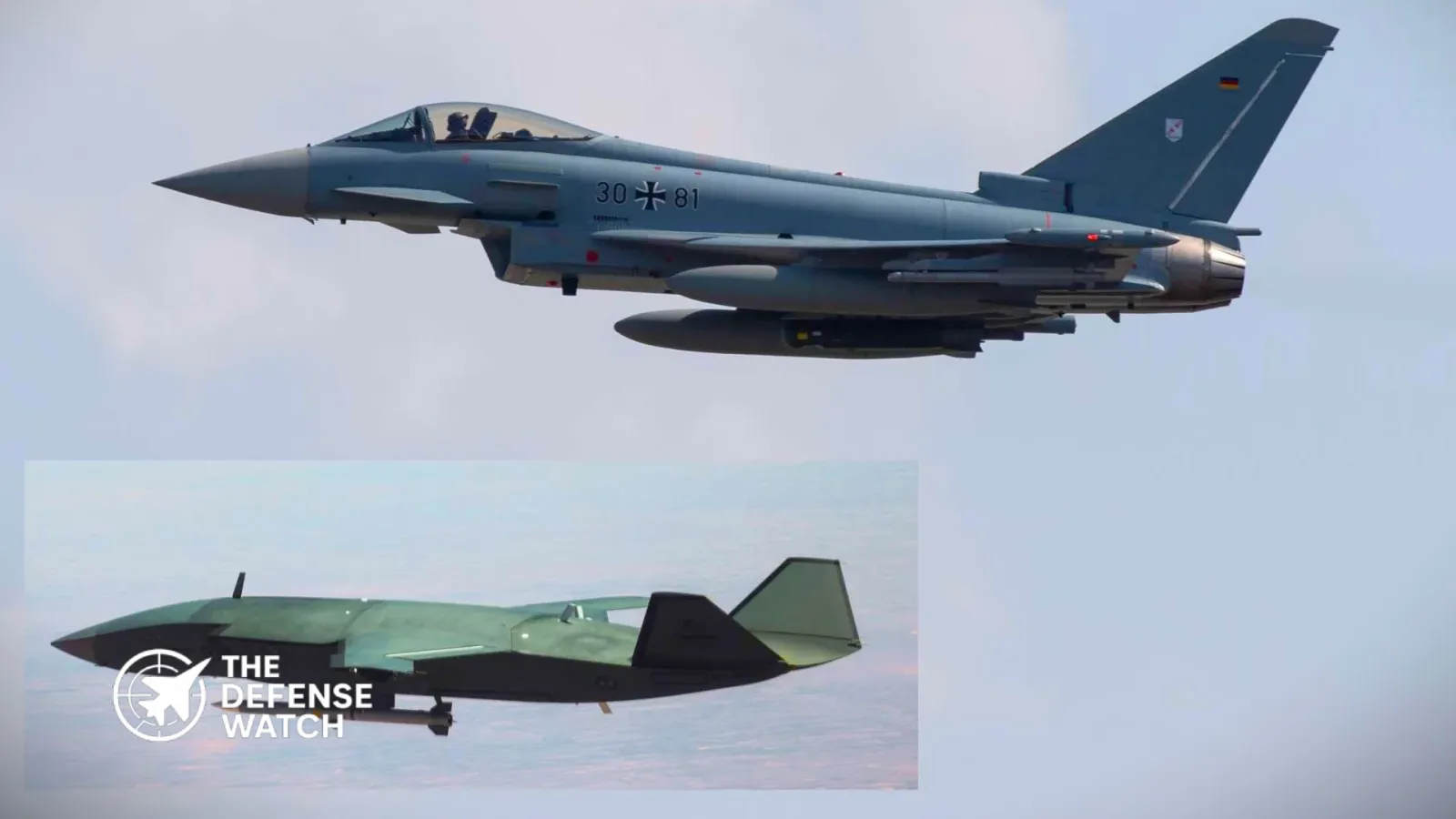
The MQ-28 Ghost Bat Germany evaluation marks a notable step in Europe’s exploration of collaborative combat aircraft to support manned fighter operations. Germany, as part of its broader modernization efforts within the Luftwaffe of Germany, is assessing unmanned systems designed to operate alongside platforms such as the Eurofighter Typhoon to extend sensing, strike, and survivability capabilities.
This move reflects a wider shift among NATO members toward integrating loyal wingman drones into frontline air operations, aiming to improve mission flexibility while reducing risk to pilots.
Germany Advances Loyal Wingman Concept
Germany’s evaluation of the MQ-28 Ghost Bat aligns with ongoing efforts to incorporate autonomous and semi-autonomous systems into European air combat doctrine. Originally developed under Australia’s Collaborative Combat Aircraft program, the MQ-28 is designed to accompany crewed fighters and perform tasks such as reconnaissance, electronic warfare support, and threat engagement.
For Germany, the interest in such a platform highlights the operational need to enhance the capabilities of its Eurofighter fleet without immediately replacing existing aircraft. By pairing manned fighters with unmanned wingmen, the Luftwaffe can potentially expand sensor reach and distribute combat workloads across multiple platforms.
Integration With Eurofighter Typhoon Operations
The Eurofighter Typhoon remains a core component of Germany’s air defense and strike capability. Integrating a loyal wingman like the MQ-28 Ghost Bat could allow Eurofighter pilots to command or coordinate multiple unmanned assets in contested environments.
This concept supports several operational advantages. First, it can extend the radar and sensor footprint of the formation. Second, it may allow unmanned units to take on higher-risk roles such as forward reconnaissance or electronic attack. Third, it can help preserve manned aircraft by shifting certain mission elements to autonomous platforms.
Defense analysts note that pairing advanced fighters with unmanned systems is becoming a standard approach among modern air forces seeking distributed lethality and greater mission resilience.
Strategic Context Within NATO Modernization
Germany’s evaluation is consistent with broader NATO efforts to modernize air combat capabilities in response to evolving threats. Several allied nations are exploring similar collaborative combat aircraft programs, often referred to as loyal wingman systems.
These initiatives aim to address challenges posed by advanced integrated air defense systems, electronic warfare environments, and the increasing use of unmanned platforms in contested airspace. By deploying a mix of crewed and uncrewed assets, air forces can complicate adversary targeting while maintaining operational flexibility.
Within this framework, the MQ-28 Ghost Bat Germany assessment represents an exploratory step rather than a formal procurement decision. It allows German defense planners to examine interoperability, mission roles, and integration requirements with existing NATO systems.
Industrial and Operational Implications
If Germany proceeds beyond evaluation, integration of loyal wingman platforms could influence both operational doctrine and defense industry collaboration. European defense contractors may seek partnerships or adaptations to align similar unmanned systems with existing fighter fleets.
For the Luftwaffe, adopting such systems would require development in areas including command and control, secure data links, and human-machine teaming. Training programs would also need to evolve to enable pilots to effectively manage multiple unmanned assets during missions.
While no final acquisition decision has been announced, the MQ-28 Ghost Bat Germany evaluation underscores growing interest in modular, networked air combat architectures across Europe.