


Royal Marines T-150 Drone Marks New Arctic Capability Step
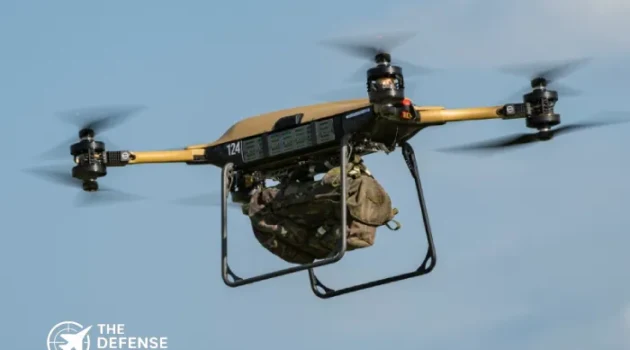
The Royal Marines T-150 drone has completed operational activity in the Arctic, marking a notable step in British efforts to integrate uncrewed systems into cold-weather expeditionary missions. According to BAE Systems, the T-150 uncrewed air system supported Royal Marines activity in extreme northern conditions, demonstrating its ability to operate where terrain, weather, and distance often slow traditional resupply methods.
- Royal Marines used the T-150 uncrewed air system during Arctic operations.
- The drone can support cargo delivery, reconnaissance, and resupply missions.
- Arctic deployment reflects growing NATO focus on northern security routes.
- Trials were conducted in extreme cold conditions that challenge conventional systems.
- Small autonomous aircraft may reduce risk to troops in remote environments.
The development matters because Arctic operations place unique stress on manned aircraft, vehicles, and troops. Reliable autonomous systems can help close those gaps.
The Big Picture
Arctic security has moved sharply up the defense agenda for NATO members. Melting sea routes, increased military activity, and growing competition over northern access corridors have pushed nations such as the United Kingdom, United States, Norway, and Canada to strengthen high-latitude readiness.
For the UK, the Royal Marines play a central role in cold-weather warfare. They regularly train in Norway and are expected to provide rapid-response forces for northern flank contingencies. Integrating drones such as the T-150 aligns with a broader trend across allied militaries, using autonomous platforms for reconnaissance, logistics, and force protection.
What’s Happening
BAE Systems said the Royal Marines employed the T-150 during Arctic activity, making history for the platform in the region. The aircraft is an uncrewed air system designed for demanding missions including cargo movement and surveillance.
The Arctic creates serious operating barriers. Snow cover limits mobility, mountainous terrain complicates line-of-sight movement, and severe cold can degrade batteries, sensors, and mechanical systems. A successful trial in those conditions is more meaningful than a standard temperate-climate demonstration.
Why It Matters
Military logistics often determine whether forces can sustain operations. In remote Arctic zones, even short movements can take hours or days. A drone capable of moving supplies directly to dispersed troops can shorten timelines and reduce exposure.
That has several advantages:
- Fewer personnel exposed on hazardous ground routes
- Faster movement of medical stores, batteries, and ammunition
- Better support for small forward teams
- Lower burden on helicopters reserved for higher-priority missions
The Royal Marines T-150 drone therefore represents more than a technology test. It points toward a new operating model for distributed forces.
Strategic Implications
Britain’s northern defense role has grown since NATO renewed focus on deterrence in Europe. The High North links the North Atlantic, GIUK gap, and access routes between North America and Europe.
Any platform that improves persistence and mobility in that region strengthens alliance readiness. Small drones cannot replace large transport aircraft or helicopters, but they can fill the tactical layer between backpack carriage and manned aviation.
That middle tier is often where shortages appear during real operations.
Competitor View
Russia has long treated the Arctic as a strategic military zone, with air bases, missile coverage, and maritime presence across its northern territories. Western adoption of resilient logistics drones may be viewed as part of a broader NATO effort to sustain forces closer to contested northern areas.
China, while not an Arctic state, has shown growing commercial and strategic interest in polar shipping lanes and research access. NATO members are likely to interpret autonomous cold-weather systems as necessary preparation for future competition rather than niche experimentation.
What To Watch Next
Several indicators will show whether the T-150 moves beyond trials:
- Expanded Royal Marines field exercises using the system
- Integration with British Army or joint logistics units
- Maritime launch and recovery testing
- Secure data-link upgrades for contested environments
- Procurement decisions for wider fleet adoption
If the platform proves dependable across repeated deployments, it could become part of standard expeditionary force packages.
Capability Gap
Western militaries often possess advanced strike systems but still struggle with last-mile resupply in difficult terrain. The Royal Marines T-150 drone appears aimed directly at that weakness.
However, limitations remain realistic and important:
- Payload is smaller than helicopters or vehicles
- Weather can still restrict flight windows
- Electronic warfare threats may disrupt control links
- Batteries and maintenance remain critical in cold climates
Even so, those constraints do not remove its utility. They define where it should be used.
The Bottom Line
The Royal Marines T-150 drone shows how small autonomous aircraft can solve real battlefield logistics problems in one of the world’s most demanding theaters.
- Iran and Russia reportedly signed a secret €500 million missile deal in December 2025, according to the Financial Times.
- The pact covers delivery of 500 Verba man portable air defense launch units and 2,500 9M336 missiles through 2027 to 2029.
- The Verba systems are infrared guided MANPADS designed to target low altitude threats including drones and cruise missiles.
- The deal follows damage to Iran’s air defense network during the 2025 conflict with Israel.
- The agreement reflects deepening military cooperation between Tehran and Moscow.
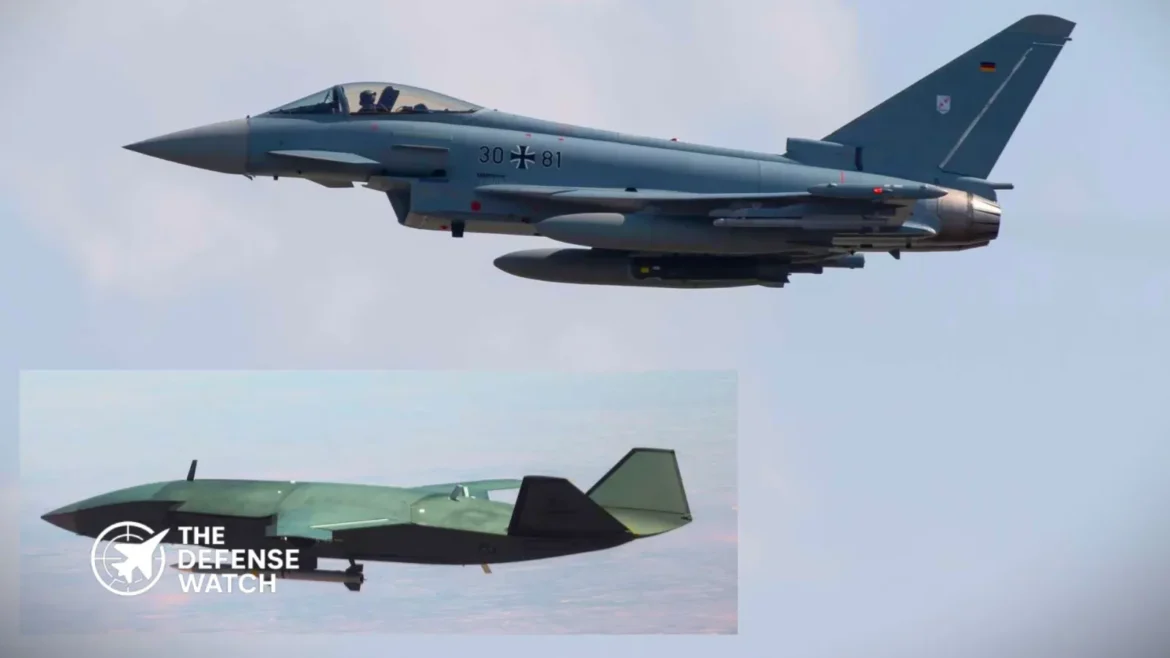
The MQ-28 Ghost Bat Germany evaluation marks a notable step in Europe’s exploration of collaborative combat aircraft to support manned fighter operations. Germany, as part of its broader modernization efforts within the Luftwaffe of Germany, is assessing unmanned systems designed to operate alongside platforms such as the Eurofighter Typhoon to extend sensing, strike, and survivability capabilities.
This move reflects a wider shift among NATO members toward integrating loyal wingman drones into frontline air operations, aiming to improve mission flexibility while reducing risk to pilots.
Germany Advances Loyal Wingman Concept
Germany’s evaluation of the MQ-28 Ghost Bat aligns with ongoing efforts to incorporate autonomous and semi-autonomous systems into European air combat doctrine. Originally developed under Australia’s Collaborative Combat Aircraft program, the MQ-28 is designed to accompany crewed fighters and perform tasks such as reconnaissance, electronic warfare support, and threat engagement.
For Germany, the interest in such a platform highlights the operational need to enhance the capabilities of its Eurofighter fleet without immediately replacing existing aircraft. By pairing manned fighters with unmanned wingmen, the Luftwaffe can potentially expand sensor reach and distribute combat workloads across multiple platforms.
Integration With Eurofighter Typhoon Operations
The Eurofighter Typhoon remains a core component of Germany’s air defense and strike capability. Integrating a loyal wingman like the MQ-28 Ghost Bat could allow Eurofighter pilots to command or coordinate multiple unmanned assets in contested environments.
This concept supports several operational advantages. First, it can extend the radar and sensor footprint of the formation. Second, it may allow unmanned units to take on higher-risk roles such as forward reconnaissance or electronic attack. Third, it can help preserve manned aircraft by shifting certain mission elements to autonomous platforms.
Defense analysts note that pairing advanced fighters with unmanned systems is becoming a standard approach among modern air forces seeking distributed lethality and greater mission resilience.
Strategic Context Within NATO Modernization
Germany’s evaluation is consistent with broader NATO efforts to modernize air combat capabilities in response to evolving threats. Several allied nations are exploring similar collaborative combat aircraft programs, often referred to as loyal wingman systems.
These initiatives aim to address challenges posed by advanced integrated air defense systems, electronic warfare environments, and the increasing use of unmanned platforms in contested airspace. By deploying a mix of crewed and uncrewed assets, air forces can complicate adversary targeting while maintaining operational flexibility.
Within this framework, the MQ-28 Ghost Bat Germany assessment represents an exploratory step rather than a formal procurement decision. It allows German defense planners to examine interoperability, mission roles, and integration requirements with existing NATO systems.
Industrial and Operational Implications
If Germany proceeds beyond evaluation, integration of loyal wingman platforms could influence both operational doctrine and defense industry collaboration. European defense contractors may seek partnerships or adaptations to align similar unmanned systems with existing fighter fleets.
For the Luftwaffe, adopting such systems would require development in areas including command and control, secure data links, and human-machine teaming. Training programs would also need to evolve to enable pilots to effectively manage multiple unmanned assets during missions.
While no final acquisition decision has been announced, the MQ-28 Ghost Bat Germany evaluation underscores growing interest in modular, networked air combat architectures across Europe.


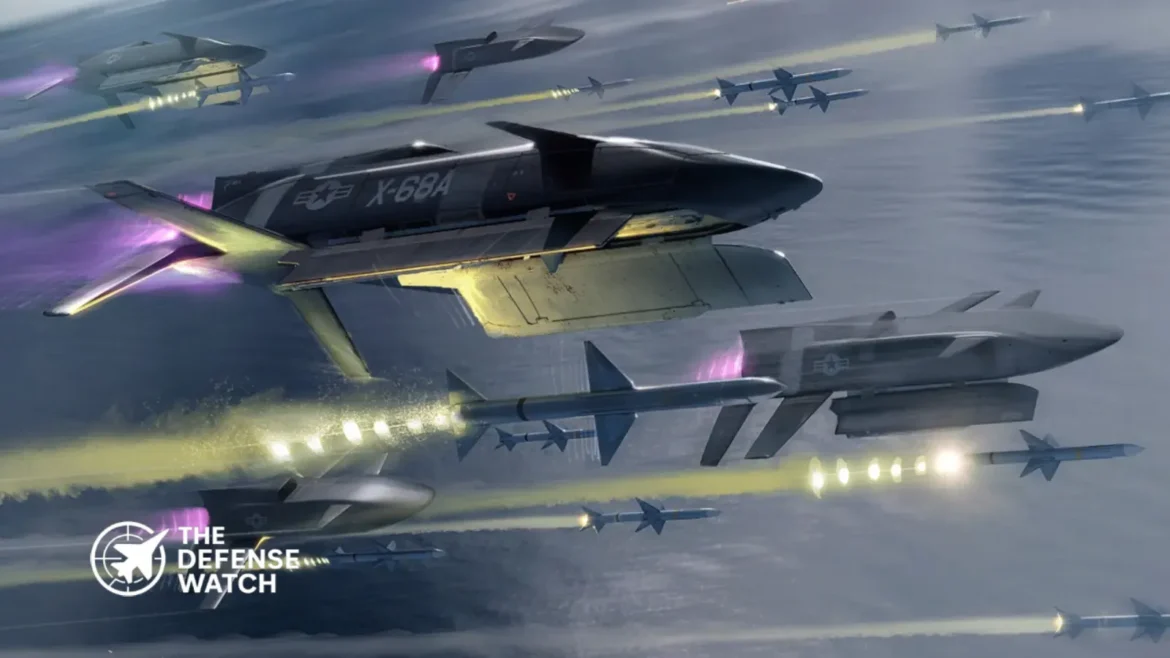
- ► DARPA’s LongShot program aims to launch uncrewed X-68A vehicles from crewed aircraft to extend strike range.
- ► General Atomics Aeronautical Systems leads design and development of the X-68A missile truck prototype.
- ► Concept enables standoff deployment of precision-guided missiles while keeping crewed aircraft out of harm’s way.
- ► X-68A designation marks progress from concept to tangible prototype with imminent flight testing.
- ► Platform reflects DARPA’s ongoing push for next-generation uncrewed strike capabilities and flexible deployment.
DARPA X-68A LongShot Missile Truck Nears Flight Testing
DARPA’s X-68A LongShot missile truck, developed by General Atomics Aeronautical Systems, is advancing toward initial flight tests. The Pentagon’s LongShot program envisions uncrewed missile carriers launched from crewed aircraft to extend operational reach and strike precision.
The X-68A is designed to deploy precision-guided weapons while the launch aircraft remains at a safe distance, minimizing risk to human crews. DARPA first awarded the contract in 2021, and the designation X-68A reflects the progress from early concept to tangible prototype.
General Atomics has led the development, drawing on its experience in UAV systems, and the program represents a five-year effort to explore scalable, flexible strike platforms.
The missile truck concept fits into broader U.S. efforts to enhance standoff strike options, complementing existing air-launched platforms while leveraging uncrewed autonomy. DARPA’s LongShot initiative focuses on adaptability, allowing the X-68A to operate across various scenarios without exposing human pilots to contested airspace.
Flight testing will validate the system’s ability to launch, navigate independently, and deploy munitions reliably. This step moves the program closer to operational evaluation and potential integration into future force structures.
Analysts note that uncrewed missile carriers could provide commanders with flexible options for rapid, precise strikes against high-value targets, a key focus amid evolving global threats.
The X-68A aligns with the Pentagon’s emphasis on force multiplication through autonomous systems, enhancing reach and survivability of U.S. air assets.
Russia Unveils Goliath-RU Tactical Reconnaissance Drone At World Defense Show 2026
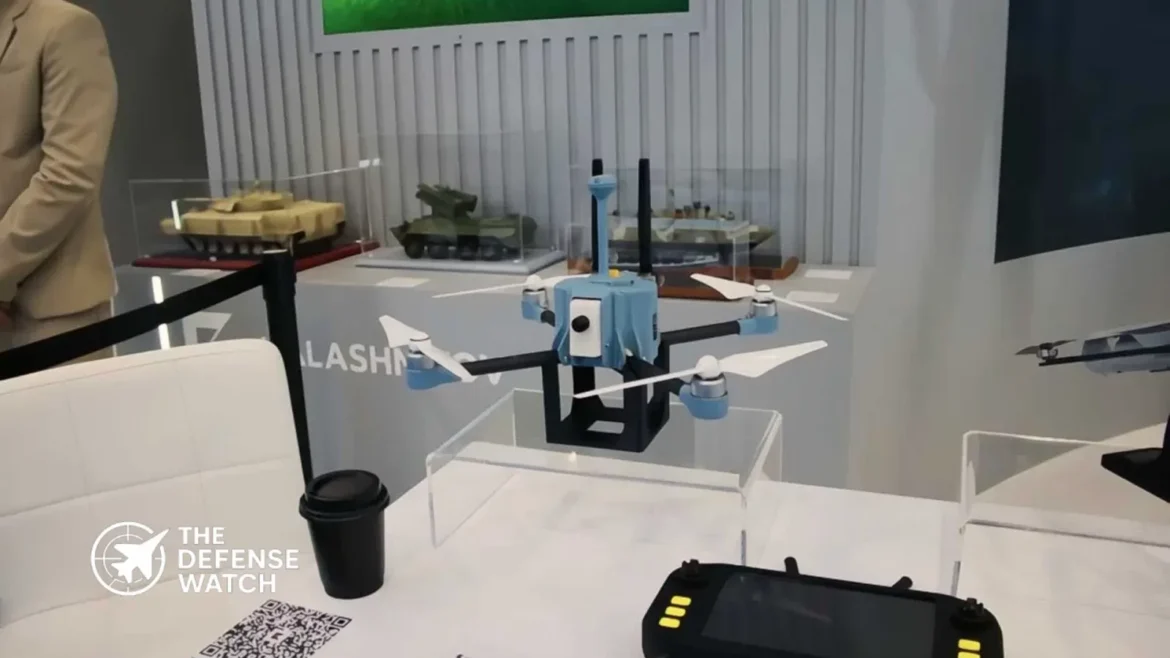
At the World Defense Show 2026 in Riyadh Saudi Arabia, Russia’s Kalashnikov Group introduced the Goliath-RU tactical drone offering a 4 km operational range for short-range aerial reconnaissance operations.
The compact unmanned aerial system is part of an expanding suite of Russian reconnaissance UAVs aimed at military and security customers. The Goliath-RU weighs about 1.2 kilograms, can remain airborne roughly 40 minutes, and is built for vertical takeoff and landing from ground positions.
Design And Capabilities
The Goliath-RU is engineered as a short-range reconnaissance platform rather than a weaponized drone. Its vertical takeoff and landing (VTOL) design enables launch from confined areas. The system includes ground control equipment and support gear as a complete tactical kit.
Key features include:
- Range and endurance Up to 4 kilometers line-of-sight range, about 40 minutes flight time.
- Weight and payload Operational weight near 1.2 kg with a 500-gram payload capacity.
- Altitude Operational ceiling up to 250 meters.
- Navigation Integrated GNSS (global navigation satellite system) support with radio control and telemetry links.
- Safety logic Automatic return-to-base on signal loss.
- Day and night sensors Typically supplied with both day and night cameras in field containers.
The system’s GNSS navigation suite and automatic return logic are intended to support reliable recovery within its operational envelope. It is supplied with a single remote terminal for live video and telemetry display plus spare parts and documentation for field service.
Context And Related Developments
The Goliath-RU adds to Russia’s portfolio of small UAVs showcased at the event as militaries expand use of unmanned systems for reconnaissance and situational awareness. In addition to Goliath-RU, Kalashnikov has recently highlighted upgraded variants including the Goliath 2.0 and Karakurt 2.0 at regional shows. These later models feature longer range, encrypted communications, and enhanced optical sensors.
Across the show floor, other nations also highlighted unmanned platforms and integrated systems for reconnaissance, target tracking, and air defense. For example, Türkiye’s ASELSAN presented layered air and missile defense concepts while China displayed unmanned ground vehicles paired with ISR drones.
Russia’s broader UAV efforts include plans to expand production of larger reconnaissance platforms like the Supercam series, reflecting sustained industry focus on unmanned systems.
Strategic And Operational Notes
Short-range reconnaissance UAVs such as Goliath-RU serve tactical units by providing real-time observation and tracking of ground movements or terrain features. Their use spans military planning, provisional target validation, and risk-reduced forward observation. Systems of this class are common in modern forces to extend situational awareness without direct human exposure.
Detailed performance figures align with short-range tactical roles where line-of-sight communication and limited payload set the operational use case. Russia’s continued updates to the Goliath family underscore an incremental approach to small UAV development, balancing low weight and ease of use with mission capability.