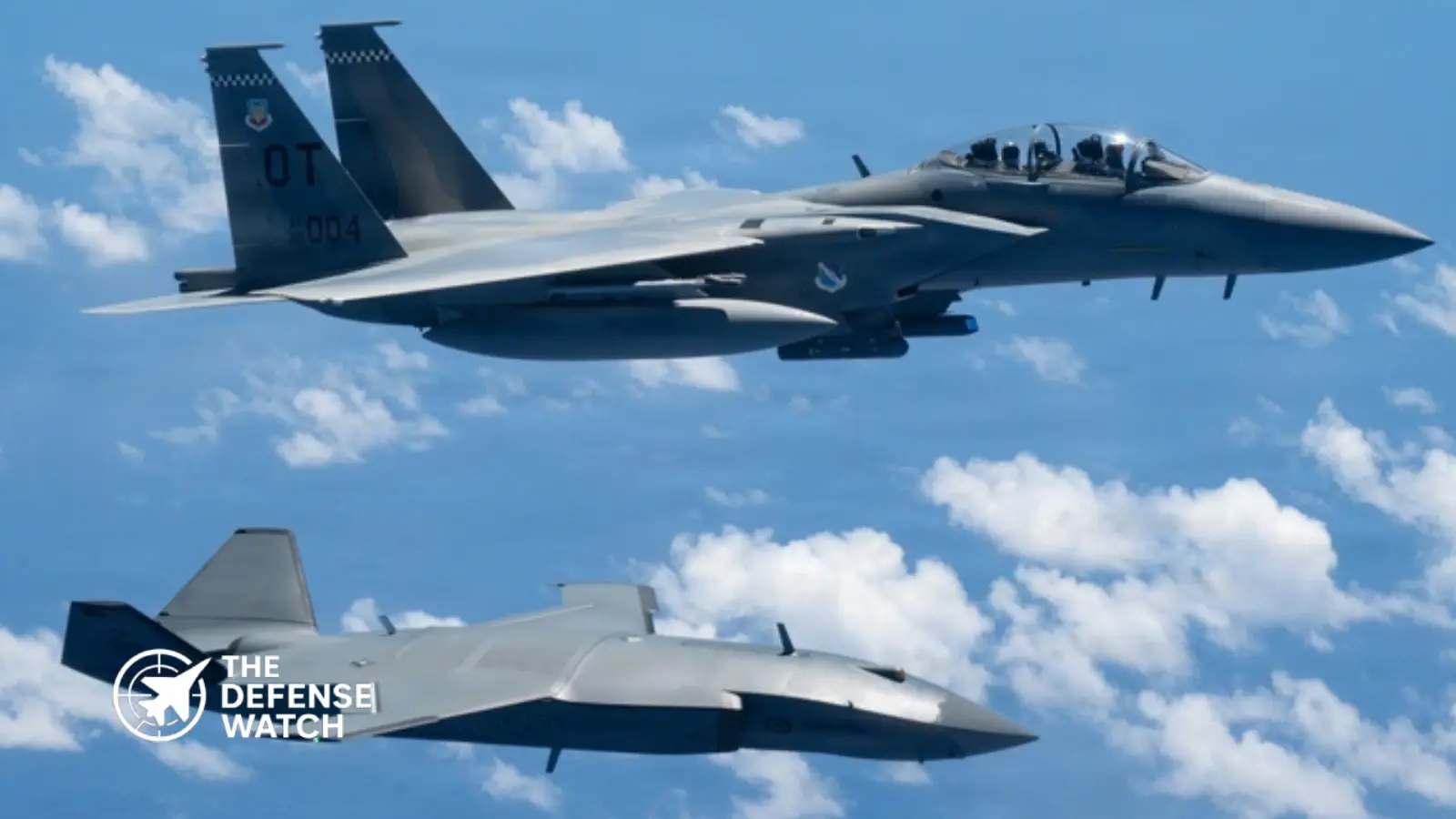
Loyal Wingman Drones Are Becoming a New Layer of Airpower
Loyal wingman drones are uncrewed combat aircraft designed to operate alongside crewed fighters, extending their sensors, weapons, electronic warfare capabilities and reach while reducing the risk to pilots. The concept has moved rapidly from experimental demonstrations toward operationally relevant testing, with the U.S. Collaborative Combat Aircraft program, Australia’s MQ-28 Ghost Bat and European and Chinese efforts all pursuing different versions of the same broad idea.
The most important change is that these aircraft are no longer being designed simply as remotely piloted drones. Instead, they are being developed as semi-autonomous or autonomous members of a larger combat formation.
That distinction matters.
A future fighter formation may include a crewed F-35, F-47 or Eurofighter at the center of the mission, supported by several uncrewed aircraft performing sensing, jamming, communications relay, decoy, air-to-air or strike missions.
The U.S. Air Force’s CCA program is now one of the most advanced examples. The service designated the General Atomics YFQ-42A and Anduril YFQ-44A in 2025 and moved into increasingly demanding flight, autonomy and weapons testing during 2026. In July 2026, a YFQ-44A conducted a live-fire test involving an AIM-120 weapon against a digital target, marking an important step in weapons integration.
At the same time, Australia’s MQ-28 Ghost Bat has accumulated operationally relevant experience and demonstrated autonomous teaming with crewed aircraft.
The result is a rapidly expanding competition over what could become one of the defining technologies of sixth-generation air warfare.
Key Takeaways
Loyal wingman drones are evolving from experimental unmanned aircraft into networked combat systems intended to operate with crewed fighters in highly contested airspace.
What Is a Loyal Wingman Drone?
A loyal wingman is an uncrewed aircraft designed to cooperate with a crewed aircraft rather than operate as an isolated drone.
The term originally described the idea of an unmanned aircraft accompanying a fighter and following instructions from the human pilot. Modern Collaborative Combat Aircraft, however, go further.
A CCA is intended to receive high-level mission direction while autonomously handling many flight and tactical functions.
That could include:
- Navigation and formation management
- Sensor collection and fusion
- Threat detection
- Electronic warfare
- Target identification
- Communications relay
- Decoy operations
- Intelligence, surveillance and reconnaissance
- Air-to-air weapons employment
- Air-to-ground strike
- Battle damage assessment
The human pilot remains responsible for mission command and critical decisions, while the uncrewed aircraft handles tasks that would otherwise increase the workload of the crewed aircraft.
The U.S. Congressional Research Service has described CCA as semi-autonomous uncrewed aircraft intended to operate alongside crewed fighters, with potential missions including air combat, strike, electronic warfare, targeting and ISR. Earlier Air Force planning used an assumption of roughly 1,000 aircraft, based on two CCAs supporting each of 500 advanced fighters.
Why Militaries Want Loyal Wingman Drones
The underlying problem is straightforward.
Modern fighter aircraft have become extraordinarily capable, but also extraordinarily expensive and complex.
A fifth-generation fighter such as the F-35 can carry sophisticated sensors, electronic warfare equipment, communications systems and precision weapons. But there are limits to how many aircraft a nation can buy, how many pilots it can train and how much risk commanders can accept when placing crewed platforms against advanced air defenses.
Loyal wingman drones offer another option.
Instead of asking one fighter to perform every mission, commanders can distribute functions among several aircraft.
For example, a formation could theoretically include:
Crewed fighter: command, sensor fusion and mission control.
CCA 1: electronic attack.
CCA 2: forward sensing and targeting.
CCA 3: air-to-air weapons.
CCA 4: decoy or communications relay.
The exact allocation would depend on the aircraft and mission, but the broader principle is to create a distributed combat formation.
This makes the formation harder to defeat because an adversary cannot necessarily eliminate the mission by destroying one aircraft.
MQ-28 Ghost Bat: Australia’s Loyal Wingman
The MQ-28 Ghost Bat is one of the most mature loyal wingman programs in the world.
Developed by Boeing Australia for the Royal Australian Air Force, the aircraft began flight testing in 2021 and became the first military aircraft designed and manufactured in Australia in more than five decades.
Boeing describes the MQ-28 as an uncrewed collaborative combat aircraft designed to work with both crewed and uncrewed platforms. The company lists a range of more than 2,000 nautical miles, speeds up to Mach 0.9, a ceiling above 40,000 feet and a maximum takeoff weight of up to 12,000 pounds.
Those figures are important because they place the Ghost Bat in a different category from conventional small tactical drones.
It is intended to operate at fighter-like speeds and ranges rather than simply provide low-cost battlefield surveillance.
MQ-28 and Human-Machine Teaming
The Ghost Bat has also demonstrated increasingly sophisticated teaming.
In 2025, Boeing and the RAAF demonstrated a mission involving MQ-28 aircraft controlled through an E-7A Wedgetail, while the program has also progressed to autonomous weapons engagement testing. Boeing reported an air-to-air autonomous weapon engagement in December 2025 involving an MQ-28 teamed with an E-7A and F/A-18F Super Hornet.
The aircraft also completed international operational flight testing at Point Mugu, California, in 2026, giving the program experience operating from an allied location outside Australia.
That experience gives the MQ-28 an important advantage: it is not simply an airshow concept.
It has accumulated a growing body of flight, autonomy and integration experience.
XQ-58A Valkyrie: The US Experimental Path
The XQ-58A Valkyrie, developed by Kratos with the U.S. Air Force Research Laboratory, represents another major step in the development of attritable combat aircraft.
The Valkyrie was developed through AFRL’s Low Cost Attritable Aircraft Technology effort.
Unlike conventional fighter aircraft, the XQ-58A was designed around affordability and rapid production.
The U.S. National Museum of the U.S. Air Force lists a maximum speed of approximately 652 mph, a range of 3,500 miles, a ceiling approaching 45,000 feet and a maximum weight of 6,000 pounds.
The aircraft also demonstrated an important concept in 2021 when it released an ALTIUS-600 small unmanned aircraft from its internal weapons bay.
This demonstrated that an uncrewed aircraft could itself become a carrier for additional autonomous systems.
That concept is significant because future combat aircraft may not simply carry missiles and bombs. They may deploy smaller drones, decoys or sensors as part of a distributed attack package.
From XQ-58 to the US Collaborative Combat Aircraft
The XQ-58 helped demonstrate the technical feasibility of affordable, high-performance uncrewed aircraft.
The Air Force’s CCA program is taking the concept toward a more formal operational capability.
In March 2025, the Air Force officially designated the two Increment 1 prototypes as:
- YFQ-42A, developed by General Atomics
- YFQ-44A, developed by Anduril
The Y designation identifies a prototype, while F indicates fighter and Q identifies an unmanned aircraft. The Air Force said both aircraft are intended to support crewed-uncrewed teaming in contested environments.
The program has moved quickly.
The YFQ-42A began flight testing in 2025, while the Air Force continued weapons and autonomy testing across both platforms.
In February 2026, the service reported that it was implementing a government-owned Autonomy Government Reference Architecture across multiple CCA vendor platforms. The objective is to reduce dependence on a single proprietary software ecosystem and allow the government to insert new autonomy capabilities more rapidly.
That software architecture may ultimately prove as important as the aircraft itself.
YFQ-44A Live-Fire Test Marks a Major Milestone
The U.S. program crossed another important threshold in July 2026.
The Department of the Air Force conducted a live-fire test involving the YFQ-44A and an AIM-120 weapon over the Mojave Desert.
The test used a digital target and was designed to validate the aircraft’s ability to conduct a safe weapons engagement while retaining human oversight of weapon release.
This distinction is important.
The objective is not simply to create an autonomous aircraft capable of making independent lethal decisions.
The operational model being pursued involves human command authority combined with machine-level autonomy for navigation, sensing, coordination and other tactical functions.
That approach could allow a single pilot to manage several autonomous aircraft without manually flying each one.
How CCA Autonomy Works
A CCA does not need to be intelligent in the same way as a human pilot.
Instead, autonomy can be divided into different layers.
Flight Autonomy
The aircraft must maintain safe flight, avoid collisions and manage fuel and navigation.
Formation Autonomy
Multiple aircraft need to maintain formation geometry without requiring continuous pilot commands.
Mission Autonomy
The system needs to understand assigned objectives and adapt its route or behavior as conditions change.
Tactical Autonomy
The aircraft may detect threats, classify contacts and recommend or execute predefined responses within authorized rules.
Human Command
The human operator remains responsible for mission-level control and applicable weapons decisions.
This division of responsibility is central to the future CCA concept.
The pilot does not need to tell a loyal wingman every time to turn left, climb or adjust its formation position.
Instead, the pilot could issue a higher-level instruction, allowing the autonomous system to determine how best to execute it.
Open Architecture Could Decide the Winners
One of the most important aspects of the U.S. CCA program is not visible in photographs.
It is the software architecture.
Air forces traditionally purchase aircraft as tightly integrated systems. Upgrading them can require major hardware and software modifications.
CCA programs are attempting to break that model.
The Air Force’s government-owned autonomy architecture is intended to support modular software and allow capabilities from different suppliers to operate across multiple aircraft.
That approach could allow the service to improve autonomy much faster than it can redesign an aircraft.
It also creates an important industrial advantage.
If the airframe, sensors and autonomy system use open interfaces, new suppliers may be able to compete for individual components rather than requiring a single company to control the entire platform.
Europe Builds Its Own Loyal Wingman Ecosystem
The loyal wingman concept is not limited to the United States and Australia.
Europe is pursuing similar technologies through next-generation combat-air programs.
Airbus describes collaborative combat aircraft as autonomous armed platforms that can operate alongside crewed fighters such as the Eurofighter. The company highlights missions including sensing, electronic warfare, targeting and strike.
The broader European approach is connected to programs such as Future Combat Air System and associated remote carrier concepts.
The basic philosophy is similar to the U.S. model.
A crewed fighter acts as a command node while uncrewed systems extend its reach and provide additional capabilities.
The United Kingdom is also developing its own CCA technology.
In July 2026, BAE Systems unveiled Brontanax, described by the company as Britain’s first British-designed uncrewed autonomous CCA. BAE said the aircraft is intended to provide additional frontline capability and combat mass alongside crewed aircraft.
These programs show that Europe is not necessarily attempting to reproduce the U.S. CCA model exactly.
Instead, European countries are integrating uncrewed aircraft into their own sixth-generation combat-air architectures.
China’s Loyal Wingman Development
China is also pursuing multiple uncrewed combat aircraft concepts.
The FH-97A is one of the most frequently discussed Chinese loyal wingman designs. It has been associated with manned-unmanned teaming and has been presented as a platform capable of supporting missions such as electronic warfare, reconnaissance and strike.
Independent research has also identified the GJ-11 stealth UCAV as an important component of China’s broader uncrewed combat aircraft development. The International Institute for Strategic Studies and other defense analysts have tracked China’s increasing use of stealth UCAV and CCA-type concepts.
However, publicly available information about Chinese systems is much less complete than information available for U.S. and Australian programs.
This creates an important analytical limitation.
Aircraft displayed at Chinese air shows or military parades do not necessarily represent operational capability.
The distinction between a prototype, technology demonstrator, production aircraft and operational combat system must therefore be maintained.
Loyal Wingman Comparison
System Country Developer Role Approx. Range Approx. Speed Status MQ-28 Ghost Bat Australia Boeing Australia Collaborative combat aircraft 2,000+ nm Up to Mach 0.9 Advanced testing and operational development XQ-58A Valkyrie United States Kratos / AFRL Attritable combat aircraft / CCA technology demonstrator 3,500 miles 652 mph Mature demonstrator and technology platform YFQ-42A United States General Atomics CCA Not publicly disclosed Not publicly disclosed Flight testing YFQ-44A United States Anduril CCA Not publicly disclosed Not publicly disclosed Flight and weapons testing European Remote Carrier / CCA concepts Europe Airbus and industry partners Distributed combat, sensing and EW Program dependent Program dependent Development Brontanax United Kingdom BAE Systems Autonomous CCA Not publicly disclosed Not publicly disclosed Development FH-97A China Chinese aerospace industry Loyal wingman / UCAV concept Not reliably disclosed Not reliably disclosed Development / prototype GJ-11 China Chinese aerospace industry Stealth UCAV Not reliably disclosed Not reliably disclosed Development and testing Publicly available figures are not directly comparable because the aircraft have different design objectives and mission configurations. Chinese specifications in particular should be treated cautiously.
Loyal Wingman vs Traditional Combat Drones
A loyal wingman is different from a conventional remotely piloted drone.
A system such as the MQ-9 Reaper is primarily operated through a human control architecture, although it includes automated flight functions.
A CCA is intended to operate much more independently.
The distinction can be summarized this way:
Conventional Combat Drone Loyal Wingman / CCA Usually remotely operated Designed for high levels of autonomy Human operator manages flight Human provides mission-level direction Often optimized for ISR or strike Designed for fighter support and contested airspace Typically operates as an independent asset Designed to work as part of a formation Ground control is central Airborne crewed aircraft can act as mission commanders Longer endurance often prioritized Speed, survivability and integration are emphasized This does not mean conventional drones are becoming obsolete.
Instead, military aviation is moving toward a broader ecosystem containing multiple types of autonomous aircraft.
What Missions Could Loyal Wingmen Perform?
The flexibility of CCA designs is one of their most important advantages.
Electronic Warfare
An uncrewed aircraft could move closer to hostile radar systems and conduct electronic attack while reducing the risk to a crewed fighter.
Forward Sensing
A CCA could operate ahead of the crewed formation and provide additional sensor coverage.
Air Combat
Some aircraft could carry air-to-air missiles and expand the number of weapons available to a formation.
Decoy Operations
A relatively inexpensive aircraft could force an adversary to reveal radar emissions or expend expensive interceptors.
Strike
CCA platforms could carry precision weapons or provide targeting information to other aircraft.
Communications Relay
A loyal wingman could extend communications between aircraft operating at different locations.
Swarm Support
Larger CCAs could potentially carry or coordinate smaller autonomous aircraft, creating multiple layers of distributed capability.
The Real Advantage: Combat Mass
The strongest argument for loyal wingman drones is not that they can replace fighters.
It is that they can make fighters more effective.
A formation containing one crewed aircraft and several CCAs can potentially generate more sensors, weapons and tactical options than a formation consisting only of crewed aircraft.
The economics are also important.
Boeing describes the MQ-28 as being designed around an affordability objective and says the platform is intended to cost roughly one-tenth of a crewed platform.
The exact acquisition cost of operational variants will depend on production quantities, sensors, engines, weapons, support equipment and software.
Nevertheless, the basic concept is clear.
A military can accept greater risk when the aircraft are cheaper and faster to replace.
That creates the possibility of affordable combat mass.
Survivability Is More Than Stealth
It would be a mistake to judge CCAs only by radar cross-section.
Survivability can come from several factors:
- Low observability
- Electronic warfare
- High speed
- Stand-off weapons
- Distributed formations
- Decoys
- Sensor networking
- Autonomous maneuver
- Communications resilience
- Large numbers
An aircraft does not necessarily have to be invisible if the adversary cannot determine which aircraft is the primary threat.
That is one reason distributed formations are attractive for operations against sophisticated integrated air defense systems.
The Communications Problem
The biggest weakness of a networked combat formation may also be its greatest strength.
If CCAs depend heavily on data links, an adversary will attempt to disrupt those links.
Electronic warfare could interfere with:
- Satellite communications
- Tactical data links
- GPS
- Navigation systems
- Aircraft-to-aircraft communications
- Sensor data
- Ground control networks
A serious CCA architecture therefore needs to continue operating when communications are degraded or denied.
This requires greater onboard autonomy.
An aircraft that cannot receive continuous instructions from its human controller cannot simply stop functioning.
It needs predefined mission logic, navigation resilience and the ability to make bounded tactical decisions without constant external input.
Cost, Maintenance and Attrition
The phrase attritable aircraft is important.
Attritable does not mean disposable.
A military still needs to recover value from each aircraft.
Engines, sensors, electronic warfare equipment, communications systems and software can be expensive even if the airframe is relatively inexpensive.
A fleet of hundreds or thousands of CCAs would also require:
- Engines and spare parts
- Maintenance personnel
- Distributed operating locations
- Secure software infrastructure
- Weapons stocks
- Ground support equipment
- Training systems
- Data management
- Cybersecurity
- Autonomy testing
The economic advantage therefore depends on the entire lifecycle cost, not simply the price of the aircraft.
Why the US CCA Program Matters for the Indo-Pacific
CCA is particularly relevant to the Indo-Pacific because geography places a premium on range, survivability and distributed operations.
Large distances between bases and contested airspace can make traditional assumptions about centralized air operations less practical.
Uncrewed aircraft could provide additional combat power without requiring an equivalent increase in pilot numbers.
They could also operate from dispersed locations, depending on their logistics and runway requirements.
The Air Force has explicitly connected CCA to future air superiority and the broader Next Generation Air Dominance family of systems.
That makes CCA more than a drone procurement program.
It is becoming part of the architecture for future U.S. airpower.
CCA and the F-35
The F-35 could be an important node in future loyal wingman operations.
Its sensors, communications architecture and low-observable design make it well suited to operating inside a distributed combat network.
A future formation could potentially use an F-35 as the human-controlled sensor and command platform while CCAs extend the formation’s weapons and sensing reach.
The exact operational architecture remains under development.
But the concept is straightforward.
The F-35 does not need to carry every sensor and weapon itself if it can coordinate with several autonomous aircraft.
CCA and Future Sixth-Generation Fighters
The long-term vision goes beyond today’s F-35.
The U.S. Air Force is developing CCA alongside the broader NGAD family of systems.
Europe is developing FCAS and GCAP-related technologies.
In these architectures, the crewed fighter becomes one part of a much larger network.
That network may include:
- Crewed fighters
- CCAs
- Tankers
- AEW&C aircraft
- Satellites
- Ground sensors
- Maritime platforms
- Electronic warfare systems
- Long-range missiles
- Smaller autonomous drones
This is why CCA should be viewed as a system-of-systems capability, rather than simply another aircraft.
Major Challenges Ahead
Despite rapid progress, loyal wingman drones remain an emerging capability.
1. Autonomous Decision-Making
The more responsibility given to software, the greater the requirement for testing, verification and reliable human control.
2. Electronic Warfare
CCA networks must function in environments where GPS and communications may be actively attacked.
3. Engine and Maintenance Costs
A supposedly inexpensive aircraft can become expensive if its engine, sensors and support system are difficult to maintain.
4. Weapons Integration
Carrying a missile is relatively straightforward compared with safely integrating targeting, fire control, communications and rules governing weapons release.
5. Production Capacity
The strategic value of affordable mass disappears if industry cannot produce aircraft quickly enough during a major conflict.
6. Training and Doctrine
Pilots and commanders must learn how to manage several autonomous aircraft without becoming overloaded by information.
7. Cybersecurity
A compromised autonomy system could create risks far more serious than the loss of a conventional remotely piloted aircraft.
The Future of Loyal Wingman Drones
The next stage of development will probably focus less on proving that an aircraft can fly autonomously and more on proving that it can operate reliably inside a contested combat network.
That means testing increasingly difficult combinations of:
Autonomy + sensors + electronic warfare + weapons + communications + human command.
The U.S. Air Force’s rapid progress from prototype development to flight and weapons testing demonstrates how quickly the CCA concept is advancing.
Australia’s MQ-28 provides another model, emphasizing operational experimentation and allied interoperability.
Europe is embedding similar capabilities into sixth-generation combat-air programs, while China is developing multiple UCAV and loyal wingman concepts.
The competition is therefore no longer about whether autonomous combat aircraft will exist.
It is increasingly about who can integrate them at scale, connect them securely and produce them quickly enough to matter in a major conflict.
Analytical Conclusion
Loyal wingman drones represent one of the most significant changes in fighter aviation since the introduction of stealth and networked warfare.
The MQ-28 Ghost Bat demonstrates how an uncrewed aircraft can progress from technology demonstrator toward operationally relevant teaming. The XQ-58A Valkyrie demonstrated the potential of affordable, high-performance attritable aircraft. The U.S. YFQ-42A and YFQ-44A now push the concept toward an operational Collaborative Combat Aircraft fleet.
The central objective is not to eliminate the fighter pilot.
It is to give the pilot more options.
A single crewed fighter supported by several autonomous aircraft could potentially see farther, carry more weapons, conduct electronic attack from multiple directions and force an adversary to divide its defensive resources.
That changes the economics of air combat.
The future air force may therefore not be measured simply by how many fighters it owns.
It may be measured by how effectively it can combine crewed aircraft, autonomous combat aircraft, sensors, weapons and software into one distributed combat system.
For the United States and its allies, the race to develop that architecture is already underway.
The decisive advantage will likely belong to the force that can combine autonomy with reliable human command, resilient communications, affordable production and large-scale operational deployment.
In that sense, the loyal wingman is not replacing the fighter.
It is becoming the fighter’s next layer.
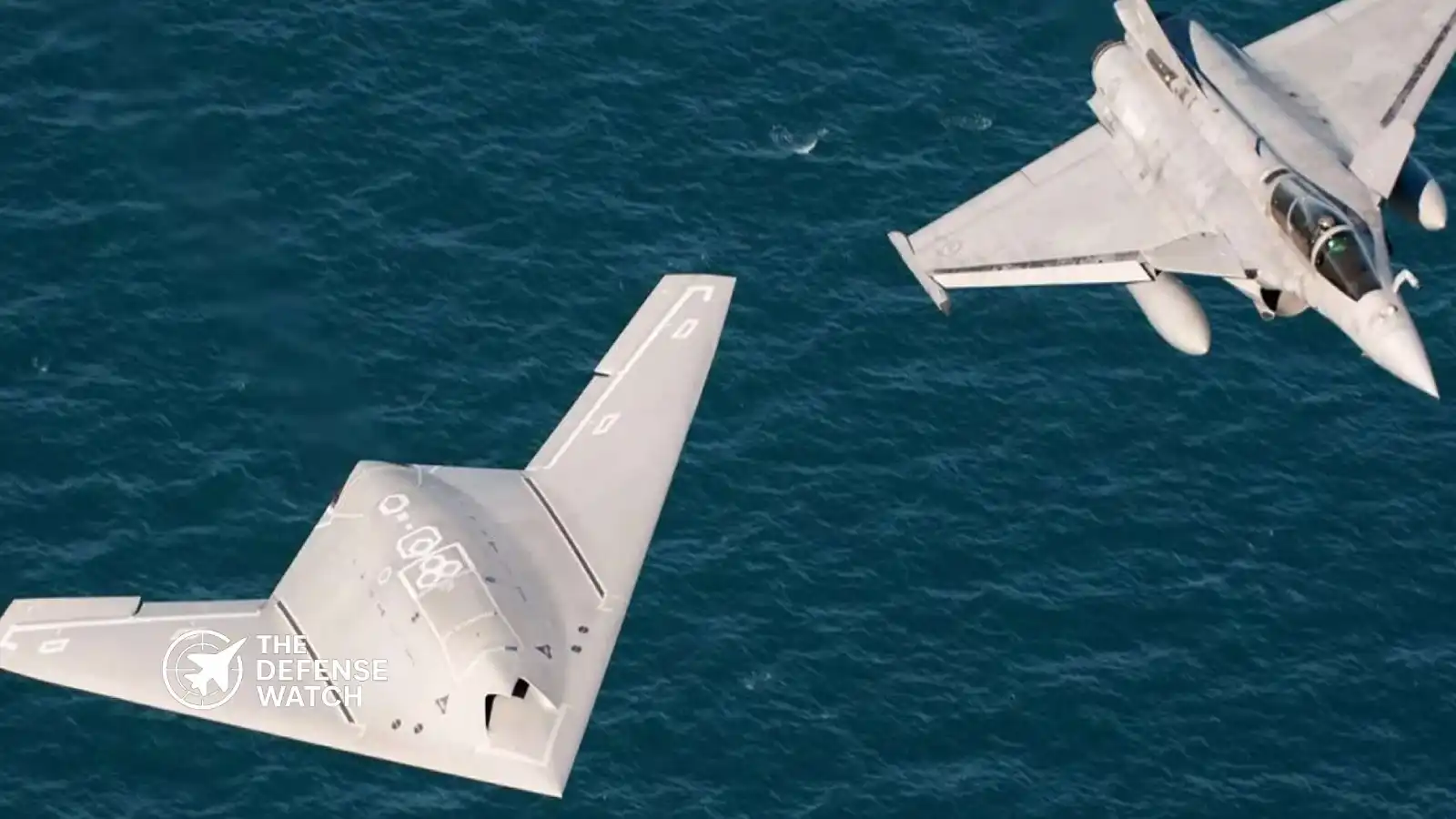
France Armed Drone Squadrons Mark Strategic Airpower Shift
France armed drone squadrons are becoming a central pillar of the country’s evolving air combat doctrine, as the French Air and Space Force moves to integrate unmanned systems and loyal wingman concepts into frontline operations.
Paris is restructuring its aerial force posture to include dedicated armed drone units capable of executing strike, surveillance, and support missions alongside manned aircraft.
This shift reflects a broader reassessment of modern warfare, where unmanned platforms are increasingly shaping battlefield outcomes.
¦ KEY FACTS AT A GLANCE- France is restructuring its air force with dedicated armed drone squadrons to enhance combat flexibility and endurance.
- The strategy includes integration of loyal wingman drones to operate alongside manned fighter aircraft.
- Unmanned systems are expected to support ISR, strike missions, and electronic warfare roles.
- The shift aligns with broader European efforts to modernize air combat under future combat air system programs.
- The move reflects lessons from recent conflicts where drones have played a decisive operational role.
From ISR Platforms to Armed Combat Assets
France has long operated drones primarily for intelligence, surveillance, and reconnaissance missions. Platforms like the MQ-9 Reaper have been used extensively in overseas operations, particularly in Africa’s Sahel region.
However, the expansion of France armed drone squadrons signals a transition toward more offensive roles. Armed UAVs are now expected to conduct precision strikes, persistent overwatch, and target designation in contested environments.
This mirrors operational trends seen in conflicts such as Ukraine, where drones have proven critical for both tactical and strategic missions.
Loyal Wingmen Concept Gains Momentum
A key component of the new strategy is the adoption of loyal wingman drones, unmanned systems designed to operate in coordination with manned fighter jets like the Dassault Rafale.
These drones can perform high risk tasks, including electronic warfare, suppression of enemy air defenses, and forward reconnaissance, reducing pilot exposure to threats.
Programs tied to Europe’s Future Combat Air System, led by Dassault Aviation and Airbus, are expected to play a major role in developing these capabilities.
The integration of loyal wingmen is not just a technological upgrade. It represents a doctrinal shift toward networked, distributed air combat operations.
Operational Impact and Strategic Context
The expansion of France armed drone squadrons comes amid rising security challenges in Europe and beyond. NATO air forces are adapting to increasingly contested airspace, where advanced air defenses and electronic warfare systems limit traditional manned operations.
By deploying unmanned systems, France can maintain operational reach while reducing risk to personnel and lowering mission costs over time.
From an operational standpoint, drones provide endurance that manned aircraft cannot match. They can loiter over targets for extended periods, gather intelligence, and strike when conditions are optimal.
This capability is especially relevant for expeditionary operations and hybrid conflict scenarios.
Analysis: Closing the Capability Gap
France’s move highlights a growing recognition that future air dominance will depend on manned unmanned teaming.
The United States, through programs like the U.S. Air Force’s collaborative combat aircraft initiative, and countries such as Australia and the United Kingdom, have already invested heavily in loyal wingman technologies.
France’s approach suggests it aims to close this gap while aligning with European defense initiatives.
At the same time, the success of this strategy will depend on integration, not just acquisition. Command and control systems, secure data links, and artificial intelligence will determine how effectively these drones operate in complex combat environments.
There is also the question of scale. Building a few drone units is not enough. Sustained investment will be required to field a credible unmanned force that can operate alongside advanced fighters.
European Defense and Future Outlook
France armed drone squadrons are likely to influence broader European defense planning. As part of the Future Combat Air System framework, these capabilities could eventually be shared or integrated across allied air forces.
The shift also reinforces Europe’s push for strategic autonomy in defense technology, reducing reliance on external suppliers for critical systems.
Looking ahead, France is positioning itself to operate in a hybrid air combat environment where manned jets, drones, and space based assets work together in a unified network.
This transformation is still underway, but the direction is clear. Airpower is becoming more distributed, more automated, and increasingly reliant on unmanned systems.
¦ KEY FACTS AT A GLANCE- Iran and Russia reportedly signed a secret €500 million missile deal in December 2025, according to the Financial Times.
- The pact covers delivery of 500 Verba man portable air defense launch units and 2,500 9M336 missiles through 2027 to 2029.
- The Verba systems are infrared guided MANPADS designed to target low altitude threats including drones and cruise missiles.
- The deal follows damage to Iran’s air defense network during the 2025 conflict with Israel.
- The agreement reflects deepening military cooperation between Tehran and Moscow.
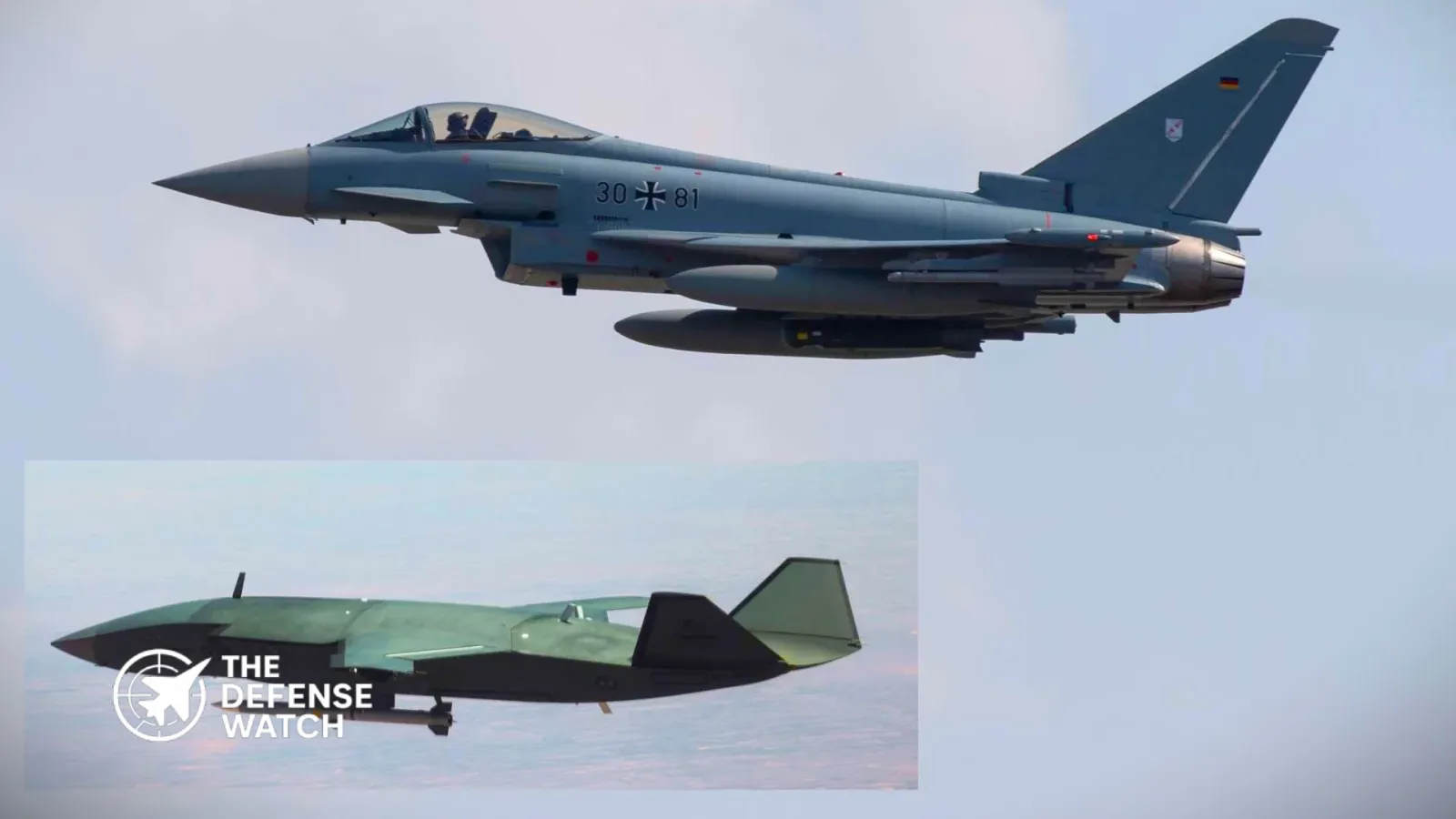
The MQ-28 Ghost Bat Germany evaluation marks a notable step in Europe’s exploration of collaborative combat aircraft to support manned fighter operations. Germany, as part of its broader modernization efforts within the Luftwaffe of Germany, is assessing unmanned systems designed to operate alongside platforms such as the Eurofighter Typhoon to extend sensing, strike, and survivability capabilities.
This move reflects a wider shift among NATO members toward integrating loyal wingman drones into frontline air operations, aiming to improve mission flexibility while reducing risk to pilots.
Germany Advances Loyal Wingman Concept
Germany’s evaluation of the MQ-28 Ghost Bat aligns with ongoing efforts to incorporate autonomous and semi-autonomous systems into European air combat doctrine. Originally developed under Australia’s Collaborative Combat Aircraft program, the MQ-28 is designed to accompany crewed fighters and perform tasks such as reconnaissance, electronic warfare support, and threat engagement.
For Germany, the interest in such a platform highlights the operational need to enhance the capabilities of its Eurofighter fleet without immediately replacing existing aircraft. By pairing manned fighters with unmanned wingmen, the Luftwaffe can potentially expand sensor reach and distribute combat workloads across multiple platforms.
Integration With Eurofighter Typhoon Operations
The Eurofighter Typhoon remains a core component of Germany’s air defense and strike capability. Integrating a loyal wingman like the MQ-28 Ghost Bat could allow Eurofighter pilots to command or coordinate multiple unmanned assets in contested environments.
This concept supports several operational advantages. First, it can extend the radar and sensor footprint of the formation. Second, it may allow unmanned units to take on higher-risk roles such as forward reconnaissance or electronic attack. Third, it can help preserve manned aircraft by shifting certain mission elements to autonomous platforms.
Defense analysts note that pairing advanced fighters with unmanned systems is becoming a standard approach among modern air forces seeking distributed lethality and greater mission resilience.
Strategic Context Within NATO Modernization
Germany’s evaluation is consistent with broader NATO efforts to modernize air combat capabilities in response to evolving threats. Several allied nations are exploring similar collaborative combat aircraft programs, often referred to as loyal wingman systems.
These initiatives aim to address challenges posed by advanced integrated air defense systems, electronic warfare environments, and the increasing use of unmanned platforms in contested airspace. By deploying a mix of crewed and uncrewed assets, air forces can complicate adversary targeting while maintaining operational flexibility.
Within this framework, the MQ-28 Ghost Bat Germany assessment represents an exploratory step rather than a formal procurement decision. It allows German defense planners to examine interoperability, mission roles, and integration requirements with existing NATO systems.
Industrial and Operational Implications
If Germany proceeds beyond evaluation, integration of loyal wingman platforms could influence both operational doctrine and defense industry collaboration. European defense contractors may seek partnerships or adaptations to align similar unmanned systems with existing fighter fleets.
For the Luftwaffe, adopting such systems would require development in areas including command and control, secure data links, and human-machine teaming. Training programs would also need to evolve to enable pilots to effectively manage multiple unmanned assets during missions.
While no final acquisition decision has been announced, the MQ-28 Ghost Bat Germany evaluation underscores growing interest in modular, networked air combat architectures across Europe.
■ KEY FACTS AT A GLANCE- ► Australia is assessing European weapons integration for the Ghost Bat uncrewed combat aircraft.
- ► The move could expand the RAAF’s missile options beyond traditional U.S. systems.
- ► Ghost Bat is designed to operate alongside crewed fighters as part of Australia’s loyal wingman concept.
- ► European missile integration could strengthen industrial ties and diversify supply chains.
- ► The decision reflects broader Australian efforts to build a flexible, resilient air combat ecosystem.
Australia Explores European Weapons Integration For Ghost Bat
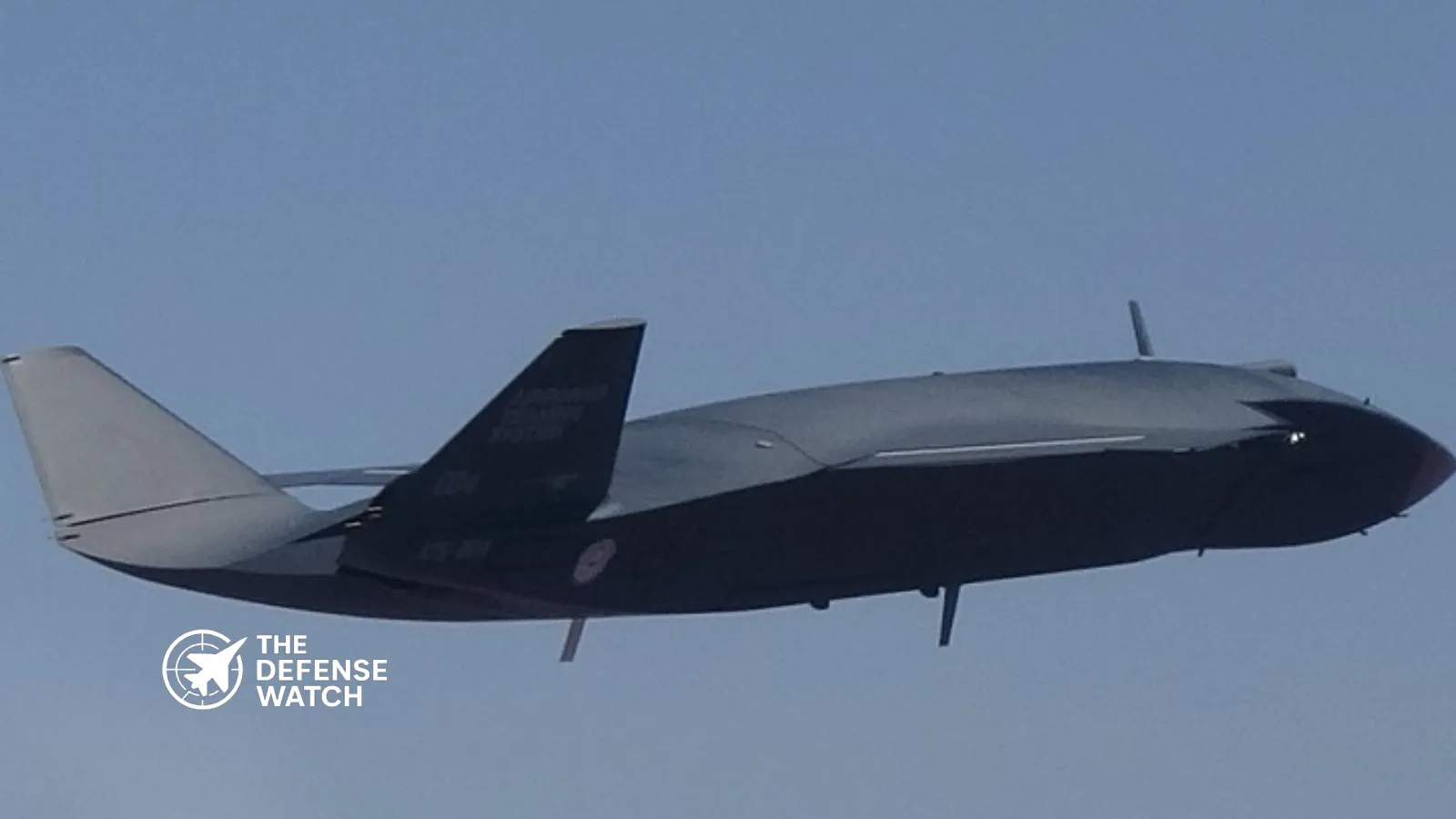
Australia is exploring European weapons integration for Ghost Bat as it refines the future role of its uncrewed loyal wingman aircraft.
The study reflects Canberra’s interest in expanding the combat flexibility of the Royal Australian Air Force, particularly as the Indo Pacific security environment grows more complex.
(adsbygoogle = window.adsbygoogle || []).push({});Ghost Bat, developed by Boeing Defence Australia, is designed to operate alongside crewed fighters such as the Royal Australian Air Force fleet of F-35A Lightning II and F/A-18F Super Hornet aircraft. Its core mission is to extend sensor reach, carry additional weapons, and absorb operational risk in contested airspace.
Expanding Missile Options Beyond Traditional Suppliers
At the center of the review is whether European munitions could be integrated onto Ghost Bat. While Australian combat aircraft traditionally rely heavily on U.S. sourced weapons, diversification has become a growing theme in defense planning.
Potential European systems could include air to air and air to surface missiles developed by firms such as MBDA, though no final selection has been announced.
Integrating European weapons would not be a simple plug and play effort. It would require software, fire control, and certification work to ensure compatibility with Ghost Bat’s open mission systems architecture. Still, the aircraft was designed with modularity in mind, a feature that may ease multi supplier integration.
From a strategic standpoint, diversifying suppliers reduces reliance on a single source and strengthens resilience in a crisis. It also signals Australia’s intent to build broader defense industrial ties with European partners.
Loyal Wingman In A Changing Threat Environment
The Ghost Bat program, formerly known as the Airpower Teaming System, is a flagship example of Australia’s push into advanced autonomous air combat. The platform is intended to operate as a force multiplier for crewed jets, sharing sensor data and executing missions with a high degree of autonomy.
As regional militaries invest in advanced surface to air systems and long range air to air missiles, survivability and flexibility are critical. An uncrewed aircraft that can carry varied munitions, including potentially European weapons, gives planners more operational choice.
(adsbygoogle = window.adsbygoogle || []).push({});This flexibility matters in coalition operations as well. Australia routinely trains and operates with NATO partners and Indo Pacific allies. A broader mix of compatible weapons could simplify joint logistics and expand mission options during combined operations.
Industrial And Strategic Implications
The exploration of European weapons integration for Ghost Bat also has industrial implications. Australia has emphasized sovereign capability and local industry participation in recent defense policy documents.
Working with European missile suppliers could open pathways for co production, technology transfer, or local assembly. That would align with Canberra’s long term objective of strengthening its domestic defense base.
At the same time, interoperability with U.S. systems remains central to Australian strategy. The United States is Australia’s principal security ally, and many of its high end capabilities, including the F 35A, are deeply integrated with American networks and weapons.
Balancing these relationships requires careful technical and diplomatic coordination. Expanding options does not mean replacing existing partnerships, but rather adding depth to them.
What Comes Next For Ghost Bat
Australia has already conducted multiple test flights of Ghost Bat prototypes, advancing the program from concept to operational experimentation. The aircraft’s modular nose section and open architecture were intended to allow rapid reconfiguration for sensors and mission systems.
(adsbygoogle = window.adsbygoogle || []).push({});If European weapons integration proceeds, the next steps would likely include feasibility studies, integration trials, and certification testing under RAAF oversight.
The outcome will shape how Ghost Bat is fielded in the coming decade. Whether equipped primarily with U.S. systems, European munitions, or a mix of both, the platform represents a shift toward distributed, collaborative air combat.
For the Royal Australian Air Force, the goal is clear. Build a flexible, survivable force that can adapt quickly to changing threats. Exploring European weapons integration for Ghost Bat is one more step in that direction.
Anduril’s YFQ-44A Drone Wingman Completes First Flight in Key CCA Milestone
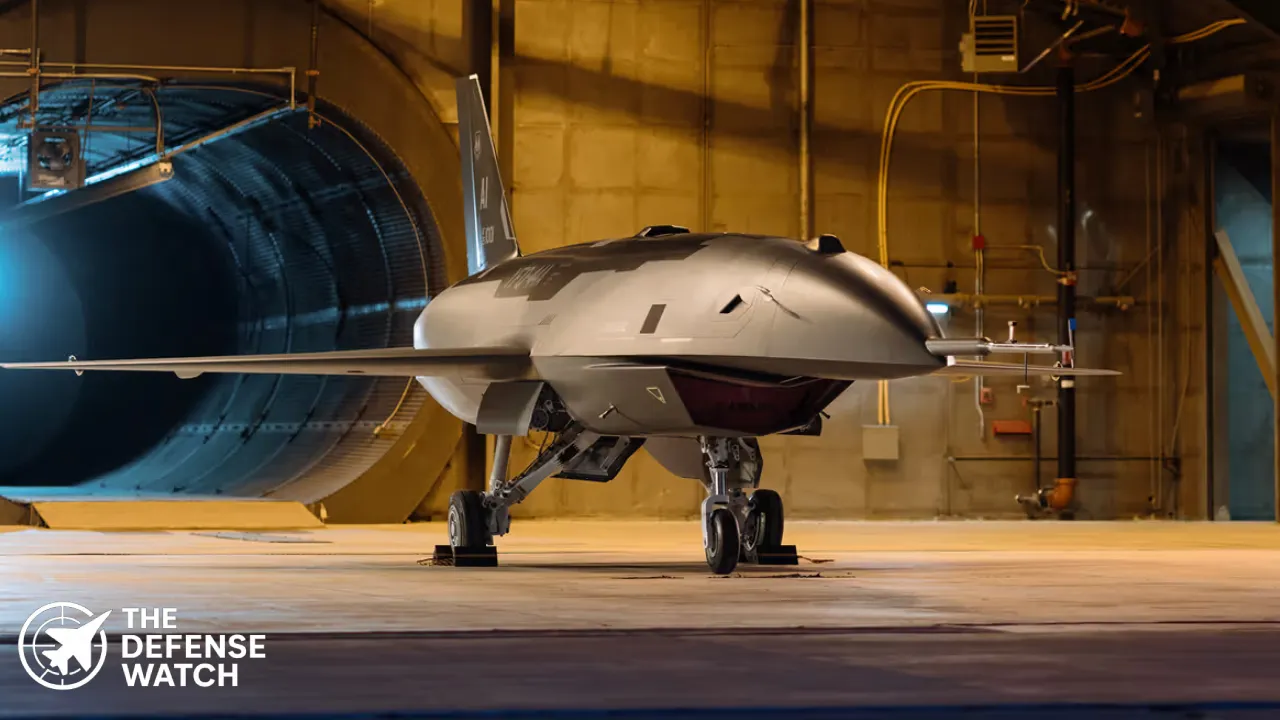
Anduril Industries has successfully conducted the first flight of its YFQ-44A autonomous drone, marking a major milestone in the U.S. Air Force’s Collaborative Combat Aircraft (CCA) program. The company confirmed the achievement this week, noting that the prototype performed as expected during its inaugural sortie at a U.S. test range.
A Milestone for the CCA Program
The YFQ-44A is one of the Air Force’s leading prototypes under development for the CCA effort—an initiative designed to field autonomous “loyal wingman” aircraft capable of operating alongside crewed fighters such as the F-35A and next-generation platforms. The successful flight demonstrates steady progress toward developing unmanned systems that can conduct sensing, strike support, electronic warfare, and distributed operations.
According to Anduril, the test flight validated core aerodynamics, autonomy software, and safety architectures that will inform later risk-reduction phases. While specific flight parameters were not disclosed, the company described the data collected as “high-quality and mission-relevant.”
Background: The Rise of Autonomous Combat Aviation
The CCA program is one of the U.S. Air Force’s most ambitious modernization efforts. The initiative seeks to introduce an operational fleet of affordable, expendable, and highly autonomous drones that can support or augment piloted aircraft during combat missions. These systems are designed to be modular, AI-enabled, and adaptable to a range of missions—from reconnaissance to kinetic engagements.

Anduril’s YFQ-44A is part of a competitive field that includes multiple defense contractors working on parallel CCA prototypes. The Air Force expects operational platforms to enter service later in the decade, with the first production awards anticipated within the next few years.
Technical Features and Development Goals
While detailed specifications of the YFQ-44A remain undisclosed for security reasons, Anduril has emphasized several foundational design principles:
- Autonomous mission execution: The drone is built to operate with limited human supervision, leveraging advanced onboard processing and AI-driven decision-making.
- Open-architecture mission systems: The platform is designed to support rapid payload integration and capability upgrades.
- Cost-efficient production: CCA systems must be affordable at scale, enabling the Air Force to field them in large numbers for distributed operations.
The company stated that the first flight marks the beginning of a broader series of test sorties focused on validating control laws, sensor integration, and collaborative behaviors between unmanned and manned aircraft.
Industry and Air Force Perspectives
U.S. Air Force officials have repeatedly emphasized the importance of the CCA initiative in future air warfare concepts. The service envisions operational units deploying multiple autonomous wingmen per crewed aircraft, enabling greater mission flexibility, survivability, and target coverage.
Defense industry analysts note that Anduril’s rapid development approach—leveraging digital engineering, modular systems, and commercial software practices—positions the company as a disruptive competitor in the traditionally hardware-driven aerospace sector.

The YFQ-44A’s flight also illustrates the Air Force’s shift toward fielding systems at a faster pace, echoing recent service guidance prioritizing speed over extended development timelines. Industry experts say that early flight demonstrations help reduce program risk and strengthen the company’s position in future down-select phases.
What Comes Next
With the first flight completed, Anduril will now proceed with envelope expansion, integrated payload testing, and multi-vehicle autonomy trials. The company plans to increase flight tempo as the program advances toward more complex demonstrations, including teaming operations with crewed fighters and other CCA prototypes.

The Air Force has indicated that the next major step for the CCA program will involve selecting companies for low-rate production development, following competitive evaluations of autonomy performance, cost, mission adaptability, and manufacturing readiness.
The YFQ-44A’s successful first flight brings the service closer to fielding autonomous wingmen capable of supporting combat airpower in contested environments—an operational shift that could reshape U.S. aerial warfare strategy in the years ahead.