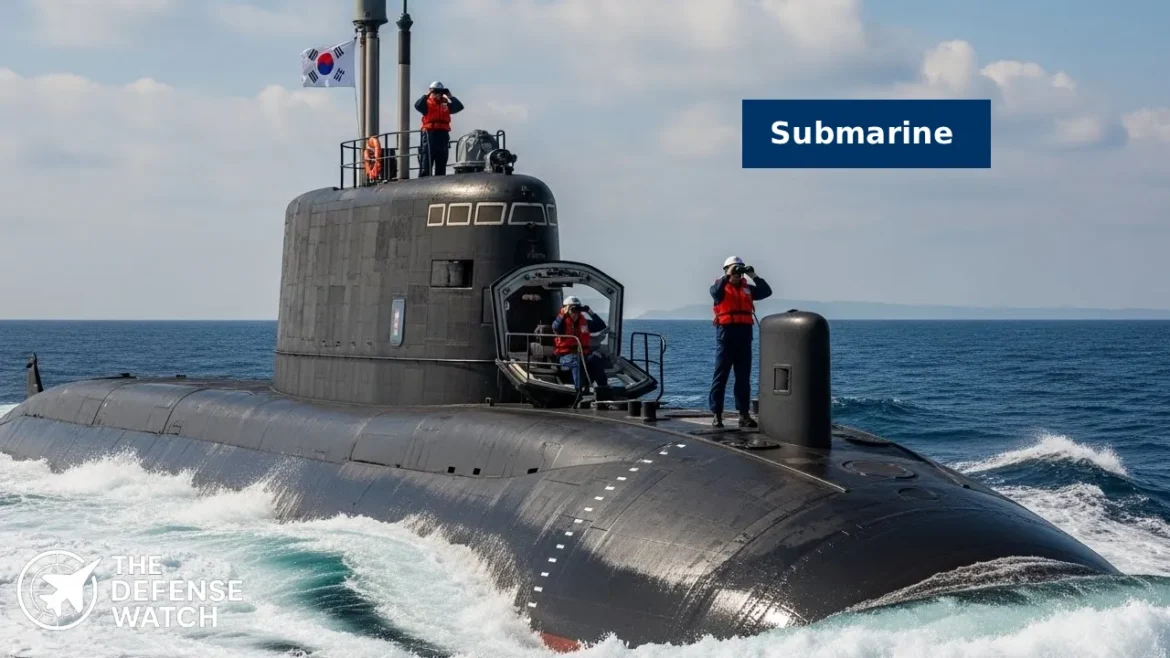
South Korea to Transfer Jang Bogo-Class Submarine to Poland by Late 2025
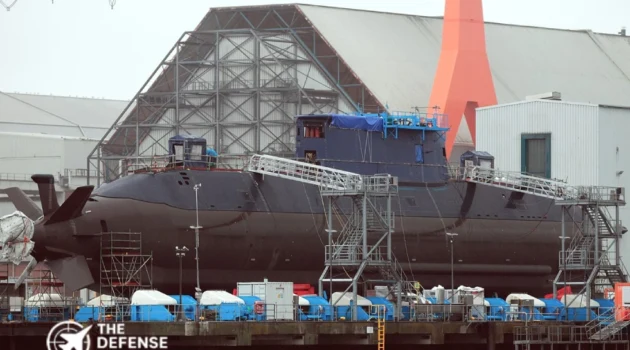
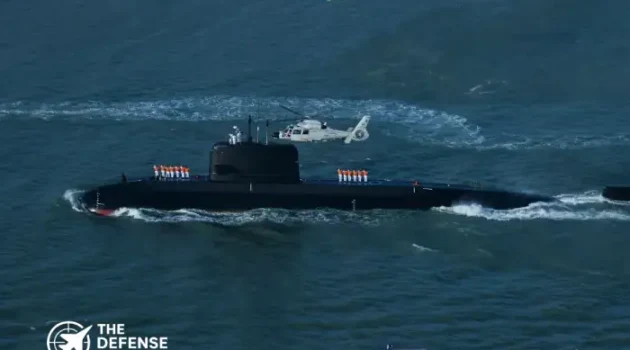
South Korea is preparing to transfer a Jang Bogo-class submarine to Poland by the end of 2025, according to emerging defense reports highlighting the expanding security cooperation between Seoul and Warsaw. The move represents a notable step in Poland’s naval modernization efforts and reinforces South Korea’s growing role as a supplier of defense platforms within Europe.
Background on the Transfer Plan
The initiative follows ongoing discussions between both governments linked to Poland’s broader acquisition of South Korean defense systems. In recent years, Warsaw has purchased a range of K-defense platforms, including K2 main battle tanks, K9 self-propelled howitzers, and FA-50 light combat aircraft. The submarine transfer aligns with this expanding portfolio, signaling diversification beyond land and air systems.
The Jang Bogo-class submarine, derived from the German Type 209/1200 design, has been a core component of the Republic of Korea Navy fleet since the 1990s. While South Korea advances to more modern platforms such as the Dosan Ahn Chang-ho–class submarines, the transfer will enable Poland to enhance its undersea operational capacity at minimal acquisition cost.

Details of the Arrangement
According to the available reporting, the submarine will be provided as a free transfer rather than a sales contract. This approach may facilitate Poland’s ability to reconstitute its submarine force after the decommissioning of legacy vessels, including the aging Kobben-class platforms. The delivery timeline places the handover before the close of 2025, pending refurbishment and readiness assessments.
The transfer is expected to be accompanied by technical support, training provisions, and logistical assistance, enabling Poland to integrate the vessel into its naval structure. The development occurs as Poland reassesses maritime security requirements in the Baltic Sea, where undersea surveillance, deterrence posture, and fleet renewal have become increasing priorities.
Strategic and Policy Implications
Defense analysts note that the arrangement reinforces South Korea’s emergence as an influential defense partner in Europe. Warsaw’s expanding procurement links with Seoul have been driven by rapid delivery schedules, scalable production capability, and the need to respond to evolving regional security dynamics.
For Poland, the submarine transfer may serve as an interim measure while pursuing longer-term acquisition strategies. The nation has explored multiple avenues for future submarine procurement, including potential participation in European collaborative programs or bilateral sourcing options.
The development also highlights shifting naval capability patterns among NATO members bordering the Baltic Sea. Enhanced undersea assets contribute to surveillance coverage, anti-access operations, and resilience against hybrid maritime activity.
What Comes Next
Further details regarding crew training cycles, modernization work, and operational deployment timelines are expected in the coming months. Once integrated, the Jang Bogo-class submarine would provide Poland with renewed undersea capability while informing its long-term fleet planning priorities.
The transfer underscores a continuing trend of strengthened defense ties between South Korea and European partners, with naval cooperation now joining land and air domain collaboration already in progress.

India Reportedly Eyes Israel’s LORA Missile System for Long-Range Precision Strikes
New Delhi, November 2025 — India is reportedly in talks with Israel to acquire and co-produce the LORA (Long Range Artillery) tactical ballistic missile, a precision-strike system developed by Israel Aerospace Industries (IAI).
According to reports from Israeli media, a Memorandum of Understanding (MoU) was signed between Indian Defense Secretary Rajesh Kumar Singh and Israeli Defense Director General Amir Baram to expand defense collaboration between the two nations.
Expanding India-Israel Defense Ties
The potential acquisition comes amid growing India–Israel defense cooperation. Data from the Stockholm International Peace Research Institute (SIPRI) indicates that India accounted for roughly 34% of Israel’s total defense exports between 2020 and 2024, making it Israel’s largest defense customer.
LORA: Capabilities and Strategic Utility
Developed by IAI’s MLM Division, the LORA missile system offers an operational range of up to 400 kilometers, significantly extending strike capabilities compared to India’s existing Rampage air-launched missile (approximately 250 km). LORA’s solid-fuel propulsion, satellite-based guidance system, and fire-and-forget functionality make it suitable for precision engagements against fortified targets.
The missile, weighing around 1,600 kilograms, travels at supersonic speeds and is capable of deploying multiple warhead types — including high-explosive and penetration variants — for tactical and strategic missions.
Why LORA Matters to India
India’s reported interest in the LORA system may stem from operational experiences with the Rampage missile, used during regional tensions with Pakistan. While Rampage provides accurate standoff strike capability, its shorter range exposes launch aircraft to hostile air defenses. LORA, by contrast, allows Indian forces to strike from well beyond enemy radar coverage, aligning with India’s doctrine of deep precision strikes and networked warfare.
Broader Defense Collaboration
Beyond LORA, reports indicate that India is also exploring Israel’s Ice Breaker cruise missile — a 300 km-range precision weapon designed for both land and naval operations. The Ice Breaker employs AI-assisted infrared navigation and is built to function in electronic warfare-saturated environments, underscoring India’s interest in next-generation missile systems.
Strategic Outlook
If the deal progresses, it could represent a significant milestone in India’s missile modernization efforts, complementing indigenous systems such as BrahMos, Agni, and Prithvi. Collaboration with Israel could further enhance India’s precision-strike capabilities, particularly in contested or high-threat regions.
No official confirmation has been made by the Indian Ministry of Defence or Israel Aerospace Industries regarding the LORA deal. However, defense observers note that such cooperation fits into India’s broader push for self-reliance in advanced weapon technologies under its ‘Make in India’ initiative.
What’s Next
If finalized, the LORA partnership would strengthen bilateral defense production and potentially position India as a co-producer of advanced tactical ballistic systems for regional and global markets. Both nations are expected to issue formal statements if the MoU leads to a production agreement.
LORA Tactical Ballistic Missile System – Full Specifications
- Guidance System: GPS/INS
- Maximum Speed: Mach 4.5
- Launch Compatibility: Ground and Naval Platforms
- Warhead Technology: High-Explosive or Penetration
Older Posts