
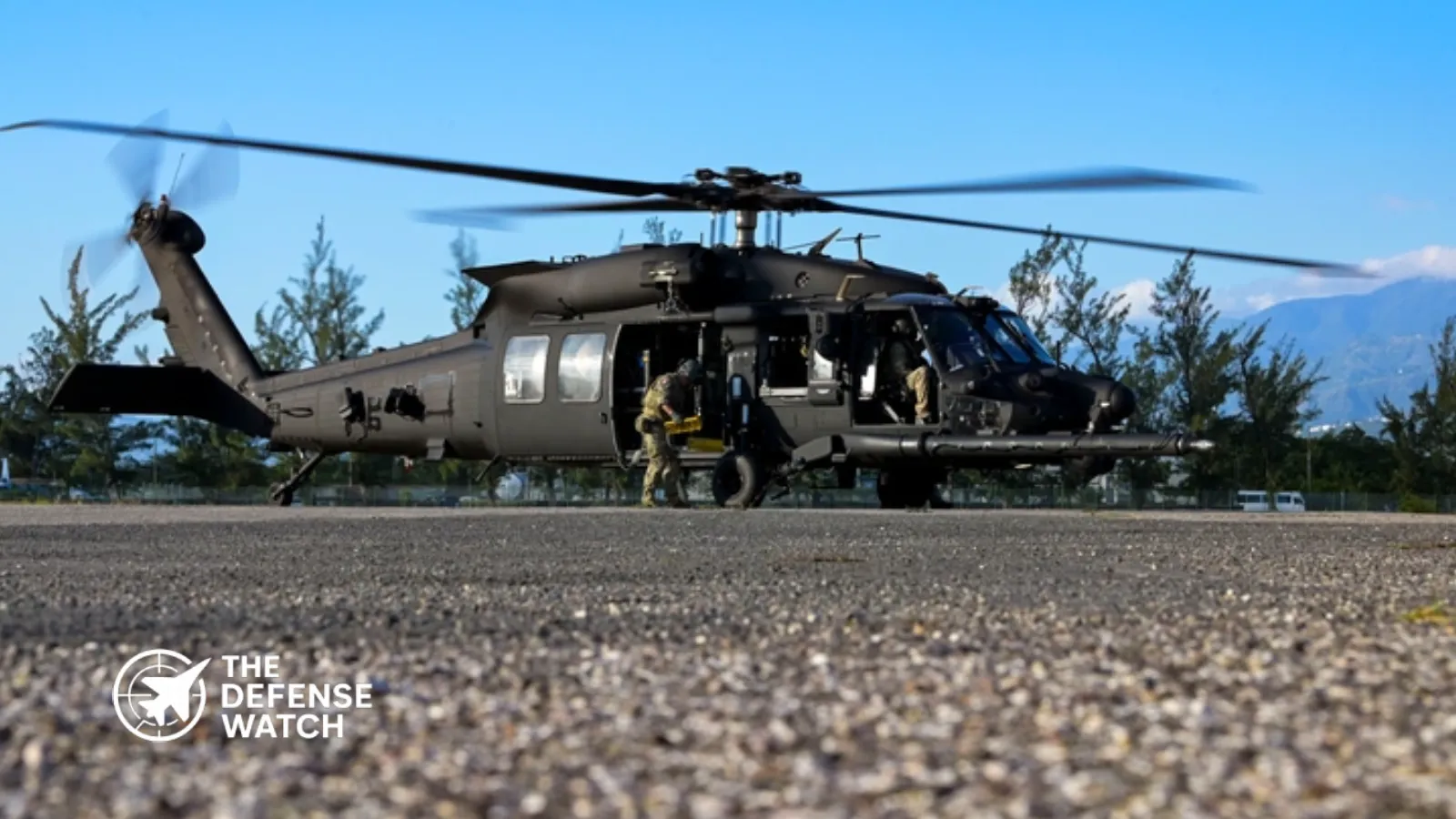
SEAL Team 6 Executes High-Risk Personnel Recovery Inside Iran to Rescue Downed F-15E Crew
SEAL Team 6, the U.S. Navy’s elite Tier 1 special mission unit, conducted a personnel recovery operation deep inside Iran to rescue a downed U.S. Air Force F-15E Strike Eagle crew member, according to multiple U.S. media reports. The mission fused covert CIA support, a deliberate deception campaign, and special operations aviation to extract the airman from one of the world’s most heavily defended threat environments.
- SEAL Team 6 (DEVGRU), a U.S. Navy Tier 1 special mission unit under JSOC, served as the primary ground recovery force for the downed F-15E crew inside Iran.
- The operation reportedly integrated a CIA-led deception campaign designed to delay Iranian response forces and create a viable extraction window.
- A temporary forward landing zone was established inside hostile Iranian territory to enable rapid extraction by special operations aviation assets.
- Naval Special Warfare Command fields approximately 2,500 active-duty SEAL operators across eight SEAL Teams, with DEVGRU representing the highest-tier element.
- The mission demonstrates U.S. capacity to project decisive special operations power into one of the world’s most heavily defended and politically sensitive environments.
The Big Picture
The United States military has long maintained that it will not abandon personnel to capture in hostile territory. That commitment is embedded in the doctrine of Personnel Recovery and codified across the services in joint and service-specific field manuals. But doctrine is easier to write than to execute — particularly inside a country like Iran, which fields a layered air defense architecture, a large paramilitary intelligence apparatus, and a track record of exploiting captured U.S. personnel for strategic leverage.
The reported rescue of an F-15E crew member from Iranian territory places this doctrine under its most operationally demanding test. Iran’s Artesh and Islamic Revolutionary Guard Corps maintain extensive ground surveillance networks, rapid reaction forces, and long-range surface-to-air missile batteries. Operating inside that environment requires not just elite ground forces, but a synchronized joint and interagency system built for speed, deception, and suppression.
What’s Happening
According to multiple U.S. media reports, including the New York Post, the mission reportedly involved Tier 1 special operations forces, a coordinated intelligence ruse, and the rapid establishment of a temporary forward landing zone inside hostile territory.
The reported involvement of SEAL Team 6, officially the Naval Special Warfare Development Group, indicates the deployment of a U.S. Navy Tier 1 special mission unit specifically designed for the most sensitive and high-risk operations.
DEVGRU was established in 1980 following the failure of Operation Eagle Claw in Iran and was created to provide a dedicated counterterrorism and hostage rescue capability capable of rapid global deployment under extreme operational constraints. The unit operates under Joint Special Operations Command alongside Delta Force.
The F-15E Strike Eagle, a dual-role multirole strike aircraft operated by the U.S. Air Force, carries a two-person crew — a pilot and a weapon systems officer. Both represent high-value intelligence targets in Iranian hands, given their detailed knowledge of U.S. strike package composition, tactics, frequencies, and mission profiles.
Why It Matters
Personnel recovery in denied territory is not simply a humanitarian imperative — it is a strategic one. A captured U.S. Air Force crew member inside Iran represents a diplomatic crisis, an intelligence exposure risk, and a potential propaganda asset for Tehran. The speed and decisiveness with which Washington responded directly limits each of those risks.
The operation underscores the United States’ ability to fuse top-tier special operations units with covert intelligence capabilities to retrieve personnel in denied territory. It signals to adversaries that even in hostile airspace and under intense surveillance, the United States retains the reach and precision to recover its forces.
That signal carries operational value beyond this single mission. Adversaries who believe U.S. forces can be stranded behind enemy lines gain leverage — over negotiations, over escalation decisions, and over pilot willingness to fly into contested airspace. A successful recovery directly counters that calculus.
How SEAL Team 6 Operates
Naval Special Warfare Command fields roughly 8,000 to 9,000 personnel, including operators and support elements, with approximately 2,500 active-duty SEAL operators distributed across multiple SEAL Teams — commonly identified as Teams 1, 2, 3, 4, 5, 7, 8, and 10 — geographically aligned between the U.S. West Coast and East Coast to support different theaters of operation.
Each SEAL Team is structured into deployable platoons of around 16 operators, enabling modular deployment in small, autonomous units or as part of larger joint task forces.
Within this framework, DEVGRU represents the highest level of specialization, focusing on the most complex and time-sensitive missions. Its operators are trained extensively in close-quarters combat, hostage rescue, and high-value target operations, and benefit from direct access to JSOC-level intelligence fusion and specialized aviation support.
In the specific context of the reported F-15E crew recovery inside Iran, DEVGRU would likely have served as the mission’s core ground maneuver element — rapidly locating and securing the isolated airman, establishing immediate local superiority at the recovery site, and preventing capture by hostile forces.
The Role of CIA Deception
The reported CIA deception effort is, operationally speaking, as significant as the DEVGRU element itself. In a high-density threat environment like Iran, no ground force — regardless of how capable — can sustain extended contact against a mobilizing adversary. The mission architecture depends on preventing that mobilization from occurring at all, or at least delaying it long enough to complete the extraction.
The CIA-led deception effort would play a key enabling role by shaping the operational environment, delaying or misdirecting Iranian forces, and creating the time window necessary for ground forces to execute the recovery.
This type of intelligence-special operations integration reflects lessons learned from decades of post-9/11 operational experience. The fusion of signals intelligence, human intelligence, and active deception with ground maneuver forces represents a distinctly American approach to contested personnel recovery — one that requires years of institutional refinement to execute reliably.
Strategic Implications
The strategic implications of this operation extend well beyond Iran. Adversaries across all theaters — from North Korea to Russia to China — now have renewed evidence that U.S. special operations forces retain the capacity to reach inside contested and denied territory, recover personnel, and exit before host-nation forces can effectively respond.
For Iran specifically, the operation highlights a persistent vulnerability: despite the country’s substantial investment in air defense systems and paramilitary capabilities, a coordinated U.S. joint and interagency effort can penetrate Iranian territorial security with enough speed and deception to achieve mission success. That will have planning implications within Iran’s IRGC intelligence and ground force commands.
More broadly, the mission reinforces the deterrent value of a credible personnel recovery capability. Allies and partners flying alongside U.S. forces in contested environments have greater confidence when they know the U.S. will act to recover downed crews. That confidence directly affects coalition cohesion and combined air operations planning.
Competitor View
Iran will interpret this operation through two competing lenses. The first is embarrassment — a successful U.S. special operations penetration of Iranian territory is a direct challenge to the IRGC’s ability to control its own airspace and ground environment. Tehran may use the incident to justify further investment in counter-special operations capabilities, layered ground surveillance networks, and rapid reaction force readiness.
The second lens is deterrence recalculation. Iranian planners must now factor in a higher probability that any downed U.S. airman will be recovered before Iranian forces can reach them, limiting the intelligence and propaganda value of a shootdown. This marginally reduces the attractiveness of engaging U.S. aircraft in contested scenarios.
China and Russia, both of which study U.S. special operations doctrine closely, will note the operational model: forward staging, intelligence deception, temporary forward landing zones, and rapid extraction. Each will seek to develop countermeasures — particularly improved ground-based surveillance networks, faster rapid reaction forces, and electronic warfare capabilities that could detect or disrupt SOCOM insertion profiles.
Capability Gap
The Iran personnel recovery mission highlights a persistent operational gap that has challenged U.S. planners for decades: the ability to execute combat search and rescue in environments where air superiority is contested or absent, and where adversary ground forces are capable of rapid response.
Historically, DEVGRU has demonstrated this type of capability in operations such as the 2011 raid against Osama bin Laden in Pakistan, which required deep penetration into a sensitive area, precise coordination between intelligence and military forces, and rapid execution under significant operational risk.
However, the Iran scenario represents a materially more difficult environment than Pakistan in 2011. Iran operates the S-300PMU2 Favorit surface-to-air missile system, domestic derivatives of the SA-15 Gauntlet, and an expanding network of domestically produced air defense assets. Penetrating that environment with low-observable or low-altitude special operations aircraft requires precise intelligence on radar coverage, timing, and flight routing — all of which must be developed well before any crisis scenario emerges.
This underscores the importance of persistent intelligence collection on Iranian air defense architecture, not just as a targeting tool for conventional strikes, but as a foundational requirement for personnel recovery planning. Any gap in that intelligence picture directly degrades SOCOM’s ability to plan low-risk insertion routes.
What To Watch Next
The immediate priority for U.S. Special Operations Command will be assessing the operational security of the mission and evaluating whether any Iranian collection efforts compromised insertion routes, aviation assets, or communications protocols. Lessons learned from this recovery will feed directly into future personnel recovery planning across all theaters.
More broadly, the mission will likely accelerate ongoing U.S. military investment in combat rescue and personnel recovery capabilities, including potential procurement of next-generation low-observable special operations helicopters, expanded forward staging networks in the Middle East, and enhanced interagency intelligence fusion protocols.
Congress will also take note. The demonstrated effectiveness of Tier 1 special operations forces in a denied-area personnel recovery scenario reinforces the political and budgetary case for sustained investment in SOCOM readiness, training pipelines, and interagency integration.
The Bottom Line
The SEAL Team 6-led recovery of a downed F-15E crew inside Iran demonstrates that the United States retains the joint and interagency architecture to execute denied-area personnel recovery at operational depth — a capability with strategic deterrent value that extends well beyond any single mission.
Get real time update about this post category directly on your device, subscribe now.
