China’s Type 071 Amphibious Ships in Live-Fire Drill
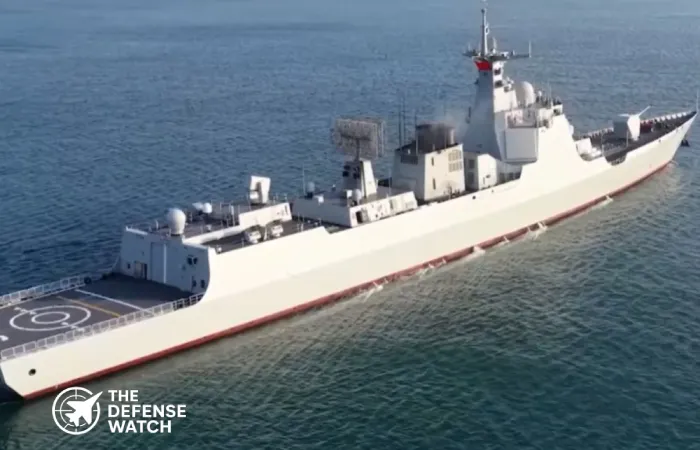
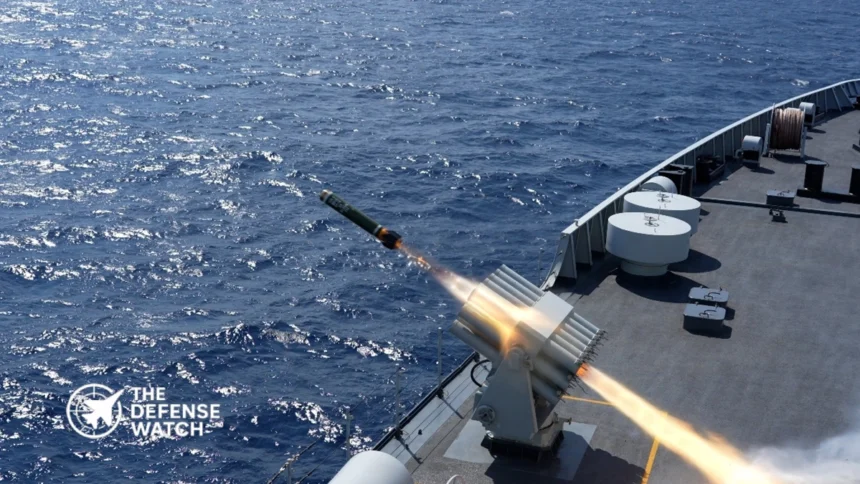
Four Type 071 amphibious transport dock ships operated together in a reported live-fire exercise conducted by a naval formation under the Chinese People’s Liberation Army (PLA) Southern Theater Command, according to Chinese state media reports published on Oct. 18, 2026. The training involved coordinated ship maneuvers, responses to simulated threats and firing by the ships’ main and secondary guns.
The vessels identified in the reporting were Kunlunshan (Hull 998), Changbaishan (Hull 989), Qilianshan (Hull 985) and Wuzhishan (Hull 987). Footage carried by China Central Television (CCTV) showed Kunlunshan and Changbaishan sailing alongside each other during the exercise.
The activity offers a view of how the PLA Navy trains its amphibious fleet to operate under simulated combat conditions. However, the publicly available reporting does not establish the full exercise scenario, the location of the drill or whether it was connected to a specific contingency plan.
What the exercise revealed about amphibious operations
According to CCTV footage described by the Global Times, the exercise began with combat alerts that prompted the ships to change formation. Orders were relayed from command spaces, while personnel at different stations coordinated their responses to incoming simulated threats.
The formation then conducted what Chinese state media described as air-defense interception training, with main and secondary guns firing in succession. The report did not identify the simulated targets, disclose the weapons used in each engagement or provide performance data from the firing sequences.
The exercise also included simulated replenishment at sea. The ships moved into replenishment positions and used line-throwing equipment as crews practiced the coordination required to transfer supplies between vessels.
These activities address different parts of naval readiness. Weapons drills test crew response and coordination under simulated attack, while replenishment training helps ships sustain operations without immediately returning to port. For amphibious vessels, both functions matter because transporting troops and equipment is only one part of a larger operation that also requires protection, communications and logistical support.
The Southern Theater Command described the training as designed to improve emergency response in complex maritime and air conditions. That is an official characterization of the exercise, rather than independently verified evidence of how much the ships’ combat effectiveness improved.
Why the Type 071 matters to the PLA Navy
The Type 071, also known by NATO’s reporting name Yuzhao, is a large amphibious transport dock designed to move troops, vehicles and landing craft from sea to shore. The U.S. Army’s Worldwide Equipment Guide describes the class as a major addition to China’s amphibious warfare capabilities, with facilities for vehicles, landing craft, helicopters and medical support.
Its well deck allows compatible landing craft to embark and leave the ship, carrying personnel and equipment toward shore. The flight deck supports helicopter operations, providing another route for moving personnel and supplies where conditions permit.
This combination gives the Type 071 a role beyond that of a conventional transport ship. It can support amphibious landings, move heavy equipment, assist resupply efforts and provide a platform for coordinating parts of a landing operation.
The ships can also support missions that do not involve an opposed landing, including humanitarian assistance and civilian evacuation. Their value therefore depends on how well they can move and sustain forces, not simply on the number of weapons carried aboard.
Four ships operating together
The involvement of four Type 071 vessels is relevant because amphibious operations place demands on coordination across multiple ships. A formation must manage navigation, communications, force protection and the movement of landing craft while keeping personnel and equipment ready for transfer ashore.
Operating several ships together can also provide more transport capacity than deploying a single vessel. It allows planners to distribute equipment and personnel across the formation, although the actual capacity available in a particular exercise depends on the embarked force, load configuration and supporting assets.
Chinese military affairs expert Wang Yunfei told the Global Times that the exercise could involve complex training intended to prepare multiple landing ships for island and reef operations, transportation and missions connected to China’s territorial claims. Those comments describe an expert interpretation of the exercise, not confirmation that the four ships rehearsed a particular operational plan.
The Southern Theater Command is responsible for Chinese military operations in the country’s southern strategic region, including areas relevant to the South China Sea. The command’s participation provides geographic and organizational context, but the available report does not establish the precise location of this particular drill.
The role of Type 075 and Type 076 ships
China’s amphibious fleet includes different ship designs intended to support different parts of an operation. The Type 071 provides transport capacity and facilities for launching landing craft, while the larger Type 075 amphibious assault ship emphasizes helicopter operations and the movement of troops by air.
The Type 076 is another amphibious assault ship design intended to expand China’s ability to operate aircraft and uncrewed systems from the sea. The Global Times cited Wang as saying the Type 071 could operate alongside the newer ships, with the different classes providing complementary capabilities.
In operational terms, this combination could allow a task group to move vehicles and personnel by landing craft while using helicopters for selected air-mobile tasks. The exact mix would depend on mission requirements, available aircraft, landing conditions and the opposition’s defenses.
A larger amphibious fleet does not, by itself, establish that a landing operation would succeed. Such an operation would also depend on control of the surrounding airspace and waters, intelligence, minesweeping, logistics, communications and the ability to protect ships approaching the coast.
What the drill does, and does not, demonstrate
The reported exercise provides evidence that four Type 071 ships participated in coordinated training that included simulated air-defense engagements and replenishment procedures. It also shows that the Southern Theater Command has continued to publicize training involving major amphibious vessels.
It does not establish that the ships tested new weapons, achieved a particular interception rate or demonstrated an operational capability against a real adversary. No verified performance figures or independent assessment of the exercise results were provided in the reporting reviewed for this article.
The most useful measure of the fleet’s readiness would be evidence of sustained operations, effective coordination with escorts and aviation units, reliable logistics and the ability to carry out complex missions under realistic opposition. The latest report offers a limited window into one part of that training process.
For regional observers, the exercise is relevant to understanding the PLA Navy’s continuing attention to amphibious operations. Its wider strategic significance, however, should be judged alongside other evidence of fleet readiness, force deployment and operational development, rather than inferred from a single live-fire drill.