
Table of Contents
The Silent Revolution Beneath the Waves
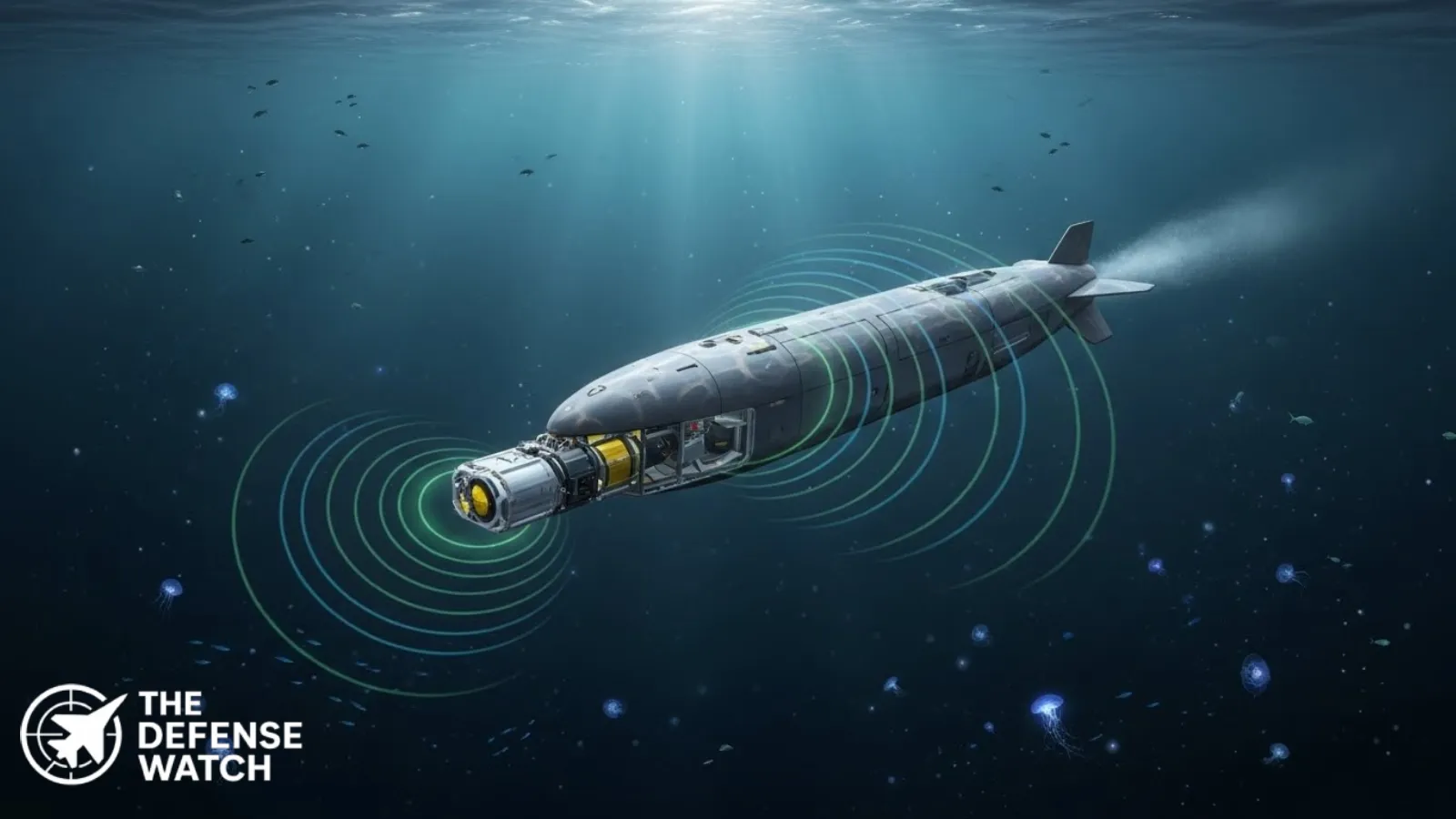
The United States Navy is fundamentally transforming underwater warfare through unprecedented advancements in stealth undersea drone technology, positioning autonomous unmanned underwater vehicles (UUVs) as critical components of 21st-century maritime security architecture. As global naval competition intensifies across contested waters from the South China Sea to the Arctic Ocean, these sophisticated robotic platforms are emerging as game-changing assets that operate undetected in hostile environments, gathering intelligence, conducting reconnaissance, and potentially engaging adversary threats without risking human lives.
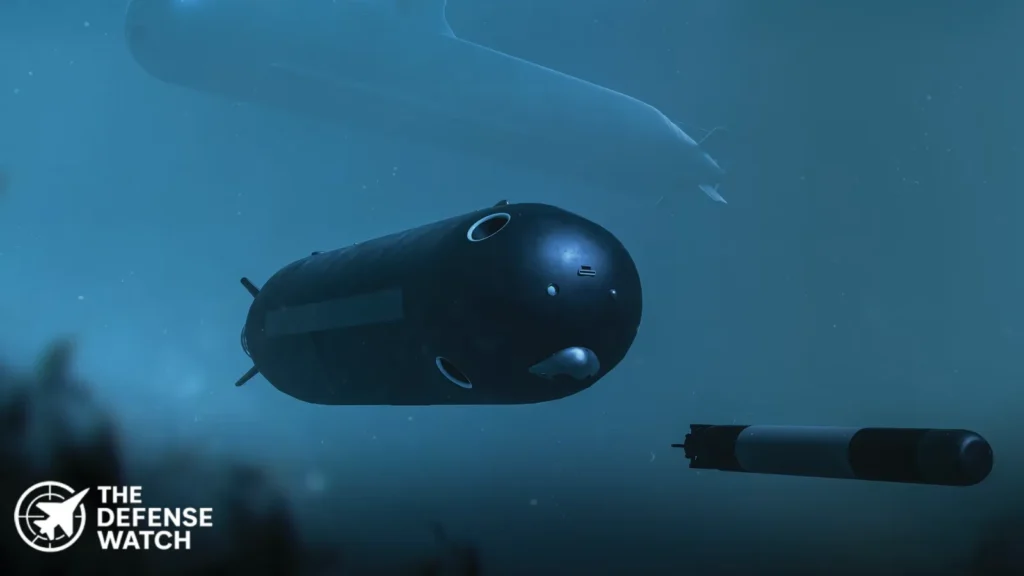
The US Navy technology development roadmap now prioritizes unmanned systems as force multipliers capable of extending operational reach, maintaining persistent surveillance, and executing missions in contested domains where traditional crewed vessels face escalating risks. Recent deployments and testing programs demonstrate that stealth undersea drones represent not merely incremental improvements to existing capabilities, but rather a paradigm shift in how naval forces project power, maintain situational awareness, and deter adversaries beneath the ocean’s surface.
Strategic Imperative: Why Stealth Undersea Drones Matter Now
Contemporary maritime security challenges demand innovative solutions that transcend conventional naval platforms. Traditional submarines, while formidable, require substantial crews, extensive logistical support, and significant financial investment. Stealth undersea drone systems offer complementary capabilities at reduced operational costs, enabling distributed maritime operations across vast ocean expanses simultaneously.
The strategic calculus driving UUV development centers on several converging factors. First, near-peer competitors including China and Russia have dramatically expanded submarine fleets and anti-access/area-denial (A2/AD) capabilities, complicating U.S. Navy operations in critical regions. Second, undersea infrastructure including communication cables, energy pipelines, and sensor networks face increasing vulnerability to sabotage or surveillance. Third, emerging technologies in artificial intelligence, battery systems, and autonomous navigation have matured sufficiently to enable genuinely independent underwater operations lasting weeks or months.

According to recent Pentagon assessments, unmanned underwater systems will constitute approximately 40 percent of future naval platforms by 2045, reflecting institutional recognition that autonomous capabilities provide asymmetric advantages in great power competition. The U.S. Navy’s underwater operations doctrine increasingly emphasizes distributed, networked forces rather than concentrated strike groups, with UUVs serving as persistent sensors, communication nodes, and potential weapons delivery platforms across contested battlespaces.
Technical Breakthroughs Enabling Operational Viability
Recent technological advances have transformed stealth undersea drone concepts from experimental prototypes into deployable operational systems. Battery technology improvements, particularly in lithium-ion and fuel cell systems, now enable UUVs to operate continuously for extended durations without surfacing or requiring mid-mission recharging. Advanced propulsion systems minimize acoustic signatures, allowing these platforms to operate undetected even in acoustically monitored waters.
Artificial intelligence and machine learning algorithms represent perhaps the most transformative enabler for autonomous underwater operations. Modern UUVs employ sophisticated decision-making frameworks that allow them to navigate complex underwater terrain, avoid obstacles, recognize potential threats, and adapt mission parameters based on environmental conditions—all without continuous human oversight. These systems incorporate sensor fusion capabilities that integrate acoustic, magnetic, and optical data streams to build comprehensive environmental pictures even in degraded visibility conditions.
Navigation remains a fundamental challenge in the underwater domain where GPS signals cannot penetrate. Contemporary UUVs address this limitation through integrated inertial navigation systems, terrain-contour matching algorithms, and acoustic positioning networks. Some advanced platforms incorporate quantum sensing technologies that detect minute gravitational variations for precise navigation without external references. Communication capabilities have similarly evolved, with systems now employing low-probability-of-intercept acoustic modems and occasional surfacing for satellite data bursts when operating in permissive environments.

The US Navy technology development community continues investing heavily in extending operational envelopes. Current research priorities include swarm coordination algorithms enabling multiple UUVs to collaborate autonomously, enhanced energy harvesting systems utilizing ocean thermal gradients, and modular payloads allowing rapid reconfiguration for diverse mission sets ranging from mine countermeasures to anti-submarine warfare.
Operational Programs Reshaping Naval Capabilities
The U.S. Navy operates several distinct UUV development programs addressing different operational requirements across the size and capability spectrum. Extra-Large UUVs (XLUUVs), exemplified by the Orca program, represent the largest and most capable autonomous underwater platforms currently under development. These submarine-sized vehicles, measuring approximately 51 feet in length and displacing over 50 tons, can operate independently for months while carrying substantial payloads including sensors, mines, or potentially weapons systems.
Boeing serves as prime contractor for the Orca XLUUV program, with the Navy ordering five production units following successful prototype testing. These platforms leverage technologies initially developed for the Echo Voyager demonstrator, which completed extended autonomous missions exceeding 6,500 miles. Orcas are designed to deploy from shore facilities rather than host submarines, reducing operational complexity while maintaining strategic reach. Their modular payload bays accommodate diverse mission packages, enabling rapid reconfiguration supporting intelligence gathering, mine warfare, electronic warfare, or strike missions as operational requirements evolve.
Large Displacement UUVs (LDUUVs) occupy a mid-tier capability range, typically measuring 20-30 feet in length and weighing several tons. The Snakehead program represents the Navy’s primary LDUUV effort, developing platforms compatible with submarine torpedo tube launch and recovery systems. Northrop Grumman and Lockheed Martin have received contracts for prototype development, with systems expected to achieve initial operational capability in the coming years. These vehicles provide Virginia-class submarines and other platforms with deployable autonomous assets for forward reconnaissance, communication relay, or payload delivery without requiring the host vessel to expose itself to detection.
Medium and small UUVs address tactical requirements including mine countermeasures, harbor security, and close-range surveillance. The Knifefish surface mine countermeasure UUV, developed by General Dynamics Mission Systems, employs advanced sonar systems to detect and classify buried mines in littoral environments—a mission traditionally requiring divers or specialized vessels in hazardous conditions. Similarly, the Lionfish small UUV provides expeditionary forces with man-portable underwater reconnaissance capabilities deployable from small boats, beaches, or forward operating locations.
Maritime Security Applications Across the Competition Spectrum
Stealth undersea drone platforms enhance maritime security across the full spectrum of competition, crisis, and conflict scenarios. During peacetime competition, persistent UUV surveillance enables continuous monitoring of adversary submarine bases, shipping patterns, and underwater infrastructure without diplomatic complications associated with crewed vessel operations in sensitive areas. These systems can loiter near critical chokepoints, tracking submarine transits and communications without surfacing or betraying their presence.
Intelligence, surveillance, and reconnaissance missions represent primary applications for current-generation UUVs. Advanced acoustic sensor arrays, synthetic aperture sonar systems, and optical imaging capabilities allow these platforms to map seafloor terrain, identify underwater installations, monitor marine traffic, and track adversary vessels with resolution previously requiring risky crewed submarine operations. The persistent presence enabled by extended endurance means strategic areas remain under continuous observation rather than intermittent surveillance constrained by submarine deployment cycles.
Anti-submarine warfare applications are rapidly expanding as UUV capabilities mature. Distributed networks of autonomous sensors can establish acoustic barriers across strategic areas, detecting and tracking adversary submarines while reducing the burden on traditional ASW platforms. Future concepts envision UUV swarms collaborating to prosecute submarine contacts, employing coordinated search patterns and sensor fusion to maintain contact even against quiet adversary boats employing advanced acoustic countermeasures.
Mine warfare scenarios showcase UUV operational advantages particularly clearly. Rather than risking crewed vessels or divers in potentially mined waters, autonomous systems can systematically survey suspected areas, identify mines through advanced classification algorithms, and either mark them for subsequent clearance or employ integrated countermeasure systems to neutralize threats directly. The Knifefish and similar platforms transform mine countermeasures from high-risk serial operations into distributed, persistent clearance campaigns.
Infrastructure protection represents an emerging mission area where underwater drone naval operations provide unique capabilities. Subsea communication cables carry approximately 99 percent of intercontinental data traffic, making them strategic targets for adversary disruption or surveillance. Similarly, offshore energy infrastructure, port facilities, and naval bases present attractive targets for sabotage or reconnaissance. Autonomous UUV patrols can monitor these critical assets continuously, detecting suspicious activity, unauthorized vessels, or potential threats far more efficiently than surface patrols or periodic crewed inspections.
Geopolitical Context: Underwater Competition With Near-Peer Adversaries
The acceleration of US Navy technology investment in stealth undersea drones occurs against a backdrop of intensifying strategic competition in the underwater domain. China’s People’s Liberation Army Navy has dramatically expanded its submarine fleet, now operating the world’s largest maritime force by hull count while rapidly modernizing its undersea warfare capabilities. Russia maintains a capable submarine force emphasizing advanced quiet technologies and developing novel underwater systems including nuclear-powered autonomous torpedoes designed for strategic deterrence missions.
Both competitors are simultaneously developing their own UUV capabilities, though publicly available information suggests U.S. programs maintain technological advantages in autonomy, endurance, and sensor performance. Chinese naval development emphasizes unmanned systems across all domains, with underwater robots featured prominently in official military modernization documents. Russian development has focused particularly on large autonomous systems including the Poseidon nuclear-powered torpedo and various research platforms for Arctic operations.
The Arctic Ocean represents an emerging domain for underwater competition as climate change reduces ice coverage, opening new transit routes and resource access opportunities. All Arctic nations are expanding submarine and UUV operations in the region, with autonomous systems offering particular advantages for sustained operations beneath seasonal ice where surfacing opportunities remain limited. The U.S. Navy’s Arctic strategy explicitly identifies unmanned underwater systems as critical enablers for maintaining regional awareness and operational access.
Contested waters in the Indo-Pacific, including the South China Sea, Taiwan Strait, and East China Sea, similarly drive maritime security autonomous systems development. These congested, acoustically complex shallow-water environments favor stealthy, persistent platforms capable of operating undetected amid heavy commercial traffic and complex bathymetry. UUVs provide options for maintaining situational awareness in contested areas without the political complications or escalation risks associated with traditional naval presence operations.
Challenges and Limitations Tempering Near-Term Expectations
Despite impressive technological progress, advanced UUV development programs face significant challenges that constrain current operational capabilities and complicate integration into naval force structures. Communication limitations remain fundamental, as underwater acoustic channels provide only low-bandwidth connectivity unsuitable for transmitting large data volumes or enabling responsive command and control. This constraint necessitates high levels of autonomy, but also creates risks if UUVs encounter unexpected situations requiring human judgment.
Command and control frameworks for autonomous systems raise complex questions about authority, accountability, and rules of engagement. While current UUVs operate under human supervision with predefined mission parameters, future applications including armed variants will require clear doctrinal guidance about when autonomous systems can employ force and under what circumstances human authorization remains mandatory. International humanitarian law considerations regarding autonomous weapons systems add additional complexity to operational employment decisions.
Adversary counter-UUV capabilities are evolving concurrently with friendly developments. Potential threats include passive and active acoustic detection systems, autonomous hunter-killer UUVs, cyber attacks targeting autonomous control systems, and physical capture of vehicles operating in denied areas. The relatively slow speed of most UUVs limits evasion options if detected, while their high unit costs make losses potentially significant. Comprehensive evaluation of vulnerability requires realistic threat replication during testing—a capability that remains underdeveloped in current validation programs.
Logistics and maintenance present practical challenges for sustained operations. While UUVs reduce crew requirements compared to traditional submarines, they still require extensive shore support infrastructure for mission planning, data exploitation, maintenance, and logistics. Battery systems require periodic replacement, sensors need calibration and repair, and hull integrity inspections remain necessary. Shore infrastructure for XLUUV operations represents significant capital investment, particularly for forward-deployed locations supporting distributed maritime operations concepts.
Regulatory and legal frameworks governing autonomous systems in international waters remain ambiguous. Current law of the sea provisions address crewed vessels but provide limited guidance regarding autonomous platforms’ legal status, particularly during peacetime intelligence gathering operations in exclusive economic zones or transiting territorial waters. Adversary nations may challenge UUV operations as violations of sovereignty or employ them as pretexts for broader restrictions on naval activities.
Integration Into Broader Naval Architecture and Future Concepts
The U.S. Navy envisions stealth undersea drone technology as integral components of distributed maritime operations concepts rather than standalone capabilities. The Distributed Maritime Operations framework, articulated in recent strategy documents, emphasizes networked forces operating across vast geographic areas to present adversaries with multiple dilemmas simultaneously while reducing vulnerability to concentrated strikes. UUVs serve as sensors, communications nodes, and potential weapons delivery platforms within this distributed architecture.
Integration with manned platforms remains a development priority. Virginia-class submarines and future Columbia-class ballistic missile submarines incorporate facilities for deploying and recovering LDUUVs, extending these vessels’ effective sensor ranges and reducing their exposure to detection. Surface combatants are similarly receiving capabilities to launch and control UUVs for mine countermeasures, anti-submarine warfare, and expeditionary missions. Effective manned-unmanned teaming requires robust communications systems, intuitive operator interfaces, and automation of routine functions to avoid overwhelming crews with additional coordination burdens.
Swarming concepts represent a particularly promising frontier for underwater operations innovation. Multiple autonomous vehicles coordinating their activities can accomplish missions impossible for single platforms while providing redundancy against individual vehicle failures or losses. Envisioned applications include collaborative search patterns covering large areas rapidly, multi-static sonar configurations improving detection performance against quiet targets, and saturation attacks overwhelming adversary defenses. Realizing these concepts requires advances in swarm algorithms, inter-vehicle communication, and testing methodologies capable of validating complex emergent behaviors.
Modular payloads and open architectures enable rapid capability evolution as technologies mature and operational requirements shift. Rather than developing purpose-built UUVs for each mission, current programs emphasize adaptable platforms accommodating diverse sensor suites, communication systems, and potentially weapons. This approach reduces development costs, accelerates capability delivery, and provides operational flexibility as strategic circumstances evolve. Industry partners are developing standardized interfaces and payload modules compatible across multiple vehicle classes, creating ecosystem effects that accelerate innovation.
Artificial intelligence and machine learning promise to dramatically enhance UUV capabilities over coming decades. Current systems employ relatively simple rule-based autonomy, but emerging AI technologies enable more sophisticated behaviors including complex navigation in dynamic environments, adaptive mission planning responding to unexpected situations, and improved target recognition reducing false alarm rates. The U.S. Navy is investing in AI assurance methodologies ensuring these systems behave predictably and reliably even when confronting novel situations beyond their training experiences.
Industrial Base and International Partnerships
The U.S. defense industrial base supporting UUV development encompasses established prime contractors, specialized technology firms, and academic research institutions. Boeing, General Dynamics, Lockheed Martin, and Northrop Grumman serve as prime contractors for major acquisition programs, integrating subsystems from specialized suppliers into complete operational platforms. These primes leverage extensive experience in marine systems, autonomous technologies, and complex program management to translate requirements into deployable capabilities.
Specialized firms contribute critical technologies enabling UUV capabilities. Battery manufacturers develop advanced energy storage systems providing extended endurance. Sensor companies supply acoustic arrays, optical systems, and magnetic detectors. Software firms develop autonomy algorithms, mission planning tools, and data exploitation capabilities. Navigation system suppliers provide inertial measurement units, acoustic positioning systems, and emerging quantum sensors. This ecosystem approach distributes innovation across numerous firms while maintaining integration expertise at prime contractor level.
International partnerships extend UUV development beyond purely national efforts. The AUKUS security agreement between Australia, the United Kingdom, and the United States includes substantial collaboration on undersea autonomous systems alongside its more prominent nuclear submarine technology sharing provisions. These partners are jointly developing technologies, sharing operational concepts, and coordinating requirements to ensure interoperability. Similar collaboration occurs through NATO frameworks, with member nations sharing research findings and coordinating capability development to avoid duplication while ensuring alliance forces can operate together effectively.
Allied nations including Japan, South Korea, and several European countries maintain their own advanced UUV development programs, creating opportunities for technology sharing, coordinated operations, and collaborative capability development. Japan has demonstrated particular sophistication in autonomous underwater systems, leveraging its advanced commercial underwater technology sector. European nations bring expertise in specific technological areas including quieting technologies, advanced materials, and novel propulsion concepts. Effective partnership management ensures technology security while capturing collaboration benefits.
The U.S. Navy is actively cultivating nontraditional defense contractors and technology startups bringing novel approaches to underwater autonomy challenges. Small companies often demonstrate greater agility in pursuing high-risk, high-reward technologies that established firms avoid. Recent acquisition reform efforts including Other Transaction Authority enable faster contracting with nontraditional firms, accelerating innovation cycles. Several venture capital firms now specialize in maritime technology investments, creating financial mechanisms supporting startups through development phases until they can compete for traditional defense contracts.
Expert Analysis: Strategic Implications for Naval Warfare
The proliferation of stealth undersea drone capabilities will fundamentally alter strategic calculations governing undersea warfare and broader naval operations. Traditional submarine warfare emphasizes stealth, patience, and careful management of limited detection opportunities. Autonomous systems operating persistently in contested areas reduce adversary submarines’ operational freedom, forcing them to remain deeper, move more slowly, or accept higher detection risks—all of which constrain their effectiveness.
The cost exchange ratios favoring unmanned systems present particular strategic advantages. A single Virginia-class submarine costs approximately $3.5 billion and requires 135 crew members, while an Orca XLUUV costs roughly $40-50 million and operates completely autonomously. This disparity allows distributed deployment of multiple UUVs for the cost of a single traditional platform, complicating adversary targeting calculations and providing redundancy against losses. Even if adversaries successfully neutralize individual UUVs, the overall mission continues with minimal operational impact.
However, technology diffusion ensures competitors will eventually field comparable capabilities, potentially creating mutually degraded underwater operating environments. If multiple nations deploy large numbers of autonomous systems throughout strategic waters, the resulting congestion and mutual surveillance could complicate traditional submarine operations for all parties. This dynamic might ultimately favor nations with larger submarine fleets and more extensive shore infrastructure, potentially including China given its demonstrated commitment to underwater domain expansion.
The shift toward unmanned systems may also alter political-military dynamics governing naval competitions. Autonomous platform losses carry different political consequences than crewed vessel casualties, potentially lowering escalation thresholds during crises. Conversely, the ability to maintain persistent presence without crew risks might enable more assertive operational postures in contested areas, increasing chances of miscalculation or unintended escalation. Establishing norms and confidence-building measures governing UUV operations represents an important agenda item for strategic stability discussions.
Future Outlook: Next-Generation Capabilities on the Horizon
Looking forward, US Navy technology roadmaps envision increasingly sophisticated autonomous underwater systems with capabilities far exceeding current platforms. Energy breakthrough technologies including compact nuclear power sources, advanced fuel cells, or exotic concepts like seawater batteries could enable effectively unlimited endurance, transforming UUVs from periodic deployment assets into permanent ocean sentinels. Nuclear-powered UUVs would match traditional submarines’ endurance while maintaining autonomous operation advantages, though at substantially higher unit costs and with additional safety considerations.
Advanced manufacturing techniques including additive manufacturing may enable distributed production and in-field fabrication of UUV components or even complete vehicles. This capability would transform logistics for forward-deployed forces, allowing rapid replacement of damaged or lost systems without relying on extended supply chains. Modular designs optimized for additive manufacturing could further enhance operational flexibility, enabling mission-specific customization of vehicles for particular operational environments or mission requirements.
Biomimetic technologies inspired by marine life offer potential for radically improved efficiency and stealth. Propulsion systems mimicking fish swimming motions could reduce acoustic signatures below current mechanical propeller or jet systems while improving energy efficiency. Skin-like coatings incorporating active acoustic materials might enable adaptive camouflage, dynamically adjusting to match ambient noise characteristics. These biologically-inspired approaches remain largely experimental but represent potential game-changing technologies if successfully transitioned from laboratory to operational systems.
Quantum technologies extending beyond navigation sensors may revolutionize underwater communications and sensing. Quantum communication systems promise secure, unjammable connectivity potentially operable underwater where classical electromagnetic approaches fail. Quantum sensing technologies beyond gravitational navigation could enable detection of submarine magnetic signatures, acoustic emissions, or even neutrino emissions at extended ranges, fundamentally altering detection geometries currently favoring stealthy submarines.
The convergence of maritime security autonomous systems with artificial general intelligence could ultimately produce underwater platforms capable of genuinely independent strategic decision-making. While current autonomy remains narrow and rule-based, future AI systems might demonstrate creativity, judgment, and adaptability rivaling human operators. Such capabilities would enable mission profiles impossible with current technology while raising profound questions about military command structures, accountability, and the appropriate role for autonomous systems in warfare.
Conclusion: Transforming Naval Power for 21st Century Competition
Stealth undersea drone technology represents far more than incremental capability improvements—it signals a fundamental transformation in how naval forces operate, compete, and project power in the maritime domain. As the U.S. Navy accelerates UUV development programs across the size and capability spectrum, these autonomous platforms are becoming indispensable components of future fleet architecture, extending operational reach, maintaining persistent presence, and accomplishing missions previously impossible or excessively risky.
The convergence of artificial intelligence, advanced sensors, improved energy systems, and sophisticated autonomy algorithms has reached a threshold enabling genuinely operational underwater robots rather than experimental prototypes. Programs like Orca, Snakehead, and Knifefish demonstrate institutional commitment to transitioning these technologies from concept to deployed capability. As testing progresses and early operational experience accumulates, doctrinal frameworks, training programs, and support infrastructure are maturing to integrate unmanned systems alongside traditional platforms.
The strategic imperative driving this transformation extends beyond technological possibility to operational necessity. Contemporary security challenges including near-peer submarine proliferation, undersea infrastructure vulnerability, and contested domain access require capabilities that autonomous systems uniquely provide. The ability to maintain persistent surveillance, conduct distributed operations, and operate in denied areas without crew risks addresses critical gaps in current naval capabilities while providing asymmetric advantages in great power competition.
However, realizing the full potential of autonomous underwater operations requires sustained investment, realistic testing against sophisticated threats, and continued innovation across multiple technological frontiers. The U.S. Navy must simultaneously develop the platforms themselves, integrate them into fleet operations, establish effective command and control frameworks, and work with allies and partners to maximize collaborative capabilities. Success in this endeavor will substantially enhance American maritime security for decades to come, while failure risks ceding underwater domain advantages to strategic competitors actively pursuing their own autonomous systems.
The silent revolution occurring beneath the waves may ultimately prove as consequential as previous naval transformations from sail to steam, surface to subsurface, and conventional to nuclear power. As stealth undersea drones proliferate and mature, they will fundamentally reshape naval warfare’s character, altering strategic balances, operational concepts, and the essential nature of maritime power. The nations that master these technologies first will enjoy substantial advantages in the underwater domain competition defining 21st-century naval warfare.
FAQs
Stealth undersea drones, officially known as Unmanned Underwater Vehicles (UUVs), are autonomous robotic platforms that operate without onboard crews. Unlike traditional submarines requiring 50-135 personnel, UUVs operate completely autonomously or with remote oversight. They range from portable systems weighing under 100 pounds to extra-large variants exceeding 50 tons. While lacking the speed, weapons capacity, and operational flexibility of crewed submarines, UUVs offer extended endurance, reduced operational costs, lower acoustic signatures, and the ability to take risks unacceptable with human crews. They complement rather than replace traditional submarines, extending sensor ranges, maintaining persistent surveillance, and executing specialized missions.
Current and planned UUV missions span the operational spectrum. Intelligence, surveillance, and reconnaissance missions employ advanced sonar and optical sensors to map seafloor terrain, track adversary vessels, and monitor strategic chokepoints. Mine countermeasures UUVs detect and neutralize sea mines threatening naval operations and commercial shipping. Anti-submarine warfare applications include distributed acoustic sensor networks and potentially autonomous prosecution of submarine contacts. Infrastructure protection missions monitor undersea cables, pipelines, and port facilities for sabotage or unauthorized activity. Future capabilities may include strike missions, electronic warfare, communication relay, and submarine decoy operations. Modular payload architectures enable rapid reconfiguration supporting diverse requirements.
Endurance varies dramatically by vehicle size and mission profile. Small tactical UUVs typically operate 10-20 hours on battery power before requiring recovery and recharge. Medium UUVs supporting mine countermeasures or tactical reconnaissance can operate 20-40 hours. Large Displacement UUVs like Snakehead can operate several days to weeks depending on speed and sensor usage. Extra-Large UUVs including Orca can operate continuously for months, with theoretical endurance limited primarily by mechanical reliability rather than energy. Future platforms incorporating fuel cells, nuclear power, or exotic energy sources may achieve effectively unlimited endurance, permanently patrolling assigned areas.
Underwater communication remains fundamentally limited by physics, with acoustic channels providing only low bandwidth unsuitable for transmitting large sensor data volumes or enabling responsive command and control. This necessitates high autonomy levels but creates risks when vehicles encounter unexpected situations. Navigation without GPS requires sophisticated inertial systems and terrain-matching algorithms susceptible to cumulative errors. Adversary counter-UUV capabilities including detection systems, cyber attacks, and hunter-killer vehicles threaten operational effectiveness. Command and control frameworks for autonomous systems raise complex questions about authority and accountability, particularly for armed variants. Logistics, maintenance infrastructure, and integration with existing fleet operations require substantial investment.
Autonomous systems enable distributed maritime operations spreading forces across vast areas to complicate adversary targeting while maintaining comprehensive situational awareness. Persistent UUV surveillance denies adversaries operational freedom in contested waters, forcing submarines to operate more cautiously and limiting their effectiveness. Cost advantages allow deploying multiple unmanned systems for the price of single traditional platforms, providing redundancy and complicating adversary calculations. The reduced political consequences of unmanned system losses may enable more assertive operational postures, though also potentially lowering escalation thresholds. Long-term strategic effects remain uncertain and will evolve as capabilities mature and operational experience accumulates.
Get real time update about this post category directly on your device, subscribe now.

2 comments
[…] undersea drones are unmanned platforms designed to operate below the ocean surface with minimal acoustic signature. They range from small portable systems […]
[…] BAE Systems remains a major industrial partner for U.S. naval modernization efforts. The company supports a wide range of Navy programs, including combat systems, naval guns, ship repair, and advanced undersea technologies. […]