FlightGlobal Lists 32 Indian Rafales, but Defence Ministry Questions the Count
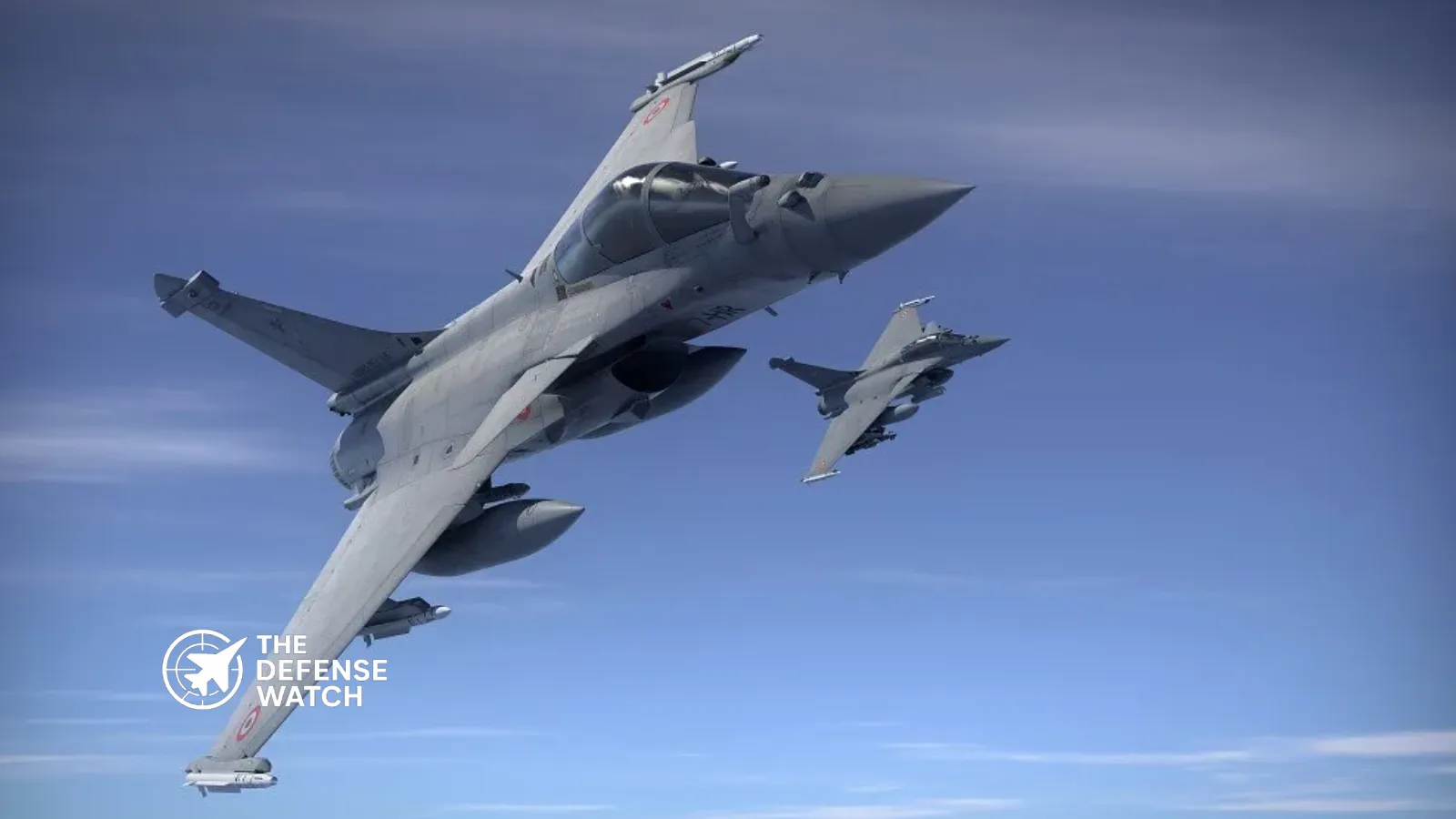
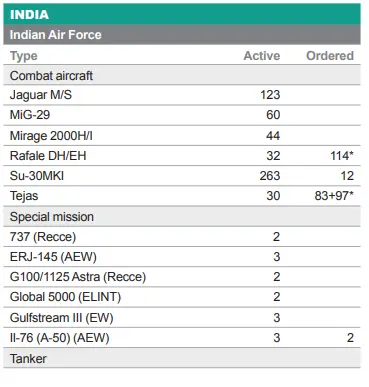
The Indian Air Force’s reported active inventory of Dassault Rafale fighters has fallen from 35 to 32 in the latest FlightGlobal World Air Forces directory. However, the revised estimate has drawn scrutiny in India, where Ministry of Defence officials have questioned the figures and said they were not supplied by the Indian Air Force.
The updated assessment has renewed attention on India’s aircraft losses during the May 2025 conflict with Pakistan. Islamabad claimed that it shot down four Rafale fighters during the confrontation, but the latest inventory estimate does not establish that those aircraft were destroyed or that the change resulted from combat losses.
The distinction is important. FlightGlobal’s directory provides an independent assessment of military aircraft inventories, not an official Indian government record of aircraft losses.
What the new Rafale inventory actually shows
The latest 2027 edition of FlightGlobal’s World Air Forces directory lists 32 Rafale DH/EH fighters in the Indian Air Force’s active inventory.
That compares with 35 aircraft in the previous edition, published in November 2025. India originally purchased 36 Rafales from France under a government-to-government agreement signed in September 2016.
The Indian fleet consists of:
- 28 single-seat Rafale EH fighters.
- Eight two-seat Rafale DH fighters.
- 36 aircraft originally procured from France.
- 35 aircraft listed as active in FlightGlobal’s previous directory.
- 32 aircraft listed as active in its latest assessment.
The latest change is therefore a reduction of three aircraft from FlightGlobal’s previous active inventory estimate, not four.
This distinction matters because the original procurement total and the directory’s active fleet count are different measurements. The difference between 36 purchased aircraft and 32 currently listed as active cannot automatically be interpreted as four combat losses.
FlightGlobal’s fleet directory is prepared using Cirium aviation intelligence data. The company tracks military aircraft using publicly available information, including aircraft sightings, flight-tracking information and defense reporting.
India questions the accuracy of the assessment
The latest figure has also encountered resistance from India’s Ministry of Defence.
According to reporting by The Hindu on November 19, 2026, senior ministry officials questioned the authenticity of the assessment, saying the published figures had not originated from the ministry or the Indian Air Force.
The issue is not simply whether the number is correct. It is also how an aircraft is classified within an external fleet database.
An aircraft may remain part of an air force’s overall inventory while being temporarily unavailable for operational service because of maintenance, structural repairs, upgrades or other technical work.
Cirium’s open-source tracking methodology can also result in aircraft being removed from an active listing when their operational status cannot be established through publicly available information.
Neither the latest directory nor the publicly reported Indian response identifies the individual aircraft responsible for the three-aircraft reduction.
Consequently, the 32-aircraft figure should be treated as an external inventory assessment rather than a confirmed statement of the IAF’s operational strength.
What the May 2025 air battle established
The inventory debate is closely connected to Operation Sindoor, the military confrontation between India and Pakistan from May 7 to May 10, 2025.
Pakistan claimed that its air force shot down several Indian aircraft, including four Rafales. India rejected Islamabad’s overall loss figures but eventually acknowledged that it had suffered aircraft losses.
On May 31, 2025, Indian Chief of Defence Staff General Anil Chauhan discussed the losses in interviews with Reuters and Bloomberg.
Chauhan acknowledged that Indian aircraft had been lost during the initial phase of the fighting. He did not provide a total or identify the aircraft types. He also said the Indian military had adjusted its tactics before resuming operations.
That admission established that India suffered aircraft losses, but it did not verify Pakistan’s claim that four Rafales had been destroyed.
Additional evidence emerged from France.
In August 2025, Reuters reported that French Air Force Chief General Jérôme Bellanger had seen evidence indicating the loss of three Indian fighter aircraft, including one Rafale, one Sukhoi Su-30MKI and one Mirage 2000.
This was an important independent indication that at least one Rafale had been lost. However, it did not substantiate the four-Rafale figure claimed by Pakistan.
The two governments also continued to dispute aircraft losses during the confrontation, making precise accounting difficult.
Why an active aircraft count is not a combat-loss record
Military aircraft directories are useful for assessing force structure, but they have limitations.
An active inventory figure does not necessarily represent the total number of aircraft owned by a military service. Nor does it establish how many aircraft are immediately mission-ready.
Several factors can affect the published count:
- Combat losses: Aircraft destroyed or damaged beyond economical repair may eventually disappear from active inventory estimates.
- Depot maintenance: Aircraft undergoing lengthy maintenance may not be counted as active.
- Structural repairs: Airframes undergoing substantial repairs may temporarily disappear from operational listings.
- Modernization: Aircraft receiving upgrades may not be available for regular operations.
- Data limitations: Open-source databases may lack recent confirmation of an aircraft’s status.
Without individual aircraft records, serial numbers or official confirmation, the latest reduction cannot be attributed to a particular cause.
There is also a historical reason for caution. FlightGlobal’s previous directory recorded 35 active Indian Rafales and discussed the difficulty of verifying aircraft losses during the 2025 confrontation. Its assessment at that time classified one Rafale as lost after reviewing images reported to show wreckage.
That earlier assessment and the new reduction should not be combined into a definitive tally without further evidence.
What the figures mean for India’s airpower
The Rafale is an important component of the Indian Air Force’s modern combat aircraft fleet.
Developed by French manufacturer Dassault Aviation, the fighter is designed for air superiority, precision strike, reconnaissance and other multirole missions.
India’s original acquisition provided the IAF with 36 aircraft, including single-seat and two-seat variants. The fleet also operates alongside Su-30MKI fighters, Mirage 2000 aircraft, MiG-29s and indigenous Tejas fighters.
A reduction in the number of aircraft available for operational service could affect squadron availability, training schedules and the distribution of aircraft across operational commitments. However, the extent of any effect depends on how many aircraft are actually unavailable and for how long.
The distinction between aircraft ownership, active inventory and mission-capable availability is particularly important when assessing a relatively small fleet of advanced fighters.
The debate also comes as India pursues a much larger proposed Rafale acquisition for its air force. Any assessment of the programme’s long-term contribution to Indian airpower will depend not only on procurement numbers but also on aircraft availability, maintenance capacity, weapons integration and sustained operational support.
The latest directory alone cannot establish whether India’s Rafale fleet has suffered permanent losses beyond those already acknowledged or independently assessed.
For now, the most defensible conclusion is that FlightGlobal’s latest estimate places the active Rafale count at 32, down from 35 in its previous edition. India’s Defence Ministry has questioned the provenance of that figure, while the precise status of the aircraft not included in the latest listing remains publicly unresolved.
Enjoying our coverage?
Make The Defense Watch a preferred source on Google to see more of our geopolitical and defense insights when relevant to you.