
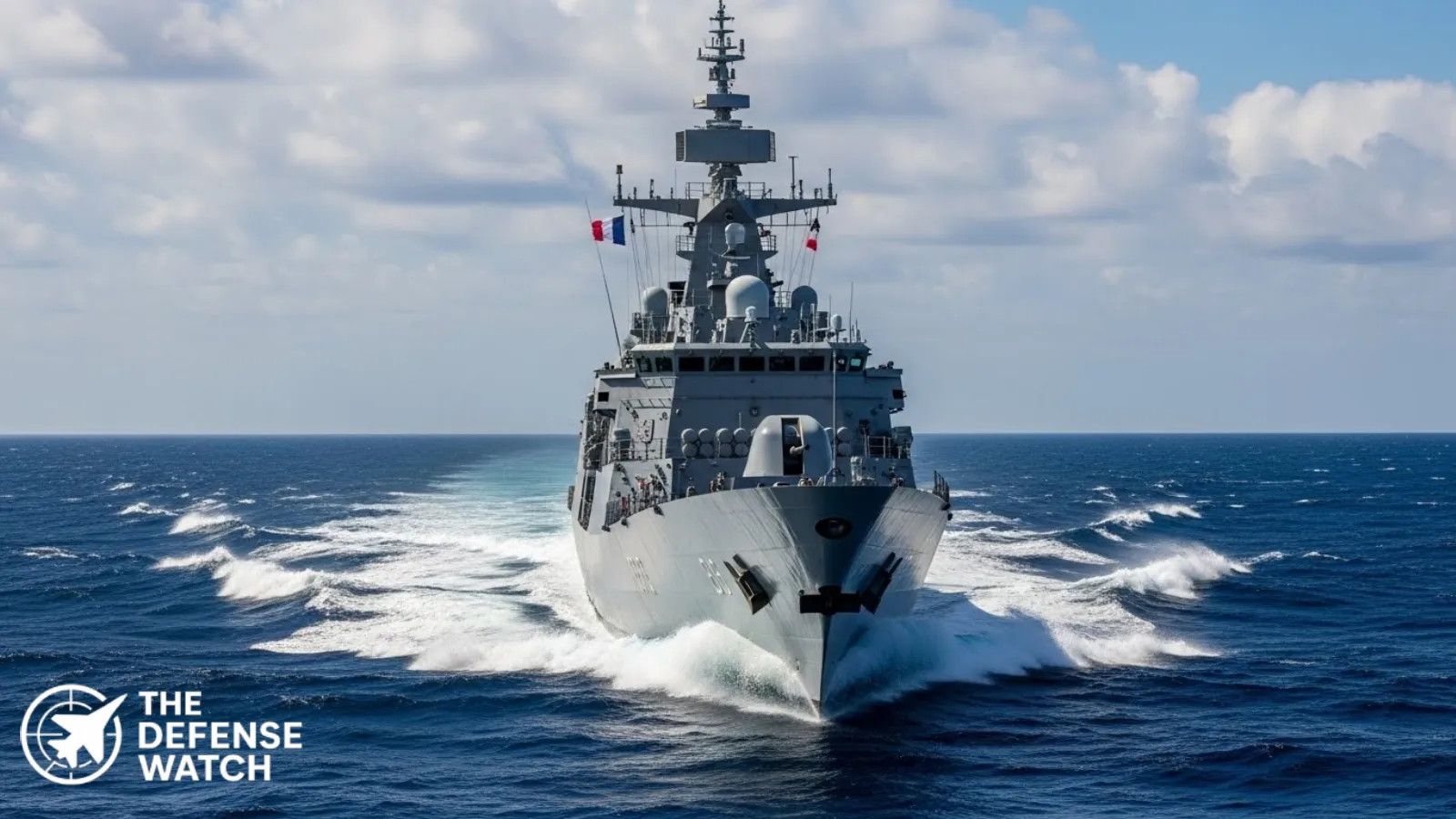
France Develops New Missile Launch System for FDI Frigates
France is developing a new missile launch system designed to significantly increase the missile load of its FDI class frigates, also known as the Belharra class. The development was disclosed in 2025 and reflects ongoing efforts by the French Navy and domestic defense industry to improve surface combatant firepower without increasing ship size.
According to available information, the new launch system could allow each FDI frigate to carry up to four times more missiles than current configurations. The effort is linked to broader French naval modernization plans and is expected to support future air defense and strike missions.
Background on the FDI Frigate Program
The FDI frigate is a next generation surface combatant developed by Naval Group for the French Navy. The program was launched to replace older La Fayette class frigates and to provide a modern, digitally designed platform optimized for high intensity naval operations.
FDI frigates are equipped with advanced sensors, including the Sea Fire active electronically scanned array radar, and are designed to perform air defense, anti surface, and anti submarine missions. Current French Navy FDI ships use vertical launch systems compatible with Aster air defense missiles.
As naval threats evolve, especially the growth of saturation missile attacks and drone swarms, navies are seeking ways to increase onboard missile capacity. This requirement has driven interest in more compact and flexible launch systems.
Details of the New Launch System
The France FDI frigate missile launch system under development focuses on increasing missile density within existing deck space. The concept involves a modular launcher capable of accommodating multiple smaller missiles within a single vertical launch cell.
This approach could allow four short to medium range missiles to be loaded where only one larger missile would normally be carried. Such configurations are already being explored by several navies worldwide as a way to improve defensive depth against massed threats.
For the FDI frigate, this would mean a substantial increase in ready to fire interceptors, particularly for air and missile defense roles. While the exact missile types have not been officially confirmed, the system is expected to support modern European naval missiles used by the French Navy.
Industrial and Program Context
The development effort is tied to Frances broader naval industrial base, with Naval Group playing a central role. Missile integration is also expected to involve European missile manufacturers already working with the French armed forces.
The France FDI frigate missile launch system is being designed to fit within the frigates existing architecture. This reduces the need for major structural changes and helps control costs. It also allows potential retrofitting on future hulls or export variants.
France has promoted the FDI design to international customers, including Greece, which has already ordered the type. A higher missile capacity could make the frigate more attractive in competitive export markets.
Operational Implications for the French Navy
Increasing missile capacity directly improves a ships ability to remain in combat longer without resupply. For air defense frigates, a larger missile load is critical when facing sustained or complex attacks.
With the new launcher, FDI frigates could provide stronger area and point defense for task groups, including aircraft carriers and amphibious ships. The system may also support layered defense concepts, combining long range and short range interceptors.
From an operational standpoint, the France FDI frigate missile launch system aligns with French naval doctrine, which emphasizes flexibility, autonomy, and high readiness across global deployments.
Expert and Policy Perspective
French defense planning documents have consistently highlighted the need to adapt naval platforms to changing threat environments. While no direct policy statement has been issued on this launcher, the development supports national objectives of maintaining technological independence and combat credibility at sea.
The move also reflects wider European trends, where navies are investing in modular systems to extend the life and relevance of existing platforms.
What Comes Next
Further technical details, including testing timelines and missile compatibility, are expected to emerge as development progresses. If successful, the new launcher could be integrated into later FDI units or offered as an upgrade option.
The France FDI frigate missile launch system may also influence future French surface combatant designs beyond the FDI class, setting a standard for higher missile density in medium sized warships.
Get real time update about this post category directly on your device, subscribe now.

6 comments
[…] missile was launched using a hot launch method from a vertical cell, a key capability for modern naval air defense. The […]
[…] of HIIs intent is to increase U.K. content in production, including launch and recovery systems for the Remus 620, along with basic vehicle assembly. Almost all repair and maintenance for U.K. […]
[…] Early design imagery shows a “cranked kite” wing and a compact footprint that may allow mobile launch and recovery system […]
[…] surface fleet expansions in decades and has drawn interest from major European shipbuilders. France’s Naval Group and Spain’s Navantia are among other contenders with adapted designs. The Swedish government […]
[…] exercise set to run from February to April 2026. The exercise engages ground, air, and naval components from France and partner nations to rehearse collective responses to complex operational scenarios across […]
[…] Maximum dynamic pressure, often referred to as max Q, occurs when aerodynamic stress on a rocket is at its peak during ascent. Demonstrating a safe abort at this stage is considered one of the most demanding tests for any crewed launch system. […]