Table of Contents
The Evolution of American Military Small Arms
The United States military’s small arms inventory represents decades of battlefield experience, technological innovation, and strategic adaptation. As of 2025, American forces deploy a carefully selected arsenal of infantry weapons designed to maintain tactical superiority across diverse combat environments. From close-quarters urban combat to extended-range engagements, these firearms form the backbone of individual soldier lethality and unit effectiveness.
Understanding the top small arms used by U.S. military personnel today provides crucial insight into American defense doctrine, procurement priorities, and the evolving nature of ground warfare. This comprehensive analysis examines the five most prevalent and strategically significant firearms currently equipping American servicemembers across all branches.
M4A1 Carbine: The Standard Bearer of American Infantry
Operational Overview and Specifications
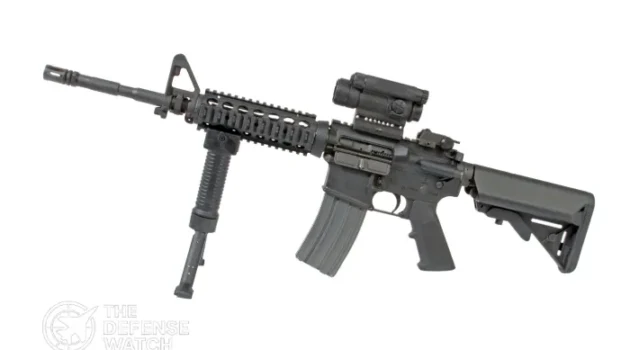
The M4A1 Carbine maintains its position as the primary individual weapon for the vast majority of U.S. military personnel. This gas-operated, magazine-fed rifle chambered in 5.56×45mm NATO represents the culmination of the AR-15/M16 platform’s evolution, incorporating lessons learned from conflicts spanning Vietnam to Afghanistan.
The M4A1 features a 14.5-inch barrel, collapsible buttstock, and fully automatic fire capability—distinguishing it from the earlier semi-automatic/three-round-burst M4 variant. With an effective range of approximately 500 meters for point targets and 600 meters for area targets, the carbine weighs just 6.36 pounds unloaded, facilitating rapid maneuverability in complex terrain.
Modernization and Accessory Integration
Current M4A1 configurations extensively utilize the Picatinny rail system, enabling soldiers to mount advanced optics, laser designators, infrared illuminators, and foregrips according to mission requirements. The integration of the M320 Grenade Launcher Module and various sound suppressors further enhances the platform’s versatility.
According to recent U.S. Army acquisition data, over 500,000 M4A1 carbines currently serve across active-duty, National Guard, and Reserve components. The weapon’s modular design philosophy has influenced global small arms development, with numerous allied nations adopting similar platforms.

Conceptual illustration Analysis: The M4A1’s dominance reflects a calculated balance between firepower, weight, and adaptability. While debates continue regarding the 5.56mm cartridge’s effectiveness at extended ranges, the platform’s proven reliability and soldier familiarity ensure its continued frontline service well into the next decade. Ongoing programs exploring 6.8mm alternatives under the Next Generation Squad Weapon initiative may eventually supplement rather than replace the ubiquitous M4A1.
M249 Squad Automatic Weapon: Sustained Firepower at the Squad Level
Tactical Role and Capabilities
The M249 Squad Automatic Weapon (SAW) provides infantry squads with crucial sustained automatic fire capability, bridging the gap between individual rifles and vehicle-mounted weapons systems. Manufactured by FN Herstal under license, this belt-fed light machine gun chambers the same 5.56×45mm NATO ammunition as the M4A1, simplifying logistics and ammunition compatibility.
Fielded since the mid-1980s, the M249 delivers effective suppressive fire out to 1,000 meters, with a cyclic rate between 650-850 rounds per minute. The weapon feeds from either disintegrating metallic belt ammunition or standard M16/M4 magazines, offering tactical flexibility during ammunition shortages or emergency situations.
Operational Modifications and Variants
Recent modifications include the M249 Paratrooper variant featuring a shortened barrel and collapsible stock for airborne operations, and the improved Product Improvement Program (PIP) version incorporating heat-resistant components and enhanced reliability mechanisms. Modern M249s typically deploy with Trijicon ACOG or Elcan SpecterDR optics, dramatically improving first-round hit probability.
Analysis: Despite its weight—approximately 17 pounds unloaded—the M249 remains indispensable for squad-level tactics. Its ability to lay down suppressive fire while riflemen maneuver represents fundamental infantry doctrine. While the Army’s Next Generation Squad Weapon program includes the XM250 automatic rifle as a potential replacement, the M249’s extensive deployment and proven combat record ensure its continued relevance throughout this decade.
M240 Medium Machine Gun: The Reliable Workhorse
Platform Characteristics and Deployment
The M240 medium machine gun family represents the U.S. military’s primary 7.62×51mm NATO belt-fed weapon system, serving across infantry, armor, and aviation units. Originally adopted by the U.S. Marine Corps in the 1980s and subsequently by the Army, this FN MAG derivative offers superior range and penetration compared to 5.56mm weapons.
The standard M240B infantry variant weighs 27.6 pounds and delivers effective fire to 1,800 meters, with maximum effective range exceeding 3,000 meters with tripod-mounted configurations. Its gas-operated, open-bolt design ensures exceptional reliability even under sustained firing conditions that would induce failures in lesser weapons systems.
Variant Applications Across Military Branches
Multiple M240 variants serve specialized roles: the M240L features titanium components reducing weight by approximately 5.5 pounds for dismounted operations; the M240H serves as the standard coaxial machine gun for the M1 Abrams tank; and the M240D equips helicopters and other aircraft. This versatility consolidates training requirements and spare parts logistics across platforms.
According to Department of Defense procurement reports, the U.S. military maintains an inventory exceeding 50,000 M240 machine guns across all variants. The weapon’s continued production and modernization reflect its strategic value in providing squad and platoon-level indirect fire support.
Analysis: The M240’s 7.62mm NATO chambering addresses the range and penetration limitations inherent to 5.56mm platforms, particularly against hardened targets and at extended distances. Its reputation for reliability under adverse conditions—from Arctic cold to desert heat—has earned soldier confidence across multiple generations of servicemembers. While heavier than squad automatic weapons, the M240’s superior ballistics justify its tactical employment.
M110A1 Compact Semi-Automatic Sniper System: Precision at Extended Ranges
Operational Requirements and Capabilities
The M110A1 Compact Semi-Automatic Sniper System (CSASS) addresses the U.S. Army’s requirement for a lightweight, accurate, semi-automatic rifle capable of engaging targets between 300-800 meters—filling the gap between standard infantry rifles and dedicated long-range sniper systems. Adopted in 2019, this Knights Armament Company platform chambers 7.62×51mm NATO ammunition and features a 16-inch barrel with integrated sound suppressor.
Weighing approximately 15 pounds with loaded magazine and optic, the M110A1 provides designated marksmen with rapid follow-up shot capability unavailable from bolt-action platforms. The rifle’s accuracy guarantees sub-MOA (minute of angle) precision, typically grouping within 1 inch at 100 meters with quality ammunition.
Technological Integration and Operational Advantages
Standard configuration includes a Leupold Mark 5HD 3.6-18×44mm riflescope, backup iron sights, and Harris bipod. The weapon’s M-LOK handguard accommodates mission-specific accessories including night vision devices, laser rangefinders, and ballistic calculators. The integrated suppressor significantly reduces acoustic signature and muzzle flash, enhancing shooter concealment.
The M110A1 replaces the earlier M110 Semi-Automatic Sniper System, offering reduced weight, improved ergonomics, and enhanced modularity. According to U.S. Army procurement documentation, the service has acquired over 5,000 M110A1 systems for infantry and special operations units.
Analysis: The M110A1 exemplifies modern precision rifle philosophy—balancing accuracy, weight, and rapid engagement capability. Its semi-automatic action enables designated marksmen to maintain observation through the scope during recoil cycle, facilitating immediate follow-up shots or target transition. This capability proves particularly valuable in asymmetric conflict environments where threats emerge rapidly at varying distances. The weapon’s suppressor integration represents a broader trend toward sound signature reduction across military small arms.
M17/M18 Modular Handgun System: Sidearm Modernization
Platform Selection and Capabilities
The M17 and M18 Modular Handgun System (MHS), manufactured by SIG Sauer, replaced the venerable M9 Beretta as the U.S. military’s standard sidearm beginning in 2017. This striker-fired, semi-automatic pistol chambers 9×19mm Parabellum and features a modular grip design accommodating various hand sizes without tools.
The full-size M17 features a 4.7-inch barrel and 17+1 round capacity, while the compact M18 reduces barrel length to 3.9 inches and magazine capacity to 21+1 rounds with extended magazines. Both variants incorporate ambidextrous controls, loaded chamber indicators, and accessory rails for weapon lights or lasers.
Operational Deployment and Performance
The MHS contract, valued at approximately $580 million, calls for delivery of over 280,000 pistols across all military branches. The weapon system includes day/night sights, various magazine capacities, and the option for sound suppressor attachment. Enhanced accuracy and ergonomics represent significant improvements over the M9, with most shooters achieving tighter groupings during qualification courses.
According to U.S. Army Combat Capabilities Development Command research, the M17/M18 demonstrates improved reliability in extreme temperature and environmental conditions. The pistol’s striker-fired mechanism eliminates the M9’s double-action/single-action trigger complexity, simplifying training and improving consistency.
Analysis: While handguns represent secondary weapons for most servicemembers, their importance for personal protection, close-quarters combat, and specialized units cannot be understated. The M17/M18 adoption demonstrates military commitment to modernizing even supplementary weapons systems. The modular design philosophy—allowing frame size customization, optic mounting, and suppressor integration—reflects contemporary firearms engineering trends. For military police, aircrew, and special operations personnel relying primarily on pistols, these improvements translate directly to operational effectiveness.
Emerging Trends and Future Developments
Next Generation Squad Weapon Program
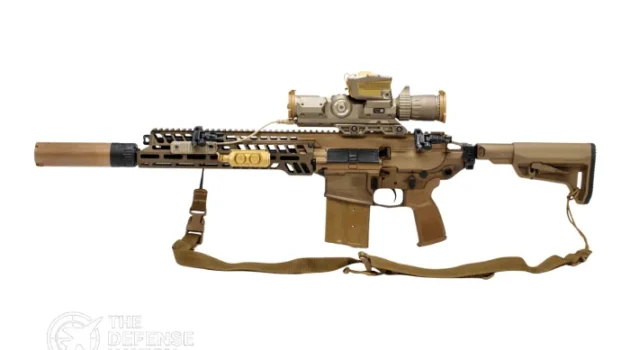
The U.S. Army’s ambitious Next Generation Squad Weapon (NGSW) program seeks to introduce revolutionary small arms technology through the XM7 rifle and XM250 automatic rifle, both chambered in 6.8×51mm. These weapons promise significantly increased effective range and penetration capability against advanced body armor. However, full-scale deployment remains years away, with fielding prioritized to close-combat forces.
Ammunition Technology Advances
Concurrent with platform development, the military invests heavily in ammunition innovation. The 6.8mm common cartridge features hybrid-case technology combining steel case bases with brass bodies, enabling higher chamber pressures and velocity. Additionally, smart ammunition incorporating guidance systems and programmable airburst capability enters developmental testing for specialized applications.
Modular and Adaptable Systems
Contemporary military small arms increasingly emphasize modularity—allowing rapid configuration changes for diverse mission sets without requiring entirely different weapons. This philosophy manifests in adjustable stocks, quick-change barrel systems, and universal accessory mounting interfaces. Future platforms will likely integrate electronic components including ballistic calculators, environmental sensors, and network connectivity.
Conclusion: Maintaining the Edge in Infantry Weapons
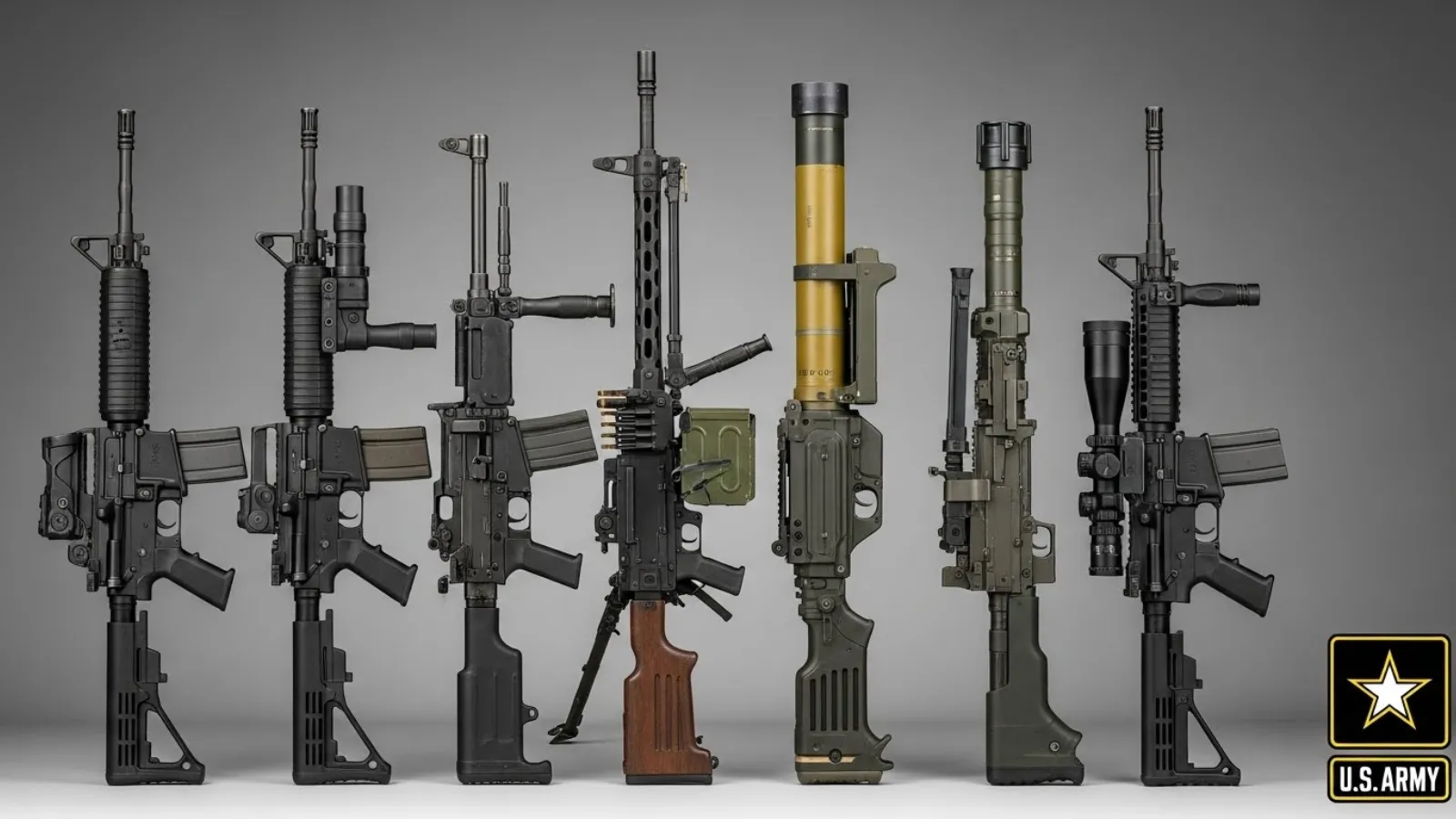
The top 5 small arms used by U.S. military forces reflect careful prioritization of reliability, effectiveness, and logistical sustainability. From the ubiquitous M4A1 Carbine to the precision-focused M110A1, each system addresses specific tactical requirements while maintaining interoperability with broader weapons ecosystems.
As near-peer military competition intensifies and asymmetric threats evolve, American small arms development continues adapting. The integration of advanced optics, suppressor technology, and next-generation ammunition ensures U.S. servicemembers maintain tactical advantages in individual and small-unit engagements.
While technology progresses, fundamental infantry principles—accurate fire, rapid maneuverability, and sustained combat effectiveness—remain paramount. These five weapons systems exemplify how traditional firearms platforms evolve through incremental improvement, incorporating cutting-edge materials, manufacturing techniques, and digital enhancements while preserving the proven mechanical principles that save lives in combat.
The coming decade will witness gradual introduction of revolutionary technologies like the NGSW program alongside continued refinement of existing platforms. This balanced approach—honoring proven designs while pursuing innovation—characterizes American military small arms philosophy and sustains the competitive edge essential for national security.
FAQs
What is the most widely used small arm in the U.S. military?The M4A1 Carbine is the most prevalent individual weapon across all U.S. military branches, with over 500,000 units currently in service. It serves as the standard rifle for infantry, support personnel, and most combat roles.
Why does the U.S. military use different calibers for different weapons?Different calibers serve specific tactical purposes: 5.56mm offers lightweight ammunition for rifles, 7.62mm provides increased range and penetration for machine guns, and 9mm delivers sufficient stopping power with manageable recoil for pistols. This caliber diversity optimizes each weapon system for its intended role.
When will the Next Generation Squad Weapon replace current rifles?The XM7 rifle and XM250 automatic rifle are scheduled for initial fielding to close-combat forces starting in 2024-2025, with broader deployment extending through the late 2020s. The M4A1 will likely remain in service alongside newer systems for years due to inventory size and budget constraints.
How does U.S. military small arms technology compare to peer adversaries?U.S. small arms emphasize modularity, accessory integration, and soldier ergonomics alongside basic ballistic performance. While Russian and Chinese platforms offer comparable raw effectiveness, American weapons typically demonstrate superior reliability, accuracy, and adaptability through advanced optics and attachments.
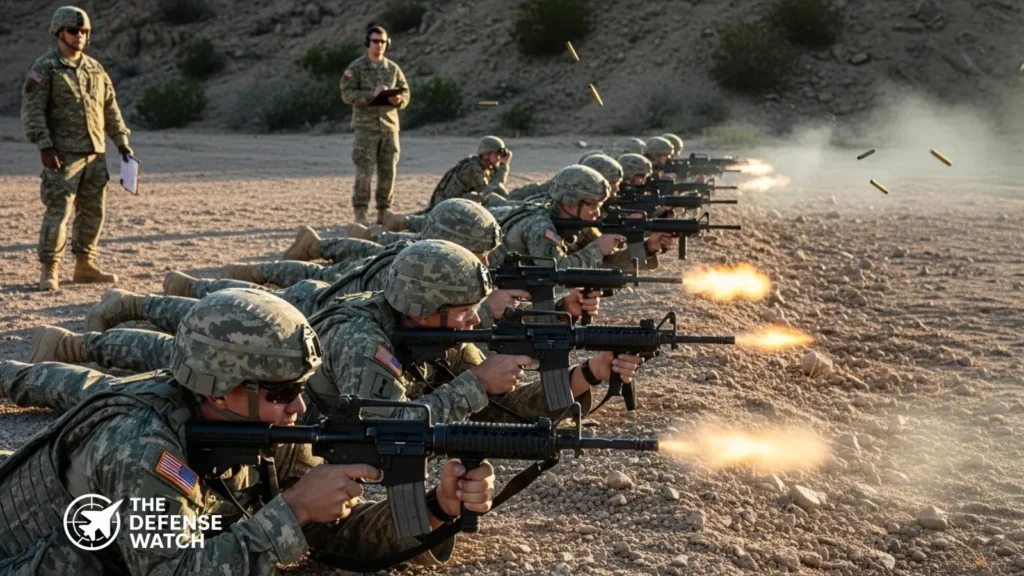
What training do U.S. military personnel receive on these weapons systems?All servicemembers receive basic rifle marksmanship training, typically on the M4A1 or M16A4. Specialized weapons like the M249, M240, M110A1, and M17/M18 require additional qualification courses specific to each system. Special operations forces receive extensive advanced training encompassing all platforms.
Get real time update about this post category directly on your device, subscribe now.