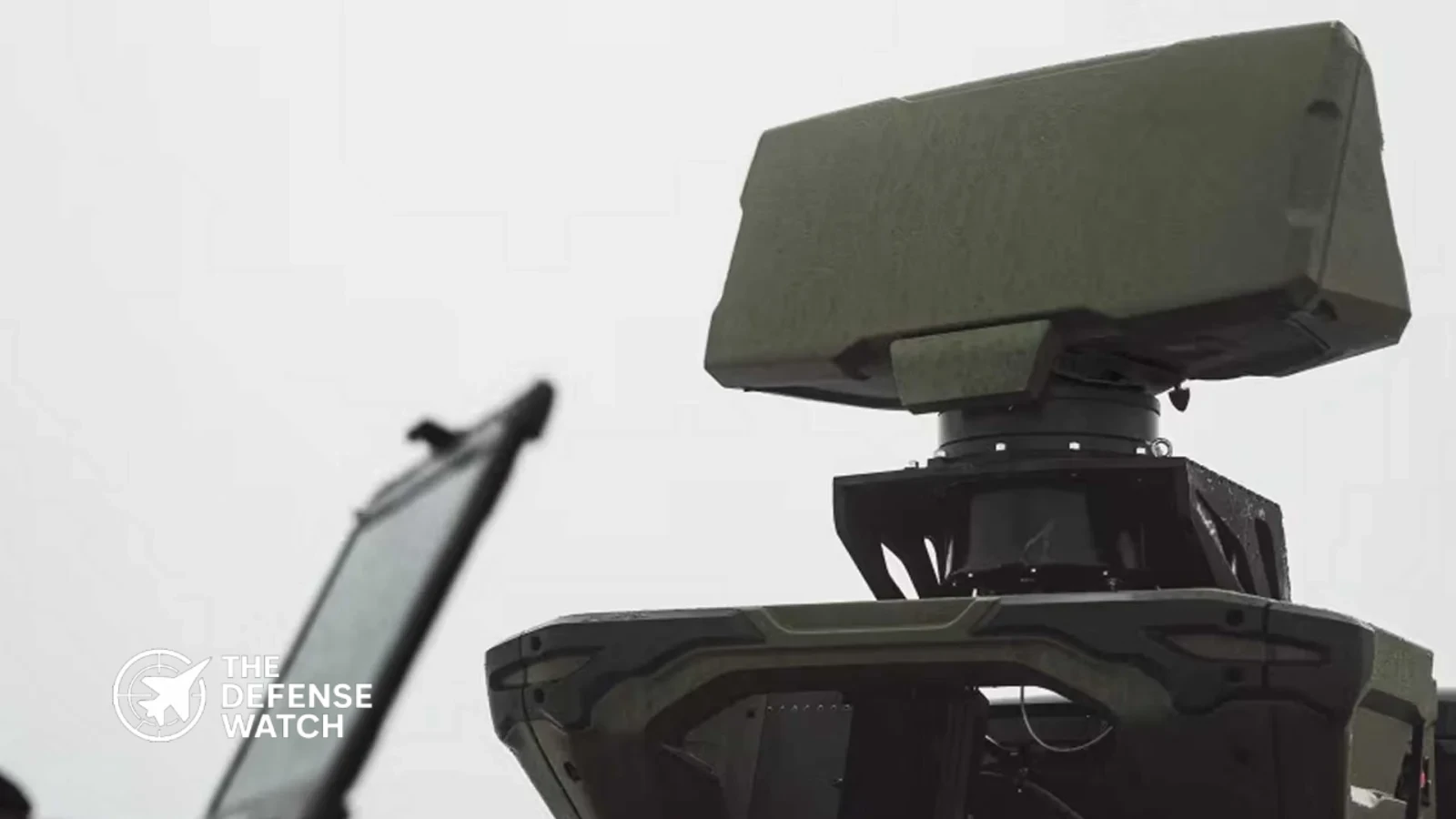
Saab Giraffe 1X Radar Reaches RAF Counter UAS Operations
Saab has delivered Giraffe 1X radar systems to the Royal Air Force under an urgent operational requirement, adding a lightweight 3D surveillance capability to Britain’s counter uncrewed aerial systems architecture. Saab UK confirmed the delivery on September 2, saying the systems are intended to strengthen protection against the growing UAS threat.
- Saab Giraffe 1X Radar Reaches RAF Counter UAS Operations
- Takeaways
- What The Giraffe 1X Brings To The RAF
- Detection Is Only One Part Of The Counter Drone Chain
- Mobility Supports Dispersed Base Defense
- UK Production Base Supports Rapid Delivery
- Counter UAS Demand Is Driving A Broader UK Response
- Why The RAF Requirement Matters
Takeaways
Saab has delivered Giraffe 1X radars to the Royal Air Force to strengthen mobile counter UAS surveillance and protection for deployed British and coalition forces.
The number of radars delivered and the value of the specific RAF requirement have not been disclosed. Saab said the equipment will support counter drone operations involving British and coalition forces, including deployed locations in the Middle East.
The delivery comes as the United Kingdom expands investment in air, drone and missile defense. The British government has allocated £790 million over four years for protection of the homeland and overseas bases against air, drone and missile threats, including new radars and sensors and expanded counter drone capabilities.
What The Giraffe 1X Brings To The RAF
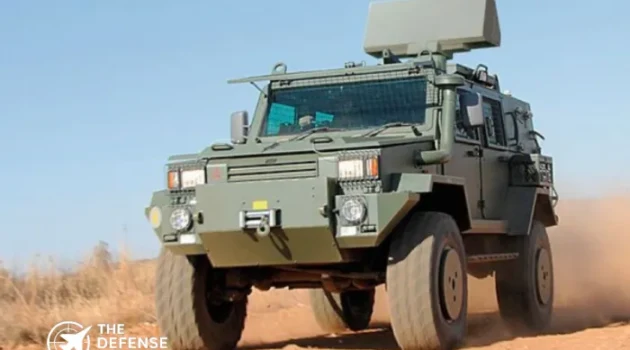
Giraffe 1X is a compact, multifunction 3D radar designed for short range air surveillance, ground based air defense and counter UAS missions.
According to Saab, the complete radar system weighs less than 150 kilograms, including a topside weighing about 100 kilograms. Its low weight and small footprint allow it to be installed on mobile platforms, fixed structures or deployable configurations.
| Capability | Giraffe 1X |
|---|---|
| Radar type | Compact 3D radar |
| Frequency | X band |
| Total system weight | Less than 150 kg |
| Coverage | 360 degrees |
| Search update | Complete search volume every second |
| Target types | Aircraft, helicopters, missiles, rockets, artillery, mortars and UAVs |
| Small UAV detection | UAV lighter than a milk carton at up to 4 km, according to Saab |
| Deployment | Mobile, fixed or deployable |
| Key functions | Air surveillance, GBAD target acquisition, C RAM sense and warn, counter UAS |
Saab’s product documentation states that Giraffe 1X can detect fixed wing and rotary wing aircraft, fast missiles, rockets, artillery and mortar threats, as well as small UAVs operating in cluttered environments.
The radar’s Drone Tracker capability is designed to detect and track small and mini UAVs while distinguishing them from birds. This is particularly relevant to airbase and site defense, where false alarms can consume operator attention and complicate decisions about whether an airborne contact represents a genuine threat.
Detection Is Only One Part Of The Counter Drone Chain
The RAF’s acquisition is significant because Giraffe 1X is not intended to defeat drones by itself.
Its primary function is to establish an air picture, detect targets, maintain tracks and provide information to command and control systems and external weapons or countermeasures. This allows the sensor to form the detection layer of a wider counter UAS system.
That distinction matters because effective counter drone defense increasingly depends on matching the response to the threat. A small UAV may be addressed through electronic warfare, a gun system, a short range missile or another effector, depending on its characteristics, location and operational circumstances.
A radar that can feed accurate tracks into different parts of the engagement network therefore gives commanders more options than a sensor tied to a single weapon.
Giraffe 1X can also perform several surveillance functions at the same time. Saab says it can conduct air surveillance, ground based air defense target acquisition and rocket, artillery and mortar sense and warn functions without performance degradation.
Mobility Supports Dispersed Base Defense
One of the system’s most important characteristics for deployed operations is mobility.
Giraffe 1X supports Saab’s Search On The Move capability, using an inertial navigation system to stabilize the sensor while a platform is moving. This allows the radar to maintain existing tracks and generate new ones during movement or redeployment.
For the RAF Regiment, this can support a more distributed approach to force protection. Instead of depending exclusively on a large fixed radar installation, lightweight sensors can be positioned around individual facilities, temporary operating locations or other vulnerable areas.
The system can also operate as a primary radar for very short range air defense or as a gap filler alongside larger ground based air defense sensors. This flexibility is useful when defended areas are dispersed or when low altitude threats can exploit gaps between larger surveillance systems.
UK Production Base Supports Rapid Delivery
The RAF delivery also highlights Saab’s expanding British industrial footprint.
Saab UK completed its 100th Giraffe 1X radar at its Fareham facility in May 2026. The company has also established integration and verification infrastructure at the site for testing, software integration and customer acceptance.
In April, Saab announced a separate approximately £24 million order from the UK Ministry of Defence for Giraffe 1X systems. That procurement was funded through the UK administered NATO Security Assistance and Training for Ukraine Trust Fund and was intended to support weapon locating, air surveillance and counter UAS requirements.
The April procurement should not be confused with the latest RAF urgent operational requirement. Saab has not disclosed the quantity or contract value associated with the September delivery.
The existing UK manufacturing and support infrastructure nevertheless provides an established industrial base for the system. That can be important when military users need additional sensors quickly rather than waiting for a new production and integration cycle.
Counter UAS Demand Is Driving A Broader UK Response
The Giraffe 1X delivery is part of a wider British effort to adapt air defense to the changing economics of drone warfare.
In July, the Ministry of Defence awarded £3.16 million to three companies developing low cost interceptors for drones and other airborne threats. The program forms part of a five nation European effort focused on lower cost air defense effectors and autonomous systems.
The government also launched Project PANOPTES on September 2, seeking an integrated counter UAS force protection capability. The initiative is intended to move promising technologies from development toward deployment and includes requirements for open architectures, modularity, autonomous operation and integration with future ground based air defense systems.
These programs address different parts of the same operational problem. Giraffe 1X strengthens the sensing and tracking layer, while low cost effectors and other counter UAS technologies address the response side.
Why The RAF Requirement Matters
The immediate value of Giraffe 1X is its ability to put a relatively small sensor into locations where a larger air defense radar may not be practical.
Its combination of low weight, 360 degree coverage, rapid search updates, small target detection and network connectivity makes it suited to the short range end of a layered defense architecture. Saab says the radar can detect a UAV lighter than a milk carton at a distance of 4 kilometers, illustrating the system’s focus on very small airborne targets.
The operational challenge, however, does not end with detection. Small drones can operate close to the ground, blend into clutter and appear in large numbers. Counter UAS networks therefore need reliable sensing, rapid classification, resilient communications and an appropriate mix of electronic and kinetic responses.
Giraffe 1X addresses the sensor portion of that problem. Its ability to work with external command and control and weapon systems allows it to contribute to a broader defensive network rather than requiring the RAF to build the entire counter drone architecture around one radar or one interceptor.
For the United Kingdom, the latest delivery also shows how counter UAS requirements are moving from experimentation toward operational deployment. The RAF already has experience with counter drone systems, and the government’s current investment plans indicate that protection against drones will remain a continuing requirement for both deployed forces and fixed sites.
The Giraffe 1X delivery therefore represents a focused addition to the RAF’s force protection toolkit, giving deployed units a compact sensor designed to detect and track the increasingly diverse range of airborne threats they may face.