
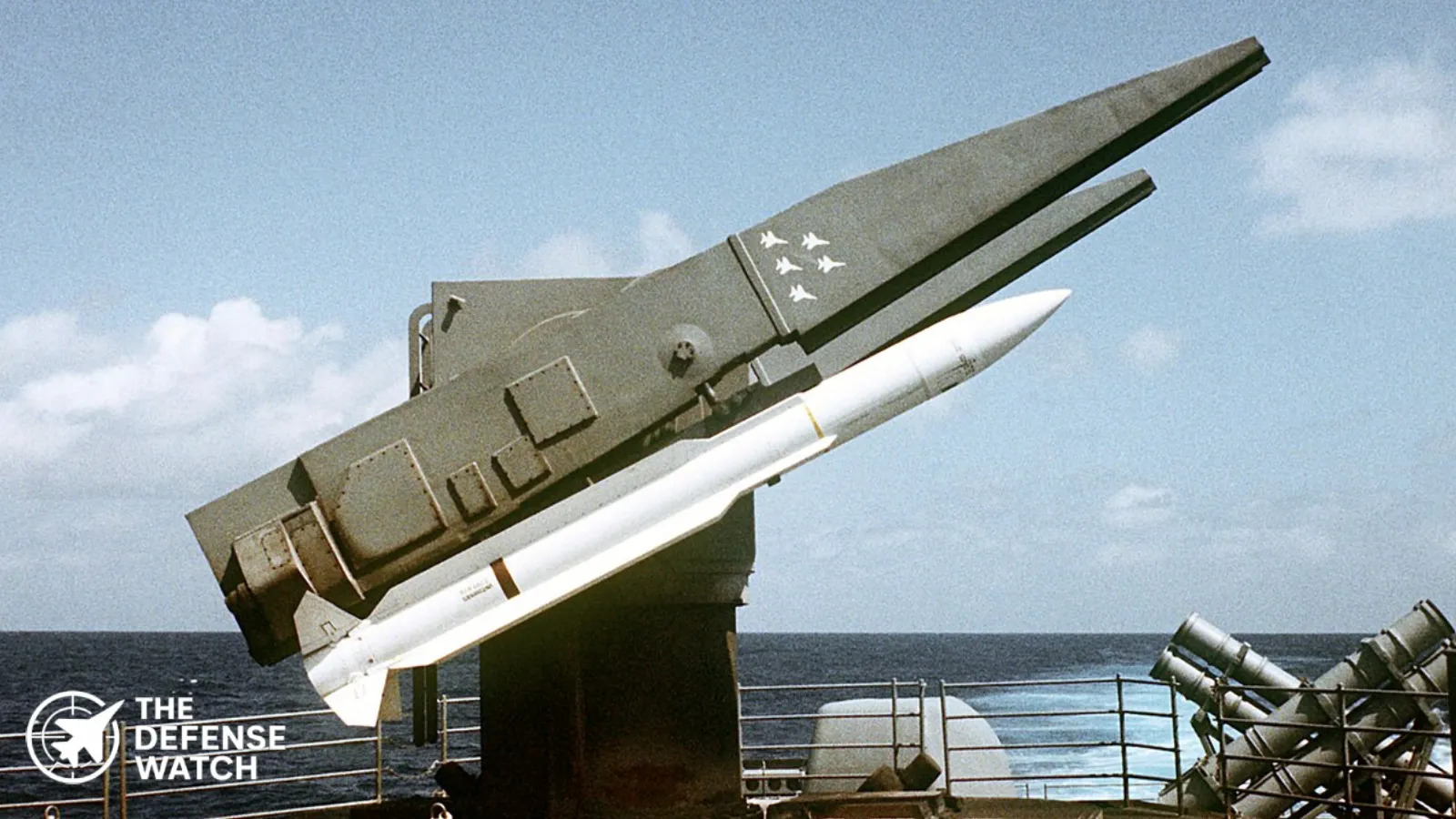
The U.S. Navy has awarded Raytheon a $58.99 million contract modification to provide engineering and technical support for Standard Missile-2 and Standard Missile-6 programs, reinforcing ongoing missile defense cooperation with key allied navies.
The award supports operational readiness and long-term sustainment of the widely deployed SM-2 and SM-6 missile families through the Foreign Military Sales process.
Contract Details and Scope
The cost-plus-fixed-fee modification was issued under an existing contract and exercises options covering continued engineering, logistics, and technical assistance for the SM-2 and SM-6 missile programs. Work will be carried out in Tucson, Arizona, and is scheduled for completion by March 2028.
Funding for the effort comes from a mix of U.S. Navy research, development, test, and evaluation accounts and Foreign Military Sales allocations. Fiscal 2026 Navy RDT and E funding accounts for half of the obligated amount, while the remaining funds are provided by participating partner nations.
The contract supports Foreign Military Sales requirements for Australia, Chile, Denmark, and South Korea. Each of these countries operates or plans to operate SM-2 or SM-6 missiles as part of their naval air defense and integrated air and missile defense architectures.
Importance of SM-2 and SM-6 Support
The SM-2 and SM-6 missiles remain central to U.S. and allied naval air defense. SM-2 variants are widely used for fleet area air defense, while SM-6 offers extended-range and multi-mission capability, including air defense and limited ballistic missile defense roles.
Engineering and technical support contracts such as this one ensure configuration control, software updates, system integration support, and sustainment planning. These services are essential for maintaining interoperability across allied fleets that operate U.S.-designed combat systems and missiles.
For Foreign Military Sales customers, U.S.-based technical support also helps align upgrades and modifications with U.S. Navy standards, reducing lifecycle risk and improving availability during deployments and exercises.
Allied Participation and Cost Sharing
Under the current award, South Korea accounts for 25 percent of the Foreign Military Sales funding, followed by Chile and Denmark at 10 percent each, and Australia at 5 percent. These allocations reflect each customer’s scope of participation and support requirements within the broader missile support framework.
The funding obligated at award will not expire at the end of the current fiscal year, allowing program managers to plan multi-year engineering activities without disruption.
Contracting Authority and Oversight
The contracting activity for the award is Naval Sea Systems Command, based in Washington, D.C. NAVSEA oversees development, acquisition, and sustainment of U.S. Navy surface and undersea systems, including missile programs used across the fleet.
Raytheon, a long-standing supplier of the Standard Missile family, continues to serve as a primary provider of missile engineering, modernization, and sustainment services for the U.S. Navy and partner nations.
Broader Context
The award reflects continued demand among U.S. allies for advanced naval air and missile defense capabilities amid rising regional security challenges. By extending engineering and technical support for SM-2 and SM-6 systems, the U.S. Navy and Raytheon aim to ensure long-term performance, reliability, and interoperability across allied naval forces.
Such contracts also reinforce the role of Foreign Military Sales as a tool for sustaining defense industrial ties and operational alignment between the United States and partner nations.
Get real time update about this post category directly on your device, subscribe now.
