
Table of Contents
U.S. Deploys Game-Changing Hypersonic Capability
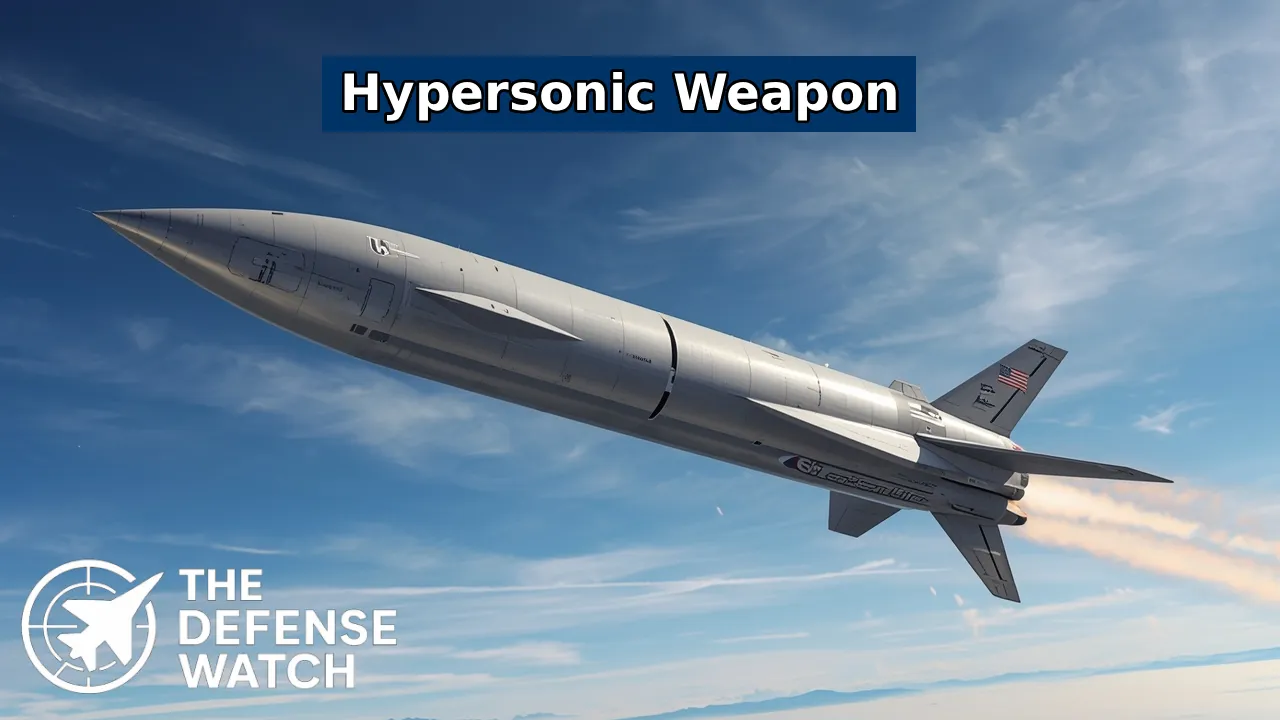
The U.S. military is positioned to field its first operational long-range hypersonic weapon by the end of 2025, marking a pivotal shift in American strike capabilities and strategic deterrence. The Army’s Long-Range Hypersonic Weapon (LRHW), formally designated Dark Eagle in April 2025, represents the nation’s response to adversarial hypersonic threats and anti-access/area denial systems deployed by near-peer competitors.
The LRHW system enables rapid strikes against time-sensitive targets at hypersonic speeds over distances exceeding 1,725 miles, fundamentally altering the calculus of modern warfare. With successful end-to-end flight tests completed in 2024 and continued validation throughout 2025, the U.S. is accelerating deployment of a weapon system that military leaders describe as having unmatched responsiveness and survivability.
The deployment comes after nearly six years of intensive development, overcoming significant technical challenges inherent to sustaining flight at extreme velocities. The system consists of ground support equipment including one battery operations center, four transporter erector launchers, and up to eight All-Up Rounds plus Canister, providing mobile, rapidly deployable strike capability across multiple theaters.
How Fast Is a Hypersonic Missile?
Understanding hypersonic speed is fundamental to grasping the strategic advantage these weapons provide. Hypersonic weapons are defined as systems capable of traveling at speeds above Mach 5, which equals five times the speed of sound. At sea level, this translates to velocities exceeding 3,836 miles per hour, or approximately one mile per second.
The LRHW travels at speeds in excess of 3,800 miles per hour and can reach the top of Earth’s atmosphere, remaining beyond the range of current air and missile defense systems until ready to strike. This speed advantage compresses decision timelines for adversaries and enables engagement of high-value targets before effective countermeasures can be deployed.
The physics of hypersonic flight presents unique engineering challenges. At these velocities, missiles must contend with thermal effects throughout most of their flight, with sustained temperatures reaching as high as 3,000 degrees Fahrenheit. Unlike ballistic missiles that briefly experience similar conditions during reentry, hypersonic weapons maintain these extreme speeds while maneuvering within the atmosphere.
Speed Variations Across Hypersonic Systems
Not all hypersonic weapons operate at identical velocities. The LRHW’s Common Hypersonic Glide Body can achieve speeds significantly higher than the Mach 5 threshold. The Dark Eagle missile is designed to reach Mach 17 speeds with a 1,700-mile operational range, though operational parameters may vary based on mission requirements and flight profiles.
By comparison, other hypersonic systems demonstrate different speed characteristics. Russian and Chinese programs have claimed capabilities ranging from Mach 5 to Mach 20, though independent verification of these claims remains limited. The sustained atmospheric flight at these velocities represents what distinguishes modern hypersonic weapons from traditional ballistic missiles.
American Hypersonic Missiles: LRHW Architecture and Technology
The U.S. long-range hypersonic weapon employs a boost-glide configuration that maximizes range while maintaining maneuverability throughout its flight envelope. The weapon consists of a large two-stage rocket booster carrying the unpowered Common-Hypersonic Glide Body in a nose cone. Once the booster reaches significant altitude and speed, it releases the glide body, which descends toward its target at hypersonic velocities.
The Common Hypersonic Glide Body represents a joint development effort between the Army and Navy. Dynetics, a subsidiary of Leidos, produces C-HGB prototypes, while Lockheed Martin builds the booster and assembles the complete missile system and launch equipment. This collaborative approach ensures commonality across service branches, with the Navy’s Conventional Prompt Strike program utilizing the same glide body for ship and submarine launches.
Technical Capabilities and Performance
The LRHW’s design traces its lineage to advanced aerodynamic research conducted over decades. The C-HGB is based on the Alternate Re-Entry System, which was tested in the early 2010s as part of the Army’s Advanced Hypersonic Weapon program and itself derived from the Sandia Winged Energetic Reentry Vehicle Experiment developed in the 1980s.
Testing milestones demonstrate increasing maturity. The C-HGB has been successfully tested in October 2017, March 2020, June 28, 2024, and December 12, 2024. The December 2024 test marked a significant achievement, representing the first live-fire event using a complete Battery Operations Center and Transporter Erector Launcher configuration.
The October 2017 test saw a missile capable of fitting in an Ohio-class submarine launch tube fly over 2,000 nautical miles from Hawaii to the Marshall Islands at hypersonic speeds, validating both range and speed parameters critical to operational deployment.
Deployment Configuration
The LRHW is a road-mobile and air-transportable weapon system that communicates with Army command and control networks via the Advanced Field Artillery Tactical Data System. This mobility ensures the system can be rapidly repositioned to respond to emerging threats or operational requirements.
The first battery, assigned to the 5th Battalion, 3rd Field Artillery Regiment of the 1st Multi-Domain Task Force at Joint Base Lewis-McChord, Washington, received initial hardware in October 2021. Live missiles are scheduled for delivery by the end of fiscal year 2025, with additional batteries planned through fiscal year 2026.
Strategic Importance of U.S. Hypersonic Missiles
The development and deployment of American hypersonic missiles addresses critical gaps in U.S. power projection capabilities. LRHW provides combatant commanders with diverse capabilities for battlefield dominance and addresses the critical need for U.S. hypersonic capabilities to effectively engage high-value targets and disrupt adversary responses.
Countering Anti-Access/Area Denial Systems
China and Russia have invested heavily in layered air defense networks and long-range strike systems designed to keep U.S. forces at bay. The LRHW system provides the Army a strategic attack weapon system to defeat Anti-Access/Area Denial capabilities, suppress adversary long-range fires, and engage other high payoff/time critical targets.
Traditional subsonic cruise missiles face increasing vulnerability to modern integrated air defense systems. The combination of hypersonic speed, maneuverability, and depressed trajectory flight profiles makes the LRHW exponentially more difficult to detect and intercept. The responsiveness and survivability of hypersonic weapons is unmatched by traditional ballistic capabilities for precision targeting, especially in anti-access/area denial environments.
Deterrence and Strategic Stability
Hypersonic weapons contribute to strategic deterrence by holding adversary high-value assets at risk across extended ranges. The ability to strike critical nodes within minutes—including command centers, naval formations, air defense sites, and strategic infrastructure—complicates adversary planning and potentially deters aggression.
The weapon’s strategic value extends beyond purely military targets. In conflict scenarios, the LRHW could engage time-sensitive targets that emerge during operations, providing commanders with responsive strike options that don’t require extended mission planning or large force packages.
Regional Deployments and Allied Assurance
In July 2025, the U.S. Army conducted its first overseas deployment of the LRHW system, participating in Exercise Talisman Sabre 25 in Australia. This demonstration showcased the system’s strategic mobility and America’s commitment to regional security partnerships in the Indo-Pacific.
The deployment signals U.S. capability to rapidly project advanced strike capabilities to allied nations, enhancing deterrence against potential adversaries. It also validates the system’s air-transportability and operational readiness in deployed environments, critical attributes for a weapon system designed for global contingencies.
Hypersonic Missile Defense Challenges
As the U.S. advances offensive hypersonic capabilities, adversaries are simultaneously developing similar systems. Russia reportedly fielded its first hypersonic weapons in December 2019, while China likely fielded hypersonic weapons as early as 2020. This proliferation drives urgent requirements for defensive systems capable of detecting, tracking, and intercepting hypersonic threats.
Detection and Tracking Limitations
The maneuverability and low flight altitude of hypersonic weapons challenge existing detection and defense systems, with most terrestrial-based radars unable to detect hypersonic weapons until late in their flight due to line-of-sight limitations. This compressed timeline leaves minimal opportunity for defensive engagement.
Traditional satellite-based infrared sensors, optimized for detecting ballistic missile launches, struggle with hypersonic threats. Hypersonic targets are 10 to 20 times dimmer than what the U.S. normally tracks by satellites in geostationary orbit, requiring new sensor architectures and tracking methodologies.
Space-Based Sensor Development
The Department of Defense is investing in multiple space-based tracking systems to address hypersonic detection challenges. The Space Development Agency’s Proliferated Warfighter Space Architecture includes tracking and transport layers designed to detect and track hypersonic threats.
The Missile Defense Agency’s Hypersonic and Ballistic Tracking Space Sensor, developed in collaboration with SDA, provides more sensitive but limited Medium Field of View coverage. This system works in concert with Wide Field of View satellites, with WFOV providing cueing data that HBTSS uses to generate target-quality tracking data for interceptors.
In March 2025, MDA and the U.S. Navy successfully demonstrated that HBTSS data could detect, track, and perform a simulated engagement of a maneuvering hypersonic target, validating this layered sensor approach.
Interceptor Development
Defensive interceptors face daunting physics challenges when engaging hypersonic targets. MDA is developing the Glide Phase Interceptor as a sea-based solution, with initial and full operational capability targeted for 2029 and 2032, respectively. However, fiscal year 2025 budget documents still reference 2035 as the deployment goal, suggesting continued development challenges.
Alternative approaches include directed energy weapons and high-velocity kinetic interceptors. DARPA’s Glide Breaker program is developing propulsion technology to support a lightweight vehicle designed for hit-to-kill engagement of hypersonic threats at very long range, though this remains in experimental stages.
Program Costs and Budget Considerations
The LRHW program represents substantial investment in transformational strike capability. A 2023 Congressional Budget Office study estimated purchasing 300 intermediate-range hypersonic boost-glide missiles similar to LRHW would cost approximately $41 million per missile in 2023 dollars. Army officials indicate actual costs for initial production missiles will exceed this estimate, though economies of scale may reduce unit costs as production volumes increase.
The Army’s FY2025 budget request included $744 million for production of LRHW Battery 3 Ground Support Equipment and eight All-Up Round plus Canister missiles. This substantial funding reflects both the system’s complexity and the Defense Department’s prioritization of hypersonic capabilities.
According to a June 2025 Government Accountability Office assessment, the estimated cost of fielding the first LRHW battery increased by $150 million since the previous year, attributed to increases in missile costs and testing issues requiring investigations and retests. Such cost growth is not unusual for first-of-kind weapon systems operating at the cutting edge of technology.
Industrial Base and Production Capacity
Expanding hypersonic weapon production requires significant investment in specialized manufacturing facilities and workforce development. Lockheed Martin has launched a factory site for hypersonic production in Courtland, Alabama, and enhanced development capability at Grand Prairie, Texas, to support multiple hypersonic programs.
The company is also working with university partners to establish new curricula for future hypersonics professionals, recognizing that sustained hypersonic capability requires a robust domestic industrial base. These investments position U.S. defense contractors to scale production as operational requirements mature.
Global Hypersonic Competition
The United States faces determined competitors in hypersonic weapons development. China has conducted significantly more hypersonic tests than the United States, with former USD(R&E) Michael Griffin stating in March 2018 that China had conducted 20 times as many hypersonic tests as the U.S.
China fields multiple hypersonic systems. The DF-17, a hypersonic glide vehicle unveiled in 2017, can fly at speeds exceeding Mach 5 with an estimated range of 1,800 to 2,500 kilometers. This weapon poses significant threats to U.S. assets and allied forces in the Western Pacific.
Russia has also fielded operational hypersonic weapons, though their performance in combat conditions has raised questions about capabilities. In May 2023, American Patriot defense systems successfully intercepted Russian Kh-47 Kinzhal hypersonic missiles, demonstrating that these weapons are not invulnerable to advanced air defenses.
Beyond these major powers, India is advancing work on the K-6 submarine-launched missile capable of reaching Mach 7.5, South Korea is developing the Hycore hypersonic cruise missile with target speeds exceeding Mach 6, and Japan, Australia, and France have initiated hypersonic weapon programs. This proliferation complicates the global security environment and accelerates the hypersonic arms race.
Testing Infrastructure and Program Challenges
Developing hypersonic weapons requires specialized test facilities capable of simulating extreme flight conditions. According to a 2014 Institute for Defense Analyses study, the United States had 48 critical hypersonic test facilities and mobile assets needed for maturation of hypersonic technologies through 2030.
The LRHW program experienced multiple setbacks during development. Test launches were canceled or failed in October 2021, June 2022, and September 2023 due to various technical issues. These challenges are inherent to cutting-edge weapon development and highlight the difficulty of sustaining hypersonic flight.
Army officials emphasize that while the plan to field the weapon has taken nearly two years longer than originally scheduled, missile development programs typically require about 10 years, and the LRHW program is only just beyond the five-year mark. This perspective contextualizes development timelines within historical norms for revolutionary weapons systems.
Operational Employment and Doctrine
The LRHW’s operational utility extends across multiple mission sets. In high-intensity conflict, the system could conduct initial strikes against integrated air defense networks, creating corridors for follow-on conventional forces. Against naval targets, the weapon provides standoff engagement capability beyond adversary defensive rings.
The 1st Multi-Domain Task Force has participated in various exercises demonstrating the ability to fully integrate LRHW into operational command and control systems at multiple echelons. In August 2024, the unit participated in Exercise Bamboo Eagle, validating joint tactics for employing hypersonic fires in theater-level engagements alongside Air Force operations.
The system’s mobility enables distributed operations, complicating adversary targeting while maintaining strike capability. Transporter erector launchers can be rapidly repositioned following launches, enhancing survivability in contested environments where counterfire is expected.
Future Development and Modernization
According to GAO’s 2025 Assessment, fielding the second LRHW battery will involve a missile with minor modifications, with flight tests of the modified weapon scheduled to begin in the fourth quarter of FY2025. These incremental improvements will incorporate lessons learned from operational testing and early fielding.
Army Secretary Daniel Driscoll and Army Chief of Staff General Randy George testified to Congress that the Army is actively seeking to acquire more affordable ground-launched hypersonic weapons that would provide deeper magazines. While such systems may not match the full capabilities of LRHW, they could hold significant enemy assets at risk while reserving Dark Eagle for the most challenging targets.
The Navy continues parallel development of its Conventional Prompt Strike variant for surface ships and submarines. Initial CPS deployment on Zumwalt-class destroyers, originally planned for late 2025, has been delayed to 2027, though testing continues to advance toward operational capability.
Conclusion: Strategic Implications
The U.S. long-range hypersonic weapon represents a fundamental shift in American strike capabilities and strategic deterrence. Operating at speeds exceeding Mach 5 and ranges approaching 2,000 miles, these weapons provide combatant commanders with responsive, survivable strike options against high-value targets in contested environments.
As adversaries field their own hypersonic systems, the parallel development of effective defenses becomes equally critical. Space-based tracking architectures, advanced interceptors, and directed energy weapons will form layered defenses against hypersonic threats to U.S. forces and allies.
The hypersonic domain will significantly influence great power competition and regional security dynamics in coming decades. American investment in offensive hypersonic weapons, defensive countermeasures, and supporting infrastructure signals commitment to maintaining technological advantage in this critical capability area.
FAQs
While both can exceed Mach 5, hypersonic weapons maneuver throughout their atmospheric flight using aerodynamic control surfaces, unlike ballistic missiles that follow predictable parabolic trajectories. This maneuverability makes hypersonic weapons significantly more difficult to detect and intercept.
Existing defenses face significant challenges intercepting hypersonic weapons due to their speed, maneuverability, and depressed flight profiles. The U.S. is developing space-based tracking systems and advanced interceptors specifically designed to counter hypersonic threats, with initial operational capability expected in the late 2020s to early 2030s.
The U.S. LRHW employs boost-glide technology similar to China’s DF-17 and Russian systems, with comparable speeds and ranges. The primary difference lies in operational employment concepts and integration with broader military capabilities. U.S. systems emphasize precision conventional strike, while adversary systems may have both conventional and nuclear roles.
Development challenges included failed preflight checks, component failures during testing, and the inherent difficulty of sustaining flight at extreme velocities and temperatures. These setbacks are typical for revolutionary weapon systems and have been addressed through iterative testing and engineering modifications.
The LRHW is designed to engage high-value, time-critical targets including enemy command centers, integrated air defense nodes, naval surface action groups, strategic infrastructure, and mobile ballistic missile launchers. Its speed and range enable strikes against targets deep within adversary territory from standoff positions.
Get real time update about this post category directly on your device, subscribe now.

5 comments
[…] engineering challenges behind hypersonic flight are formidable. At hypersonic speeds, friction and air resistance create an incredible amount of heat, which needs to be managed through […]
[…] Development of the S-500 began more than a decade ago, with initial testing phases accelerating in the late 2010s. Russian defense officials previously confirmed successful test launches against ballistic and aerodynamic targets, including high speed objects simulating hypersonic weapons. […]
[…] to counter long range missile threats, particularly following Russia’s use of ballistic and hypersonic weapons in […]
[…] contract also reflects the Missile Defense Agency’s focus on emerging threats, particularly hypersonic weapons. These systems pose unique challenges due to their speed, maneuverability, and flight […]
[…] Hypersonic weapons fly at speeds greater than five times the speed of sound and can maneuver during flight, complicating defense efforts against them. In recent years, the United States has sought to advance its hypersonic arsenal amid global developments from Russia and China. HAVOC enters this landscape as a system engineered to balance capability with manufacturability. […]