
What happened, when and where
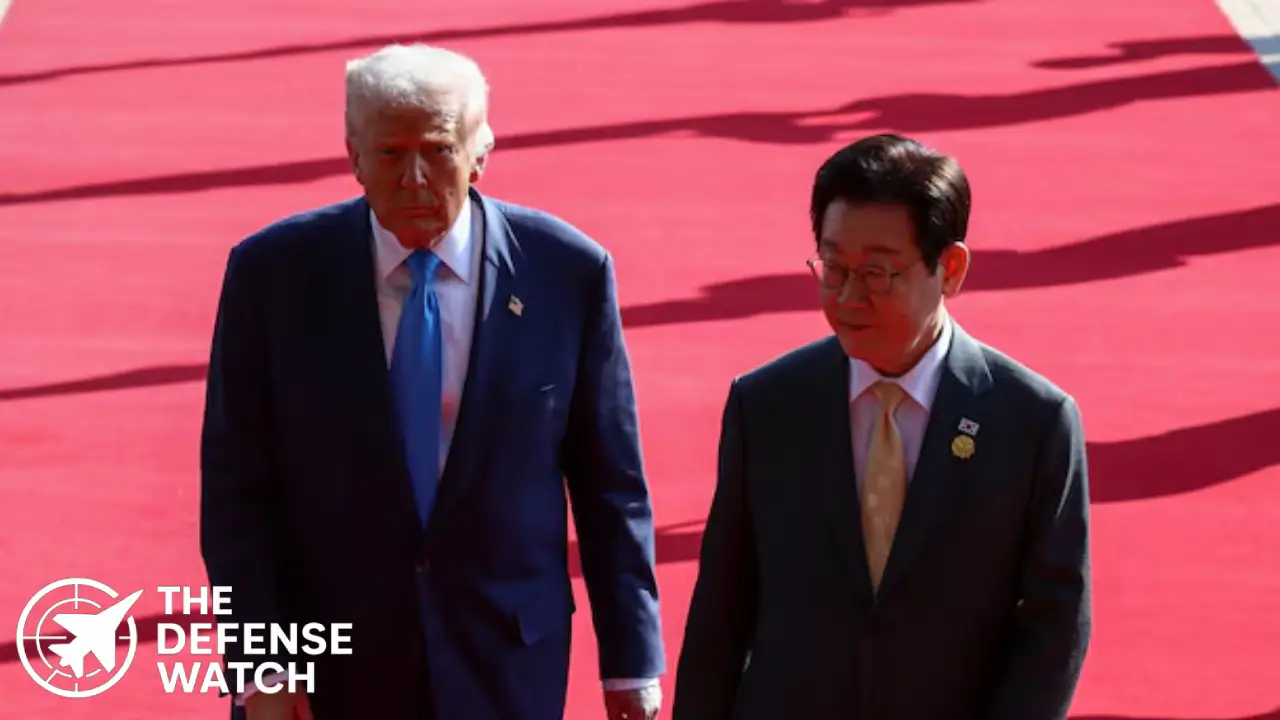
On 11 November 2025, reports revealed that the broader trade and security agreement between the United States and South Korea — widely promoted after a summit between U.S. President Donald Trump and Korean President Lee Jae Myung — has stalled. The delay centers on the submarine component: specifically, how and where South Korea’s request to build a nuclear-powered submarine will be handled, and the wording and approvals required by multiple U.S. departments.
Background: context of the event
In July 2025, the Trump administration announced a landmark deal with South Korea: in exchange for reduced U.S. tariffs (dropping to 15 %) on Korean imports, Seoul pledged some US$350 billion in investments into U.S. projects, including shipbuilding, semiconductors, biotech and energy sectors.
Simultaneously, security discussions took place, including South Korea’s ambitions to develop a nuclear-powered submarine. Such submarines offer greatly enhanced endurance and strategic capability compared with conventional diesel-electric ones. U.S. willingness to transfer nuclear-submarine technology is highly sensitive and rare.
Details of the current deadlock
Submarine clause the sticking point
South Korean officials say the hold-up in releasing a joint factsheet lies in the submarine issue. According to the defense minister, since South Korea raised the matter of building a nuclear-powered submarine, “each of the U.S. departments seems to need some time to adjust their opinions.”
Washington has reportedly approved Seoul’s use of nuclear fuel for the submarine. However, the formal factsheet has been delayed because U.S. departments continue to provide feedback and negotiate the wording.
Further complicating matters: President Trump’s social-media comment claimed the submarine “would be built at a U.S. shipyard”, whereas South Korea’s official position emphasizes a domestically built vessel. This raises questions over technology-transfer, industrial participation, and national-sovereignty issues.
Trade/investment component in limbo
While trade officials say the tariff draft is “seen as finalized” (ready for public release once the factsheet is issued), the investment memorandum of understanding (MoU) — covering the US$350 billion pledge — remains unsigned. South Korea says it must await the official announcement to proceed with parliamentary briefings and follow-up measures.
One senior South Korean presidential official said they are “waiting for that because we need it to be officially announced to take follow-up measures, such as explaining to parliament.”
Expert / policy perspective
From a defence-technology angle, the submarine issue is significant. Allowing South Korea access to nuclear-powered submarine technology would mark one of the most advanced transfers of U.S. naval capabilities outside its closest allies. U.S. policymakers will likely scrutinise nuclear-fuel handling, reactor design, propulsion technology, and command-and-control safeguards.
From a strategic-alliance angle, South Korea seeks to enhance its maritime deterrence against North Korea and the growing submarine fleets of regional actors (including China). The ability to dive longer and operate stealthily provides significant edge. However, from Washington’s perspective, the location of construction, the technology transfer boundaries, and the oversight of nuclear fuel use are critical.
On the trade front, the investment pledge raises fresh questions about viability, timing and economic impact. Reports say South Korea resisted ultra-upfront payment demands, citing possible damage to its economy and currency.
What’s next / impact
If the factsheet remains unsigned, both the security and trade pillars of the deal risk further delay. South Korea may face political pressure domestically to show results; without the official announcement, parliamentary oversight and follow-up implementation may stall.
In defence terms, any delay in the submarine component means Seoul’s aspiration to field nuclear-powered submarines will be deferred. Additionally, unresolved technology-transfer issues could affect broader U.S.–Korea cooperation in advanced naval systems.
On the trade side, market actors have monitored the won (South Korean currency) closely — it weakened as much as 0.7 % upon the news of delay.
Overall, while the headline deal remains on paper, the “devil in the details” moment has arrived. The submarine clause and the investment structure now present the real test of both countries’ commitments.
Get real time update about this post category directly on your device, subscribe now.

9 comments
[…] USNI article “The United States Needs Japan in a Fight for Taiwan” argues that U.S. strategy must ensure Tokyo’s contribution […]
[…] illicit trafficking and transnational threats that could affect the safety and prosperity of the United States and its allies in the […]
[…] was in October 1990 (under the Soviet Union). Since then, no nuclear-armed state other than North Korea has publicly carried out a new nuclear […]
[…] facilities in Guam, Japan, and South Korea remain at risk due to the DF-17’s regional range and […]
[…] industries, encourage foreign investment, and coerce trading partners into specific agreements. Deals with countries such as South Korea, India, and Brazil often included tariff adjustments in exchange for long-term investment […]
[…] achievement represents a fundamental shift in how the United States approaches hypersonic technology development. The ability to reuse the Talon-A will eventually make it a more affordable hypersonic […]
[…] Netanyahu has also emphasized his view on regional normalization, saying he is “cautiously optimistic” about prospects for Saudi-Israeli ties — but reiterated his opposition to a sovereign Palestinian state emerging from any agreement. […]
[…] United States and South Korea have reacted with broader military cooperation, expanded exercises, and reinforced joint defense […]
Can you be more specific about the content of your article? After reading it, I still have some doubts. Hope you can help me. https://www.binance.info/id/register?ref=UM6SMJM3