

The U.S. Department of War (DoW) unveiled a new procurement initiative under the banner Drone Dominance Program (DDP), committing US$1 billion to rapidly acquire hundreds of thousands of low-cost kamikaze drones. The program is designed to order approximately 340,000 small UAS (unmanned aerial systems) for combat units over a two-year period.
The DoW expects an initial order of 30,000 drones to be delivered by July 2026, with aims to purchase over 200,000 drones by 2027, and a total of more than 300,000 by early 2028.
Context: Why the Push for Kamikaze Drones
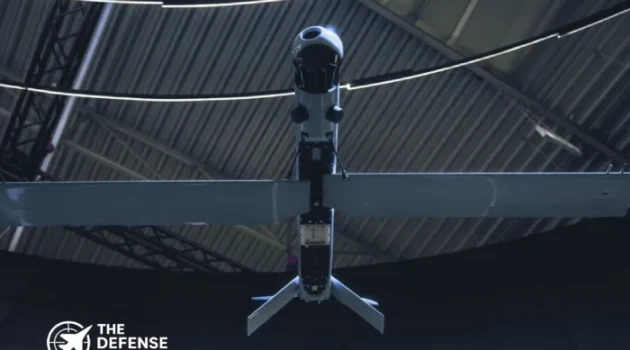
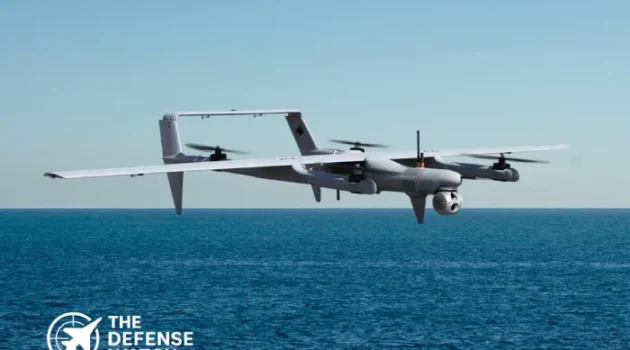
Small “suicide” or loitering drones — often called kamikaze drones — have emerged as a decisive factor on modern battlefields. Conflicts such as the one in Ukraine have demonstrated how mass-produced, inexpensive drones equipped with explosive payloads can inflict significant damage on armored vehicles, artillery, and infrastructure, even when individually less capable than conventional air-delivered munitions.

This proliferation of drone-based threats has prompted a shift in U.S. military thinking. In a July 2025 memorandum, War Department leadership made clear that small UAS will now be treated more like consumable munitions (akin to grenades or rockets) rather than traditional “aircraft,” facilitating faster procurement.
Accompanying this shift is a broader strategy to revitalize America’s domestic drone manufacturing base — favoring low-cost, mass-production capable firms, including start-ups and non-traditional defense contractors.
Program Details: How Drone Dominance Will Work
According to the publicly released Request for Information (RFI) by the DoW:
- The $1 billion will finance fixed-price orders under existing federal procurement laws (10 U.S.C. 4022).
- Acquisition is organized over four phases across two years. Each phase begins with a “Gauntlet challenge event” and ends in delivery of production-quality small UAS.
- The first phase (Feb–July 2026) will involve roughly 12 vendors producing 30,000 drones at about US$5,000 per unit (totaling roughly $150 million).
- As the phases progress, the number of vendors will be reduced — ultimately down to five vendors by the final phase scheduled between August 2027 and January 2028.
- With scaling and competition, the projected unit cost is expected to drop to ~US$2,300.
- The drones will undergo operational testing by military operators under realistic mission scenarios — including a likely 10 km strike in open terrain and a 1 km strike in simulated urban terrain using a dummy payload of at least 2 kg.
- The program calls for significant improvements in production capacity, supply-chain security, and logistical support to enable rapid scaling.
The Driving Rationale: Speed, Mass, and Deterrence
The rationale for this procurement sprint is rooted in evolving contemporary threats. As laid out in the July 2025 memo accompanying the broader drone policy shift: “Drones are the biggest battlefield innovation in a generation.” According to the memo, U.S. units had lagged behind because of bureaucratic red tape that made small drones hard to deploy at scale — a disadvantage in conflicts where adversaries flood the skies with low-cost, mass-produced drones.
By redefining small UAS as consumables and streamlining procurement to enable direct purchasing and deployment by lower-level commanders, the DoW aims to replicate the “swarming” and asymmetric tactics that have had disruptive battlefield effects recently.
Simultaneously, supporting a stable drumbeat of acquisitions — rather than single, one-off purchases — is intended to incentivize American industry to build enduring manufacturing capacity, reduce costs, and expand supply-chain resiliency.
Expert and Policy Perspective
Defense-industry analysts say the DDP is a marked departure from decades of incremental drone procurement, which favored expensive, high-end UAVs over large numbers of small, expendable drones. The new high-low procurement posture — combining a few expensive, capable systems with large quantities of basic, disposable ones — represents a significant doctrinal shift.
Some observers argue that this shift is driven in part by lessons learned from recent conflicts, especially in Eastern Europe, where relatively unsophisticated drones proved devastatingly effective when deployed en masse.
Still, doubts remain about whether the U.S. industrial base can scale fast enough, or whether funding and contracting bottlenecks could delay deliveries or restrict quantities. The DoW is betting that this stable multi-year procurement plan will draw in investment, expand production capacity, and produce supply-chain security sufficient to meet its ambitious targets.
What This Means — And What Comes Next
If implemented as outlined — 340,000 small, low-cost kamikaze drones in two years — the Drone Dominance Program could drastically change the U.S. military’s tactical options on future battlefields. Infantry units across the services could gain access to one-way offensive drones that can strike enemy armor, fortifications, or personnel from standoff distances — potentially reducing reliance on heavy artillery, air strikes or armored support.
Industry selection begins soon: the first competition under the program is slated to start February 16, 2026, with 25 invited vendors. Meanwhile, success — or failure — of the program will likely influence how the Pentagon invests in small UAS production capacity, supply chain resilience, and procurement policy in years to come.
Get real time update about this post category directly on your device, subscribe now.



This website uses cookies to improve your experience. We'll assume you're ok with this, but you can opt-out if you wish. Accept Read More