Executive Summary:
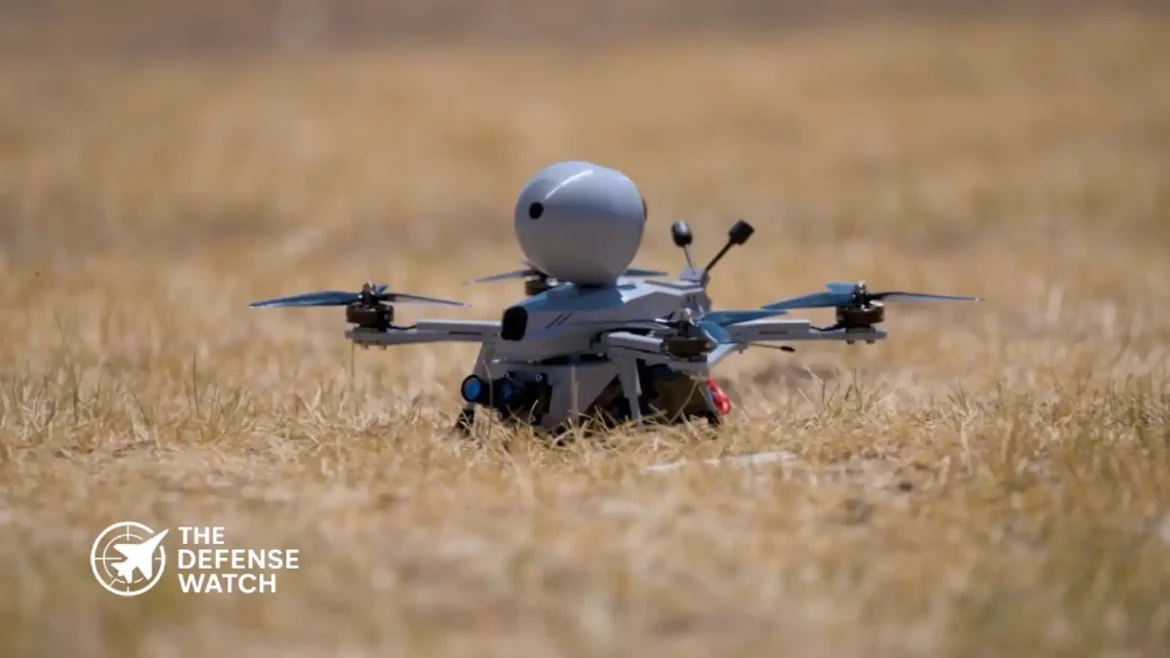
A Turkish defense firm has signed a deal to export 100,000 kamikaze drones, marking one of the largest loitering munition agreements to date. The deal underscores Türkiye’s rapid rise as a global UAV supplier and signals increasing demand for low-cost precision strike systems.
Türkiye Expands Kamikaze Drone Exports With Massive Deal
Türkiye kamikaze drone export efforts have taken a major leap forward after a domestic defense company secured a contract to deliver 100,000 loitering munitions. The scale of the agreement places it among the largest known drone export deals globally and reflects the accelerating demand for expendable precision strike systems.
The agreement highlights Türkiye’s evolving defense industrial base, which has rapidly shifted from import dependence to a net exporter of advanced unmanned systems over the past decade.
Scaling Production for High-Volume Warfare
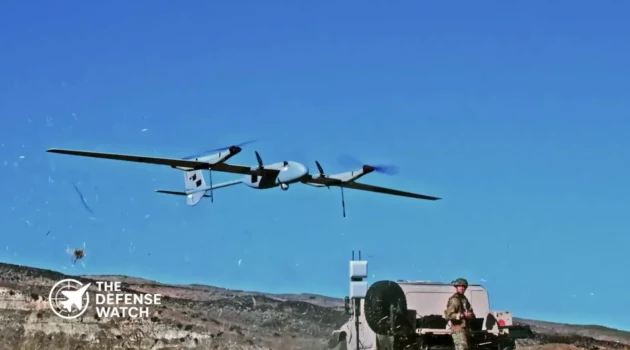
The Türkiye kamikaze drone export deal stands out not only for its size, but for what it suggests about future warfare trends. Loitering munitions, often called kamikaze drones, combine surveillance and strike capabilities in a single platform. They are relatively low-cost, easy to deploy, and highly effective against armored vehicles, air defense systems, and troop concentrations.
Producing 100,000 units requires a level of industrial scaling that few countries have demonstrated. Turkish manufacturers have increasingly focused on modular designs, simplified supply chains, and domestic component production to support mass output.
This shift mirrors lessons observed in recent conflicts, where high attrition rates demand large stockpiles of expendable systems rather than limited numbers of high-end platforms.
Strategic Implications for Global Defense Markets
The Türkiye kamikaze drone export deal reinforces the country’s position as a key competitor in the global UAV market, alongside established players such as Israel Aerospace Industries and emerging suppliers from Asia.
Unlike more expensive Western systems, Turkish drones are often positioned as cost-effective alternatives, making them attractive to countries with constrained defense budgets. This pricing advantage, combined with combat-proven performance, has driven export success across regions including the Middle East, Africa, and Eastern Europe.
From a U.S. perspective, the deal highlights a growing competitive space in low-cost autonomous weapons. While American firms lead in high-end unmanned systems, Türkiye’s focus on scalable, affordable solutions aligns closely with current battlefield realities.
Operational Impact of Mass Loitering Munitions
The Türkiye kamikaze drone export initiative reflects a broader doctrinal shift toward distributed, drone-centric warfare. Large quantities of loitering munitions enable saturation attacks that can overwhelm traditional air defense systems.
Recent conflicts have shown that even advanced defenses struggle against coordinated drone swarms. The availability of tens of thousands of such systems could significantly alter the tactical balance in regional conflicts, particularly where air superiority is contested.
In practical terms, this means militaries are increasingly prioritizing:
- Rapid deployment capabilities
- Networked drone operations
- Integration with ISR (intelligence, surveillance, reconnaissance) systems
The scale of this deal suggests that recipient forces are preparing for sustained, high-intensity operations rather than limited engagements.
Türkiye’s Defense Industry Momentum
The Türkiye kamikaze drone export deal is part of a broader trend in the country’s defense sector, which has seen significant growth driven by government support and export-oriented policies.
Companies such as Baykar and STM have played key roles in developing unmanned platforms that are both technologically capable and commercially viable.
Türkiye’s emphasis on indigenous development has reduced reliance on foreign suppliers, allowing for greater flexibility in exports without the restrictions often associated with Western systems.
This autonomy has proven to be a decisive advantage in securing international contracts.
Market Demand Driven by Recent Conflicts
Demand for loitering munitions has surged following their extensive use in conflicts such as the Nagorno-Karabakh conflict and the ongoing war in Ukraine. These systems have demonstrated their effectiveness against both conventional and asymmetric targets.
The Türkiye kamikaze drone export deal reflects how militaries are adapting procurement strategies to prioritize:
- Cost-efficiency
- Rapid replenishment
- Tactical flexibility
In this context, large-scale procurement of kamikaze drones is not just a capability upgrade, but a necessity for modern warfare planning.
Analysis: A Shift Toward Industrialized Drone Warfare
At least 30 percent of the significance of this deal lies beyond the contract itself. The Türkiye kamikaze drone export agreement signals a transition toward industrialized drone warfare, where quantity plays a decisive role alongside quality.
Traditional defense procurement emphasized fewer, highly advanced systems. Today, the battlefield increasingly rewards volume, adaptability, and resilience. Loitering munitions fit this model perfectly.
For NATO and U.S. planners, the implication is clear. Future conflicts may involve adversaries equipped with large inventories of low-cost drones capable of sustained operations. Countermeasures will need to evolve accordingly, focusing on electronic warfare, directed energy weapons, and layered air defense systems.
Türkiye’s ability to produce and export such systems at scale positions it as a key player in shaping this new operational environment.
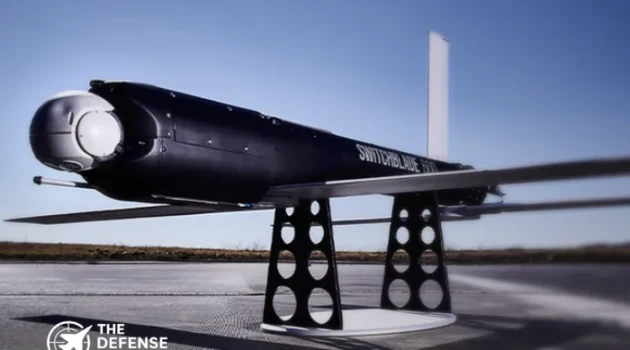

The U.S. Department of War (DoW) unveiled a new procurement initiative under the banner Drone Dominance Program (DDP), committing US$1 billion to rapidly acquire hundreds of thousands of low-cost kamikaze drones. The program is designed to order approximately 340,000 small UAS (unmanned aerial systems) for combat units over a two-year period.
The DoW expects an initial order of 30,000 drones to be delivered by July 2026, with aims to purchase over 200,000 drones by 2027, and a total of more than 300,000 by early 2028.
Context: Why the Push for Kamikaze Drones
Small “suicide” or loitering drones — often called kamikaze drones — have emerged as a decisive factor on modern battlefields. Conflicts such as the one in Ukraine have demonstrated how mass-produced, inexpensive drones equipped with explosive payloads can inflict significant damage on armored vehicles, artillery, and infrastructure, even when individually less capable than conventional air-delivered munitions.

This proliferation of drone-based threats has prompted a shift in U.S. military thinking. In a July 2025 memorandum, War Department leadership made clear that small UAS will now be treated more like consumable munitions (akin to grenades or rockets) rather than traditional “aircraft,” facilitating faster procurement.
Accompanying this shift is a broader strategy to revitalize America’s domestic drone manufacturing base — favoring low-cost, mass-production capable firms, including start-ups and non-traditional defense contractors.
Program Details: How Drone Dominance Will Work
According to the publicly released Request for Information (RFI) by the DoW:
- The $1 billion will finance fixed-price orders under existing federal procurement laws (10 U.S.C. 4022).
- Acquisition is organized over four phases across two years. Each phase begins with a “Gauntlet challenge event” and ends in delivery of production-quality small UAS.
- The first phase (Feb–July 2026) will involve roughly 12 vendors producing 30,000 drones at about US$5,000 per unit (totaling roughly $150 million).
- As the phases progress, the number of vendors will be reduced — ultimately down to five vendors by the final phase scheduled between August 2027 and January 2028.
- With scaling and competition, the projected unit cost is expected to drop to ~US$2,300.
- The drones will undergo operational testing by military operators under realistic mission scenarios — including a likely 10 km strike in open terrain and a 1 km strike in simulated urban terrain using a dummy payload of at least 2 kg.
- The program calls for significant improvements in production capacity, supply-chain security, and logistical support to enable rapid scaling.
The Driving Rationale: Speed, Mass, and Deterrence
The rationale for this procurement sprint is rooted in evolving contemporary threats. As laid out in the July 2025 memo accompanying the broader drone policy shift: “Drones are the biggest battlefield innovation in a generation.” According to the memo, U.S. units had lagged behind because of bureaucratic red tape that made small drones hard to deploy at scale — a disadvantage in conflicts where adversaries flood the skies with low-cost, mass-produced drones.
By redefining small UAS as consumables and streamlining procurement to enable direct purchasing and deployment by lower-level commanders, the DoW aims to replicate the “swarming” and asymmetric tactics that have had disruptive battlefield effects recently.
Simultaneously, supporting a stable drumbeat of acquisitions — rather than single, one-off purchases — is intended to incentivize American industry to build enduring manufacturing capacity, reduce costs, and expand supply-chain resiliency.
Expert and Policy Perspective
Defense-industry analysts say the DDP is a marked departure from decades of incremental drone procurement, which favored expensive, high-end UAVs over large numbers of small, expendable drones. The new high-low procurement posture — combining a few expensive, capable systems with large quantities of basic, disposable ones — represents a significant doctrinal shift.
Some observers argue that this shift is driven in part by lessons learned from recent conflicts, especially in Eastern Europe, where relatively unsophisticated drones proved devastatingly effective when deployed en masse.
Still, doubts remain about whether the U.S. industrial base can scale fast enough, or whether funding and contracting bottlenecks could delay deliveries or restrict quantities. The DoW is betting that this stable multi-year procurement plan will draw in investment, expand production capacity, and produce supply-chain security sufficient to meet its ambitious targets.
What This Means — And What Comes Next
If implemented as outlined — 340,000 small, low-cost kamikaze drones in two years — the Drone Dominance Program could drastically change the U.S. military’s tactical options on future battlefields. Infantry units across the services could gain access to one-way offensive drones that can strike enemy armor, fortifications, or personnel from standoff distances — potentially reducing reliance on heavy artillery, air strikes or armored support.
Industry selection begins soon: the first competition under the program is slated to start February 16, 2026, with 25 invited vendors. Meanwhile, success — or failure — of the program will likely influence how the Pentagon invests in small UAS production capacity, supply chain resilience, and procurement policy in years to come.