
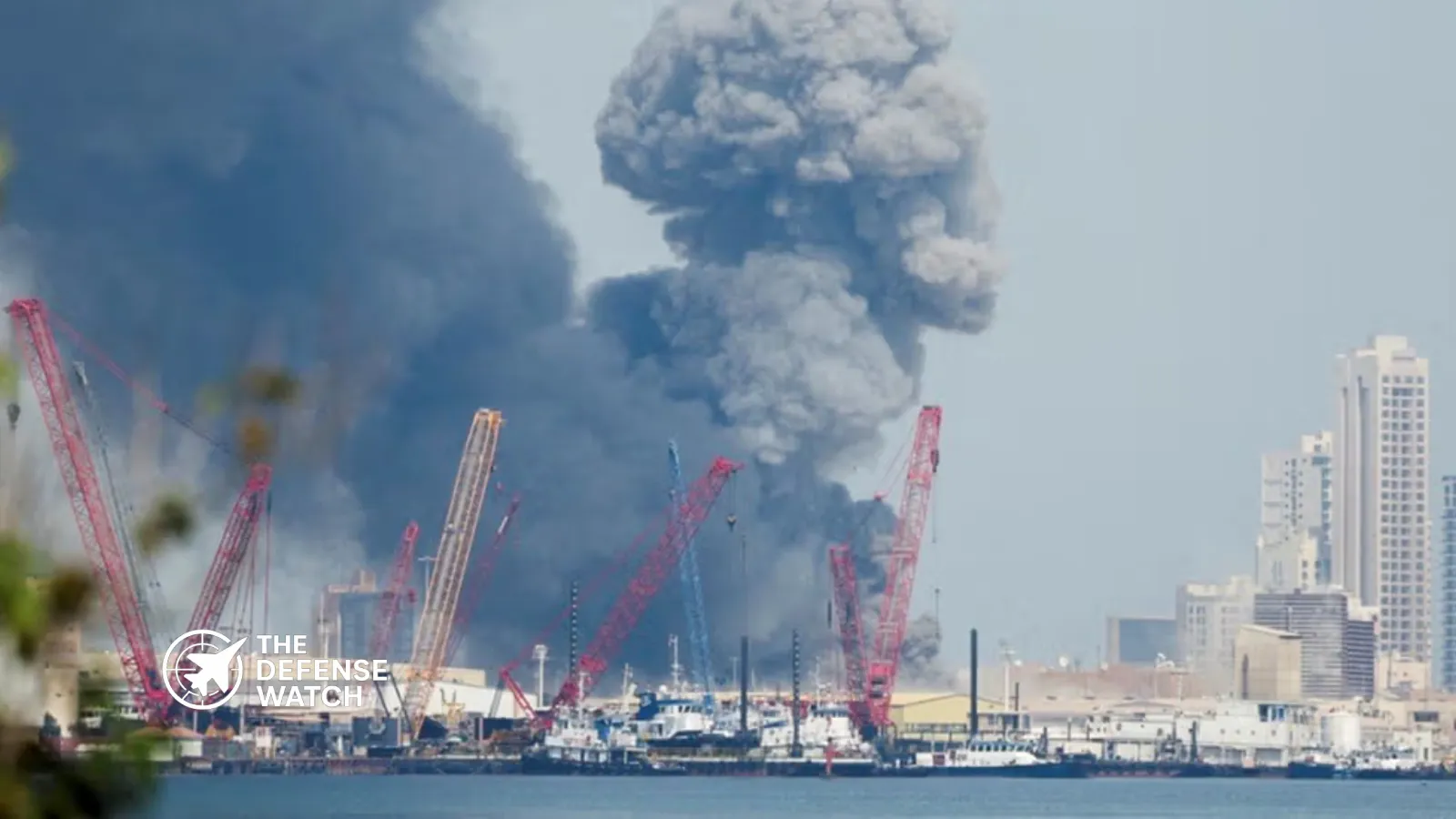
- ► Iran’s Islamic Revolutionary Guard Corps confirmed missile strikes targeting US military bases across Gulf states.
- ► Reported targets included Al Udeid in Qatar, Al Salem in Kuwait, Al Dhafra in UAE, and the US Navy Fifth Fleet headquarters in Bahrain.
- ► Gulf states activated air defense systems and reported intercepts during the missile barrage.
- ► The strikes followed earlier joint US Israeli military operations against Iranian targets.
- ► The exchange marks one of the most serious direct US Iran confrontations in recent years.
Iran’s Islamic Revolutionary Guard Corps (IRGC) confirmed missile strikes on multiple United States military bases in the Persian Gulf region on February 28, 2026, in direct retaliation for earlier joint US-Israeli military operations against Iranian targets. The strikes mark a significant escalation in Middle East tensions, drawing Gulf host nations into renewed conflict dynamics and prompting regional airspace closures.
Overview of the Attacks
Iranian state-aligned outlets reported that the IRGC launched coordinated missile attacks against at least five key US military installations in the Gulf region. These included:
- Al-Udeid Air Base (Qatar), home to a large United States Air Force hub for operations in the Middle East.
- Al-Salem Air Base (Kuwait), a logistic and support node for US Central Command forces.
- Al-Dhafra Air Base (United Arab Emirates), co-used by US and UAE air forces.
- US Navy Fifth Fleet Headquarters (Bahrain), the nerve center for US naval operations in the Gulf.
- A base in Jordan was also cited in some reports though not yet confirmed by official US statements.
Gulf state authorities reported that air defense systems were activated in Qatar, Kuwait, Bahrain and the UAE in response to the barrage. Qatar’s interior ministry confirmed intercepting incoming missiles at Al-Udeid with minimal impact, while Bahrain acknowledged that at least one strike affected the Fifth Fleet area. Emirati forces intercepted multiple missiles near Abu Dhabi; debris from intercepts reportedly caused one civilian fatality.
Regional and Strategic Context
The Iranian strikes followed what Tehran described as coordinated military operations by the United States and Israel targeting Iranian cities and military infrastructure earlier on the same day. Officials in Tehran framed the retaliation as a response to what they termed “aggression against Iranian sovereignty.”
Gulf governments including Qatar, Kuwait and the UAE closed their airspace as a precaution amid the rapidly unfolding situation, disrupting commercial air traffic across several major routes. Airlines also suspended flights in and out of the affected region.
No comprehensive casualty figures from the attacks on US bases have been released by either Washington or host countries at the time of reporting. US officials have acknowledged the developments but have not yet provided a detailed assessment of damage or personnel impact.
Implications and Analysis
This exchange represents one of the most serious direct confrontations between Iran and US military assets in the Gulf since the broader Middle East tensions flared in early 2026. The choice of bases targeted reflects Tehran’s emphasis on striking prominent US logistical and operational hubs, potentially complicating Pentagon planning and regional force posture.
For Gulf host states, whose security frameworks are tightly linked to US defense commitments, the incidents underscore the risks of their territories becoming focal points in external power conflicts. The civilian casualty in Abu Dhabi also highlights the growing danger to noncombatants as regional militaries engage sophisticated strike and defense systems.
The longer-term impact on Middle East stability will depend on subsequent diplomatic moves, US military responses, and actions by other regional actors including Saudi Arabia and Qatar. Continued escalation could draw in NATO partners and alter defense alignments in the broader West Asia theatre.
Get real time update about this post category directly on your device, subscribe now.
