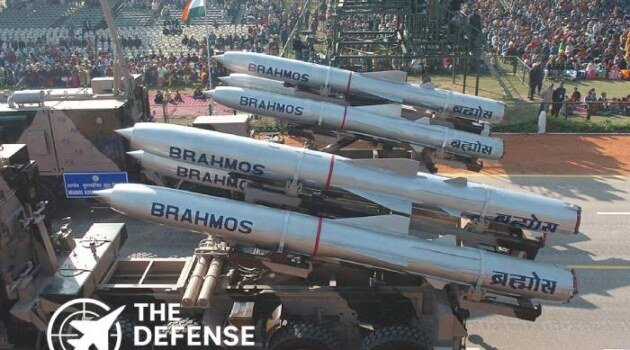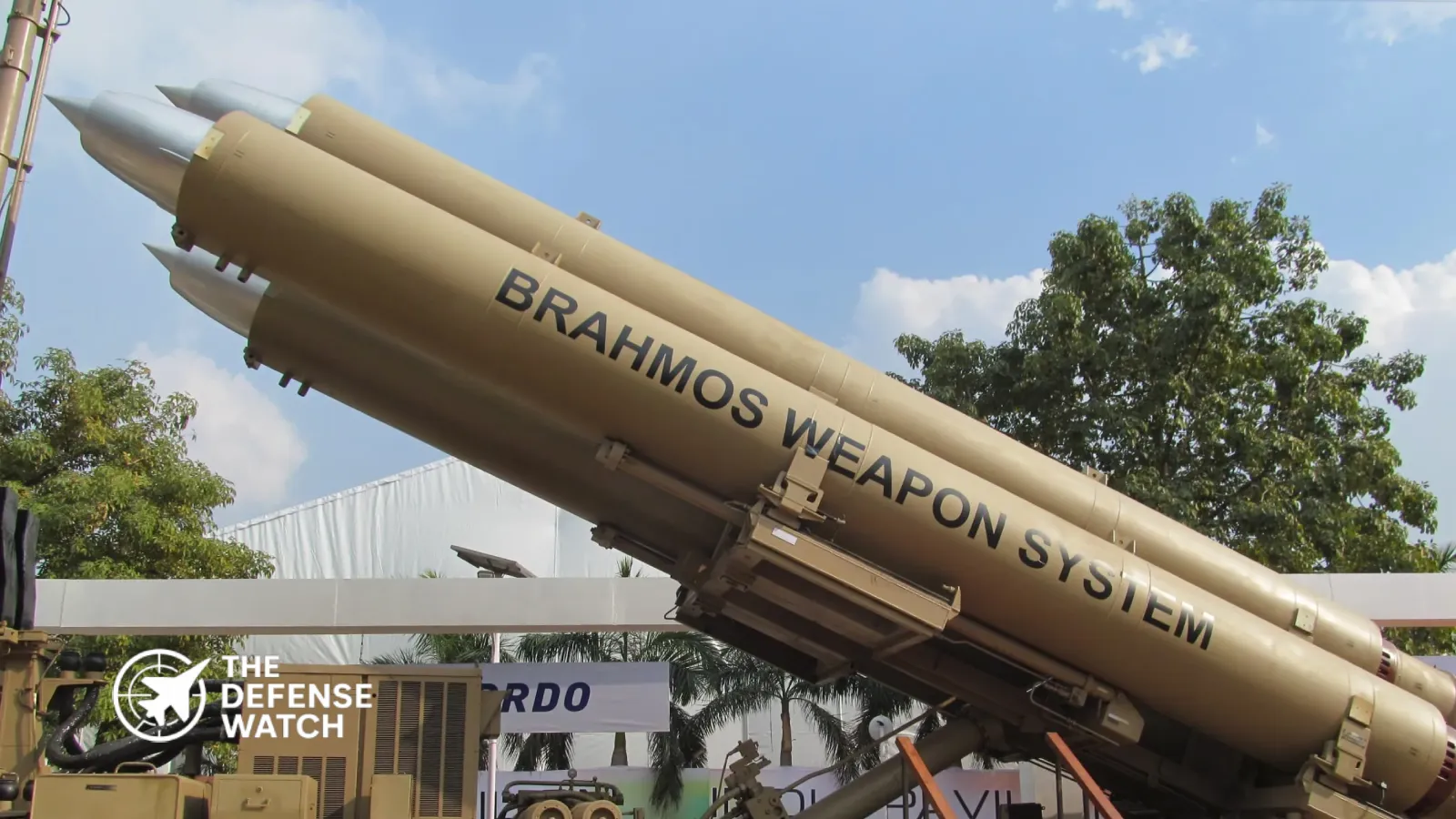
- Indonesia has agreed to acquire the BrahMos supersonic cruise missile system from India.
- The deal is estimated to be worth between $200 million and $350 million.
- The acquisition reflects growing defense cooperation between India and Southeast Asian partners.
- BrahMos missiles travel at around Mach 2.8 to Mach 3 with a range of roughly 290–400 kilometers depending on variant.
- Indonesia would become the second Southeast Asian operator of the BrahMos system after the Philippines.
Indonesia BrahMos Missile Deal Signals Growing Defense Cooperation In The Indo-Pacific
The Indonesia BrahMos missile deal marks a significant step in Jakarta’s effort to strengthen its maritime strike capabilities and deepen defense ties with India. The agreement, reportedly valued between $200 million and $350 million, will provide Indonesia with one of the world’s fastest operational cruise missile systems.
The acquisition follows a similar deal signed by the Philippines in 2022 and reflects India’s expanding role as a defense exporter in the Indo-Pacific region.
The Big Picture
Security competition across the Indo-Pacific has driven many regional militaries to expand long range strike and anti ship missile capabilities.
Countries such as Japan, Australia, the Philippines, and Vietnam have all accelerated investments in coastal defense systems and anti ship missiles designed to deter potential maritime aggression. Much of this modernization effort focuses on controlling key sea lanes and chokepoints in the South China Sea and surrounding waters.
Indonesia occupies a critical strategic position along major maritime routes linking the Indian and Pacific Oceans. The country’s vast archipelagic geography includes more than 17,000 islands and multiple strategic straits, including the Malacca Strait, Sunda Strait, and Lombok Strait.
Strengthening coastal defense and long range strike systems has therefore become a central element of Jakarta’s military modernization strategy.
The BrahMos supersonic cruise missile, developed jointly by India and Russia, offers a high speed strike capability designed for both land based and naval platforms. Its speed and maneuverability make it difficult for many conventional air defense systems to intercept.
What’s Happening
Indonesia and India have reached an agreement for Jakarta to purchase the BrahMos missile system, with the total value of the deal estimated between $200 million and $350 million.
Officials have not publicly released detailed information about the specific configuration being acquired. However, defense analysts expect Indonesia to initially deploy a coastal defense variant of the system, similar to the version currently operated by the Philippines Marine Corps.
The Philippines signed a $375 million contract with India in 2022 for the BrahMos Shore Based Anti Ship Missile System. That agreement marked the first export sale of the missile system by India.
India has since promoted the system to multiple countries across Southeast Asia, the Middle East, and Latin America as part of its broader effort to expand defense exports.
The BrahMos system is produced by BrahMos Aerospace, a joint venture between India’s Defence Research and Development Organisation (DRDO) and Russia’s NPO Mashinostroyeniya.
Why It Matters
The Indonesia BrahMos missile deal strengthens Jakarta’s ability to conduct long range precision strikes against surface targets at sea.
BrahMos missiles travel at speeds approaching Mach 3, significantly faster than most conventional subsonic cruise missiles such as the U.S. Tomahawk or the French Exocet. The high speed shortens reaction time for enemy ships and increases the probability of penetration against naval defenses.
For a country like Indonesia, which must defend an expansive maritime domain, coastal defense missiles provide a relatively cost effective method of strengthening deterrence.
Deploying land based anti ship missile batteries across key islands allows Indonesia to cover critical sea lanes without relying solely on naval vessels or aircraft.
The system also complements Indonesia’s broader modernization program, which includes new fighter aircraft, submarines, and naval surface combatants.
Strategic Implications
The growing adoption of the BrahMos missile system across Southeast Asia could gradually reshape the region’s maritime deterrence environment.
High speed anti ship missiles create a denial capability that complicates naval operations for potential adversaries operating near contested waters.
Indonesia’s potential deployment of BrahMos batteries along strategic islands would allow Jakarta to monitor and defend approaches to important maritime routes. Such capabilities can support Indonesia’s longstanding policy of maintaining sovereignty over its exclusive economic zone, particularly around the Natuna Islands, an area that has seen repeated tensions involving Chinese fishing vessels and coast guard ships.
India also benefits strategically from the deal.
Expanding BrahMos exports strengthens India’s defense industrial base while increasing its security partnerships across Southeast Asia. The policy aligns with New Delhi’s Act East strategy, which aims to deepen economic and security cooperation with ASEAN countries.
For India, each export deal also strengthens the operational ecosystem surrounding the BrahMos system, potentially opening opportunities for future upgrades, logistics support, and joint training.
Competitor View
China closely monitors regional missile deployments in Southeast Asia.
Beijing has invested heavily in its own anti ship missile capabilities, including the YJ series cruise missiles and the DF 21D anti ship ballistic missile. The spread of systems like BrahMos across Southeast Asia introduces additional challenges for Chinese naval forces operating in contested maritime areas.
Regional militaries acquiring high speed anti ship missiles increase the number of potential threat vectors for large surface combatants.
Russia, meanwhile, remains indirectly connected to the BrahMos program through its original technology partnership with India. However, India has increasingly localized production and expanded independent export efforts.
What To Watch Next
Several milestones could follow the Indonesia BrahMos missile deal.
Implementation details such as system configuration, delivery schedules, and training programs are likely to emerge once the contract enters formal execution phases.
Operational deployment will require infrastructure development, personnel training, and integration into Indonesia’s broader maritime surveillance network.
Indonesia may also consider integrating the missile with naval vessels or future platforms as its modernization program evolves.
India continues to develop upgraded variants of the BrahMos system, including extended range and hypersonic research programs, which could eventually influence future export offerings.
Capability Gap
Indonesia faces the challenge of defending one of the world’s largest maritime territories with limited naval assets.
Land based anti ship missile systems address this gap by allowing smaller forces to threaten larger naval units operating within range.
However, the BrahMos system is not a complete solution on its own. Effective employment requires reliable targeting data, surveillance systems, and command networks capable of tracking maritime threats in real time.
Without those supporting capabilities, the full potential of long range missile systems cannot be realized.
Indonesia has therefore invested in maritime surveillance radars, patrol aircraft, and satellite monitoring to support its broader maritime defense architecture.
The Bottom Line
Indonesia’s BrahMos missile acquisition strengthens regional deterrence while reinforcing India’s growing role as a defense supplier in the Indo-Pacific.
Get real time update about this post category directly on your device, subscribe now.