

Table of Contents
What Is AESA Radar
Active electronically scanned array radar is a type of radar that steers its beam using electronic control rather than physical motion. Instead of relying on a single dish that moves, an AESA radar uses many small transmit/receive modules that can each send and receive signals independently. This design lets the radar point its beam quickly and flexibly without moving parts.
How AESA Radar Works
AESA radar is built from a grid of tiny antenna elements, each with its own transmitter and receiver. When these elements send out radio waves in a coordinated way, the phases of the waves combine to form a focused beam in a chosen direction. The beam can be steered electronically by adjusting the timing of the signals from each element. Because this is done with electronics and not mechanical movement, the radar can switch direction in microseconds.
Each module can also use different frequencies for each pulse. This frequency agility helps the radar avoid interference and makes it harder for enemies to detect or jam the signal.

Why AESA Radar Is Important
AESA radar is now a key sensor in many defense platforms. It gives forces faster detection, better tracking, and improved resistance to countermeasures. Faster beam steering and the ability to form multiple beams at once give operators a more complete picture of the battlespace in real time.

Radars using older mechanical systems or passive arrays simply cannot match the speed and flexibility of an AESA system. The electronic control improves reliability because there are fewer moving parts to wear out or break in harsh environments.
Where AESA Radar Is Used
AESA radar is now common across many kinds of defense systems:
Fighter Jets
Modern combat aircraft often use AESA for air-to-air and air-to-ground roles. Examples include US fifth‑generation fighters.Unmanned Systems
Advanced drones and unmanned combat aircraft can carry AESA radar to survey areas and guide weapons without pilot risk.Naval Ships
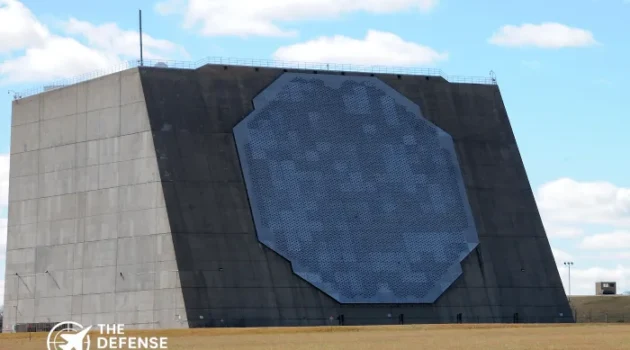
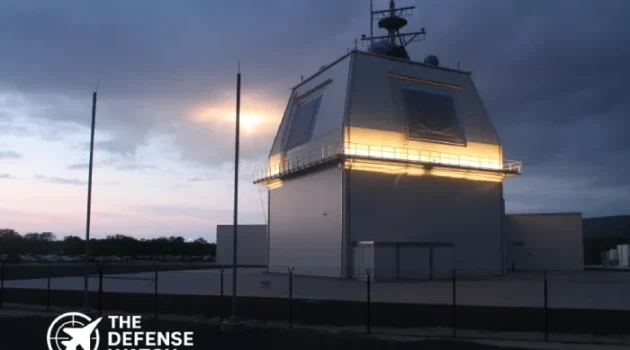
Warships use large AESA arrays for long‑range surveillance and missile guidance. Some destroyers and carriers have multifunction AESA radars for tracking air and surface threats.Ground Systems
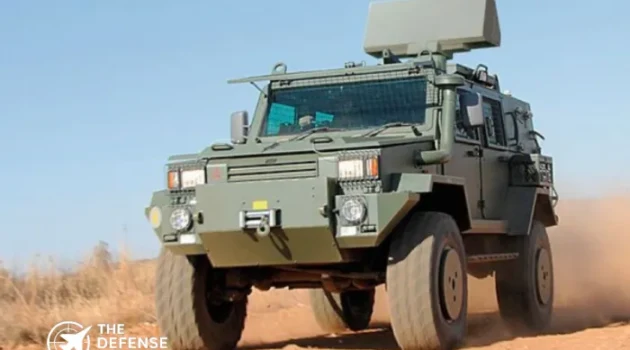
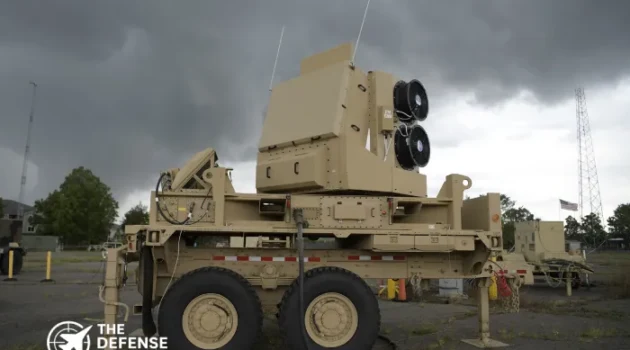
Air defense networks and mobile radars use AESA to detect aircraft, missiles, and other threats with high precision.Key Features of AESA Radar
Electronic Beam Steering
Beams change direction fast without mechanically moving the antenna.Frequency Agility
Each pulse can use a different frequency, making the radar harder to detect and jam.Multiple Beams
The system can form more than one beam at the same time for scanning, tracking, and guidance.Modular Design
If one transmit/receive module fails, the radar still works at slightly reduced performance.Benefits Over Older Systems
Speed and Accuracy
Electronic steering gives faster updates and tighter tracking than systems that rely on physical movement.Reliability
Fewer moving parts mean less maintenance and higher uptime in the field.Resilience to Jamming
Rapid frequency changes and wideband operation make it harder for adversaries to interfere.Multitasking
AESA can do search, track, and other modes at once, improving situational awareness.Applications in Defense
Air Combat
In fighters, AESA helps pilots detect and engage several targets at once while guiding their weapons.Surveillance and Reconnaissance
AESA radar on airborne early warning aircraft or drones scans wide areas and feeds data back to commanders.Targeting and Weapon Guidance
The radar provides precise target coordinates to missile systems on air, land, or sea platforms.Electronic Warfare Support
Some AESA systems can assist with detecting enemy emissions and supporting counter‑measures.Real‑World Examples
AN/APG‑81
This is the radar used on the F‑35 Lightning II. It combines search and track with functions like electronic protection and support.EL/M‑2052
An AESA fire control radar fitted on some fighter aircraft upgrades, including Indian and export jets.Large Ship Radars
Naval AESA radars like multifunction arrays support air and missile defense on modern warships.These systems show how AESA technology has become part of frontline defense hardware around the world.
Limitations and Considerations
Cost and Complexity
AESA systems are more expensive and complex than older radar types. Thousands of modules and advanced signal processing add to the price.Power and Cooling
Many modules produce heat and need power and cooling systems that can challenge smaller platforms.Electronic Countermeasures Environments
AESA is resistant to jamming, but very dense, sophisticated electronic attack environments still require careful design and tactics.Summary
AESA radar is a modern radar technology that uses many electronically controlled elements to scan and track without moving parts. It gives faster response, better multitasking, improved reliability, and stronger resistance to interference. You find AESA on fighter aircraft, drones, ships, and ground defenses. It is a key sensor in today’s military systems, despite cost and power needs.
FAQs
What does AESA stand for?AESA stands for Active Electronically Scanned Array. It is a radar system where the beam is steered electronically rather than mechanically, using multiple small transmit/receive modules.
How is AESA different from traditional radar?Traditional radar uses a single moving antenna to scan an area. AESA uses many small modules to steer the beam electronically, allowing faster scanning, multiple simultaneous beams, and better resistance to jamming.
Where is AESA radar used?AESA radar is used on fighter jets, drones, naval ships, and ground-based air defense systems for surveillance, targeting, and threat tracking.
What are the main benefits of AESA radar?The key benefits include faster target detection, multiple task handling, higher reliability, resistance to electronic interference, and precision tracking of air, sea, or ground targets.
Are there any limitations to AESA radar?Yes. AESA systems are expensive, complex, and require significant power and cooling. While highly resistant to jamming, very dense electronic warfare environments may still challenge their performance.
Get real time update about this post category directly on your device, subscribe now.


33 comments
[…] That makes it a strategic hub for homeland defense and power projection. Early warning networks, radar systems, and long-range defensive assets are positioned here to guard North America’s northern […]
[…] The B-52’s original radar dates back to mid-20th century designs and has become increasingly unreliable. Older mechanical scanning limits detection range, tracking, and mapping performance when compared with modern AESA systems. […]
[…] for air defense, surveillance and control. The company’s offerings are rooted in solid‑state AESA technology and digital signal processing, enabling high accuracy detection, tracking and classification across […]
[…] demonstration complete, attention will likely turn to operational testing, wider integration with military systems, and refinement of autonomy in real-world conditions. The ability to coordinate assets from […]
[…] vehicles weighing up to 600 kilograms at ranges up to five kilometres. Onboard sensors include radar and electro-optical tracking suites that allow the system to detect, track, and engage low-flying […]
[…] modular design also simplifies future upgrades, allowing the Boramae to adapt to evolving electronic warfare […]
[…] flight tests into rich autonomy experiments that simulate near-combat conditions. Integrating radar with AI systems allows testing of autonomous combat tasks, not just basic navigation or […]
[…] F 35’s sensor suite, including its active electronically scanned array radar and distributed infrared sensors, allows it to detect threats at long range and pass that […]
[…] because hypersonic delivery compresses the time between launch detection and impact. Allied radar and interceptor systems may have limited windows to react if the Oreshnik is launched from closer locations such as Belarus […]
[…] such as France’s AMIAD agency partnerships and other defence primes integrating AI into military systems, including contracts for AI in army IT […]
[…] the F 35 program extends beyond fuselage production. The company also provides the AN APG 81 active electronically scanned array radar, communications subsystems, and mission systems integration support. These components are central […]
[…] It authorizes the production of three additional Three-Dimensional Expeditionary Long-Range Radar systems, along with associated production management, travel, and other direct costs tied to system […]
[…] to prioritize terminal survivability over sheer speed, particularly against warships equipped with modern radar, electronic warfare suites, and layered point […]
[…] The trend of integrating military systems into civilian platforms reflects China’s broader military modernization efforts over the past […]
[…] without risking newer and more expensive stealth assets such as the F-35 or B-21 Raider. Its unique radar and infrared signature differs from modern stealth designs, giving sensor operators valuable data across a wider range of […]
[…] combat air asset. Work includes engineering tasks tied to the integration of the European Common Radar System Mk2, a next-generation sensor set for improved detection and […]
[…] The ECRS Mk2 is an active electronically scanned array (AESA) radar that combines traditional search and track functions with electronic warfare and attack capabilities. It enables Typhoon crews to detect, identify, and track multiple air and ground targets in contested environments while offering improved electronic surveillance and electronic attack capacity over older mechanically scanned radars. […]
[…] A key technical advance of the integrated stack is how radar and electronic warfare functions work together on a pulse-to-pulse basis. With digital coordination, the radar never needs to blank its emissions for the jammer, and neither function degrades the other. That lets crews simultaneously execute high-resolution tracking and denial of hostile radar engagement systems. […]
[…] radar is designed as an AESA system using gallium nitride based transmit receive modules. Officials have stated that the system is […]
[…] threats. The evolution effort includes upgrades to the Aster 30 missile family, enhancements to radar and command systems, and software […]
[…] L-band surveillance radars. The new Thales systems add scalable, mobile, and digitally integrated radar capability that aligns with ongoing modernization […]
[…] time between identifying a need and delivering capable microelectronics solutions, a priority for military systems that increasingly depend on modern […]
[…] has clear relevance for defense and security cooperation. AI applications increasingly underpin modern military systems, including decision support tools, predictive maintenance, autonomous platforms, and intelligence […]
[…] expected to incorporate advanced sensor suites including active electronically scanned array (AESA) radar systems, electro-optical targeting capabilities, and comprehensive sensor fusion architecture designed to […]
[…] simulations, Point Mugu allows the Navy to evaluate how new weapons perform against realistic radar and electronic attack […]
[…] J-10C features AESA radar and diverterless intake configurations compared to earlier variants. The platform gained […]
[…] Northrop Grumman is the original equipment manufacturer for the E 2D mission systems, including the radar and associated electronic […]
[…] while providing terminal discrimination capability in complex maritime environments. The active radar seeker allows target acquisition against maneuvering vessels and reduces susceptibility to coastal […]
[…] Lockheed Martin’s development leverages decades of undersea domain expertise, including work on submarine systems, acoustic sensors, and autonomous navigation technologies. The company has not disclosed specific performance parameters such as maximum range, depth ratings, or payload capacity, consistent with classification considerations for advanced military systems. […]
[…] platform. Both systems integrate the company’s Active Protection System (APS), which combines AESA radar technology, artificial intelligence-driven threat analysis, and electro-optical/infrared […]
[…] The Su-57’s exceptional maneuverability stems from its thrust-vectoring nozzles and advanced aerodynamic design. According to defense analysts, the aircraft can deliver serious ordnance while maintaining low observability against modern radar systems. […]
[…] new armored platforms introduced at the event, including larger tactical vehicles and purpose-built military systems, underscoring wide interest in both specialized and general armored mobility […]
[…] difficult to sustain, and expensive to fly. Its stealth coatings require intensive maintenance. Its radar cross-section management systems, while still effective, were designed against threat environments that have since evolved […]