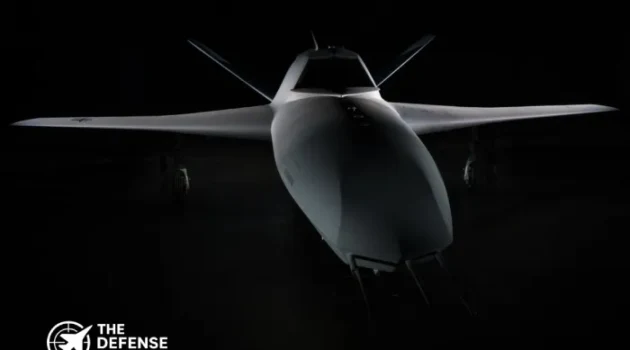
The US Air Force on December 22, 2025 officially designated Northrop Grumman’s experimental drone Project Talon as the YFQ‑48A. This designation marks the aircraft as a prototype in the service’s Collaborative Combat Aircraft (CCA) effort, which aims to field unmanned systems that fly with and extend the reach of manned fighters.1
What It Is
The official US Air Force designation YFQ‑48A reflects Pentagon naming practice where Y indicates a prototype, F signals a fighter role, and Q denotes unmanned aircraft. This is the first time Talon receives such a label, putting it alongside other prototype drone fighters like the YFQ‑42A from General Atomics and the YFQ‑44A from Anduril.3
How It Works
Details about the aircraft’s systems and performance remain limited. Available reports note Talon has a long slender body, unique wing planform, and single small turbofan engine. The focus is on rapid, affordable production and the ability to integrate sensors, communications and autonomy software to work in contested spaces.4
The broader CCA concept envisions networks of crewed and uncrewed systems. A manned fighter could lead a group of drones, handing off tasks such as surveillance, jamming, or targeting while preserving pilot decision authority. This shared workload aims to make air forces more flexible and resilient in high‑threat environments.
Why It Matters
The designation signals that the Air Force sees Project Talon as a serious contender in its effort to field collaborative drones quickly and at scale. The CCA program emphasizes industry competition and aims to speed up development cycles for new technologies.1
Unmanned wingmen are part of a broader shift in military aviation. They aim to reduce risk to pilots, extend operational reach, and counter advanced air defenses. Concepts like manned‑unmanned teaming are seen as key to future air combat in contested spaces, especially against near‑peer competitors with layered air defenses.
Strategic Context
Other nations are also pursuing similar systems. Australia’s MQ‑28 Ghost Bat, for example, is an autonomous wingman designed for interoperability with allied jets. These developments reflect a global trend toward combining human judgment with unmanned platforms that can face greater danger or carry additional sensors and payloads. (This comparison is based on publicly reported programs; specifics vary by operator and mission.)
Information on Project Talon’s exact capabilities remains partly speculative. Northrop’s focus on simplicity, fewer parts, and rapid build suggests a lean approach to innovation compared with legacy large‑platform programs. Some analysis suggests Talon is meant to be lighter and quicker to build than earlier designs Northrop offered for CCA.5
Strategic Impact
The official YFQ‑48A designation indicates that the USAF and its industry partners are advancing beyond concept toward tangible prototype systems that could reshape air combat. As Collaborative Combat Aircraft prototypes mature, the strategic balance in airpower competition may shift. For the United States, fielding effective manned‑unmanned teams could give an edge over potential rivals. Allies watching these developments may seek similar capabilities, influencing global air force modernization plans. Continued testing and eventual selection decisions in the CCA program will clarify how these systems perform and how widely they might be adopted.
Get real time update about this post category directly on your device, subscribe now.