
UK Begins Mass Production Of Ukraine Designed Interceptor Drones
The United Kingdom has begun mass production of Ukraine designed interceptor drones, marking a significant step in European efforts to counter Russia’s sustained aerial attacks on Ukrainian cities and infrastructure.
The announcement was made by officials from the UK Ministry of Defence during discussions at the Munich Security Conference, where Western leaders addressed military assistance and long term support for Kyiv.
The move reflects a growing shift toward lower cost, scalable air defense solutions as Ukraine faces continued barrages of one way attack drones and cruise missiles.
Focus On The Octopus Interceptor Drone
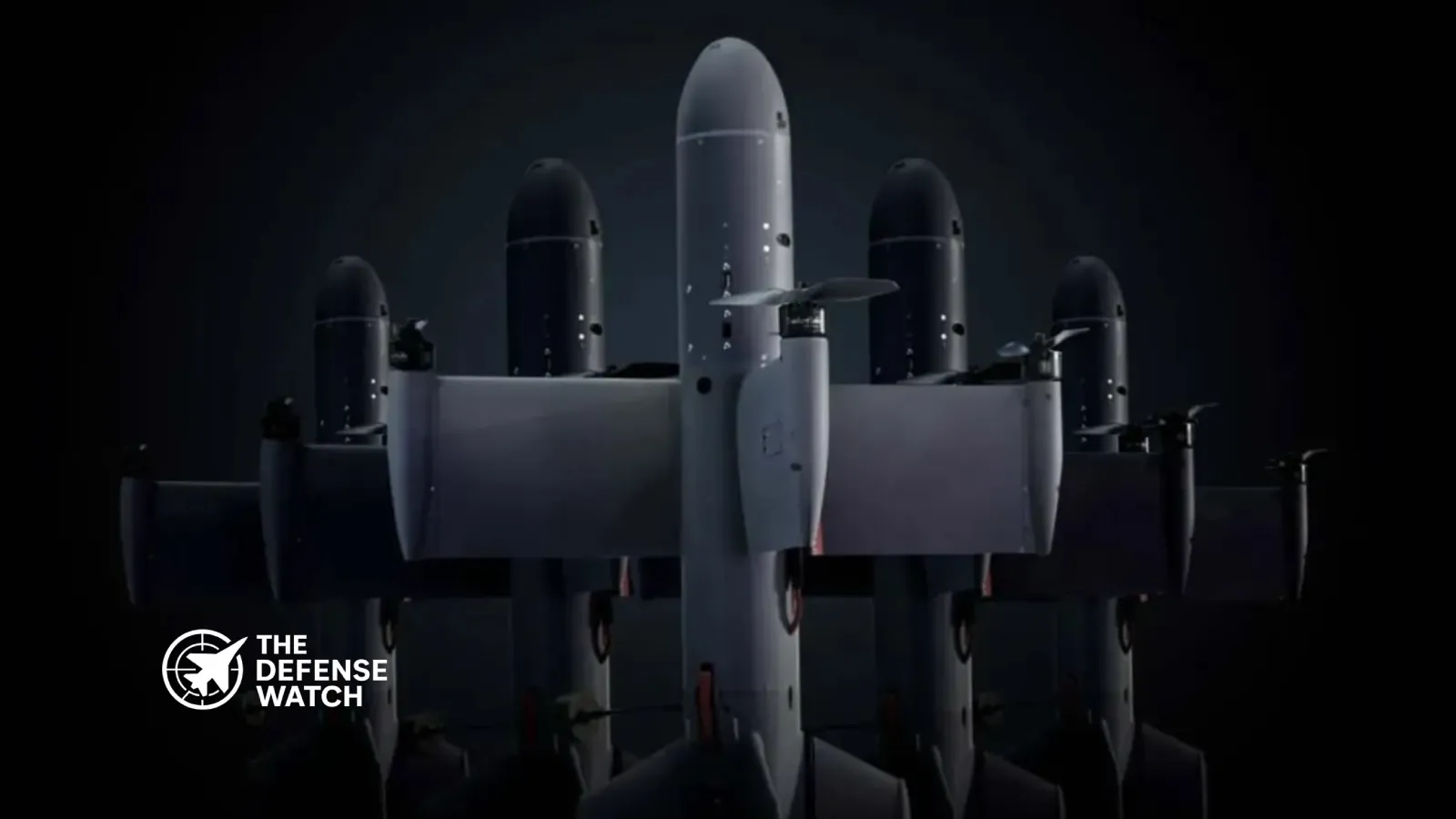
At the center of the initiative is the Octopus interceptor drone, a Ukrainian developed system designed specifically to destroy incoming unmanned aerial vehicles.
According to British defense officials, the Octopus interceptor has demonstrated operational effectiveness against the Iranian designed Shahed loitering munitions used extensively by Russian forces. These systems, often referred to as Shahed one way attack drones, have been deployed in large numbers against Ukrainian power grids, industrial facilities, and civilian areas.
The UK Ministry of Defence stated that the interceptor costs less than 10 percent of the price of the drones it targets. That cost imbalance is central to the concept. Traditional surface to air missile systems, while effective, are expensive and limited in supply. Using them to destroy low cost drones places financial strain on air defense networks.
By contrast, Ukraine designed interceptor drones offer a more sustainable solution for countering persistent aerial threats.
Expanding European Production Partnerships
The British decision comes alongside parallel manufacturing agreements between Germany and Ukraine. German defense firms have also entered joint production arrangements aimed at boosting output of drone based air defense systems.
Officials have framed the effort as part of a broader European strategy to strengthen Ukraine’s defense industrial base while reducing dependence on limited stocks of high end Western air defense missiles.
Rather than relying solely on transfers from NATO inventories, the approach emphasizes co production and localized manufacturing capacity.
This model allows faster scaling of output and supports long term resilience in Ukraine’s defense sector.
A Response To Sustained Russian Drone Campaigns
Russia has used Iranian supplied Shahed drones, often launched in large waves, to overwhelm Ukrainian air defenses. These systems are relatively inexpensive compared to advanced air defense interceptors.
Ukrainian officials have repeatedly stressed that countering mass drone attacks requires layered air defense. That includes radar systems, electronic warfare, mobile anti aircraft guns, and increasingly, dedicated interceptor drones.
The UK’s decision to begin mass production of Ukraine designed interceptor drones directly addresses this operational reality.
By introducing lower cost interceptors in significant numbers, Kyiv can preserve more advanced missile systems for higher value targets such as cruise missiles or ballistic threats.
Cost Efficiency And Scalability
Cost has become a defining factor in the air defense equation.
Advanced systems such as Patriot batteries or other Western surface to air missile platforms can cost hundreds of thousands or even millions of dollars per interceptor. Deploying such systems against relatively inexpensive drones can create an unfavorable cost exchange ratio.
British officials noted that the Octopus interceptor drone is designed for affordability and rapid assembly. Mass production in the United Kingdom will increase output and shorten delivery timelines.
This also reflects a broader trend in modern warfare. Unmanned systems are reshaping air defense by offering flexible, distributed, and lower cost solutions.
Strategic Significance For The UK
For London, the initiative underscores continued political and military support for Ukraine.
Since the start of Russia’s full scale invasion, the United Kingdom has provided anti tank weapons, air defense systems, armored vehicles, and training for Ukrainian personnel. The expansion into joint drone manufacturing signals a deeper level of industrial integration.
British officials have emphasized that strengthening Ukraine’s domestic defense production is a long term objective. Co production of Ukraine designed interceptor drones supports that goal while also reinforcing UK defense industry ties.
The announcement at the Munich Security Conference also carried strategic messaging value. It signals to Moscow that Western support remains active and adaptive.
German Ukrainian Manufacturing Cooperation
Germany’s parallel agreements further illustrate Europe’s evolving defense posture.
Berlin has increased military aid to Kyiv and supported industrial partnerships focused on ammunition, armored vehicle repair, and now drone production.
Together, UK and German initiatives reflect a coordinated European approach. Instead of ad hoc transfers, governments are enabling structured manufacturing partnerships aimed at long term capacity building.
This aligns with wider NATO discussions on boosting defense production across the alliance.
Operational Impact On The Battlefield
The practical effect of expanded interceptor drone production will depend on deployment rates and integration with existing Ukrainian air defense networks.
Ukrainian forces already employ a mix of Western supplied systems and domestically produced solutions. Adding large numbers of Octopus interceptor drones could improve coverage over urban centers and critical infrastructure.
Low cost interceptors are particularly suited to countering swarm tactics, where multiple drones are launched simultaneously.
Defense analysts have noted that layered air defense, supported by cost efficient interceptors, is increasingly necessary as drone warfare evolves.
Broader Implications For Air Defense Doctrine
The UK’s move may also influence future Western air defense planning.
Traditional missile centric defense models are facing cost and supply constraints. The integration of interceptor drones offers a complementary layer that can reduce reliance on high end munitions.
If the Octopus interceptor continues to demonstrate effectiveness, other NATO members may explore similar production partnerships.
This could accelerate a shift toward hybrid air defense architectures that combine missiles, electronic warfare, and unmanned interceptors.
Looking Ahead
Mass production of Ukraine designed interceptor drones represents more than a short term response to battlefield pressures. It reflects a structural change in how Europe is supporting Ukraine and adapting to modern air warfare.
As Russia continues aerial strikes, cost effective countermeasures will remain essential.
For the United Kingdom, the program reinforces its role as a leading European security actor. For Ukraine, it strengthens domestic innovation and expands defensive capacity against sustained drone attacks.
The evolution of this partnership will likely shape the next phase of air defense cooperation across Europe.
Get real time update about this post category directly on your device, subscribe now.
