
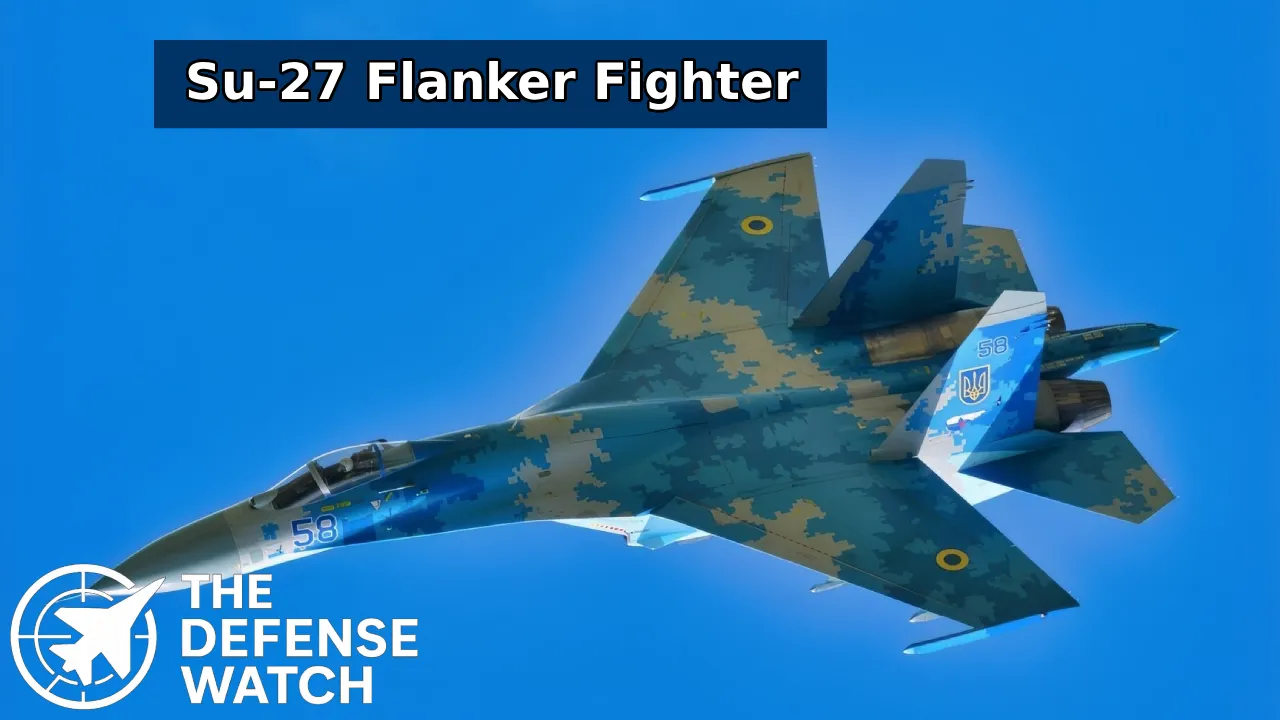
The United States military discreetly purchased two Russian-made Su-27 Flanker fighters in the mid-2000s to support advanced training and intelligence programs, according to historical procurement disclosures and defense industry sources. The acquisition, carried out through a foreign contractor, enabled U.S. pilots and analysts to study one of Russia’s most widely deployed air superiority fighters under controlled conditions.
Background: Why the Su-27 Flanker Matters
The Su-27 Flanker, developed by the Soviet Union in the late Cold War, was designed as a direct counter to the U.S. F-15 Eagle. With its Mach 2.35 top speed, high-agility aerodynamics, long operational range, and powerful radar suite, the aircraft became a cornerstone of Russian and allied air forces.
Following the collapse of the Soviet Union, several former republics inherited Su-27s. Limited budgets and shifting defense priorities made some of these aircraft available for legal export or refurbishment—creating rare opportunities for Western governments to obtain and evaluate frontline Russian platforms.


For the United States, having access to a real Su-27 Flanker offered significant advantages in understanding the design philosophy, strengths, limitations, and maneuver characteristics of a potential adversary aircraft.
Acquisition Through a Third-Party Contractor
The two Su-27 Flanker fighters were purchased through Tac Air, a private contractor specializing in adversary air support. Reports indicate that the aircraft originated from Ukraine’s surplus stock and were transferred after refurbishment and demilitarization processes aligned with export-control regulations.
While the exact purchase price was never publicly disclosed, defense analysts estimate that foreign-origin Flankers sold on the legal market typically range between $5–$15 million per unit depending on airframe hours and equipment installed.
The aircraft were shipped to a secure U.S. facility where engineers completed airworthiness evaluations and maintenance work prior to flight testing.
Purpose: Evaluation and Aggressor Training
Once in U.S. custody, the Su-27 Flanker fighters played key roles in:
1. Reverse-Engineering and Technical Evaluation
Analysts examined the aircraft’s radar cross-section, avionics architecture, radar performance parameters, and aerodynamic handling. Understanding these systems allowed the U.S. to refine both defensive countermeasures and fighter engagement strategies.
2. Adversary Air (Red Air) Training
Trained contractor pilots flew the Su-27 Flanker in simulated combat missions against U.S. fighters such as the F-15, F-16, and later the F-22 and F-35. First-hand exposure enabled American pilots to understand how the Flanker behaves during high-G maneuvers, low-speed engagements, and beyond-visual-range fights.
These sessions offered insights impossible to replicate through simulators alone.
3. Tactics Development
The Air Force’s Weapons School and intelligence community used data gathered from the aircraft to develop new tactics, techniques, and procedures for countering Russian-designed fighters widely exported to Asia, Africa, and the Middle East.
Expert Perspectives
Defense aviation expert Richard Aboulafia has noted that access to real foreign fighters gives the U.S. “a training and analytical advantage that no simulator or mock-up can replicate.”
Former Air Combat Command officials have similarly stated that assessments of authentic adversary aircraft significantly improve pilot situational understanding during air-to-air engagements.
Additionally, analysts highlight that the widespread global use of the Su-27 Flanker family—including its modern derivatives like the Su-30, Su-33, Su-34, and Su-35—makes direct exposure strategically valuable for the United States.
Strategic Significance
The acquisition reflects a long-standing U.S. practice of obtaining foreign combat aircraft whenever legally and practically feasible. Past examples include MiG-21s from Indonesia, Iraqi MiG-23s, and the well-known secretive “Red Eagles” squadron of the 1980s.
For the Su-27 Flanker, this access became especially relevant as Russia exported advanced variants to countries such as China, India, Vietnam, and Algeria. Understanding the aircraft’s baseline capabilities helped the U.S. anticipate how these fleets might operate in real-world scenarios.
What’s Next?
Although the two original Su-27 Flanker aircraft acquired by the U.S. are no longer believed to be flying, their legacy continues to influence American air combat programs. The rise of contractor-run adversary air units and increasing demand for dissimilar air combat training may prompt future interest in acquiring other foreign-origin platforms, especially as geopolitical tensions rise.
Meanwhile, the widespread deployment of advanced Flanker-family aircraft worldwide ensures that the insights gained from these airframes will remain relevant for years to come.
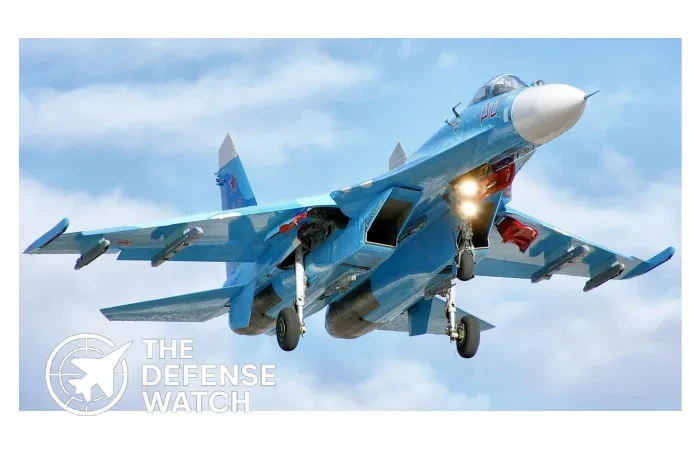
Su-27 Flanker Fighter Jet – Full Specifications
Su-27 Flanker Fighter Jet


Full Specifications
General Information
| Name | Su-27 “Flanker” |
| Manufacturer | Sukhoi Design Bureau |
| Country of Origin | Soviet Union (Russia) |
| Type / Role | Air Superiority Fighter |
| Generation | 4th Generation |
| Status | In Service |
| First Flight | May 20, 1977 |
| Introduction / In Service Since | 1985 |
| Number Built | Over 700 |
| Operators | Russia, China, Ukraine, Vietnam, Ethiopia, Indonesia, Belarus |
Dimensions & Structure
| Length | 21.9 m (72 ft) |
| Wingspan | 14.7 m (48 ft) |
| Height | 5.9 m (19 ft) |
| Wing Area | 62 m² |
| Empty Weight | 16,380 kg |
| Maximum Takeoff Weight (MTOW) | 30,450 kg |
| Internal Weapons Bay | None |
| External Hardpoints | 10 |
Performance
| Maximum Speed | Mach 2.35 (2,500 km/h) |
| Range | 3,530 km |
| Combat Radius | 1,340 km |
| Service Ceiling | 19,000 m (62,500 ft) |
| Rate of Climb | 325 m/s |
| Thrust-to-Weight Ratio | 1.07 |
| G Limits | +9G |
Powerplant
| Engine Type | Saturn AL-31F Turbofan |
| No. of Engines | 2 |
| Thrust (each) | 27,500 lbf (122.6 kN) |
| Thrust Vectoring | No (Su-27 base model) |
| Fuel Capacity | 9,400 kg internal |
Armament
| Gun | 30mm GSh-30-1 cannon |
| Missiles (Air-to-Air) | R-27, R-73, R-77 |
| Missiles (Air-to-Ground) | Kh-29, Kh-31 |
| Bombs | FAB-series general-purp |
| Hardpoints | 10 |
| Payload Capacity | 8,000 kg |
Avionics & Systems
| Radar | N001 Myech Pulse-Doppler |
| Radar Range | 80–100 km |
| Electronic Warfare (EW) System | SPO-15 Beryoza RWR |
| Targeting System | IRST & Helmet-Mounted Sight |
| Helmet Display | Yes |
| Navigation | Inertial + GPS |
| Autopilot / AI Assistance | Basic analog system |
| Communication | Secure UHF/VHF |
Stealth & Technology
| Radar Cross Section (RCS) | 10–15 m² |
| Stealth Features | Non |
| Infrared Signature Reduction | Minimal |
| Sensor Fusion | No |
| Networking Capabilities | Limited datalink |
Variants
| Special Export Versions | Su-27SK |
Operational History
| Major Conflicts / Deployments | Ethiopia–Eritrea War, Ukraine conflict |
| Notable Operators | Russia, China, India (as Su-30MK), Ukraine |
| Combat Proven? | Yes |
| Mission Types | Air Superiority, Interception, Escort, Patrol |
Cost & Program
| Unit Cost | $30–40 million USD |
| Development Cost | Classified (Soviet-era) |
| Program Name | PFI Program (Perspective Frontline Fighter) |
| Funding Countries | Soviet Union |
Additional Information
| Upgrades Planned | Radar and avionics modernization |
| Future Replacement | Su-35S, Su-57 |
| Export Restrictions | Limited to friendly nations |
| Notable Achievements | Set multiple world records for climb rate |
| Competitors | F-15 Eagle, MiG-29, Rafale |
PROS
- Exceptional range and endurance
- Highly maneuverable airframe
- Powerful twin-engine thrust
- Proven combat record
- Extensive global operator base
CONS
- Outdated avionics compared to modern jets
- Lacks stealth features
- High radar cross-section
- Limited multirole capability in base model
- Maintenance-intensive
Su-27 Flanker: Russia’s Air Superiority Fighter
Developed by the Soviet Union’s Sukhoi Design Bureau, the Su-27 “Flanker” remains one of the most capable and recognizable fourth-generation fighter jets in the world. Conceived in response to the U.S. F-15 Eagle during the late Cold War, the Su-27 was designed to ensure Soviet air superiority against advanced Western aircraft. Its blend of range, agility, and firepower continues to make it relevant in modern combat environments.
Powered by twin Saturn AL-31F turbofan engines, the Su-27 can reach speeds of Mach 2.35 and altitudes exceeding 57,000 feet. With an operational range of nearly 2,200 miles, it provides the Russian Air Force with deep strike and patrol capabilities. The aircraft’s 30mm GSh-30-1 cannon and up to 10 hardpoints for air-to-air and air-to-ground missiles make it a formidable adversary in both interception and multirole operations.
Avionics on the Su-27 Flanker Fighter Jet include the N001 radar, offering detection ranges of up to 80–100 km against fighter-sized targets. Its infrared search and track (IRST) system and helmet-mounted sight enhance situational awareness and missile cueing. Though lacking stealth, the Su-27’s aerodynamic design and supermaneuverability—achieved through relaxed static stability and powerful thrust vectoring in later variants—make it one of the most agile fighters of its era.
Modernized derivatives such as the Su-30, Su-33, and Su-35 trace their lineage to the original Su-27 platform, underscoring its robust design and long-term adaptability.
Su-27 Flanker Fighter Jet Price in US
The Su-27 Flanker’s estimated unit cost is between $30–40 million USD, depending on configuration and export version. While not operated by the U.S., it is often studied by Western analysts and featured in training simulations for its performance benchmark role against American fighters like the F-15 and F-16.
FAQs – Su-27 Fighter Jet
Yes. The Su-27’s NATO reporting name is “Flanker”. This codename was assigned during the Cold War to identify Soviet aircraft in NATO’s system. The “Flanker” designation applies to the Su-27 and its subsequent derivatives, including the Su-30, Su-33, and Su-35.
The Su-30 is a direct evolution of the Su-27 airframe, which is why NATO also classifies it under the same “Flanker” family. Although upgraded with modern avionics, radar, and multirole capability, the Su-30 retains much of the Su-27’s aerodynamic structure and design lineage—hence its continued “Flanker” naming convention.
The Su-27 and F-15 Eagle were designed as counterparts during the Cold War. While the Su-27 offers superior maneuverability, range, and high-altitude performance, the F-15 generally holds an advantage in avionics, radar, and precision-guided weapon integration. In short, the Su-27 excels in agility and endurance, while the F-15 dominates in technology and situational awareness.
The most advanced “Flanker” variant today is the Su-35S, often dubbed “Flanker-E.” It features thrust-vectoring engines, Irbis-E radar, advanced electronic warfare systems, and partial stealth improvements. The Su-35S represents the peak of Su-27 family evolution before the introduction of Russia’s fifth-generation Su-57.
The Su-27 Flanker is a fourth-generation air superiority fighter. It was developed in the 1970s to counter advanced Western fighters like the F-14 and F-15, combining high speed, long range, and agility to maintain Soviet dominance in air-to-air engagements.
Get real time update about this post category directly on your device, subscribe now.
Reviews
Get real time update about this post category directly on your device, subscribe now.

10 comments
[…] the September parade when only a ground formation was shown—the new footage underscores that the system is now integrated into active training and operational […]
[…] drones during a seven-hour aerial engagement, marking the first time alliance forces opened fire on Russian aircraft since the conflict in Ukraine […]
[…] is expected to cost less and require less maintenance, and can launch both heavier and lighter aircraft than a steam piston-driven system. This flexibility proves crucial as the Navy integrates new aircraft types, including heavier […]
[…] cryptographic devices, simulators, spare parts, software updates, publications, and full-motion training systems. Logistical and technical support services are part of the […]
[…] has been modernizing how it trains military aircrew to handle increasingly complex missions and systems. The initiative is part of Project AIR5428 Phase 3, which aims to overhaul air mission training […]
[…] SBU’s Telegram post, long-range drones operated by its Alpha Special Operations Center hit two Su-27 aircraft on the ground at Belbek. One was fully loaded and preparing for a combat sortie when it was […]
[…] personnel casualties, Ukraine’s General Staff reported the destruction or disabling of several Russian systems. These included multiple launch rocket systems used for long-range fires, as well as other […]
[…] Live Virtual Constructive (LVC) environment. That setup included a virtual F/A-18 and two simulated adversary aircraft. In the scenario, the virtual F/A-18 served as mission lead, directing the autonomous targets to […]
[…] Hurlburt Field hosts AFSOC headquarters and multiple flying and support units, making consistent training coordination and aviation management essential to day to day […]
[…] The aircraft will join the existing mix of fighters, which includes Sukhoi Su-30s, F-16s, and training aircraft. The enhanced sensor suite and weapons load of the Rafale jets are seen as key upgrades to the […]