
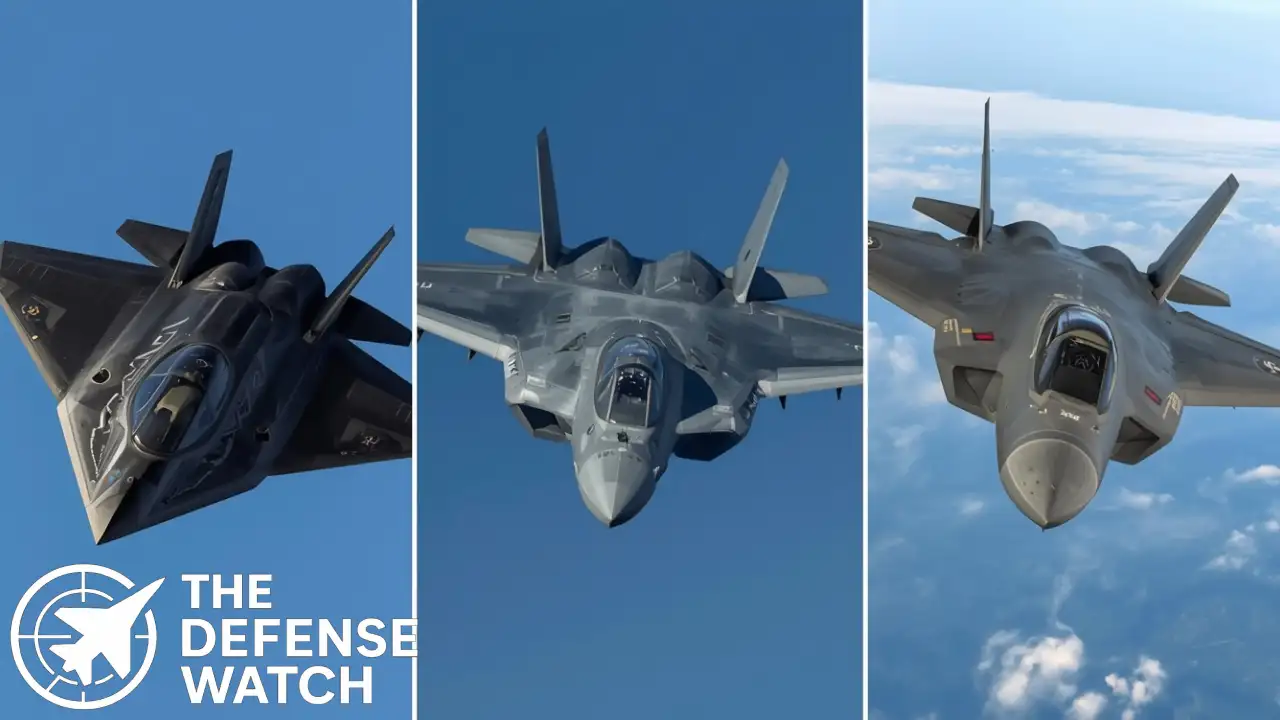
The Birth of Stealth: F-117 Nighthawk
The United States fundamentally changed the character of aerial warfare with the introduction of the Lockheed F-117 Nighthawk in the 1980s. Developed under the highly secretive “Have Blue” program, the F-117 became the world’s first operational stealth aircraft, optimized to evade radar detection through faceted design and radar-absorbent coatings.
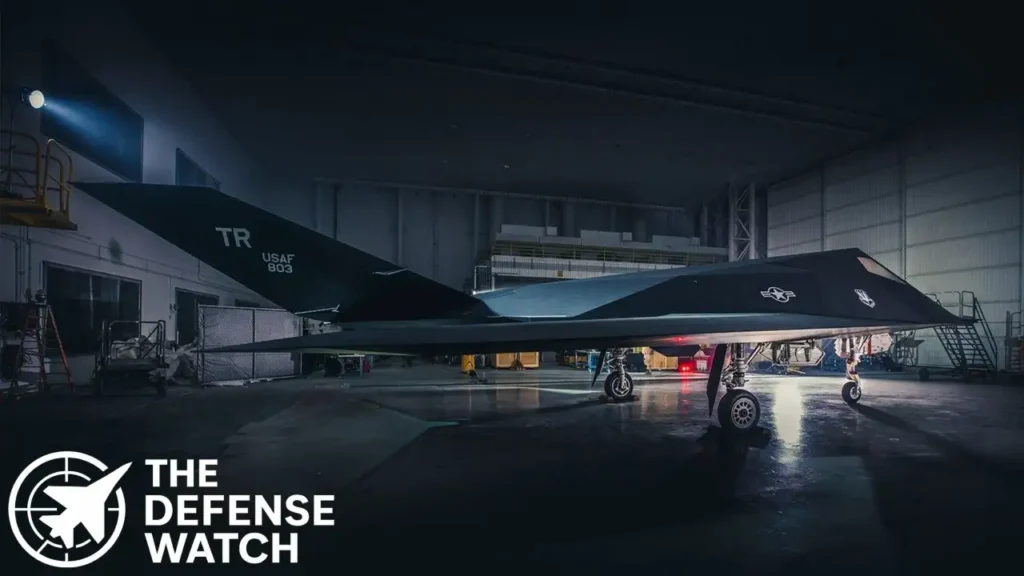
Although not a traditional fighter in terms of agility or speed, the F-117 was a precision strike aircraft. Its combat debut in Operation Just Cause (1989) and later prominence in Operation Desert Storm (1991) cemented its reputation. The aircraft’s ability to penetrate dense air defenses and deliver guided munitions on high-value targets demonstrated the transformative power of stealth.
Next Generation Superiority: F-22 Raptor
While the F-117 proved stealth’s utility, the Pentagon envisioned an aircraft combining radar evasion with air dominance. This vision led to the Lockheed Martin F-22 Raptor, which entered service in 2005.
The F-22 introduced a blend of stealth, supercruise, sensor fusion, and unmatched maneuverability. Designed to counter advanced Soviet fighters and integrated air defense systems, the Raptor became the U.S. Air Force’s premier fifth-generation air superiority platform.
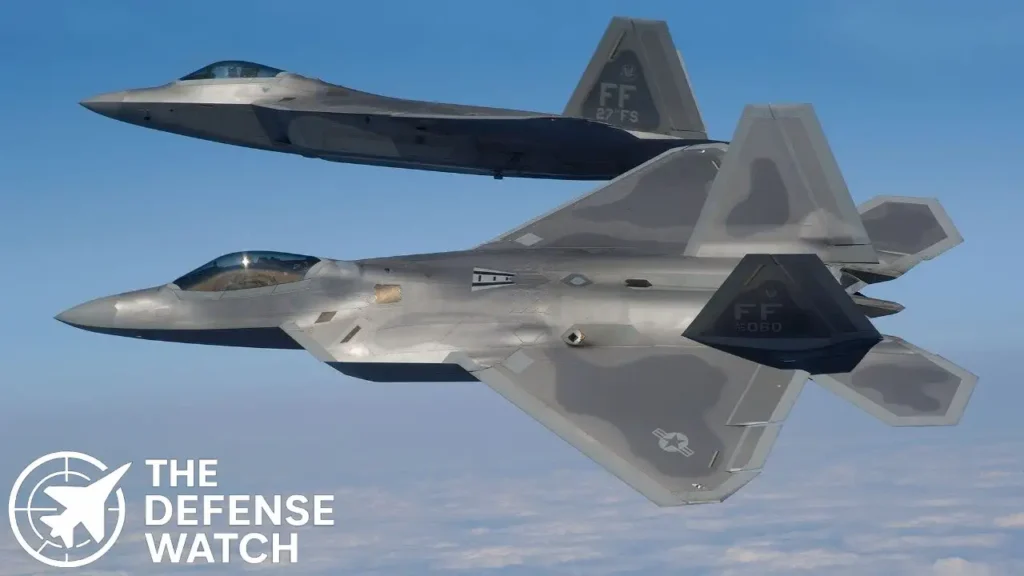
Despite its technological edge, the F-22 program was curtailed after only 187 aircraft were produced, largely due to high costs and the shifting defense priorities following the Cold War. Nonetheless, the F-22 remains a cornerstone of U.S. airpower, often deployed as a deterrent in contested regions.
Global Backbone of Stealth: F-35 Lightning II
The third stage in U.S. stealth fighter evolution came with the F-35 Lightning II, introduced in 2015. Unlike the niche-focused F-117 and the air-superiority-centric F-22, the F-35 was designed as a multirole stealth fighter adaptable across the Air Force, Navy, and Marine Corps.
The F-35’s variants—F-35A (conventional takeoff), F-35B (short takeoff/vertical landing), and F-35C (carrier-based)—allow joint and allied forces to operate with a common platform. With advanced sensors, networked warfare capability, and stealth design, the F-35 has been exported widely to NATO and partner nations, shaping coalition airpower.
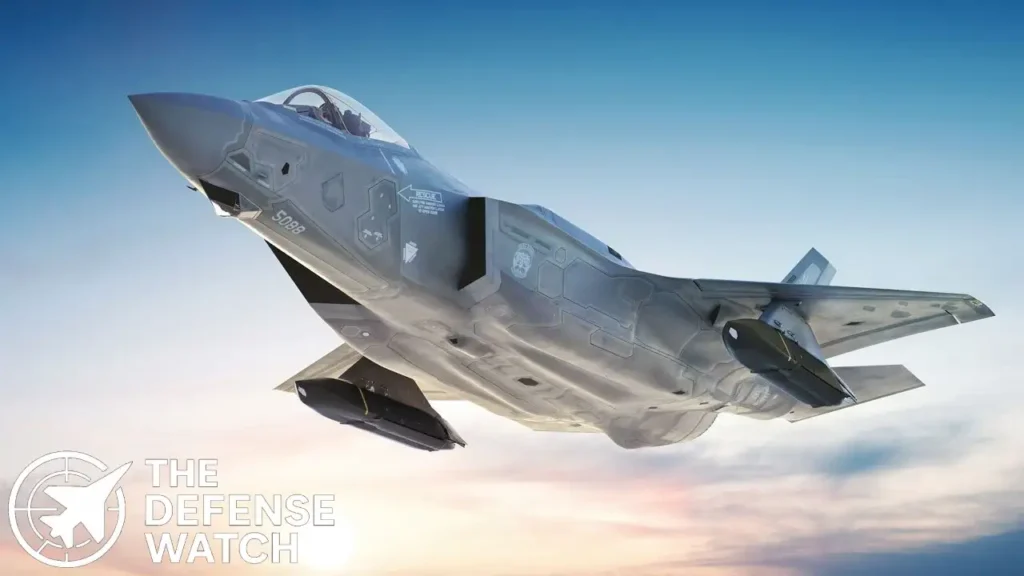
The program, though criticized for cost overruns and development delays, has matured into a global enterprise. Today, over 1,200 F-35s are in service worldwide, giving the United States and its allies a formidable technological edge.
Emerging Threats and the Next Chapter
As rivals such as China and Russia field their own stealth aircraft—the Chengdu J-20 and Sukhoi Su-57—the U.S. is already advancing its next-generation air dominance (NGAD) program. The NGAD initiative envisions a sixth-generation fighter with enhanced stealth, adaptive engines, directed-energy weapons, and unmanned teaming.
Analysts believe the NGAD will eventually complement or replace the F-22, while the F-35 remains in production through the 2030s. This layered approach ensures the U.S. maintains an air dominance edge amid growing global competition.
Analysis: From Prototype to Global Standard
The evolution from the faceted F-117 to the sensor-driven F-35 reflects the changing demands of warfare. Where stealth once meant survival against radar, it now enables data-driven, multi-domain operations. Each generation of U.S. stealth fighter has built upon the lessons of its predecessor—moving from niche strike missions, to air dominance, to coalition-wide multirole flexibility.
This progression underscores why U.S. stealth technology remains central to deterrence strategies. While adversaries invest in counter-stealth radar and integrated air defenses, the adaptability and networking capabilities of U.S. platforms have so far kept them ahead in the airpower race.
FAQs
The F-117 was retired in 2008 due to high operating costs and the arrival of more versatile stealth aircraft like the F-22 and F-35.
The F-22 excels in air superiority with unmatched maneuverability, while the F-35 is a multirole platform with advanced sensors and broader mission flexibility.
As of 2025, more than 1,200 F-35s are in service worldwide across U.S. and allied air forces.
NGAD is the U.S. Air Force’s effort to develop a sixth-generation stealth fighter designed for future contested airspaces.
Get real time update about this post category directly on your device, subscribe now.

20 comments
[…] Lockheed Martin F-35 Lightning II […]
[…] SpecificationDassault RafaleLockheed Martin F-35 Lightning II […]
[…] driving cost: Very large fighter fleet (including F-35 variants, F-22 Raptors, F-15EX, other legacy types), high unit cost of newest jets, high operating & maintenance […]
[…] a move intended to break the cycle of delays that have plagued major defense programs like the F-35 Lightning II, the Columbia-class submarine, and the B-21 Raider stealth […]
[…] production of next-generation fighter aircraft—such as the F-35 Lightning II, F/A-18E/F Super Hornet, and Eurofighter Typhoon—has been particularly affected. Tier-2 and […]
[…] A320, Boeing 787, F-35 Lightning II, C-130 […]
[…] F-35 Lightning II claims the top spot among the best fighter jets in 2025, thanks to its unmatched sensor fusion and […]
[…] island itself reflects technological evolution. Its island, shorter in length and 20 feet taller than that of the Nimitz class, is set 140 feet […]
[…] aim is to complement existing frontline aircraft — such as the F-35 Lightning II — with swarms of lower-cost, high-performance drones that can assume risky roles, extend sensor […]
[…] Assets: While specific 2026 aircraft types are undisclosed, previous iterations included F-35 Lightning IIs, F-16s, and KC-135 […]
[…] force modernization forms a critical component of Germany’s defense strategy, with investments in F-35 Lightning II acquisitions, continued Eurofighter upgrades, and munitions stockpiling. The Luftwaffe operates […]
[…] F-35A is the Air Force’s standard variant of the fifth-generation F-35 Lightning II, designed for conventional runways and cleared for up to 9G maneuvers. Its role contrasts with the […]
[…] the critical support provided by NATO Air Command and the Royal Netherlands Air Force. Dutch F-35 Lightning II fighters, which have maintained a continuous deployment in Poland since September 2025, played a key role in […]
[…] Lockheed Martin plans to showcase core platforms and technological demonstrations, including:• F-35 Lightning II features and cockpit demonstrations for invited guests, highlighting sensor fusion and data […]
[…] technology, and modern weapons systems designed to compete with established platforms like the F-35 Lightning II and European fighter programs. Turkey’s development of the Kaan accelerated following Ankara’s removal from the F-35 […]
[…] most powerful fighter engine currently in operational service. It powers all three variants of the F-35 Lightning II, including the conventional takeoff and landing F-35A, the short takeoff and vertical landing […]
[…] offers from the United States and Russia for fifth-generation fighters. Lockheed Martin’s F-35 Lightning II and Russia’s Sukhoi Su-57 were both evaluated but ultimately not selected. Defense industry […]
[…] long-term sustainment strategy for legacy fighter platforms. While newer aircraft such as the F-35 Lightning II continue to enter service, the F-16 Fighting Falcon remains a backbone platform for both US and […]
[…] to a report by Reuters, the ambassador said Portugal should look at acquiring the F-35 Lightning II as it evaluates the future of its combat aviation fleet. The remarks come as Portugal continues to […]
[…] reportedly observed include advanced fighters such as the F-22 Raptor and F-35 Lightning II, along with legacy platforms like the F-15E Strike Eagle. Strategic bombers including the B-52 […]