- ► Shield AI’s V-BAT operated during NATO’s HEIMDALL 26 exercise in northern Norway from February 17 to 26.
- ► The exercise was hosted by NATO’s Center of Excellence for Cold Weather Operations.
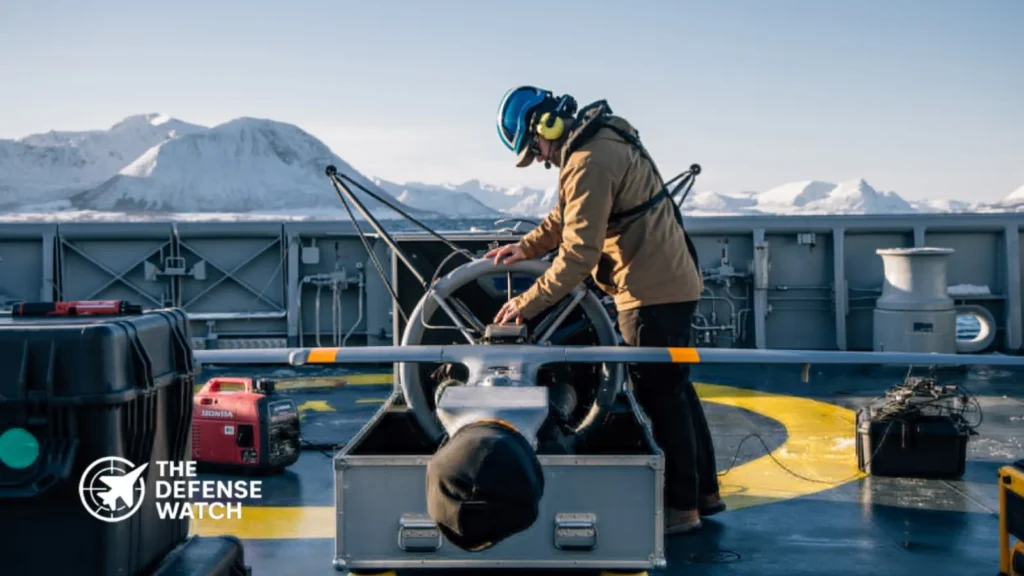
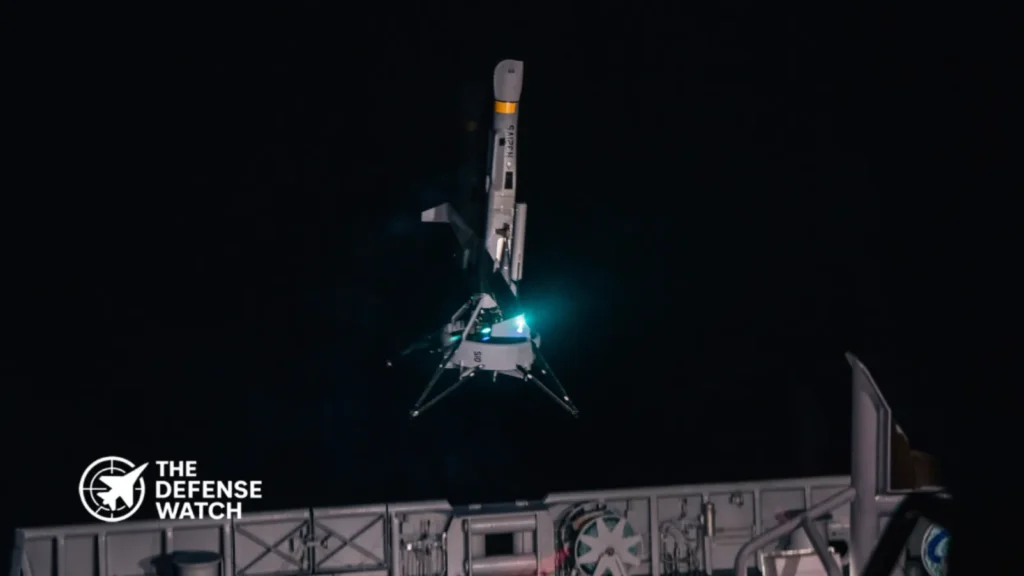
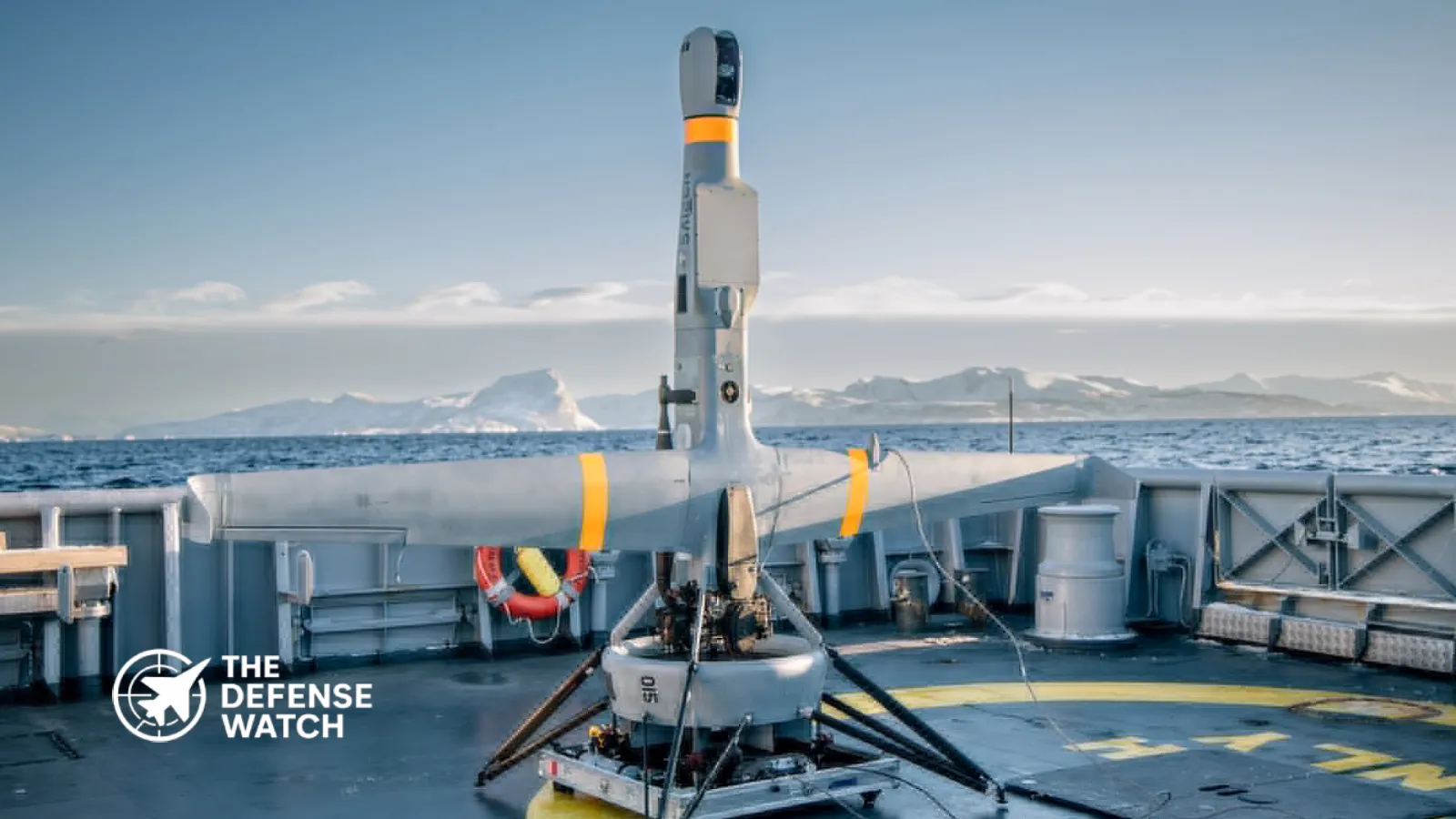
- ► V-BAT conducted ship-based VTOL operations from the Norwegian Coast Guard vessel KV Olav Tryggvason.
- ► Flights were performed in Arctic winter conditions without aircraft modifications.
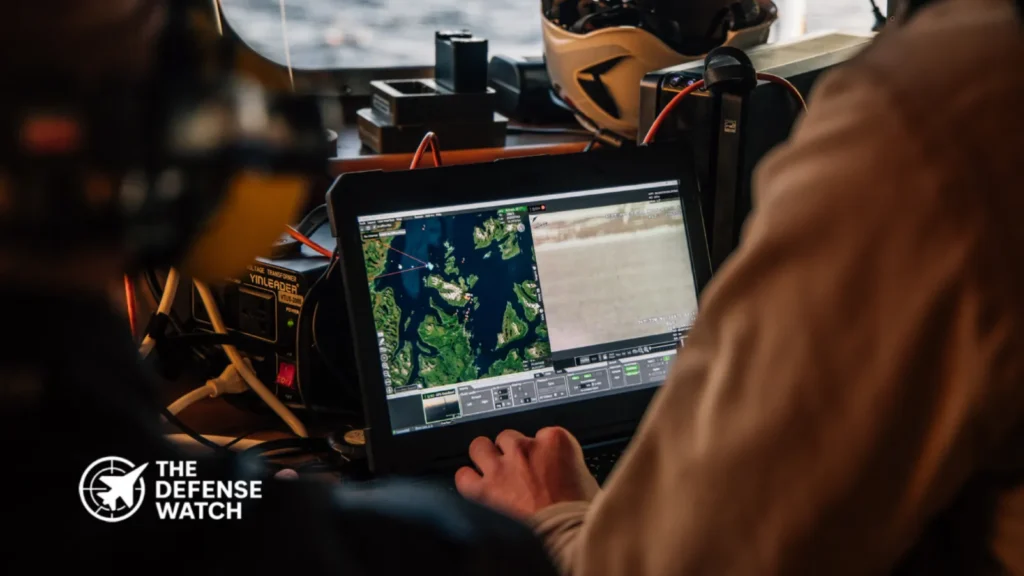
- ► ISR data from V-BAT was integrated into NATO-aligned command and control networks.
Shield AI V-BAT Arctic ISR operations during NATO’s HEIMDALL exercise mark a practical step forward in how the alliance approaches surveillance in the High North. The demonstration was not about unveiling new hardware. It was about showing that existing unmanned systems can function as reliable, ship-based ISR assets in one of the most demanding environments NATO forces face.
That distinction matters. Arctic security has shifted from a niche concern to a core planning issue for NATO navies and joint forces.
Why HEIMDALL Matters For NATO Now
HEIMDALL was designed to validate NATO’s Arctic experimentation arena, not to showcase single platforms. The focus was on manned-unmanned teaming, data sharing, and integration into the Federated Mission Network and multi-domain operations.
The High North is no longer permissive. Russian naval patrols, long-range sensors, and submarine activity have increased across the Barents and Norwegian Seas. At the same time, allied forces operate from dispersed bases with limited infrastructure.
An unmanned aircraft that can launch from small vessels, survive extreme cold, and feed ISR directly into alliance networks addresses a real operational gap. That is the context in which Shield AI brought V-BAT to Norway.
Operational Impact Of V-BAT In Arctic Maritime ISR
From an operational standpoint, the most important outcome was not endurance or sensor payload. It was reliability.
V-BAT flew from land and from a Norwegian Coast Guard ship without changes to configuration. Arctic operations often require heaters, modified fuels, or specialized maintenance cycles. The absence of those requirements lowers the barrier to deployment.

Image : Shield AI Ship-based VTOL operations from KV Olav Tryggvason demonstrated a key advantage over fixed-wing UAVs that need runways or launch systems. For patrol vessels, logistics ships, and amphibious platforms, deck space is limited. A small VTOL system extends surveillance without changing ship design.
Night and day ISR, electro-optic, infrared, and synthetic aperture radar use also point to flexibility. In Arctic winter, long periods of darkness reduce the usefulness of traditional visual surveillance. Persistent unmanned coverage becomes essential.
How V-BAT Compares To Other NATO ISR Options
Within NATO inventories, Arctic ISR usually relies on crewed maritime patrol aircraft, helicopters, and a limited number of larger UAVs. Systems like ScanEagle or Puma offer tactical coverage but are constrained in endurance and payload.
V-BAT sits in a middle ground. It is smaller and cheaper than Class II or III drones but offers far longer endurance than most ship-launched systems. Its ducted fan design improves safety on crowded decks, an issue that has limited wider UAV use aboard surface combatants.
Image : Shield AI European alternatives exist, but many still depend on catapult launch or recovery nets. That complicates use in high sea states. V-BAT’s vertical recovery is a practical advantage in the North Atlantic and Arctic waters.
Alliance And Industrial Implications
For NATO, the real takeaway is interoperability. During HEIMDALL, V-BAT functioned as an ISR node inside a multinational architecture. Data flowed to forces ashore and at sea.
That aligns with NATO’s push toward distributed sensing rather than a few high-value platforms. Smaller unmanned systems reduce risk and expand coverage.
From an industry angle, Shield AI positions itself not as a niche UAV maker but as a provider of deployable autonomy that fits alliance standards. The fact that the aircraft worked with Norwegian forces and NATO networks strengthens its case in European procurement discussions.
Image : Shield AI Statements from Shield AI leadership, including Brandon Tseng, emphasize expeditionary use. That message resonates with smaller navies that cannot afford large UAV fleets but still need persistent ISR.
Regional Security Context In The High North
The Arctic is becoming a zone of routine military presence rather than occasional patrols. Norway’s role is central, acting as NATO’s frontline state in the region.
Unmanned ISR launched from coast guard or naval vessels allows continuous monitoring of sea lines, choke points, and remote coastal areas. It also supports allied reinforcement planning by improving situational awareness during crises.
For Russia, the spread of low-cost, persistent ISR complicates concealment and movement. For NATO, it strengthens early warning without escalating force posture.
What Happens Next
HEIMDALL was an experiment, but it sets conditions for follow-on decisions. Expect more NATO exercises to include ship-based UAVs as standard assets rather than add-ons.
Procurement paths may follow. Smaller allies could prioritize systems that require minimal infrastructure and training. Larger navies may integrate them as supplements to crewed aviation.
For Shield AI, the next test will be sustained deployments, not exercises. Cold weather proof points matter most when systems stay forward for months, not weeks.
Strategic Assessment
V-BAT’s performance during HEIMDALL does not shift the military balance on its own. But it signals a broader change in how NATO approaches Arctic deterrence.
Distributed unmanned ISR reduces reliance on vulnerable high-end platforms. It improves resilience in contested environments and supports alliance cohesion through shared data.
Budget pressures across NATO favor systems that deliver coverage without heavy support tails. That reality benefits small VTOL UAVs with long endurance.
The escalation risk remains limited. ISR systems are defensive by nature. However, their presence tightens surveillance nets, reducing freedom of movement for potential adversaries.
In the High North, awareness is deterrence. HEIMDALL showed NATO is investing in both.
Get real time update about this post category directly on your device, subscribe now.