J-10 Fighter Seen With Possible YJ-21E Missile
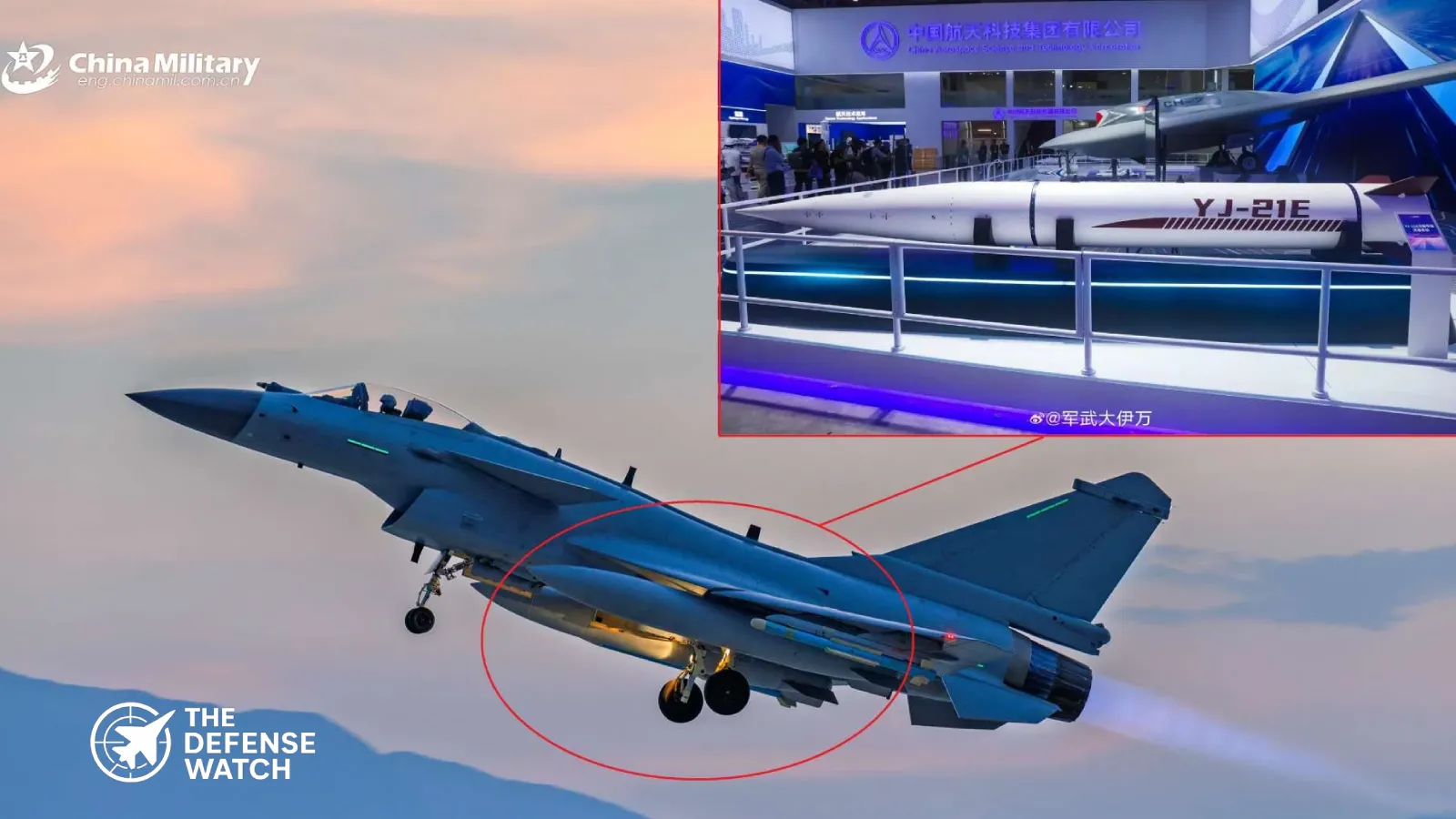
China’s J-10 fighter has been photographed carrying what appears to be a YJ-21E hypersonic anti-ship missile, a development that could mark a new step in the PLA Air Force’s strike modernization. The images, first reported by Army Recognition, show a J-10 aircraft fitted with a large centerline weapon consistent in shape and size with the YJ-21 missile family.
While Chinese authorities have not confirmed the weapon’s identity, the imagery has drawn attention across defense circles due to the YJ-21’s known role as a high-speed, long-range anti-ship system. If confirmed, the pairing would suggest China is exploring ways to extend hypersonic strike capability beyond bombers and naval platforms.
What the YJ-21E Is Believed to Be
The YJ-21 is widely assessed as a hypersonic anti-ship missile designed to defeat modern naval defenses through speed, altitude, and maneuverability. Previous sightings have linked the missile to the PLA Navy’s Type 055 destroyers and to air-launched variants carried by the H-6K bomber.
- (adsbygoogle = window.adsbygoogle || []).push({});
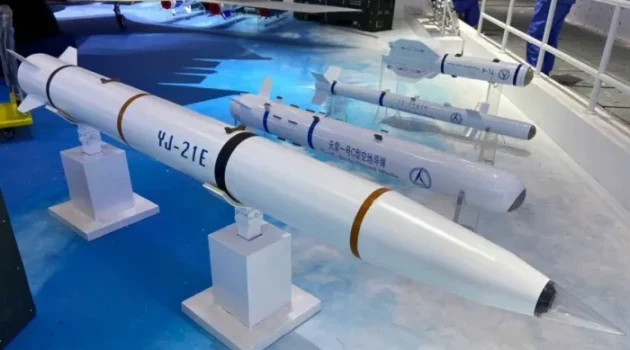
The YJ-21E is believed to be an export or air-launched derivative optimized for fighter or bomber integration. Analysts note its distinctive long body and enlarged nose section, features consistent with hypersonic glide or boost-glide designs. Army Recognition reports that the missile seen on the J-10 closely matches these characteristics, though no official specifications have been released.
Why the J-10 Integration Matters
The J-10 fighter has long been a core platform of the PLA Air Force, serving as a multirole aircraft for air defense, strike, and limited maritime missions. Integrating a weapon like the YJ-21E onto the J-10 would represent a major expansion of its mission set.
Unlike large bombers, fighters offer greater flexibility, faster reaction times, and broader basing options. A J-10 fighter armed with a hypersonic anti-ship missile could complicate adversary naval planning, especially in contested areas such as the Western Pacific and South China Sea.
From a U.S. and allied perspective, this would signal continued Chinese efforts to distribute long-range strike capabilities across multiple platforms, rather than relying on a small number of high-value assets.
Technical and Operational Questions Remain
Despite the visual evidence, several uncertainties remain. The J-10’s payload capacity, combat radius, and sensor integration raise questions about how operational such a configuration would be. Carrying a large hypersonic missile could affect the fighter’s range, maneuverability, and survivability.
(adsbygoogle = window.adsbygoogle || []).push({});It is also unclear whether the aircraft shown was conducting a test fit, captive carry trial, or an early phase of weapons integration. Defense analysts caution that imagery alone does not confirm full operational capability.
As Aviation Week and Janes have noted in past assessments of Chinese weapons programs, public sightings often precede years of testing before a system reaches frontline service.
Broader Strategic Context
China’s focus on hypersonic weapons reflects a broader push to counter advanced missile defense systems and naval power projection. Air-launched hypersonic missiles add another layer to China’s anti-access and area denial strategy.
For the United States and its allies, developments like the possible J-10 and YJ-21E pairing reinforce the need to track not just new missiles, but also the platforms that carry them. Distributed launch options increase complexity for detection, tracking, and interception.
See also: China’s H-6K bomber and its evolving long-range strike role.
What Comes Next
Further confirmation will likely depend on additional imagery, official PLA statements, or disclosures through Chinese state media. Until then, the J-10 fighter’s apparent association with a possible YJ-21E missile remains an important indicator of China’s ongoing experimentation with hypersonic air-launched weapons.
As China continues to modernize its air and missile forces, such developments will remain closely watched by defense planners across the Indo-Pacific.