

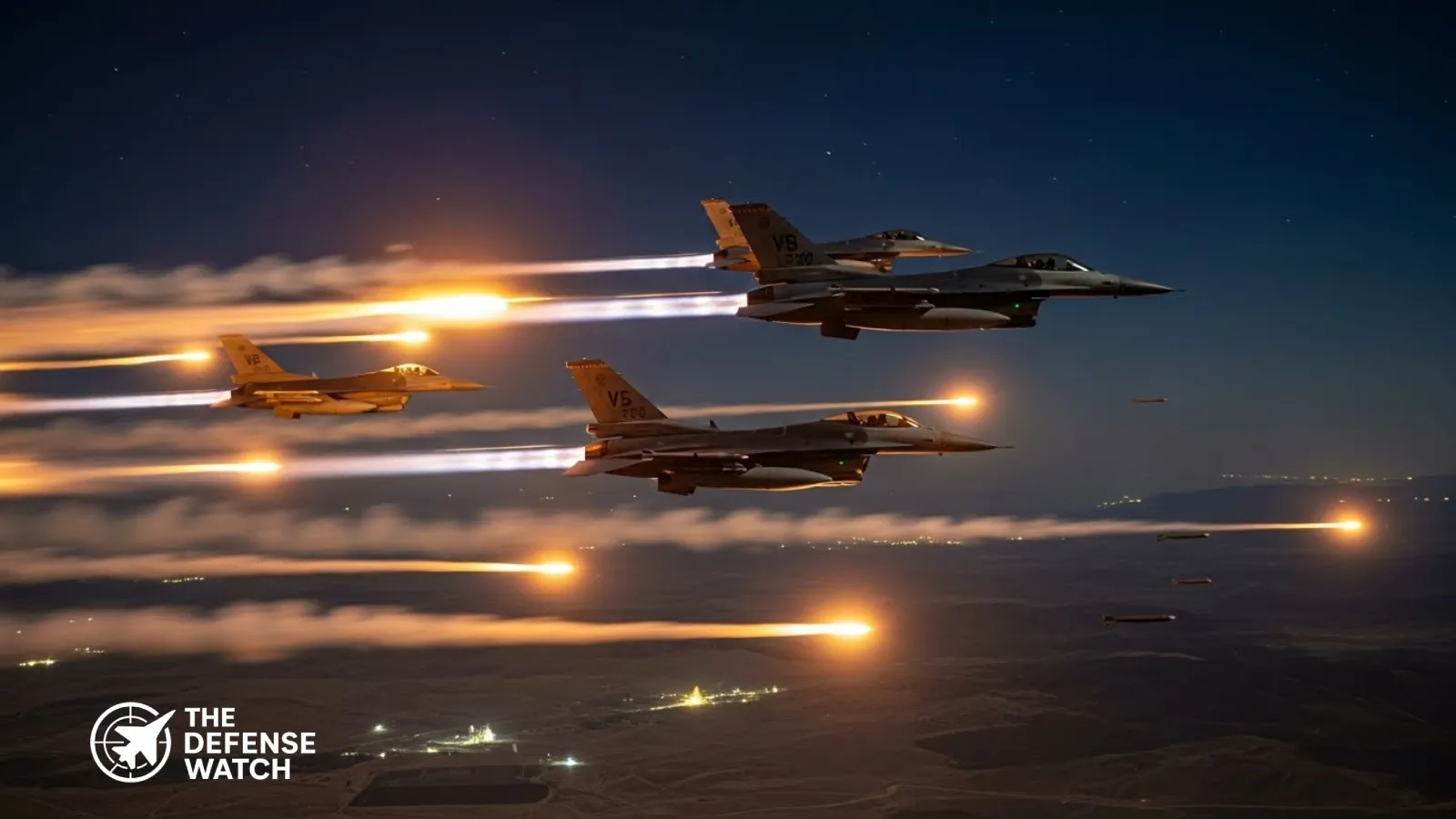
US airstrikes on ISIS targets in Syria expand sharply
US airstrikes on ISIS targets in Syria intensified on December 19, when American forces struck more than 70 Islamic State sites across the country. The strikes took place amid a fragile political transition in Damascus, where President Ahmed al Sharaa is working to assert control while keeping limited cooperation with Washington intact.
According to US defense officials, the operation targeted ISIS command nodes, weapons storage areas, training camps, and logistics routes spread across central and eastern Syria. The campaign was launched six days after a deadly attack in Palmyra in which a Syrian security officer with suspected ISIS ties killed two US soldiers and a civilian interpreter.
Operation Hawkeye Strike and US objectives
The Pentagon confirmed the strikes were part of an operation named Hawkeye Strike. Defense Secretary Pete Hegseth said the mission aimed to disrupt ISIS cells seeking to regroup after months of reduced activity.
US airstrikes on ISIS targets in Syria were carried out using a mix of manned aircraft and remotely piloted systems operating from regional bases. Defense officials stated that the scale of the operation reflected growing concern that ISIS was exploiting gaps in local security forces during Syria’s political transition.
US Central Command assessed that the strikes degraded ISIS operational capacity, though it noted that follow on missions may be required if the group attempts to re establish networks.
Security pressure on Syria’s new leadership
For President Ahmed al Sharaa, the US operation underscored the limits of state control in remote areas. While the new government has pledged to counter extremist groups, its security forces remain unevenly trained and overstretched.
The Palmyra attack raised concerns inside the Syrian leadership about infiltration within its own ranks. US officials indicated that the attacker had recent contact with ISIS facilitators operating in desert regions where government presence remains thin.
US airstrikes on ISIS targets in Syria therefore placed added pressure on Damascus to improve internal vetting and coordination with local partners.
Background on ISIS activity in Syria
ISIS lost territorial control in Syria years ago but continues to operate as an insurgent network. Cells remain active in the Syrian desert and along key transit corridors. These areas allow fighters to move, recruit, and stage attacks against both Syrian and foreign forces.
US commanders have repeatedly warned that political instability creates openings for ISIS to rebuild. Intelligence assessments in recent months pointed to increased communications and movement among ISIS remnants, prompting renewed surveillance and planning.
US airstrikes on ISIS targets in Syria have been a recurring tool to prevent such resurgence, especially when local forces are unable to act quickly.
US Syria relationship under strain
Washington has described its relationship with the new Syrian government as limited and conditional. While there is no formal alliance, US officials have acknowledged quiet coordination aimed at preventing ISIS attacks on civilians and foreign personnel.
The scale of Hawkeye Strike highlighted how quickly the United States is willing to act unilaterally when American lives are at risk. At the same time, officials stressed that the strikes were not intended to undermine Syria’s sovereignty.
Analysts note that continued US airstrikes on ISIS targets in Syria could complicate Damascus’s efforts to project authority, particularly if civilian harm or political backlash emerges.
Regional and strategic implications
The latest operation signals that US counterterrorism policy in Syria remains active despite shifting regional priorities. It also serves as a warning to ISIS affiliates that attempts to exploit political change will be met with force.
Regional partners are closely watching whether Syria’s new government can stabilize key areas without sustained foreign intervention. Failure to do so could invite further unilateral action by external actors.
What comes next
US officials said intelligence monitoring will continue in the coming weeks. Additional strikes remain possible if ISIS activity persists or expands.
For Syria, the challenge will be translating political change into real security gains on the ground. The effectiveness of that effort may shape how often US airstrikes on ISIS targets in Syria are required in the months ahead.

3 comments
[…] is contingent upon a comprehensive ceasefire being in place, and that legal frameworks to govern operations on Ukrainian territory still need final […]
[…] noted partner forces continue to assist in these efforts, aligning intelligence and operational capabilities to track and target ISIS […]
[…] governments and operators of national infrastructure remain primary targets, according to the NCSC statement. The agency urged organisations to review cyber defenses, […]